Death in the Desert

A dead white-lined sphinx moth with its head bured in the rocks of our backyard on September 5, 2021. Original: _RAC9029.arw

I was working in the yard early this month when I noticed a white-lined sphinx moth flying near one of our plants, I had seen them a few times before but this was my longest look. Sadly it soon landed on the ground, walked around a bit, then stuck its head under the rocks, shivered, and died. Most moths and butterflies have short lives as adults, it wouldn’t have picked up insecticides in our yard though I can’t speak for the neighborhood, but it was still sad to see. I wasn’t going to photograph it but had a change of heart and went out in the dark after sunset and took a picture as a tribute to a beautiful little life.

I hadn’t planned on posting the picture but learned there was a death a week or two ago at my favorite trailhead not far from here, I don’t know the details but given it was one of the last truly hot days of the summer heat stroke would be a possibility. My thoughts go out to her family on what should have been a fun visit to the desert and to the rescue crews who spent hours looking for her. Usually their tireless efforts have happier endings.

The desert is unforgiving in the summer, especially once the air temperature rises above body temperature, please don’t underestimate the heat and low humidity if you’re visiting from out of town. Fitness and hydration are important but only get you so far if you wait to hike in the hotter parts of the day. Especially avoid the trails with elevation changes, there are a number of nice short trails where you won’t get the views of the mountain trails but you can get a good taste of the desert flora, including saguaros you can see up as close you’d like, and you can quickly retreat to safety if one of your party starts to overheat.
A Fixer Upper

A close-up of worn and hardened skin of a saguaro on the Cone Mountain Trail in McDowell Sonoran Preserve in Scottsdale, Arizona on August 21, 2021. Original: _RAC7182.arw

Even after a few years in the desert I don’t know who to call when I see a saguaro in need of a fresh coat of paint. Who maintains them, the city? The county? The state?

I had gone out to photograph a particular saguaro at sunrise but as I feared Brown’s Mountain blocked the light for a good while. I switched over to my telephoto lens, the old saguaros always have interesting beauty spots to photograph and this one was no exception. I like the early diffuse light for shots like these.

A Mild Awakening

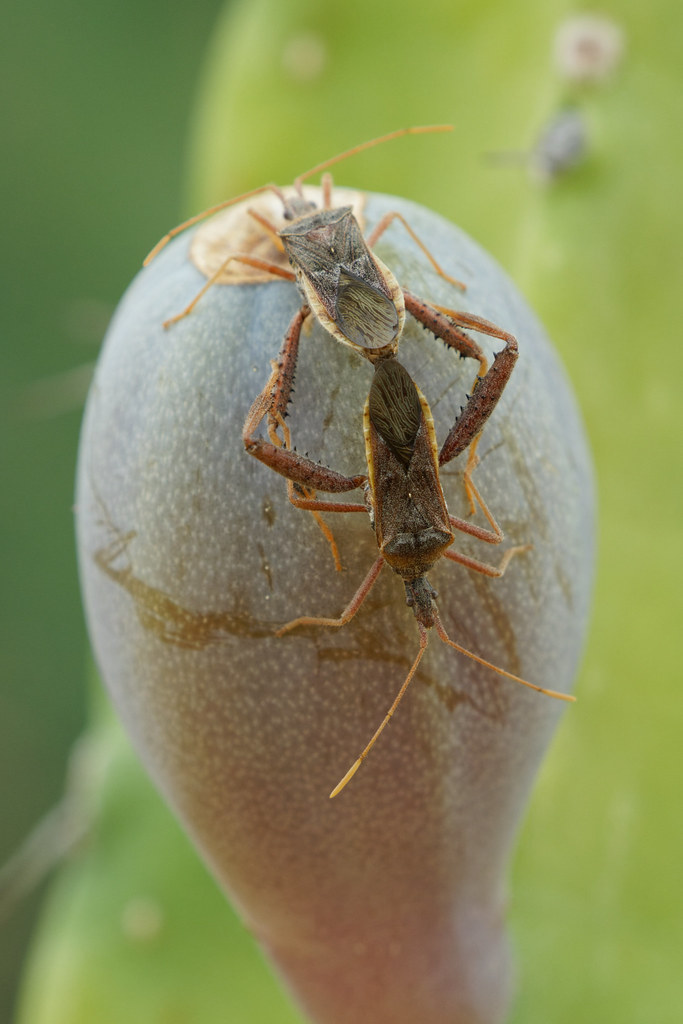
A top-down view of a leaf-footed bug (Narnia femorata) on a cactus blossom in our front yard on a rainy summer evening in Scottsdale, Arizona on August 18, 2021. Original: _RAC6564.arw

Last year after getting some confidence identifying the more common birds and mammals and reptiles of the Sonoran Desert, I decided to start learning the desert plants. I spent an evening reading up on the trees (there aren’t a bunch, this shouldn’t have been hard) but the next morning I couldn’t remember anything I had read the night before. I was a little frustrated with myself but heard a pleading voice that there had been too much that was new and to focus on the things I had to learn, not the things I wanted to learn.

As a creature of habit I knew Arizona would provide beneficial opportunities to experience something different but also that there was so much different both at work and at home that it might be overwhelming (the pandemic hasn’t helped). So I heeded that voice and put aside the guide books and stuck to familiar nearby parks rather than venturing further afield, trying out trails new to me when I felt up to a little challenge.

This summer has brought a mild awakening in being willing to learn new things, spurred on partially by the giant cactus out front that exploded in blooms after the summer monsoons and brought in a host of small creatures to feed on its bounty, and the butterflies that similarly burst into view at the same time either in our yard or on my beloved trails.

Insects have been tricky to learn but I believe this little lovely is a leaf-footed bug of the species Narnia femorata but take that with a grain of salt, I’m not a biologist much less an entomologist, and this is all new to me besides. While they apparently prefer prickly pear (the neighbors have a glorious patch) a group of them have been hanging out on this big cactus in our front yard, feeding either on the buds and blossoms like here on a rainy summer evening, or on the fruit that grew after the pollinators got to work.

By Your Leaves

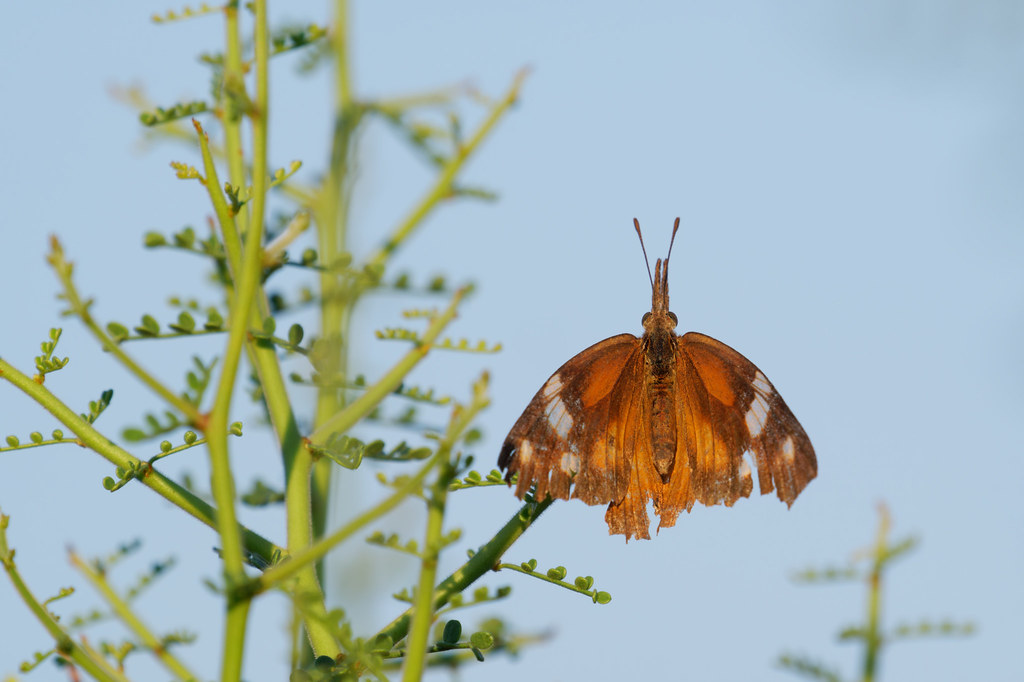
An American snout spreads its wings into the light of the rising sun on the Jane Rau Trail in McDowell Sonoran Preserve in Scottsdale, Arizona on August 24, 2021. Original: _RAC7475.arw

As the butterfly turned and spread its wings into the light of the rising sun, I could see how its wings resembled fallen leaves with uneven edges and transparent sections that mimic areas that have rotted away leaving only the veins. The disguise might be more effective in the forest than the desert where the leaves tend to be rather tiny.

Gardening at Night

A honeybee clings to the top of a large flower of a cactus in our yard in Scottsdale, Arizona on July 24, 2021. Original: _RAC4490.arw

Hard as it is to believe we’re in our third summer at our house. Out front in addition to a saguaro and a barrel cactus is some sort of big beautiful sprawling cactus. I was rather startled in July to see large flower buds emerging as it had sat silent during our time here, perhaps finally getting some decent rain this monsoon season woke it from its slumber. Even better? Like me, it blooms at night!

On a cloudy morning in late July the flowers hadn’t closed up yet so the bees were taking advantage of the new and abundant source of pollen. They seemed to struggle a bit gaining purchase on the flowers, such as this one clinging to the petal tops after clumsily climbing out from the center. Usually the flowers have closed up by the time I drag myself out of bed so I’ve developed a nightly ritual where I go out a couple of times to see the blooms and the wildlife feeding in the dark.

There are moths of course, mostly the little brown lovelies we see around but a couple of nights I saw what I think was a white-lined sphinx month, though I didn’t get a good enough look to be sure. Despite the large blossoms when this massive moth tried to land inside one it reminded me of when our dog Ellie would curl up in a cat bed when they took hers.

Best of all, we had a couple of bats coming in and resting in the alcove outside the front door. Have they been there before and I just haven’t noticed? Also best of all I saw a western banded gecko, while it doesn’t care about this cactus I wouldn’t have seen it if I hadn’t been going out to watch the blooms.

There are still a few flowers each night, mostly up high, and a whole bunch of fruit that some leaf-footed cactus bugs (at least I think that’s what they are) have been gorging themselves on, they stick around for more than just the night so I do have some pictures of them. And though I haven’t seen them, around me I can often hear coyotes howling to each other as they move about in the night. What joy this cactus has brought me, my brother in spirit if not in form.