The Desert in Bloom

California poppies and Coulter's lupines bloom at sunrise in the Sonoran Desert in front of granite formations along the Marcus Landslide Trail in McDowell Sonoran Preserve in Scottsdale, Arizona

First light falls on the California poppies and Coulter’s lupines blooming in front of the rock formation I call the Guardian. Haven’t had much time and/or energy for hiking the past few weeks but thankful I was able to get out for a few hours last week to see the desert in bloom. This was my first time seeing the Sonoran Desert bloom like this. The picture below is from a few minutes earlier in a slightly different position, clouds in the east mostly blocked the sunrise light but a little bit of red light fell upon the landscape before coming on strong for a few minutes as shown above. I like them both.

We arrived in Arizona a year ago today, how thankful I am we ended up in this wonderful place.

California poppies and Coulter's lupines bloom just before sunrise in the Sonoran Desert in front of granite formations along the Marcus Landslide Trail in McDowell Sonoran Preserve in Scottsdale, Arizona

It’s a Good Thing Saguaros Aren’t Carnivorous

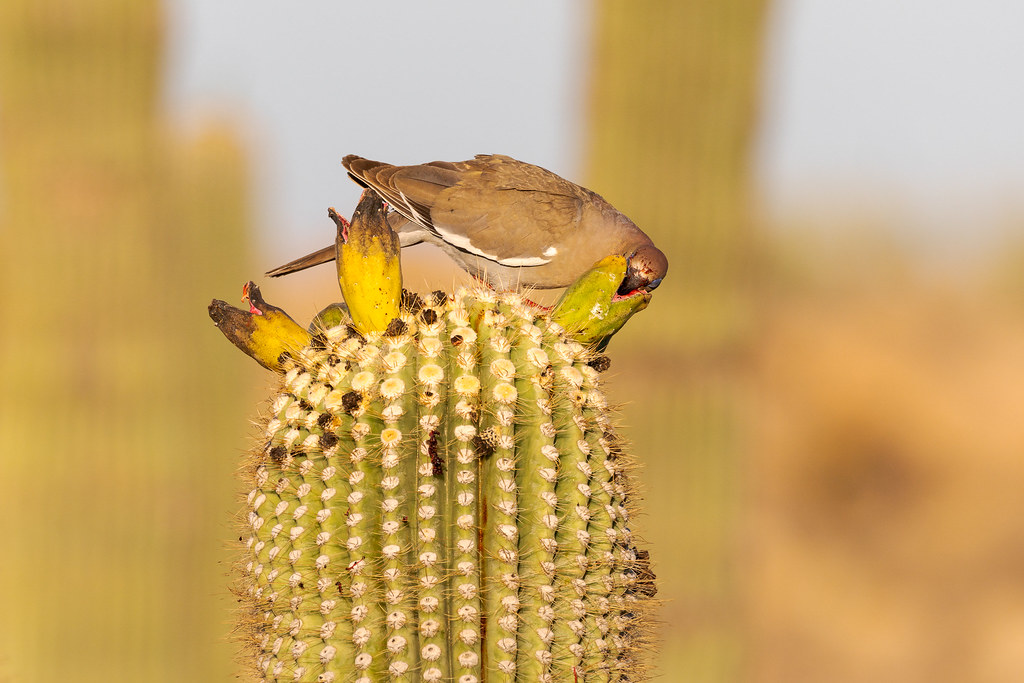
A white-winged dove sticks its face into a saguaro fruit to feed along the Latigo Trail in McDowell Sonoran Preserve in Scottsdale, Arizona

Last spring I was amazed at how many birds fed at saguaros as they bloomed and fruited, such as this white-winged dove sticking its face into fruit at the end of an arm along the Latigo Trail. It’s a good thing saguaros aren’t carnivorous or a lot of birds would lose their heads!

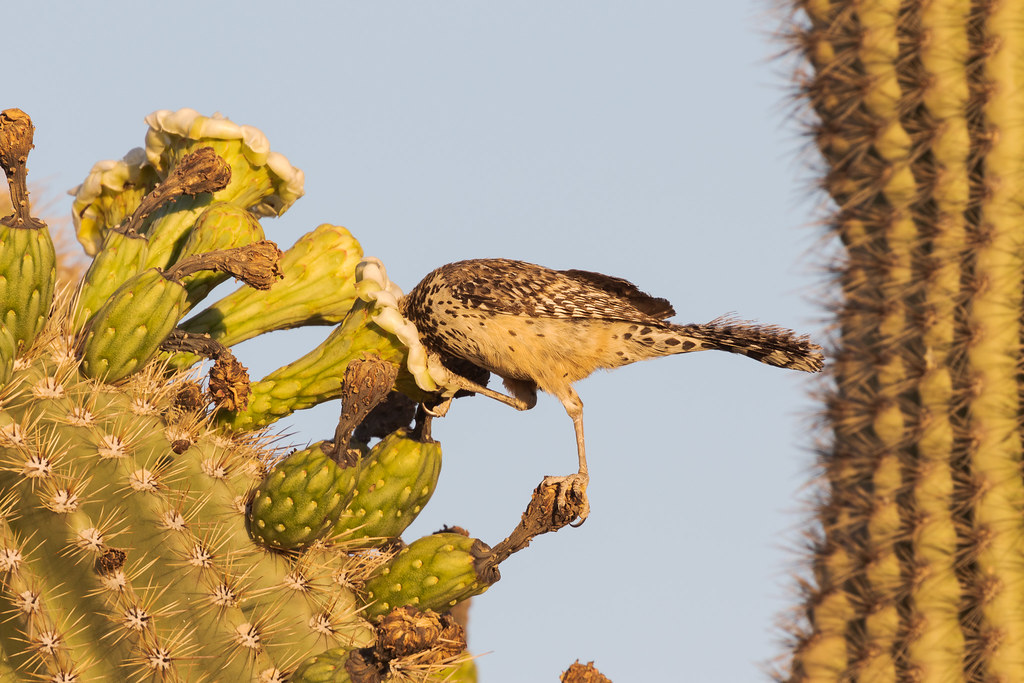
A cactus wren sticks its head into a saguaro blossom to feed in McDowell Sonoran Preserve in Scottsdale, Arizona

Cactus wrens are smaller than the doves but still large for wrens, this one stuck its head deep into a blossom on the saguaro where it was building its nest and raising its young. When it emerges its head will be covered in pollen, some of which will be deposited at the next blossom it visits.

It s a Good Thing Saguaros Aren t Carnivorous Verdin Edition

The tiny verdin had to stick most of its body into the fruit to feed at the back, in this picture it is feeding closer to the front and only its head is hidden. When the fruit ripens it is the white-winged doves that eat the most, but other birds enjoy the short-lived bounty as well.

The Portland Farewell Tour

A dog runs up to greet our dog Ellie as the trees bloom in the background at Irving Park in the Irvington neighborhood of Portland, Oregon on March 11, 2018. Original: _DSC3855.ARW

Before we left for Arizona I wanted one more picture of Ellie at the dog park at Irving Park, the first stop on all our walks, and this lovely spring morning gave me the perfect opportunity with the trees blooming behind her. Ellie had many dog admirers, a handful who absolutely adored her, fortunately I had a chance to talk with all of their owners before we left so they wouldn’t assume the worst when our elderly pup suddenly stopped showing up at the park.

📷: Sony A6500 | Sony-Zeiss 24mm f/1.8
🗓️: March 11, 2018

White-Winged Love

A white-winged dove perches atop a saguaro cactus, it's face covered in pollen

In case you were wondering what a white-winged dove looks like when it isn’t plunged headlong into a saguaro blossom, here you can see most of the bird apart from its feet. The golden color to the entire front of its head is from pollen, making readily apparent how the birds pollinate the saguaros as they stick their heads in the flowers from one cactus to the next. Much to my delight white-wings are one of the most common birds in our backyard so I get to see them every day of the week.

Face Full of Flowers

A white-winged dove sticks its entire face into a saguaro blossom as it feeds in McDowell Sonoran Preserve in Scottsdale, Arizona

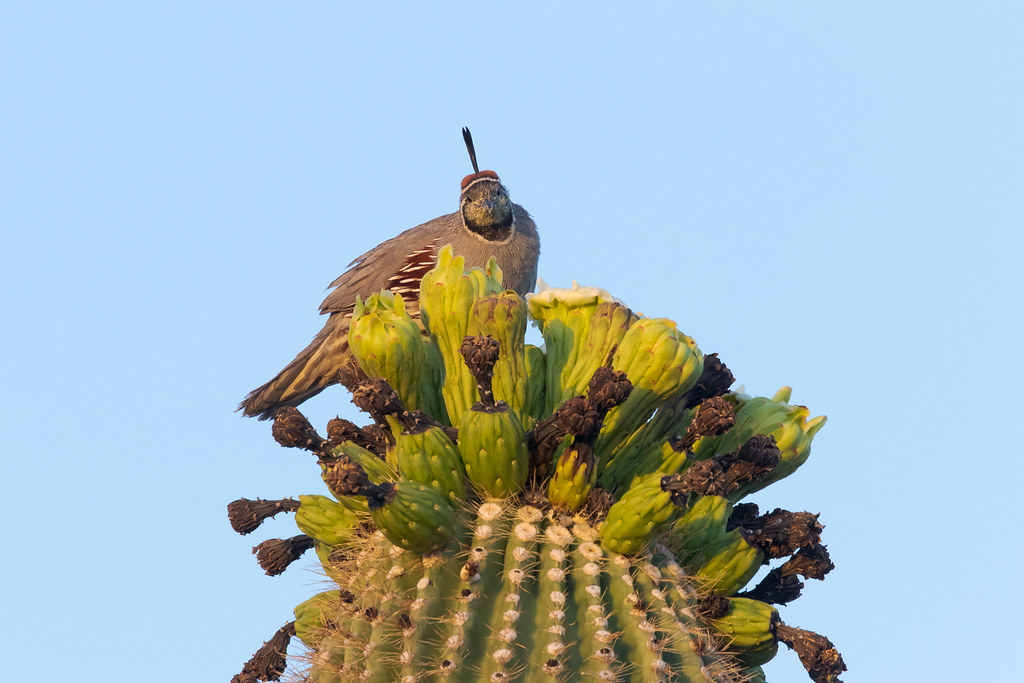
A white-winged dove sticks its entire face into a saguaro blossom as it feeds. It’s face was covered in pollen, as were many of the birds in my pictures from this time, such as the Gambel’s quail below. The birds and bats and bees took full advantage of the suddenly plentiful blooms, dining quickly as they flew from one flower to the next, pollination in action. The blooms are mostly gone now, this morning I saw only two flowers during several hours of hiking, and one of those was pretty wilted.

The face of a male Gambel's quail is covered in pollen from saguaro blossoms in McDowell Sonoran Preserve in Scottsdale, Arizona

Mother’s Day Bouquet

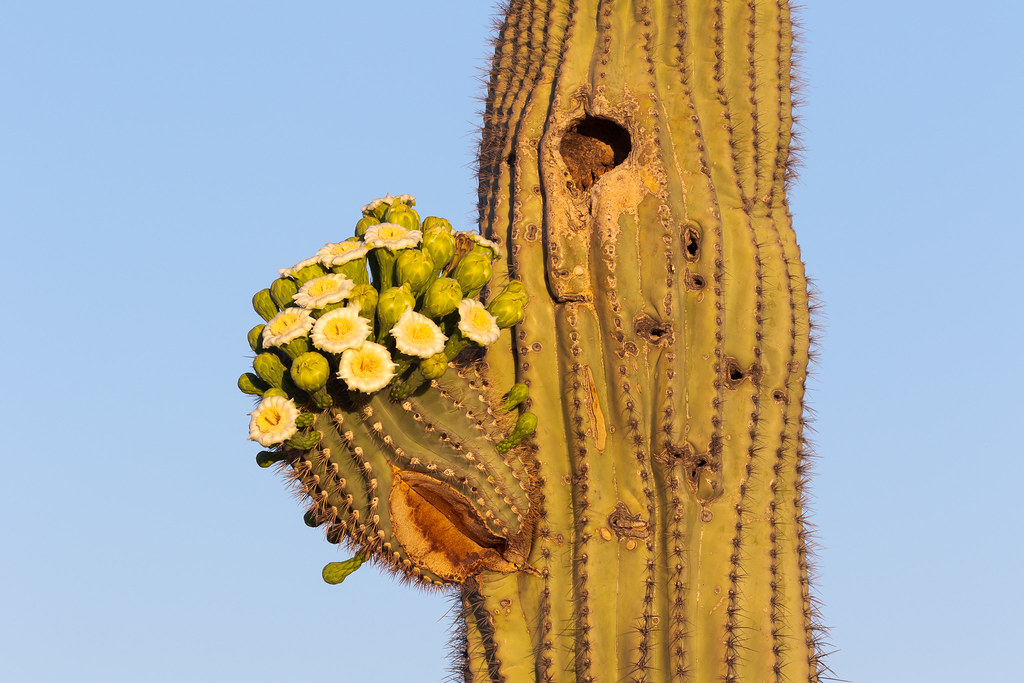
Sagurao blossoms near sunrise on an off-map trail at Brown's Ranch in McDowell Sonoran Preserve in Scottsdale, Arizona

This saguaro offered up a bouquet of flowers near sunrise on Mother’s Day. I had hopes of photographing it again with all the flowers open but by the time I could return the following Saturday, all of the blossoms were gone and I learned another fact about my new home. The flowers only last about a day, first opening at night to attract bats with their nectar and closing the following afternoon after the bees and birds have had their fill. If pollinated during that short window, the fruit below will develop during the summer.

Calling Me Home

A male Gambel's quail sits atop spent saguaro blossoms in the Brown's Ranch section of McDowell Sonoran Preserve in Scottsdale, Arizona

One of the birds I most wanted to photograph when we arrived in Arizona was the Gambel’s quail. Not because they are rare – we saw them in the neighborhood when we were looking at our rental house – but because they called me home. It was our vacation in New Mexico a decade ago that got me excited about living in the Southwest, and my encounter with Gambel’s quail there was one of the highlights of the trip, their serenade at sunrise. So it was a special delight to photograph this male and female up on the saguaros as the sun rose, dining on the cactus blossoms, in our shared desert home. Home in a larger sense, though I see them every day in my backyard these quail were at Brown’s Ranch in McDowell Sonoran Preserve.

A female Gambel's quail eats from saguaro blossoms in the Brown's Ranch section of McDowell Sonoran Preserve in Scottsdale, Arizona

Not the Usual Suspects

A young male Bullock's oriole perches atop a blooming saguaro cactus in the Brown's Ranch section of McDowell Sonoran Preserve in Scottsdale, Arizona

In my short time here there are a handful of birds I’ve gotten used to seeing on the saguaros: Gila woodpeckers, gilded flickers, house finches, cactus wrens, and curve-billed thrashers. But I sometimes see more than the usual suspects, such as this splash of color that momentarily swooped into view early Saturday morning. He’s a young Bullock’s oriole, he’ll be even more colorful and vibrant in a year. I’ve only see this species a couple of times before, both during my years in Portland, so here’s hoping we meet more often in Arizona.