Sniffing the Saguaro

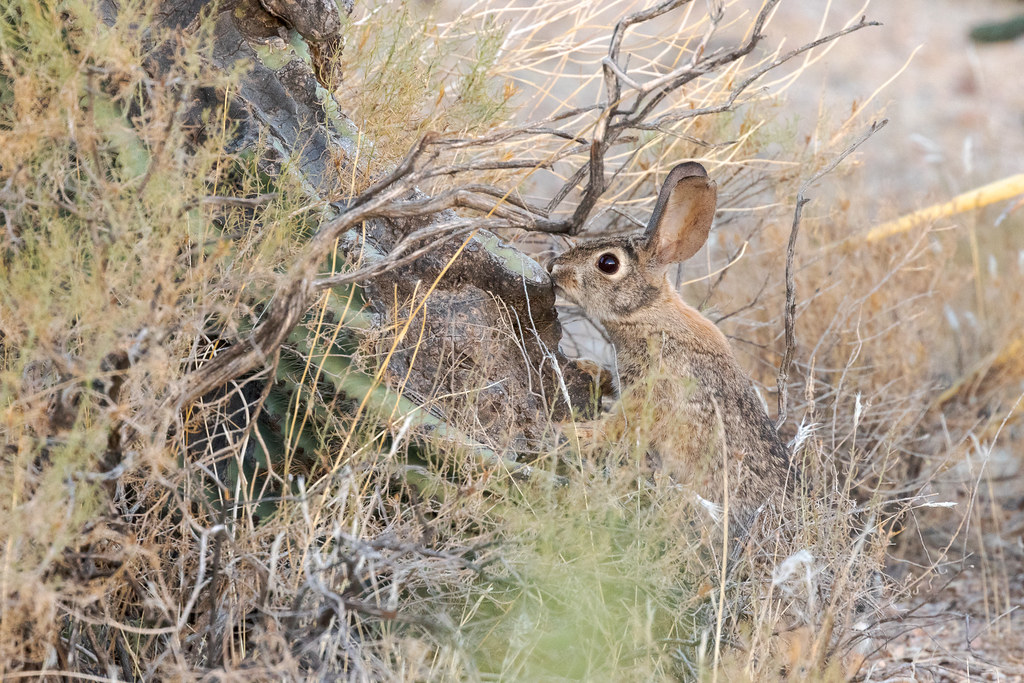
A desert cottontail sniffs the base of an old saguaro in McDowell Sonoran Preserve

This cottontail kept sniffing the base of the old saguaro and hopping up where there were no spines, hopping down, and sniffing some more. Cottontails are the mammal I see most frequently both in the desert and in our neighborhood. Fortunately our dog Ellie pays them no mind, she’s never cared about wildlife even in her younger years. Although we still see them on our walks it’s been a week or two since one has been in our backyard, is there a number I can call to complain about this?

Look How Far the Light Came

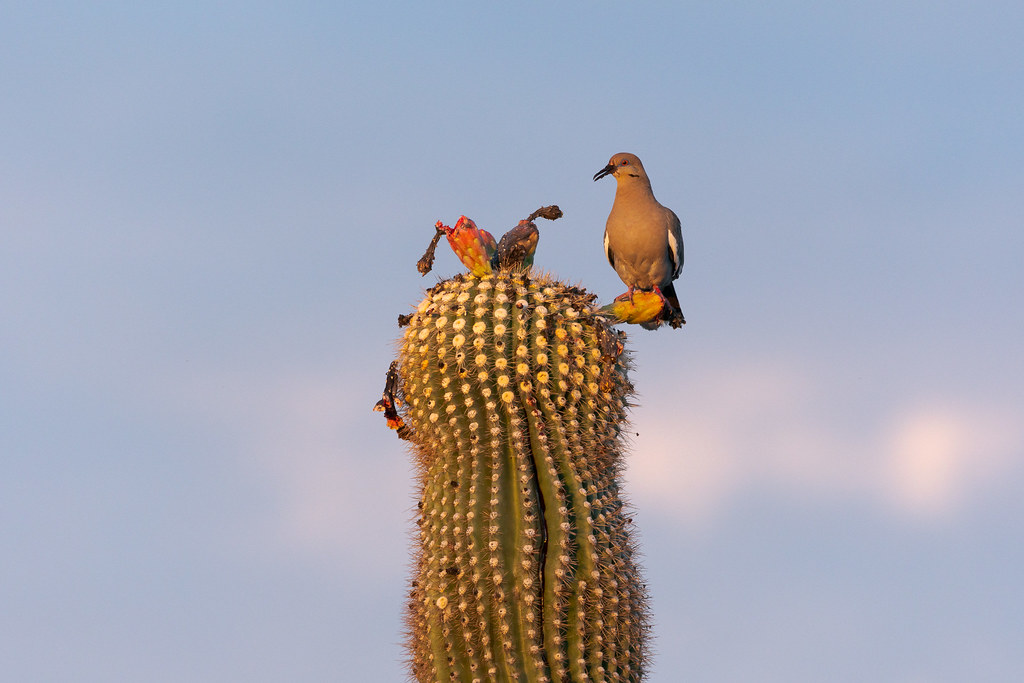
A white-winged dove straddles two pieces of fruit on a saguaro cactus on the Latigo Trail in McDowell Sonoran Preserve in Scottsdale, Arizona

Look how far the light came
To paint you
This way
Bruce Cockburn “Look How Far”

It was 5:30 a.m. on July 4th as I walked along the Latigo Trail, most of the desert still in darkness. I stopped when the rising sun fell upon this tall saguaro and the white-winged dove feeding on its fruit. Minutes later the clouds in the east obscured the sun and its rays no longer fell upon the clouds in the west nor the cactus before me, save for the tip top where the dove stood. A moment later all was in shadow. I was struck by how much had to occur for me to be standing there, to catch the light that traveled many millions of miles in mere minutes, to behold its beauty and bear witness to its passing.

The Desert Cottontail

A desert cottontail sits on the base of a large saguaro cactus

All part of my goal to photograph everything sitting on a saguaro, although in truth I never expected to see anything but birds on them given the sharp spines. Early one morning I came across two desert cottontails feeding near a large saguaro shortly before the sun rose high enough to illuminate the desert floor. I noticed this one kept sniffing the base of the cactus and jumping onto it where there were no spines. I got lucky when the rabbit jumped up one last time right as the sun fell upon us, as it only stayed for a moment before the pair hopped off into the shadows and out of sight.

Red, White, and Blue

A white-winged dove, its face covered in the red juice of saguaro fruit, perches atop a saguaro illuminated by the rising sun by the Latigo Trail in McDowell Sonoran Preserve

I spent the morning of the 4th of July amidst a double splendor of red, white, and blue. The rays of the rising sun illuminated the top of the cactus amidst blue skies, white clouds, and the ripened red fruit of the saguaro. Eating that fruit was a white-winged dove, with the white wing patches for which it is named, a blue eye ring, and red eyes. And on this morning, as with all the other doves since the fruit ripened, a face covered with the red juice and pulp of the saguaro’s fruit, as they stick their entire heads in to get every last bit of this short-lived bounty of food.

The Warriors

A damage saguaro still grows tall at Pinnacle Peak Park in Scottsdale, Arizona

The old saguaros are warriors. It’s remarkable they can survive in this climate at all, astounding they can do it while sustaining heavy damage. I don’t know how recent the damage to the base of this cactus is but as you can tell from its long shadow it is still growing at a great height with a couple of the iconic arms near the top (the arms usually don’t start growing for 50 to 100 years, depending on the amount of rain). I saw one saguaro that had fallen over and little remained except a short stump, but enough of the internal plumbing and root system survived that a new arm was growing. I hope they prove a metaphor for my country, for all the damage it has sustained and with more to come, I hope the promise of America overcomes its reality.

A Cactus Home

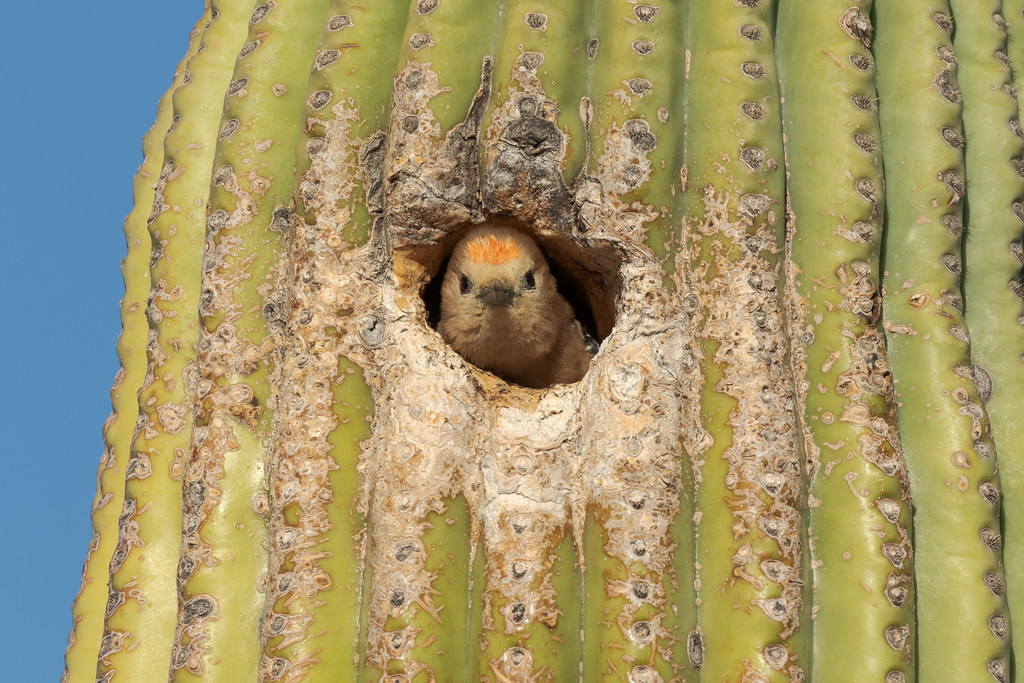
A Cactus Home

I hoped for this picture since I first learned that woodpeckers like the Gila woodpecker make their nests in cavities they drill into saguaros. I wasn’t sure how frequent a sight it would be until we moved here and thankfully I had the chance to watch a couple of different Gila woodpecker families this spring. This male and its mate made their hole facing the rising sun but it was a bit too long of a hike to get there right at sunrise. But I spent several early mornings watching in amazement as they brought an endless stream of insects and spiders to the nest.

White-Winged Love

A white-winged dove perches atop a saguaro cactus, it's face covered in pollen

In case you were wondering what a white-winged dove looks like when it isn’t plunged headlong into a saguaro blossom, here you can see most of the bird apart from its feet. The golden color to the entire front of its head is from pollen, making readily apparent how the birds pollinate the saguaros as they stick their heads in the flowers from one cactus to the next. Much to my delight white-wings are one of the most common birds in our backyard so I get to see them every day of the week.

Face Full of Flowers

A white-winged dove sticks its entire face into a saguaro blossom as it feeds in McDowell Sonoran Preserve in Scottsdale, Arizona

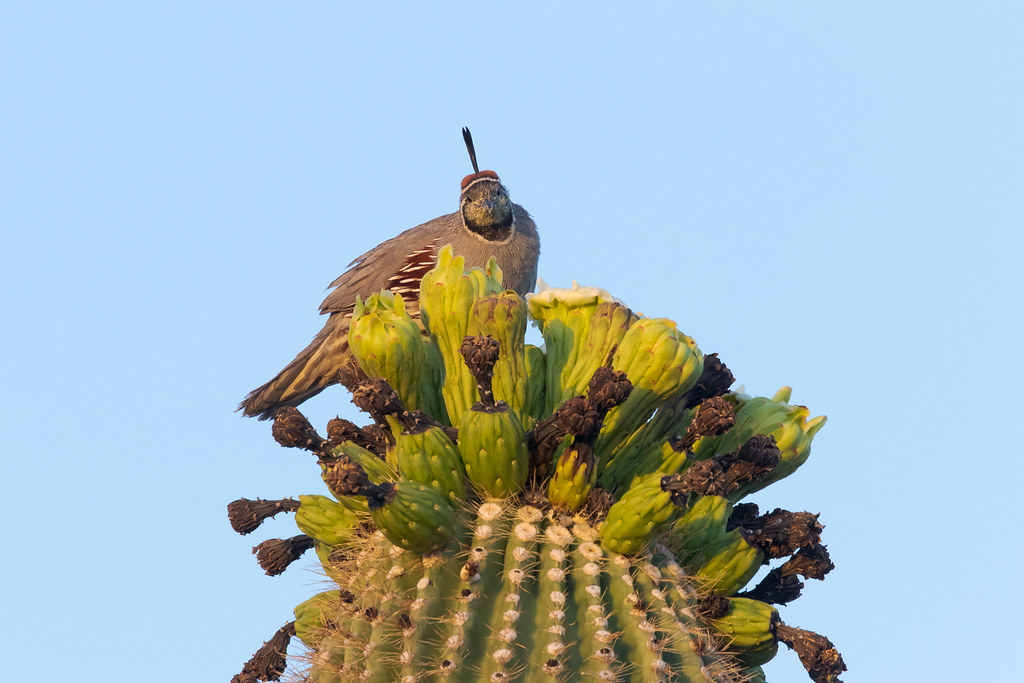
A white-winged dove sticks its entire face into a saguaro blossom as it feeds. It’s face was covered in pollen, as were many of the birds in my pictures from this time, such as the Gambel’s quail below. The birds and bats and bees took full advantage of the suddenly plentiful blooms, dining quickly as they flew from one flower to the next, pollination in action. The blooms are mostly gone now, this morning I saw only two flowers during several hours of hiking, and one of those was pretty wilted.

The face of a male Gambel's quail is covered in pollen from saguaro blossoms in McDowell Sonoran Preserve in Scottsdale, Arizona