The Rippers

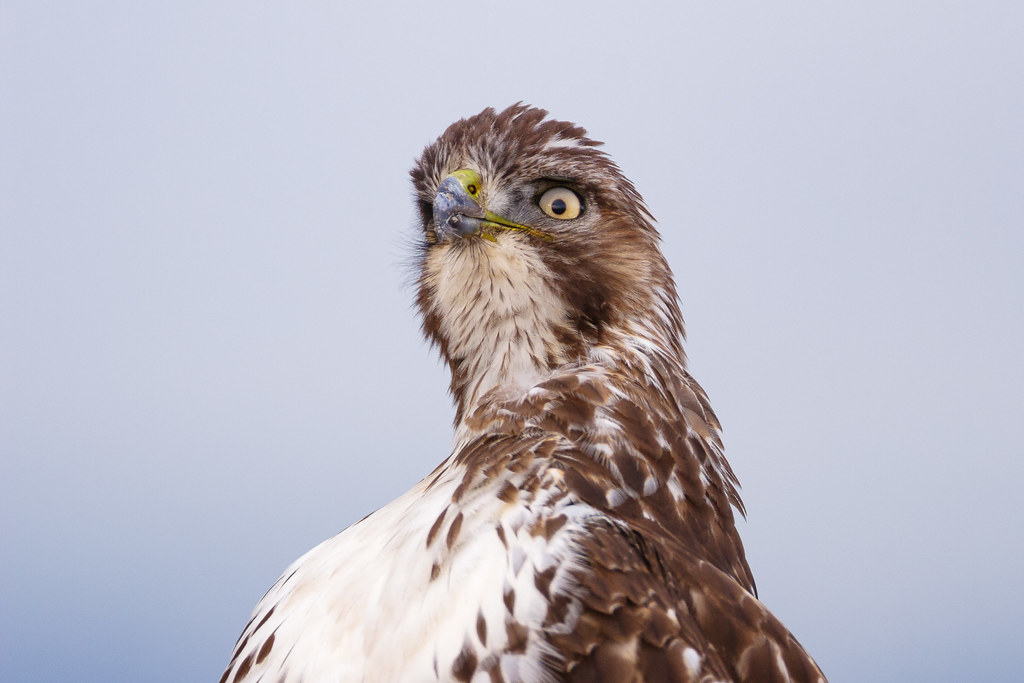
A close-up view of a juvenile red-tailed hawk

At Ridgefield, many creatures prey on the Townsend’s voles that live in the meadows and marshes. Some predators like herons, bitterns, egrets, and coyotes swallow the voles whole. Others like this red-tailed hawk (above) and rough-legged hawk (below) have beaks designed to let them rip apart their prey and eat only the parts they desire. If you watch them on a fresh kill you’ll see them pull out parts like intestines they don’t want and cast them aside so they can get to the muscles and organs they prefer. It’s a bit gruesome and I always feel for the little voles but at least they die quickly, this is how these beautiful but deadly birds have evolved to survive.

I photographed both hawks on the same day, and in nearly the same spot, the rough-leg right as the sun was cresting the hill and the red-tail over an hour later in direct sunlight.

A close-up view of a rough-legged hawk

No Shelter From the Rain

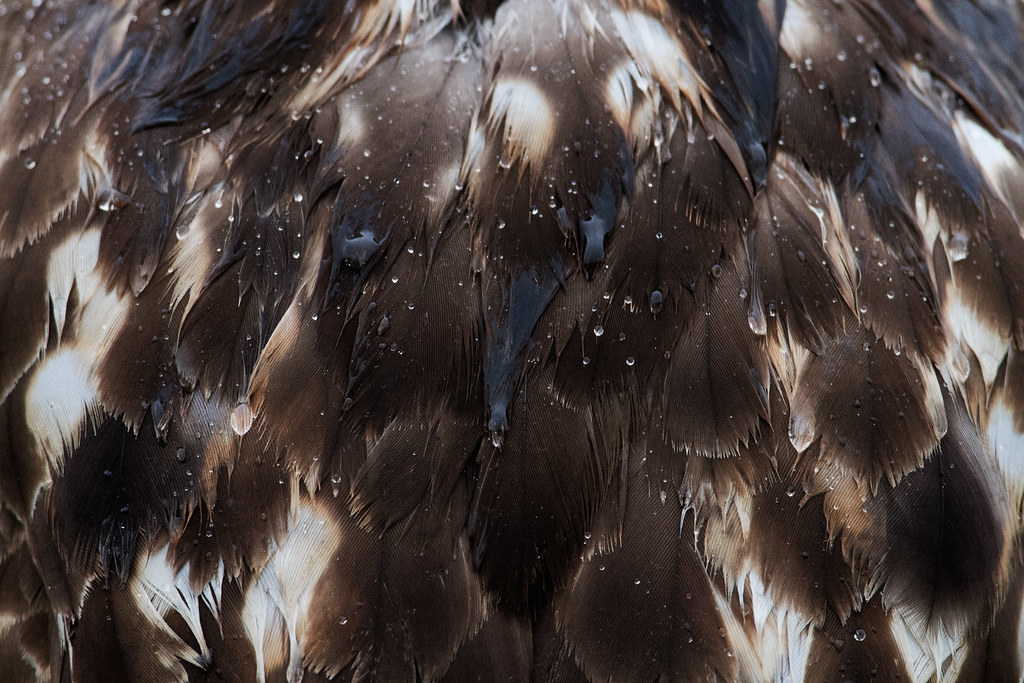
A close-up view of the feathers of a red-tailed hawk with water drops beading up during a heavy rain

A downpour on Christmas morning left this young red-tailed hawk, sitting on a signpost beside the auto tour, drenched from head to toe with water drops beading up on the feathers on its back. The heavy rain and the holiday morning also meant that I had the refuge pretty much to myself and I was able to observe this tolerant hawk at my leisure without having to worry about blocking the road.

Redtail Rain

Redtail Rain

I like to spend each Christmas morning at Ridgefield and in 2012 kept the tradition by making my first visit to the refuge in many months. It poured as I drove out in the dark so I was thankful to be in my new Subaru XV Crosstrek as it handles the rain much better than my previous car. The young redtails at the refuge sometimes hang out on the signs at the edge of the meadow and if you’re quiet, will often let you drive close and watch to your heart’s content. This redtail was soaked through and through and gave me good looks at both its front and back as it kept its eye out for voles in the meadow, and when it turned its head just right let me take a self-portrait of the new car (you can see it reflected in the hawk’s eye).

No Blackberry Breakfast

Close-up of juvenile red-tailed hawk's face looking down

There’s an invasive species of blackberry that has spread across the Northwest and is prevalent at Ridgefield. A variety of animals will use the berries as food or the thickets as cover, but this young hawk was using it as a place to listen for breakfast, every sound from below drawing its eyes downward. It didn’t end up catching anything, at least not during our time together.

Hawk On A Stick

A close-up view of a young red-tailed hawk raising its head high while preening on the auto tour at Ridgefield National Wildlife Refuge in Ridgefield, Washington in February 2008

It’s not uncommon to see hawks perched at close range on the many signposts around the auto tour at Ridgefield — what I like to call hawks on a stick. I loved the pose when this preening redtail stretched its neck out to an unusually tall height. Young birds like this one often have pale brown eyes that will darken with age.