Identification

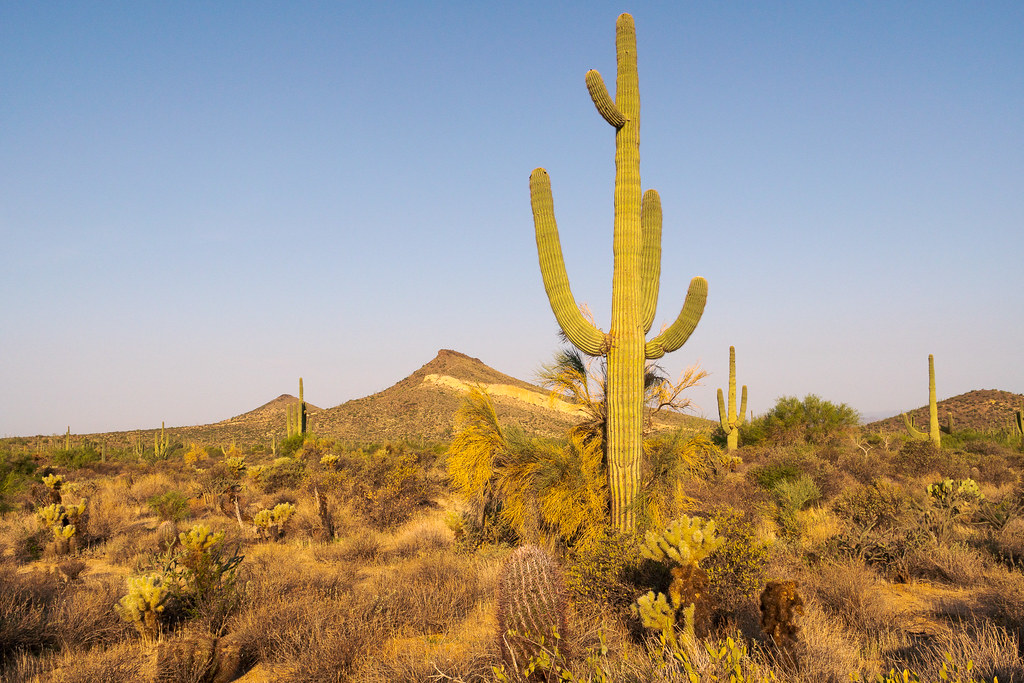
A view of the desert landscape before Brown's Mountain as seen from the Watershed Trail with a wide varienty of plants including many of the typical cactus species

At first every view in Arizona was a bit unsettling because it was so unfamiliar. The chance to explore somewhere quite different than my beloved Northwest was one of the attractions of moving here and the undercurrent of unease dissipated with each passing day. It took longer on the trails as nearly everything in my view was new to me and I couldn’t even put names to most of what I saw. I hiked as often as I could and studied when I got home and the desert changed beneath my feet into my home.

One picture can’t encapsulate all that is the McDowell Sonoran Preserve, nor even the Brown’s Ranch area that I haunt the most, but this is a mix of much of what I see. The tall cactus you probably recognize as a saguaro, that one I could identify even before I arrived. Embracing the saguaro in the center is a crucifixion thorn (there are several plants with this name, this is the canotia). Scattered around are teddy bear cholla, buckhorn cholla, compass barrel cactus, foothill palo verde, and Engelmann prickly pear. And a bunch of plants I can’t yet identify.

In the background with the long scar running down its flank is Brown’s Mountain with Cone Mountain behind and to the left. From where I was standing Cholla Mountain was to my right, Granite Mountain behind me. Each of these hills has a distinctive look which made it easier to orient myself on the many interconnected trails.

Vibram

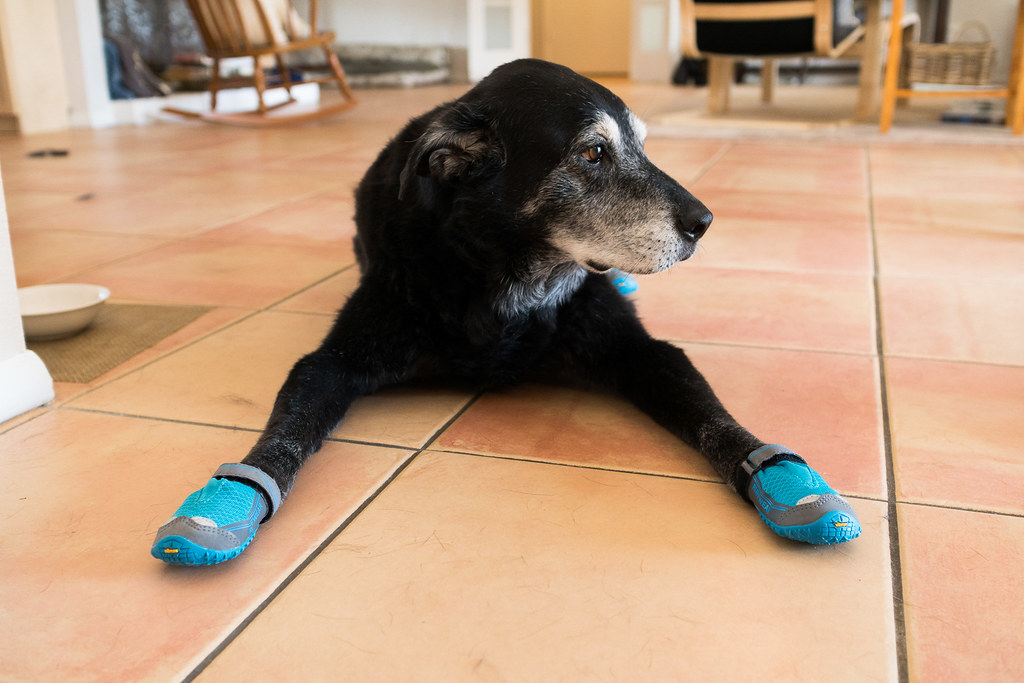
Our dog Ellie lies on the tile with dog shoes on all four paws, the soles are made of Vibram like my hiking shoes

We’re trying out a couple of types of dog shoes for Ellie, I was amused to see this pair has the same Vibram soles as my hiking shoes. They are designed for outdoor use but we got them for indoor use as her arthritic back legs are bothering her more now and she can struggle on the slippery tile. On Wednesday she couldn’t get up after we came back from our walk and was clearly anxious about it so my wife took her to the vet. We’ve been trying out some additional pain medication, the vet took her off one and switched to another and Ellie showed immediate improvement. She’s moving about more normally and has rolled around in the little patch of grass in the backyard a few times. We’ve only had her wear the shoes for short periods so far and she tolerates them OK.

He’s Making a List …

A look at the three notebooks I've used as hiking journals

A quick look at the notebooks I’ve used to keep track of my hikes (sorry about the mixed lighting), the flip notebook at the bottom I started with in 2000 before switching to the composition notebook on the right in 2003. After filling it up in 2011, I moved to the red Moleskine on the left which is what I’m using currently. I wish I had started doing this earlier! I’ve long debated about switching to keeping my notes on the computer, both so they’d be easy to backup and easy to search, but so far I’ve resisted as this is the last area of my personal life where I still write by hand and there is a romance to the feel of pen and paper.

Early on I mostly just listed what animals I saw but I got better over the years about describing the hike as I enjoy looking back and reading through past adventures. Then I started adding if it was my first sighting of an animal, the times I started and ended, the weather conditions, and lately the distance. Perhaps most importantly was switching to gel ink pens a while back as I used to use cheap pens and some of those old notes are fading, although most are still fine as I keep them out of the light. I prefer the 0.38mm pens (uni-ball Signo RT or Pilot G2), the ink is dark so the notes are easily legible but not so heavy that they show through too much to the other side of the paper. They write smoothly, they’re comfortable, the ink lasts, and they aren’t expensive. Their only downside if that if you have a Boo he greatly enjoys knocking them to the floor.

If I have any young readers who like hiking (or parents of such), start now! The composition notebook cost about $2, the Moleskine $12, the pens about $1 each. The real investment is the time it takes to write, but I think it’s worth it.

A close-up view of two of the three notebooks I've used as hiking journals

Washed Away

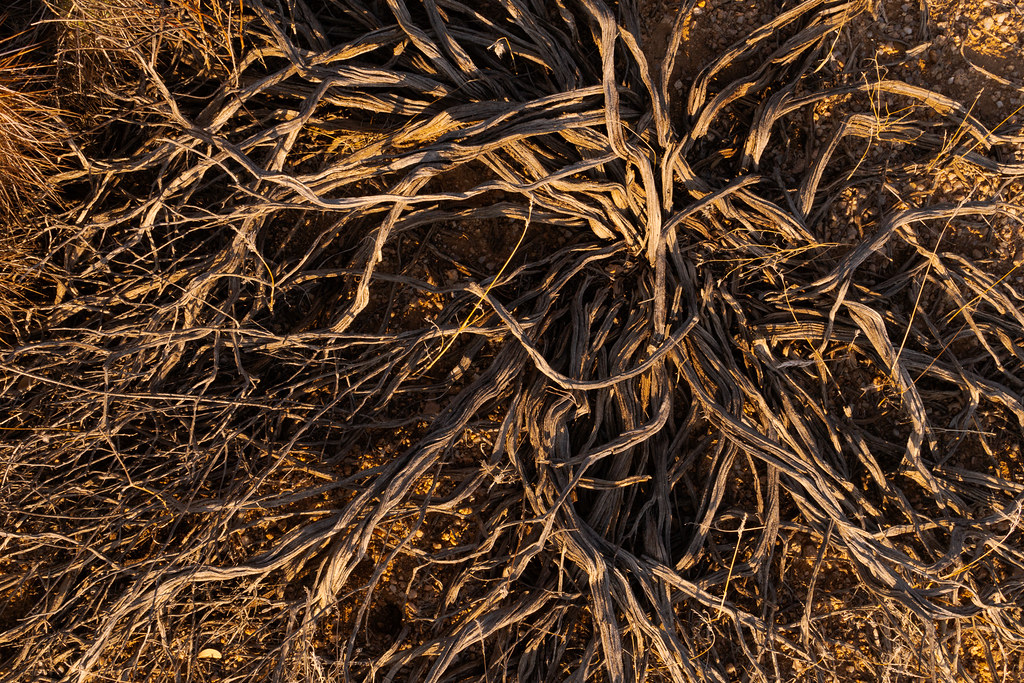
A foothill palo verde with its roots exposed in a wash at Lost Dog Wash in McDowell Sonoran Preserve

As you hike through the desert you’ll sometimes cross a wash, an area that is normally dry but where water runs after a storm. I’ve not seen a wash run, it doesn’t take long for the water to stop flowing and the monsoons usually arrive in the evenings when I’m not on the trails due to the heat. I’ve seen the aftermath though in the scouring of the trails, I wonder if the roots of this foothill palo verde were recently exposed due to erosion after a summer storm. Most of the shallow roots have been stripped of earth and are angled downstream save for one still plugged into the surviving bank.

It may not look like it but this little tree has leafed out, the trees have tiny leaves that you can see along the thorns if you look at the top of the tree set against the darker green of the larger trees behind it. You can also see the green bark, the palo verde can photosynthesize its food from both the little leaves when they are present and from the green bark and thorns year round. I’m curious to see if it survives or if it will fade away now that its roots are exposed, and perhaps wash away in a future storm. But for now it is holding on, literally.

Swimmers

A northern pintail drake swims in Ruddy Lake at Ridgefield National Wildlife Refuge in Washington

After moving to Arizona I have fallen in love with having a swimming pool in the backyard, swimming has become second only to hiking as my favorite way to exercise in the summer heat, even though I’ll never look as lovely in the water as this northern pintail swimming in Ruddy Lake at Ridgefield National Wildlife Refuge.

Northern

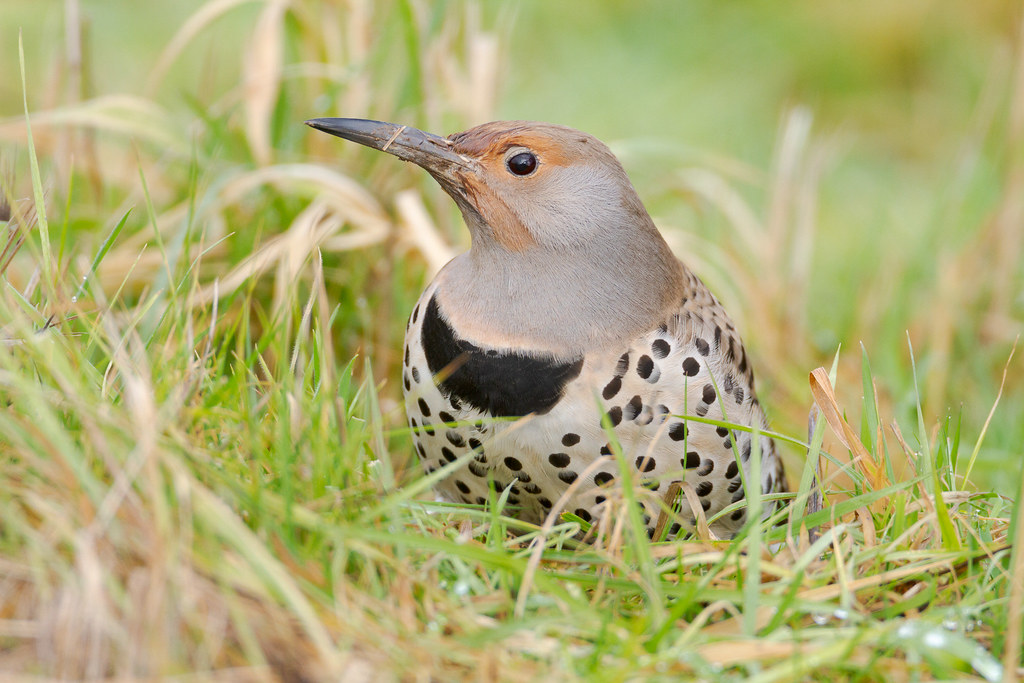
A female northern flicker searches for breakfast in a meadow on a rainy winter morning at Ridgefield National Wildlife Refuge

A female northern flicker searches for breakfast in a meadow on a rainy winter morning at Ridgefield in 2012. Given its widespread distribution across my country I wrongly assumed this would be the flicker I’d see most often in Arizona, but so far I’ve only seen the gilded flicker. To be fair I’ve only hiked in the desert, perhaps we’ll be reunited when I visit the forests. The two flickers are quite similar both in appearance and call, so in a way it feels like we were never separated.

Smug

A mule deer chews its food along the Chuckwagon Trail in McDowell Sonoran Preserve in Scottsdale, Arizona

I was walking along the Chuckwagon Trail with the sun about to crest the horizon when the pattern recognition part of my brain thought it saw a distant deer hidden behind some plants. On second glance I was less sure and thought “There you go again, turning trees into deer.” I lifted the telephoto lens to my eye anyway and the tree was a deer, it walked out into the open as it ate soft plants as it strolled along its path, then did the little mule deer hop to move down the hillside.

My pattern recognition self was feeling pretty smug the rest of the hike, even when he was spotting marmots in the rocks though there are no marmots in Arizona. That will take a while to go away, after spending a summer in Florida it took years for me to stop thinking I saw alligators in the marshes of Oregon and Washington. I don’t mind, the successes are worth the failures, and if you don’t look you can’t see.