My alarm clock rang at 4:00am and I was on the road a half hour later, heading south out of Albuquerque and towards Bosque del Apache National Wildlife Refuge, best known for the spectacular fly-ins and fly-outs of snow geese and sandhill cranes during the winter months. It was late spring and those birds were long gone, but it was my first visit to New Mexico and I wanted to at least get a feel for the refuge. Even if it wasn’t the prime time to visit, I hoped for a few surprises.
The dark sky lightened as the minutes and miles passed, with the sun threatening to rise as I pulled into the parking lot of the Visitor’s Center. There were no other cars in the lot and I knew the center would be closed, but I hoped to find some trail maps and refuge information. When I opened the car door, I was greeted by a primal call coming from up the hill. Another call came, and then another. I didn’t recognize the call, so I grabbed the camera with the big telephoto lens attached and headed up the steps and towards the calls.
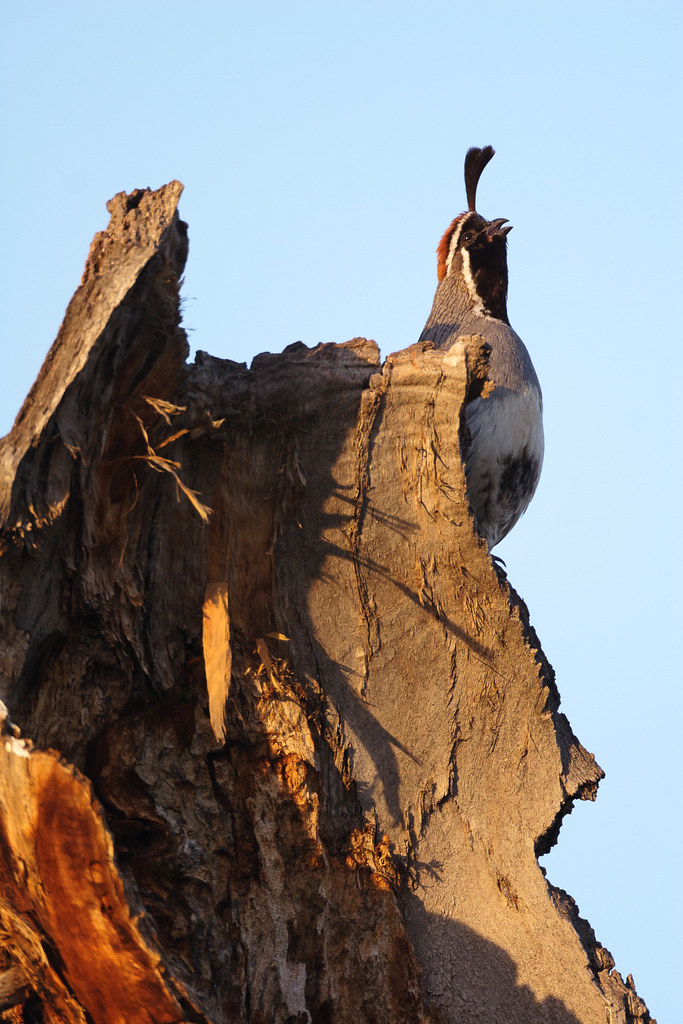
I moved slowly but anxiously until I saw a wooden pole with signs pointing in various directions. In the dim light I could see its top was crowned with a carved bird in the shape of a quail. I was a little disappointed when I guessed the calls were just a recording and no more real than the carving, something to give visitors a taste of the birds of the refuge. I decided to return to the car and head out onto the refuge proper. Before I could take a step the supposedly carved quail raised its head and gave a loud call.
I continued into the little desert arboretum as other quail were calling around me. It was a delightful little moment, to go from not sure if I’d see much of anything that day to being surrounded and serenaded by these birds on their high perches. The sun peeked above the horizon and I found this male in a nice location and angle to the sun, and only had to wait for the sun’s rays to reach him and for him to make his call.
I didn’t have to wait long.
A later look at my bird book showed them to be Gambel’s quail, a species I had never seen before. But names didn’t matter for now. I stood alone and watched and listened, mesmerized by my welcome to Bosque.