Eye of the Bittern

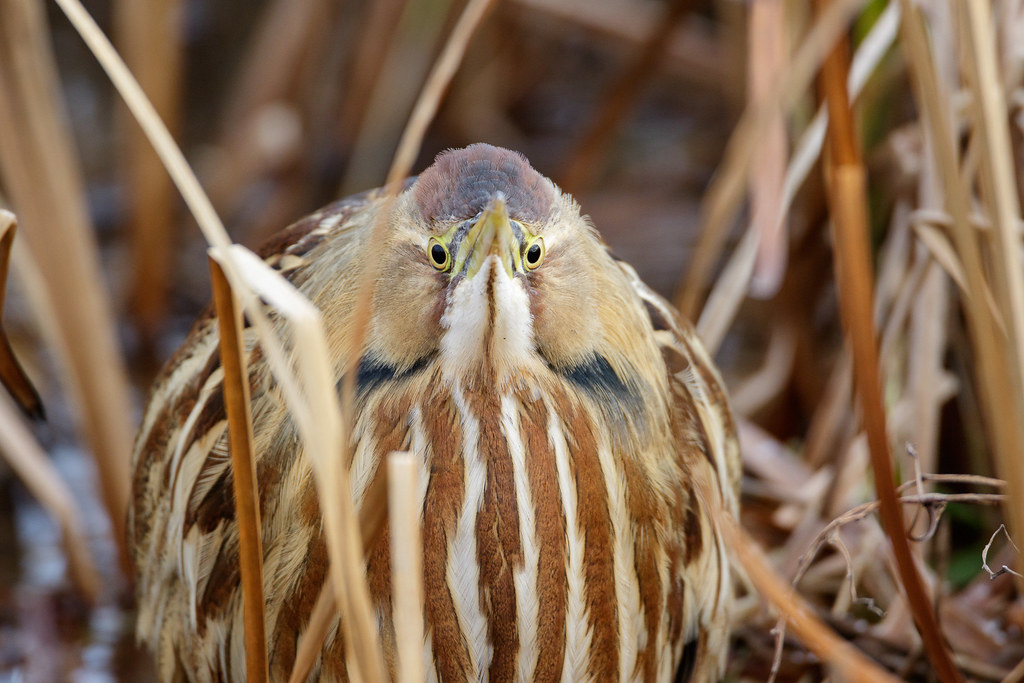
A close-up view of the face of an American bittern, taken on the auto tour at Ridgefield National Wildlife Refuge in Ridgefield, Washington on January 4, 2013. Original: _7D_1645.CR2

I was re-editing some photos to go along with a saguaro post and realized this bittern image wasn’t even online. The auto tour at Ridgefield was a magical place, you could shut your car off and sit in the rain and the cold and the wildlife would come right up to you.

📷: Canon 7D | Canon 500mm f/4 + 1.4X
🗓️: January 4, 2013

Who Can It Be Knocking At My Door?

An American bittern stand on ice and looks into tall grasses at Rest Lake on the Ridgefield National Wildlife Refuge auto tour in Ridgefield, Washington. Original: _MG_2137.CR2

As arctic conditions grip the desert with overnight lows in the 40’s and 50’s, a throwback to a cold New Year’s Day in 2011 when I was watching a bittern work a frozen channel on the auto tour at Ridgefield. Unfortunately for the vole living its best life in the tall grasses, a bittern neither knocks nor cares if you answer. In some ways they remind me of roadrunners here in the desert, both relentless hunters with diverse palettes relying on surprise, the bitterns via stealth, roadrunners via speed.

📷: Canon 7D | Canon 100-400mm
🗓️: January 1, 2011

There Are Predators and There Are Predators

A close-up of the yellow legs of an American bittern as it hides in the shallows of Rest Lake at Ridgefield National Wildlife Refuge in Ridgefield, Washington on December 25, 2011. Original: _MG_6943.cr2

We often think of predators as animals with sharp teeth and claws but I wonder if the owner of these yellow legs isn’t the creature that most haunts the nightmares of the fish and frogs and voles of Ridgefield. If you see these yellow kicks hiding in the shallows, best hope the bittern isn’t hungry.

The Winter Rain

Large water droplets bead up on the head and neck and shoulders of an American bittern at South Quigley Lake on the auto tour of the River S Unit of Ridgefield National Wildlife Refuge in Ridgefield, Washington in December 2009

On New Year’s Eve in 2009, snow still blanketed the ground but the more typical cold rain had returned, beading up on the head and neck and shoulders of an American bittern as it patrolled the edges of South Quigley Lake. I loved being at Ridgefield in the rain, sitting at one of my favorite spots on the auto tour with a bevy of towels strewn around the car to absorb the rain that would blow in. Your car acted as a blind so on days with poor weather and little traffic, as long as you sat quietly the animals would relax and often come quite close. This was one of two bitterns I was watching for a couple of hours that afternoon until the bewitching hour approached and I had to start the car to make it out before the gate closed.

Up & Up & Up

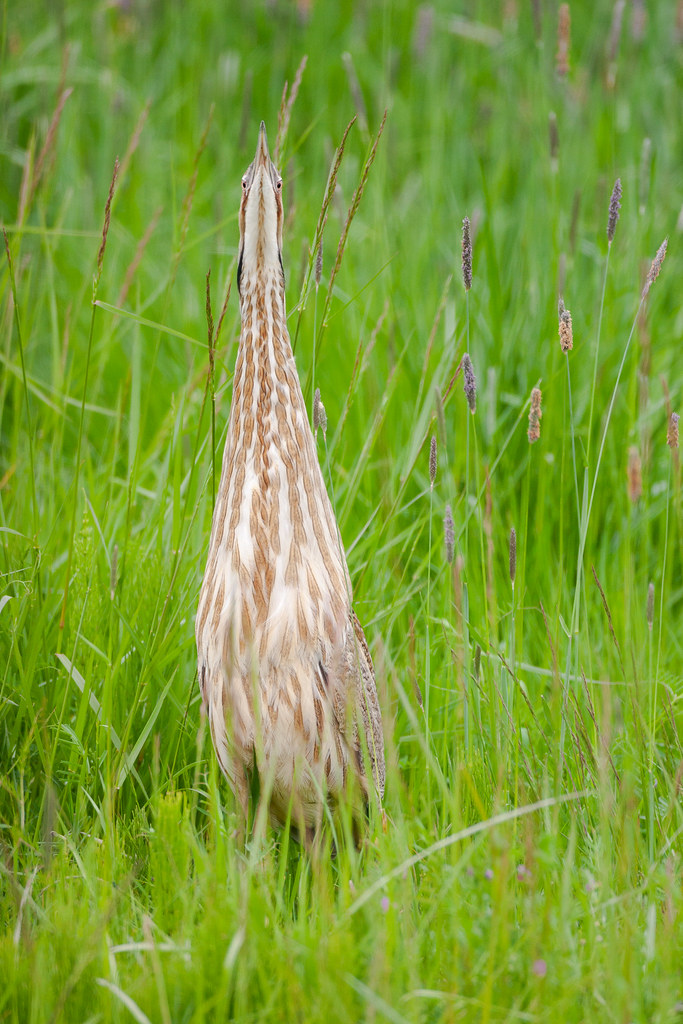
An American bittern stands with its next stretched out against a backdrop of green grasses at Ridgefield National Wildlife Refuge in Washington

Bitterns can look like a football with a head attached so it always amazed me when they’d stand and stretch their necks up, and up, and up. Useful for seeing over tall grasses and also as a defensive pose, I saw them do it multiple times when bald eagles soared high overhead, although the subterfuge worked best when the grasses were brown instead of green. I was never quite sure how they distinguished the distant eagles from other birds of prey but I did a quick check of the skies if a bittern I had been watching suddenly struck a thin vertical pose.

Whiteout

A juvenile red-tailed hawk sits in a meadow in heavy fog at Ridgefield National Wildlife Refuge in Washington

A juvenile red-tailed hawk sits in a meadow in heavy fog at Ridgefield National Wildlife Refuge in Washington. The telephoto lens is exaggerating the whiteout effect as it is picking up all the fog between my car and the distant hawk but it illustrates the point: for an animal that might normally hunt by soaring high above the meadow and looking for voles below, a thick fog changes the dynamic between predator and prey.

An American bittern stands on a shoreline in heavy fog at Ridgefield National Wildlife Refuge in Washington

The fog didn’t have such an impact on an American bittern stalking the shoreline that winter morning as it looked and listened for small creatures both on the land and in the water. Sometimes it hunted by slowly walking up and down the shoreline, sometimes by standing still, but in either case the thick fog would not obscure the prey such a short distance away.

An American bittern looking into the marsh in heavy fog at Ridgefield National Wildlife Refuge in Washington

Down Upon the Bittern’s Beak

Downy feathers cling to an American bittern's beak after a preening session

Downy feathers cling to an American bittern’s beak after a preening session on a rainy winter afternoon. This one was at South Quigley Lake at Ridgefield National Wildlife Refuge, my second favorite place to watch for bitterns on the refuge (and the first if there aren’t tall grasses along the final channel beside Rest Lake, like during the winter this was taken).