Surprise Ending

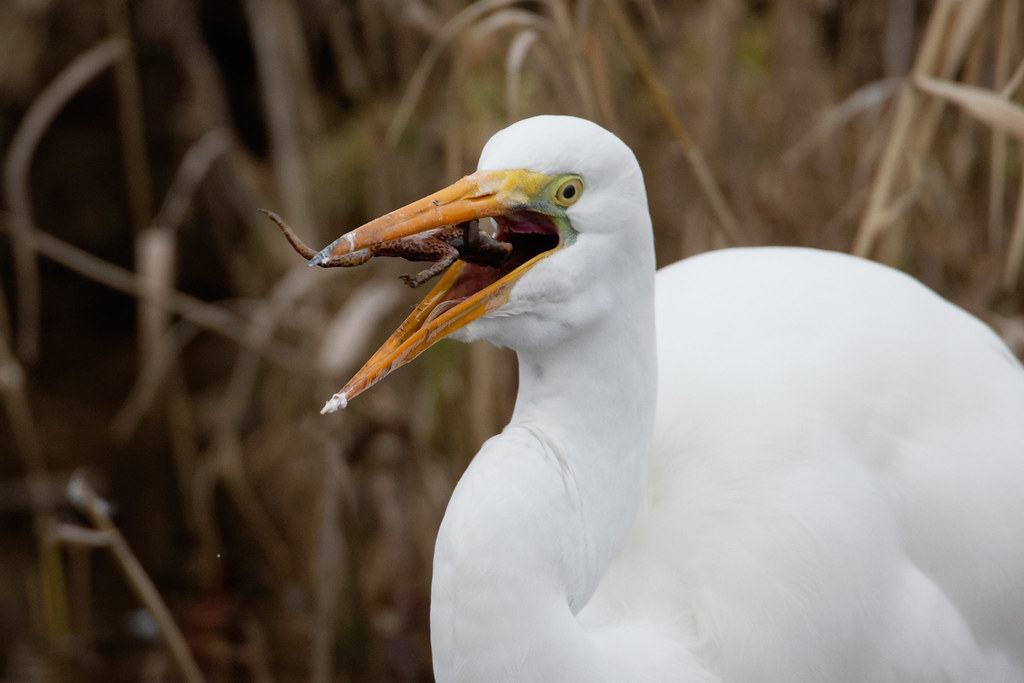
Close-up view of a great egret's face

I spent New Year’s Eve at Ridgefield from sunrise to sunset. It was sunny and cold throughout the day and the shallower ponds had partially frozen. Near the end of the day I was parked near the start of the auto tour so it would be easy to leave before the gate closed. A great egret was hunting bullfrogs in the shallow channel beside the road and I expected it would be my last wildlife sighting of the year. Not a bad way to end the year.

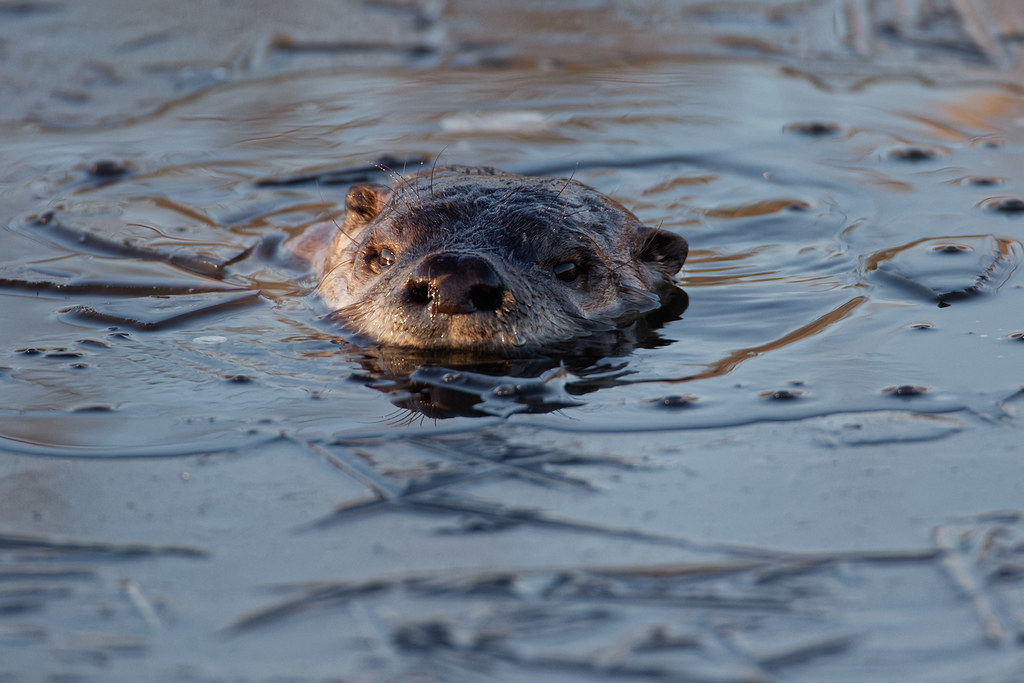
A river otter breaks through the ice so it can take a breath

But then I heard a loud crack in the ice and looked down to see that a river otter had punched though the ice to come up for air. It didn’t stay long before submerging and swimming out of sight, but it made me laugh, Ridgefield giving me one last surprise to close out the year.

Surprise Ending

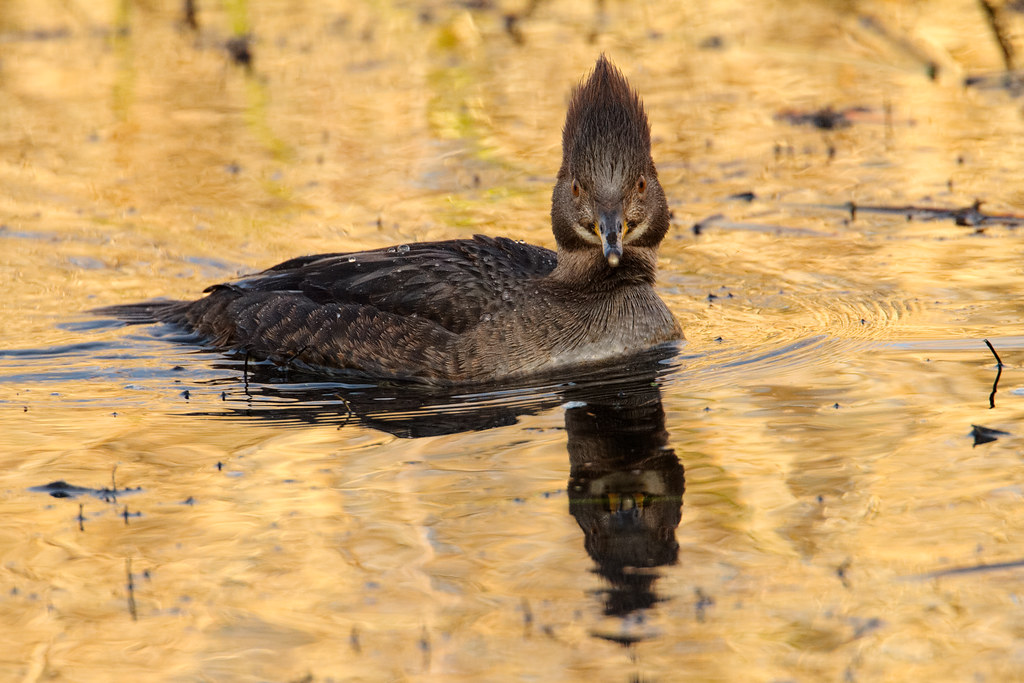
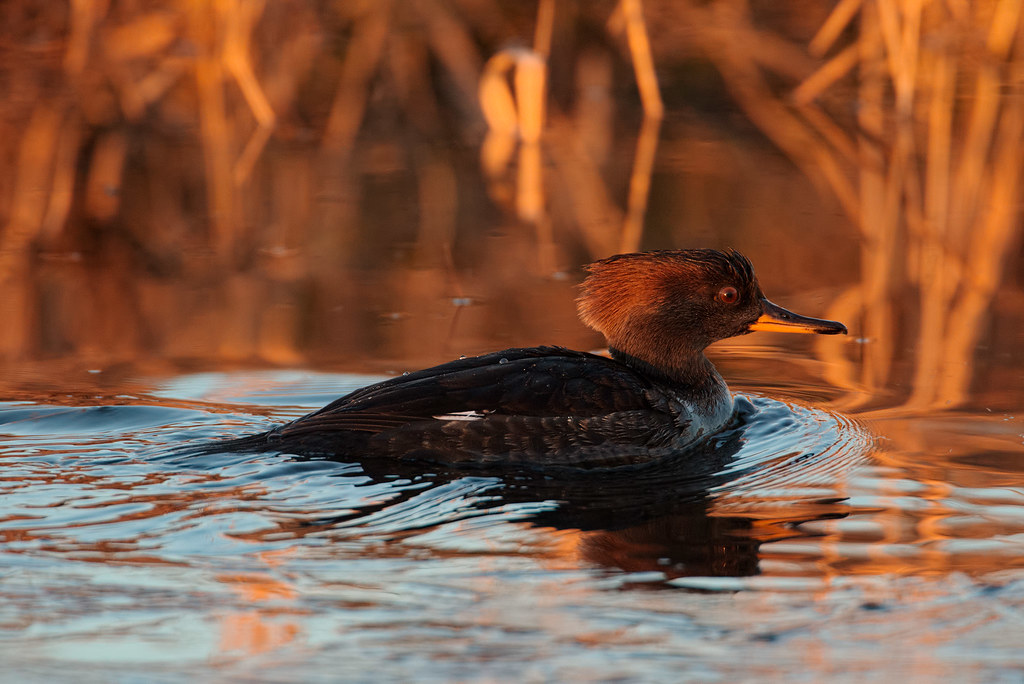
The egret had moved on, the otter had swum away, so I was about to pack up my camera for the trip home when a couple of hooded mergansers swam by in open water beside the ice, beautiful in the last light of the day. My goodness but the refuge was putting on a display. After a quick scan to make sure bigfoot wasn’t hiding in the bushes, I packed up my camera and headed home.

An End to Hibernation

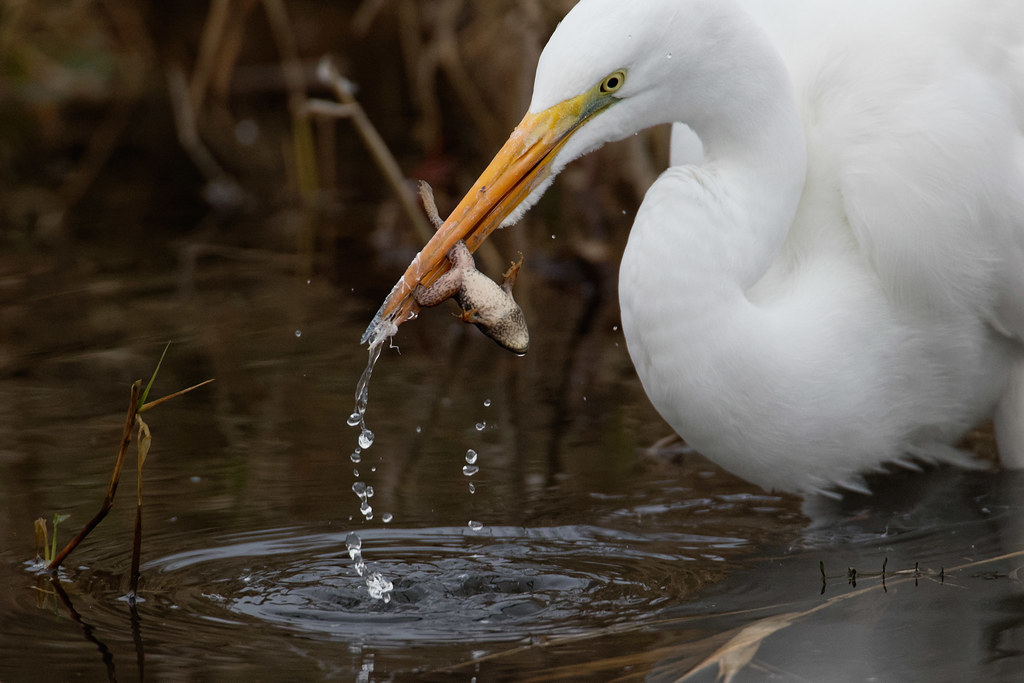
End of Hibernation: The Dunk

Bullfrogs hibernate during the winter so their metabolism slows significantly and they aren’t very active but they don’t bury themselves in the mud the way a turtle might. Many bullfrogs at Ridgefield found their hibernation cut short this winter by the herons and egrets and bitterns that worked the shallow channels and ponds of the refuge.

This egret in particular was just walking up and down one such channel, avoiding a great blue heron doing the same, striking at bullfrog after bullfrog, following a familiar process between catching the frog and eating it. First, the frog would be dunked quickly into the water, as shown above. Next, the egret would spin the frog rapidly, presumably causing massive internal injuries to the frog, as shown in the following two pictures. In the first picture, the egret has closed the nictitating membrane in its eyes, a transparent third eyelid that protects the eye from damage while still allowing the egret to see, as water spins off the frog and its clawed feet flail about, while in the second picture the membrane has been retracted.
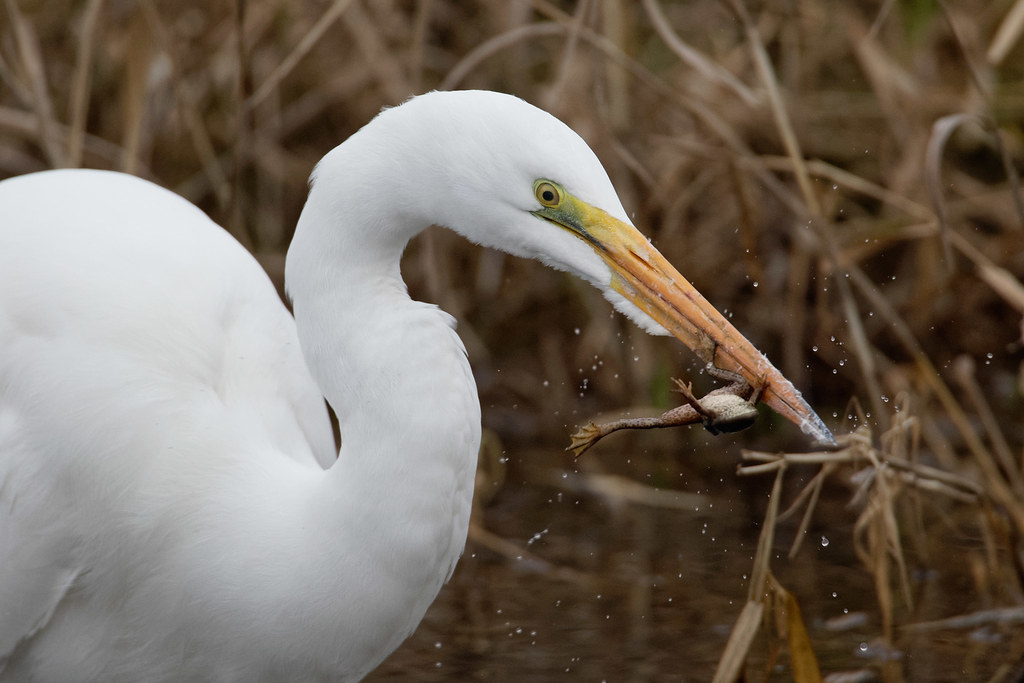
End of Hibernation: Spin Cycle No. 1

End of Hibernation: Spin Cycle No. 2

Then the egret would toss the frog into the air, catching it in a different place on its body, and either repeat the process again if it caught it by a leg, or perhaps crush it in its beak if it caught it by the body. This would happen multiple times until I gather the frog had died or given up fighting, although with the egret constantly keeping the frog moving it was hard to tell exactly when or if the frog itself stopped moving.

End of Hibernation: Throw & Catch

The final step was to position the frog head first in its beak and swallow it whole. Bullfrogs are voracious predators and, as they aren’t native to the area, have had a big impact on some of the other small creatures in the ponds and sloughs. However I’ve seen the bullfrogs themselves become prey for the larger predators of the refuge, including not just egrets and herons and bitterns but otters, raccoons, and grebes.
End of Hibernation: The End

Water

A great egret eats an American bullfrog in the rain at Ridgefield National Wildlife Refuge

In 2001 I bought what at the time was my most expensive lens, Canon’s 100-400mm lens. Since then it’s gone with me on every hike and nearly every trip and been one of my most treasured lenses. However the image stabilization system needs repair but I haven’t sent it in as I was hesitant to spend much money on a lens that could benefit from a modern re-design.

To my great delight, Canon finally brought out a new 100-400 lens and I pre-ordered the day of the announcement. It arrived on Friday so Saturday morning I opened it up and took it to my favorite refuge to try it out. One of the nice new features is that the lens has some weatherproofing, which I got to test with my very first pictures when I encountered this egret in the pouring rain. The egret was on the passenger’s side of the car so I slid over, stuck the lens out the window into the rain, and had just got the exposure and focus set when the egret struck into the water, pulling out this small bullfrog.

I meant to frame a little looser but in my haste to even get the shot I didn’t keep the camera quite level, so I rotated and cropped in post. Still I was pleased that with the zoom I was able to pull back and show a bit of the world these animals live in. The egret with its long featherless legs is built to wade in shallow water like this, able to hunt along the water’s edge, looking for frogs and fish in the water and frogs and voles on the land.

I’ve always loved photographing in the rain, especially to show how animals still have to go out into the rain to live their lives, and I’m thankful my favorite hiking lens now can as well.

Time to Say Goodbye

A juvenile great blue heron hunts for voles in a meadow on a Christmas afternoon

A juvenile great blue heron hunts for voles in a meadow on a Christmas afternoon. The direct light of the setting sun was now blocked by the distant hills so I took a few pictures in the fading light before heading for home. I had photographed this heron before and spent about 15 minutes with it on this occasion, so it felt comfortable enough to turn its back to me even at such a close distance.

Juvenile Attention

A close-up view of a juvenile great blue heron's face and beak

A juvenile great blue heron hunts in the meadow beside Bull Lake late on a sunny Christmas afternoon, one of the last shots I took after spending all day at the refuge. Initially it was farther off but as I sat quietly in the car (with the car shut off) it came quite close as it listened for voles moving beneath the grass.

Make a Joyful Noise

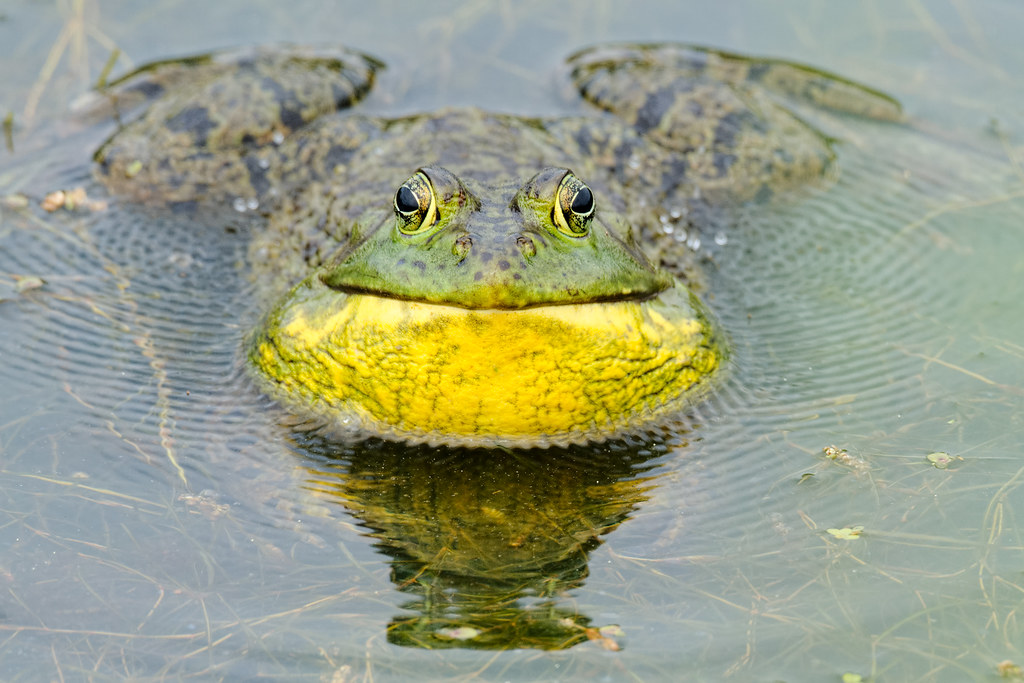
A male bullfrog croaks and creates ripples in the water

But let all who take refuge in you be glad; let them ever sing for joy.
Psalm 5:11

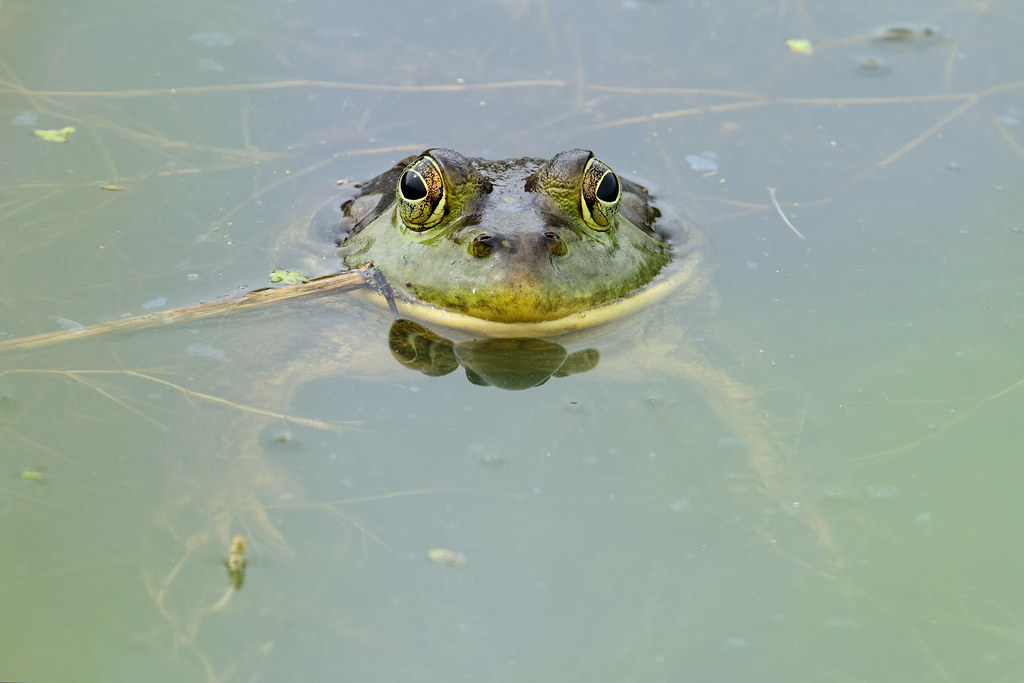
The bullfrogs were singing in rare form at the refuge this weekend. Breeding season was in full swing and the males were croaking and wrestling and leapfrogging each other, and a few lucky ones were mating with the females. They were in a channel beside Bull Lake so I had to shoot down on them between the tall grass. Between a gentle breeze that constantly moved the grass about and my temporary bout of photographic incompetence, it took me a while to settle in and find my way.

This male was one of my favorites. I wanted to catch the ripples made by his croaking but was a bit surprised that my favorite view of the ripples is before his throat fully expands. The problem was that by the time his throat is fully extended, the ripples interfered with each other as they bounced off his rear legs, breaking up the pattern.

Beautiful creature, this one. Beautiful.

A male bullfrog croaks and creates ripples in the water