A Gila woodpecker takes out a lump of poop from her nest, generated by her ever-hungry babies, a necessary cleanup the parents must occasionally do after bringing a steady stream of insects to feed the little ones. Taken in May on the Latigo Trail.
Tag: McDowell Sonoran Preserve
Performance Art
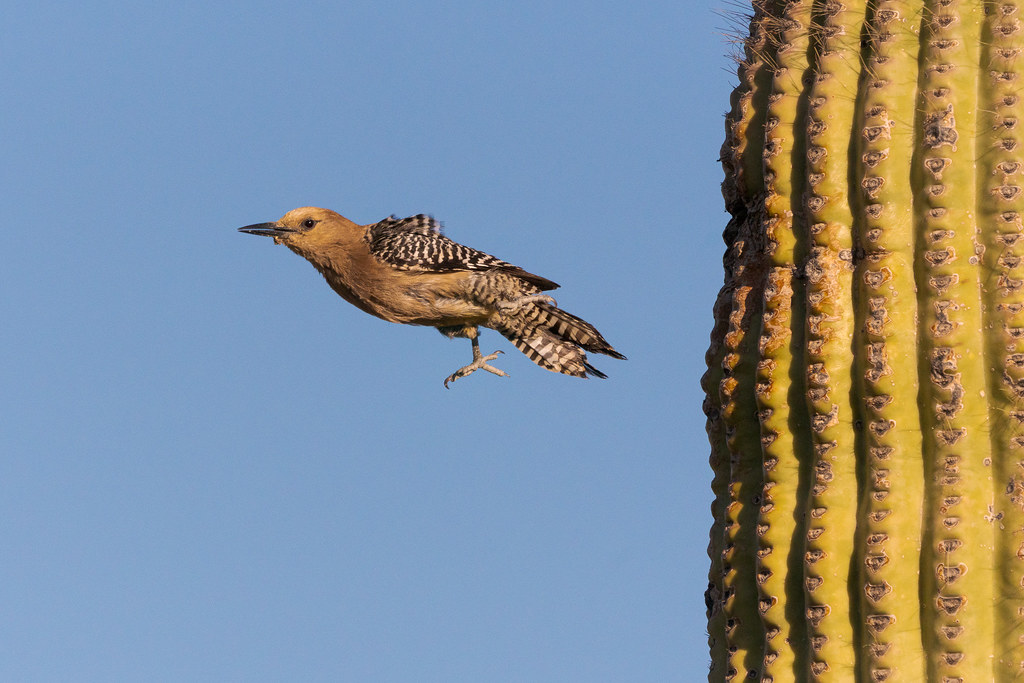
A female Gila woodpecker is for the briefest of moments in free fall after jumping from her nest in a saguaro. It took me a while to notice this behavior, everything happens so quickly when they enter and leave the nest, and took even longer before I could find the right conditions to photograph it. It looks rather unnatural when frozen in time, one foot still sticking out below her while her wings are tucked up tight, but the nest is high off the ground so even though the fall is brief she has plenty of time to put a little distance between herself and her sharp-spined home before throwing out her wings.
Brace For Impact
Yellow Belly
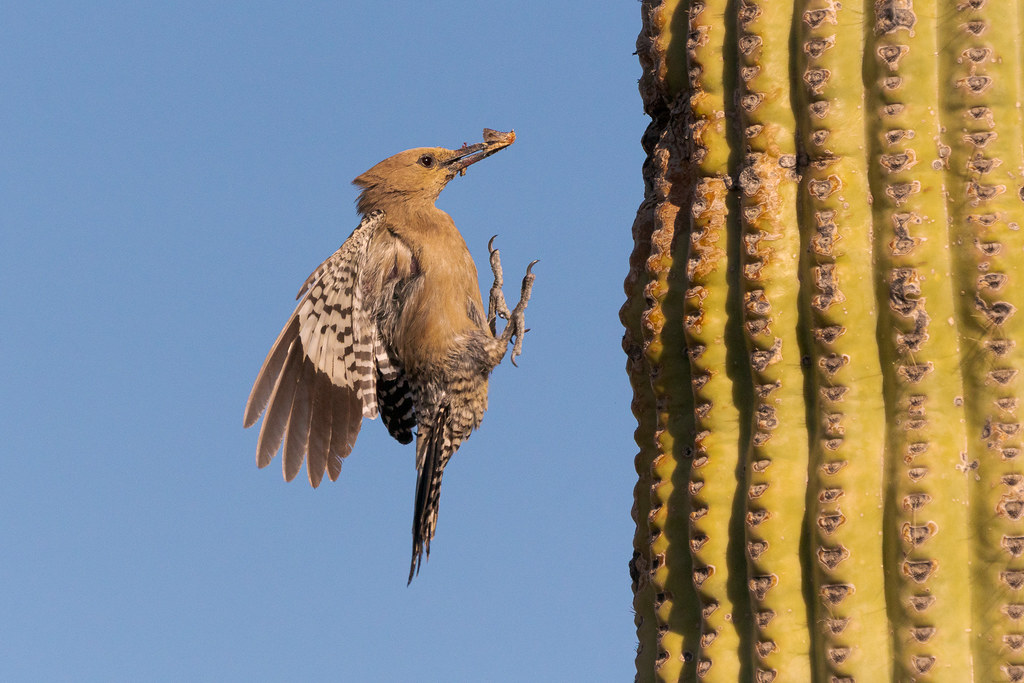
A Gila woodpecker lands at his nest in a saguaro, carrying an insect (maybe a grasshopper?) in his beak, about to feed his hungry babies inside. I love their yellow bellies, both males and females have them. There are a handful in our backyard as I write this from the porch but this flying fellow is from the spring, taken on the Latigo Trail.
Morning Makeup
I took a couple of days off work last week but it wasn’t to do anything fun, I was laid low by a cold and didn’t feel much like getting off the couch. I was watching some Gila woodpeckers in the backyard with my binoculars and something felt off, I couldn’t figure out what at first until I realized their faces were the same color as their heads. I had been editing pictures from the spring, like this male holding a freshly caught moth, and was used to seeing them with their faces dusted yellow from the pollen of saguaro flowers.
Home in the Heights
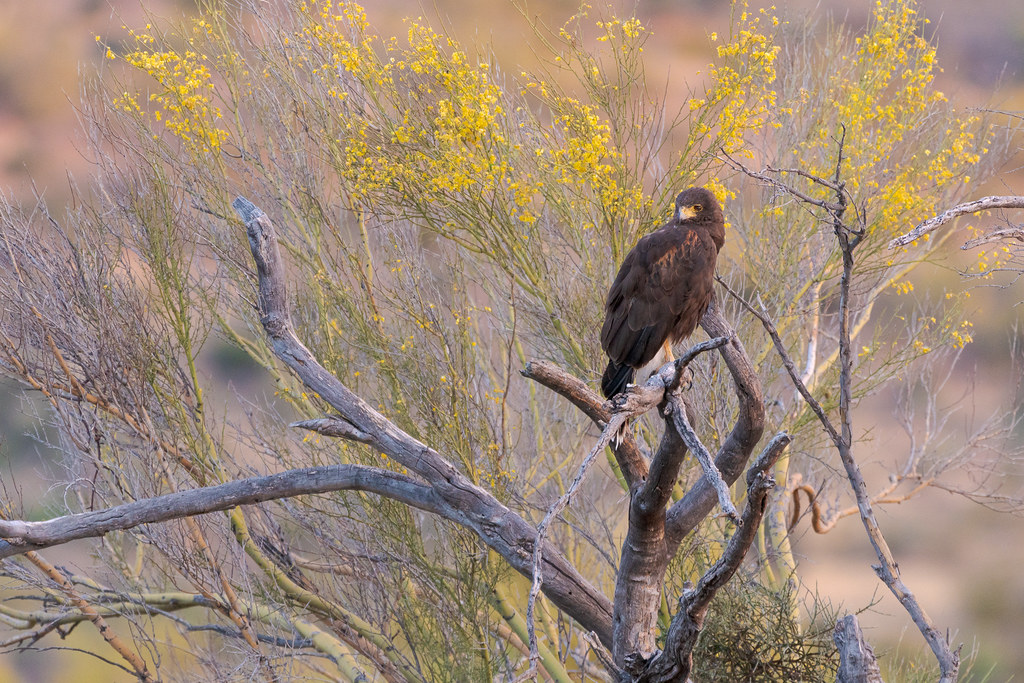
When I hiked to this Harris’s hawk nest back in June I noticed one of the chicks had fledged and this one was getting close, practicing by hopping from one arm of the saguaro to another, already at it when I arrived before the sun was even up, with the adults occasionally bringing in something to eat. I nicknamed it Trixie as it would eat just a few bites before returning to flight practice, then go back for a few bites, much like our youngest cat who likes to nibble at her food then play play play, repeat repeat repeat.
In the low light before sunrise, knowing it would be hard to freeze the motion of the young bird constantly on the move, I did what I had been meaning to do on several previous visits, zoom out to give a view of the saguaro holding the nest. The cactus doesn’t have the classic look of the tall central spire but does have an ample space to hold the nest. If you look at the teddy bear cholla in front of the saguaro (the light colored cholla in between the darker buckhorn cholla) there’s a nest of a smaller bird.
I was rather surprised when we moved here to see so many birds nesting in the various types of cactus as it seemed a rather inhospitable place to build a home. But it must give them a fair amount of protection from ground predators that can climb trees but can’t deal with the cactus spines, but if a fledgling falls from the nest it doesn’t have far to fall. Contrast that with the red-tailed hawk’s nest I saw up on the canyon walls, where a slip off the narrow ledge would result in a deadly fall, or the bald eagle’s nest in Washington that was high up in a massive tree.
I had intended to hike past this nest on the Chuckwagon Trail and then take a familiar loop back to the car, but after spending the first part of the morning watching this young bird building its agility and its confidence, I got distracted by a handful of lizards in a rock formation just up the trail, so with the morning wearing on I just took the Chuckwagon back to the trailhead. Although I didn’t get as much exercise as intended it was a positive result, Ellie had died two months earlier and it was a sign of how much I had healed that I could sit still for so long, an impossibility in the weeks after she died.

Soft
Shining Robes
The name “Phainopepla” (pronounced fay-no-PEP-la) comes from the Greek for “shining robe,” a fitting characterization of the shiny black plumage of the males, at least on a sunny day. However on this overcast morning last December the soft diffuse light showed off the details in his feathers. They’ve been gone all summer but I gather will be back in the next month or so. We didn’t see them at the rental house but will see them here, though this lovely fellow was on the nearby Marcus Landslide Trail.
Bed of Nails
The Lizard Rocks
I nicknamed this jumble of rocks The Lizard Rocks when I first saw them, though I saw no lizards there. It just seemed like they should be there, though I was new to Arizona and not really sure where lizards would want to live. They aren’t large rocks and it’s not a large formation, I suppose my initial fascination came from it being a nice place on a favorite trail to stop for a drink as it’s nestled into a kink on the trail with room to step out of the unsighted path of cyclists and horses. It took me a while but I did eventually start seeing them, on this spring morning I saw at least six lizards from three different species. This ornate tree lizard was the first I saw, I took some closeups but also pulled back to give a bit of flavor of the place he calls home.