First of the West

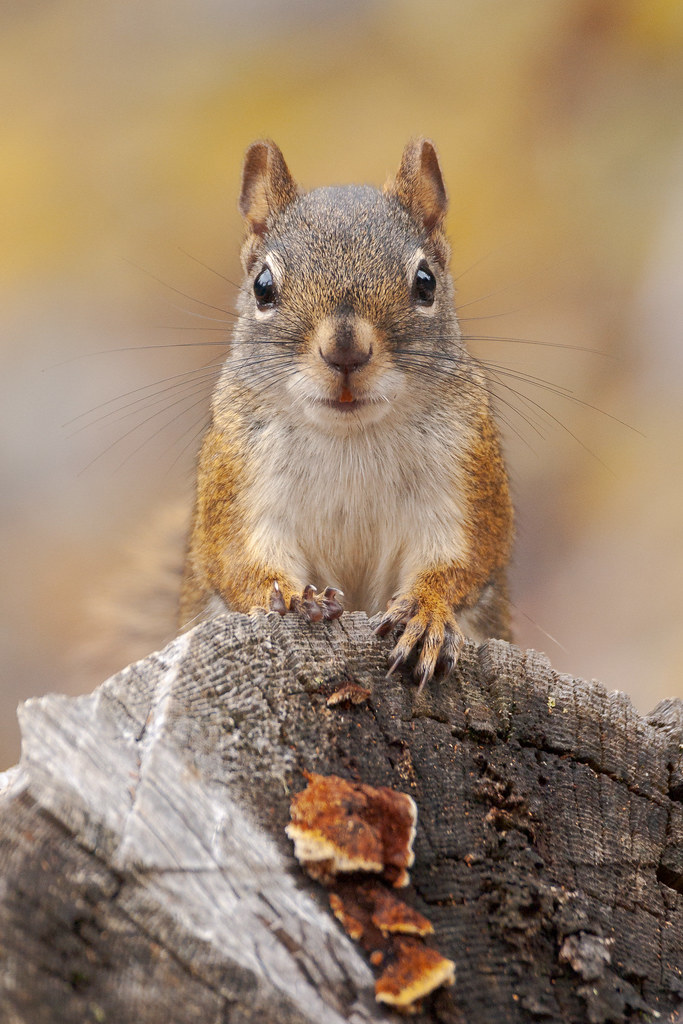
A red squirrel sits on a tree branch beside Shoshone Lake on the Shoshone Lake Trail at Yellowstone National Park

I was first exposed to the noisy chatter of red squirrels while hiking in West Virginia when I lived back east. I would see them a few times more before moving to Oregon, where I wouldn’t see or hear them again until my first real trip to Yellowstone in 2004. On my first hike in my first few hours in the park, I came across this red squirrel near the beach of Shoshone Lake on the Shoshone Lake Trail. I’ve since seen them quite a bit in the park, but good pictures usually elude me, so this first picture remains my favorite of my pictures of red squirrels in Yellowstone.

Bottom of the Pecking Order

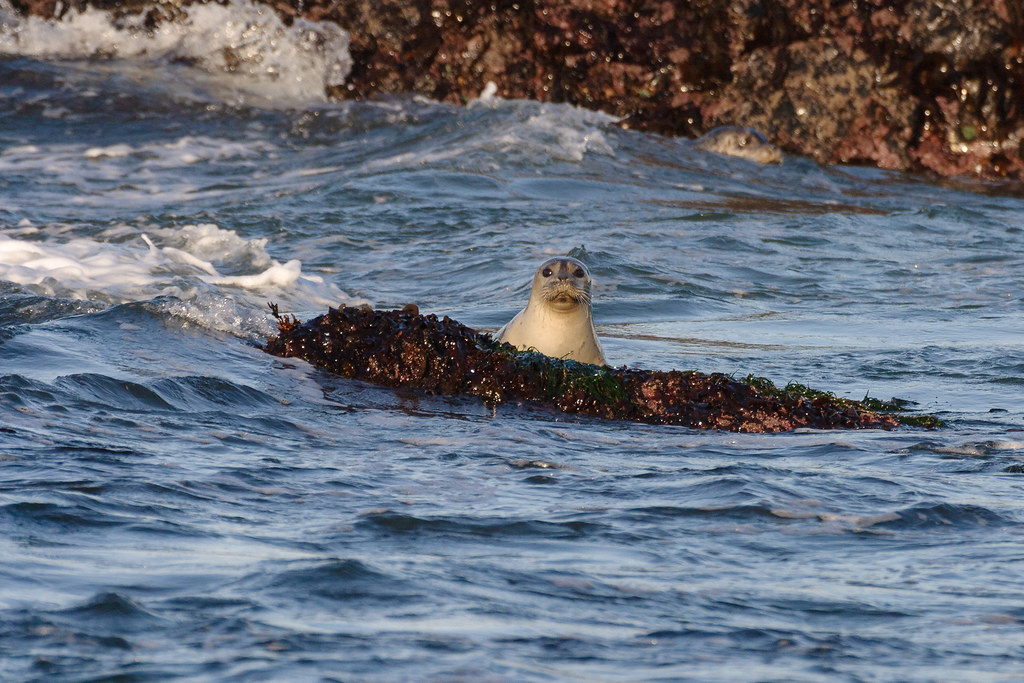
A young harbor seal perches on a rock near Cobble Beach at Yaquina Head Outstanding Natural Area in Newport, Oregon on March 14, 2005. Original: CRW_6389.crw

This young seal was at the bottom of the pecking order when it came to places to perch and rest, occupying the first place to get covered by the sea as the tide rolled in. This particular wave though didn’t dislodge the little one and it was able to hold its position until the rock was submerged. When I was growing up we had our own bottom rung: the dreaded middle seat in the station wagon, the one with the big transmission hump in the floor where your legs should have been.

A young harbor seal gets hit by a wave near Cobble Beach at Yaquina Head Outstanding Natural Area in Newport, Oregon on March 14, 2005. Original: CRW_6390.crw

Waves swirl around a young harbor seal as it perches on a rock near Cobble Beach at Yaquina Head Outstanding Natural Area in Newport, Oregon on March 14, 2005. Original: CRW_6391.crw

Boomers

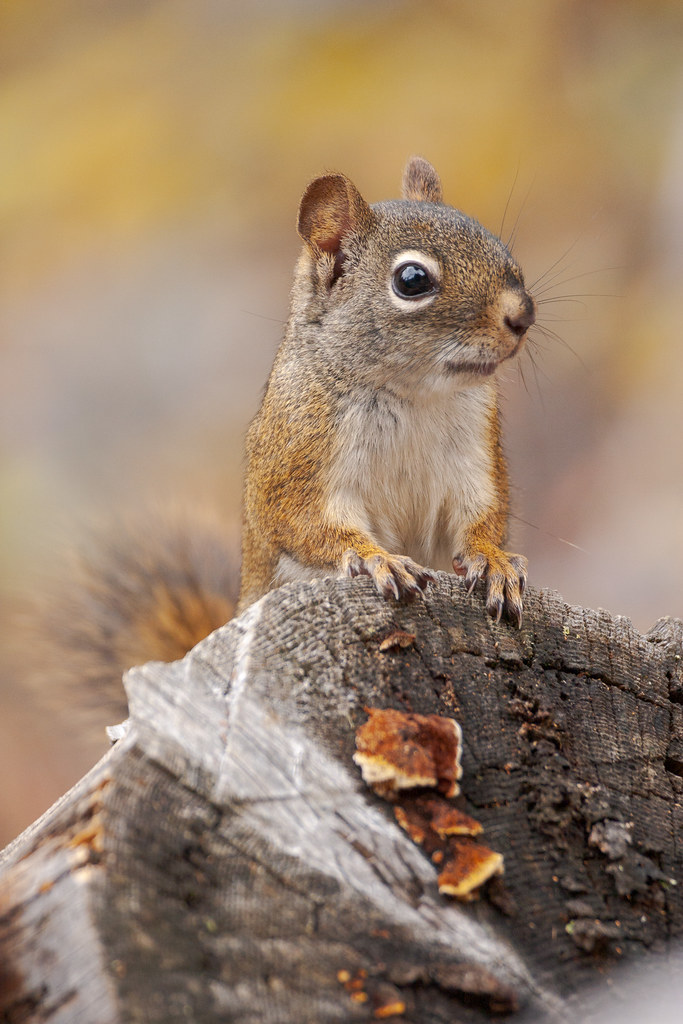
A red squirrel looks directly at me from a downed tree on the trail to Death Canyon at Grand Teton National Park in Wyoming

Red squirrels are known as boomers in some areas, a name I love although I don’t know its origin — these little chatterboxes certainly aren’t quiet, but boomy isn’t quite how I’d describe their shrill alarm calls.

I’ve toyed with the idea of having a series of “Greatest Hiking Days Ever” posts that trace in pictures and words my favorite days on the trails from start to finish, and if I do, September 27, 2005 would be a fine place to start. It started with a lovely sunrise in the Tetons, then black bears dining on huckleberries amidst the fall colors, followed by a wonderful hike into Death Canyon where I met this red squirrel and chipmunks and blacktails and even my first pikas, and ended with a moose family in Willow Flats.

There are many things to love in parks as spectacular as Yellowstone and the Tetons, and perhaps squirrels shouldn’t be so high on my list, but I love the chatter and scoldings that rain down from the trees as I hike the forested trails. I heard almost no squirrels on my last trip there a couple of years ago, a personal anecdote in support of the controversial theory of global quieting. I’m not in a position to say if humans are playing a role or if the earth is naturally cycling from noisy to quiet, just that I missed my treetop companions and I hope they are there to welcome me on my next return.

A red squirrel turns to the side as it looks out from a downed tree on the trail to Death Canyon at Grand Teton National Park in Wyoming

Gold Reward

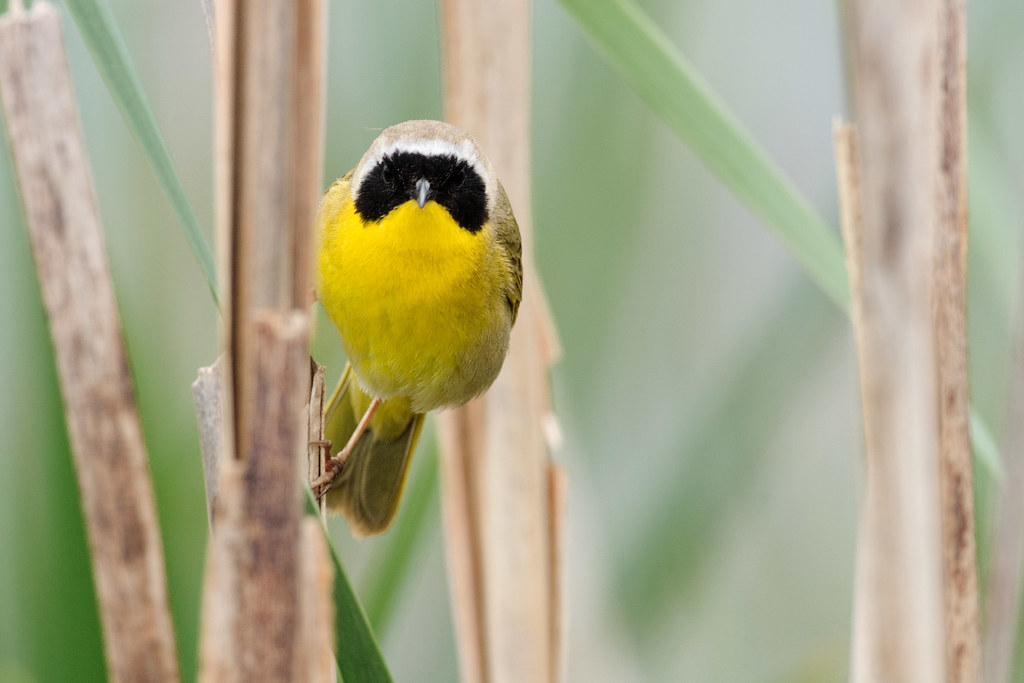
A common yellowthroat perches in cattails at Ridgefield National Wildlife Refuge

The yellowthroats weren’t staying still for very long, so even if I got a clear view of one I had to move quickly. For a few seconds this male flew into the middle of the cattails, not so high as to draw the ire of the blackbirds. His eye was obscured by the cattail in front nearly the entire time, but he stuck his head out far enough for me to get one picture before he flew off.

My favorite picture of the day.

Baby Please Don’t Go

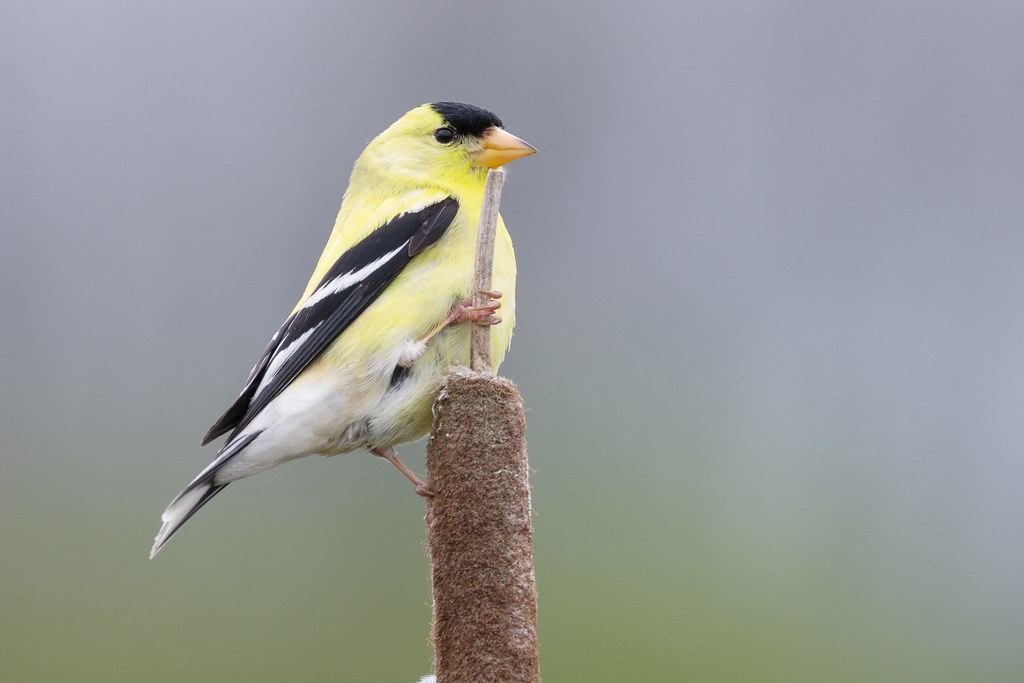
A male American goldfinch perches on a cattail at Ridgefield National Wildlife Refuge

I sat in my car at Ridgefield for hours hoping in vain to photograph migrating common yellowthroats. I was getting ready to leave when this male goldfinch and a female flew into the cattails. I only had time for a few quick pictures of the male before a territorial red-winged blackbird flew in to chase off the intruders. So happy to get a look, however brief, of goldfinches I decided to stick around a while longer and was rewarded with nice views of a male yellowthroat as well.

Oh Ridgefield!

A common yellowthroat looks out from a patch of cattails at Ridgefield National Wildlife Refuge

I got up at 5am this morning with yellow on my mind.

Like last week, I hoped to photograph yellow-headed blackbirds up at Ridgefield National Wildlife Refuge. However, the yellowheads were staying more in the interior of the marsh this week. I can’t say that I blame them, last week the red-winged blackbirds were harassing them a bit but this week they would mob the yellowheads mercilessly every time they came to the edge.

Even so, my morning did turn out to be about yellow — not from blackbirds but yellowthroats and goldfinches. After spending six hours at the refuge last week, today I stayed for ten hours. I would have stayed longer but the weather was supposed to be sunny and I had only played to stay for a couple of hours and hadn’t brought enough food and water.

Remind me to ignore the weatherman next time.

I took far fewer pictures than last week but my quarry was more elusive. The yellowthroats were staying mostly out of sight, and when they did pop up to sing they were either chased by the redwings or by other competing yellowthroats. I was ready to call it a day and about to start the car to leave when a goldfinch popped into view. That convinced me to wait a while longer but again was ready to leave when this male yellowthroat finally appeared.

I wish the out-of-focus cattail wasn’t in front of the cattail that he is actually clinging to, but I still think it’s a cute picture. I got a few others I was happy with so stay tuned for those, plus a few goldfinch pictures.

Blackbird

A male red-winged blackbird perches on a cattail at Ridgefield National Wildlife Refuge

I got up early this weekend hoping to see blackbirds at Ridgefield and wasn’t disappointed, both redwings and yellowheads were active near the edge of South Quigley Lake. My yellowhead pictures aren’t as good as previous years but it was still nice to see them singing and chasing each other around. I didn’t catch this male redwing singing but I love the colors of the early morning light. Song and savannah sparrows were also out and about and singing their hearts out, those pictures are yet to come.

Our Most Beautiful Protector

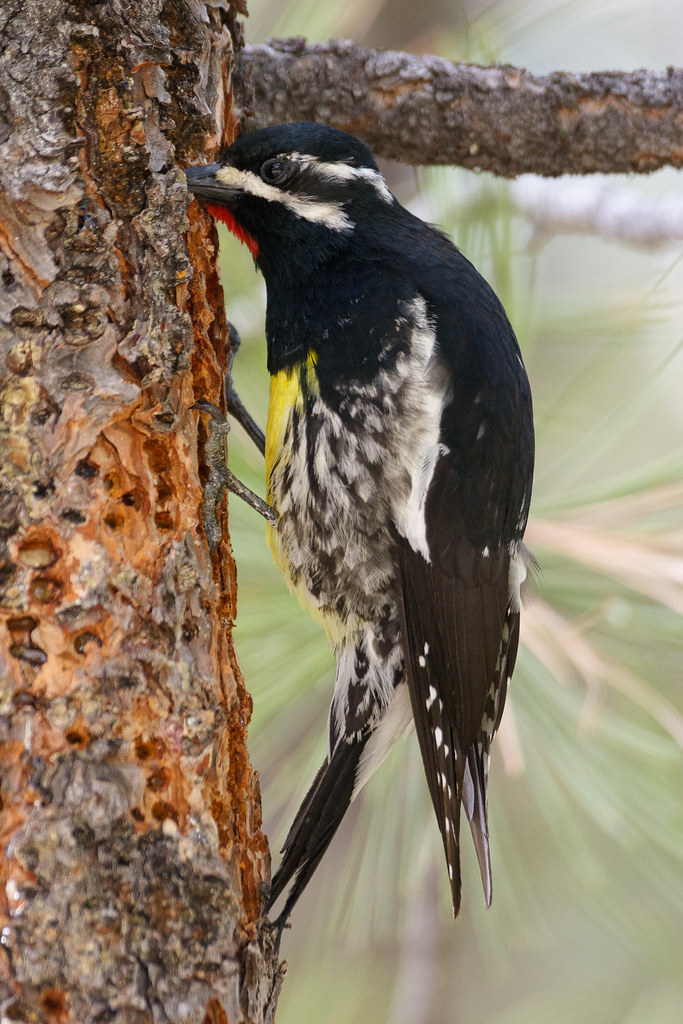
A male Williamson's sapsucker drills into a tree at the trailhead of the Cerro Grande Trail in Bandelier National Monument in Los Alamos, New Mexico in May 2007. Original: _MG_7695.cr2

On our first trip to New Mexico, my wife and I spent our first day at Bandelier National Monument. Most of the day we wandered about the cliff dwellings built by the ancestral Pueblo, even putting aside our fear of heights to climb the wooden ladders to a kiva high in the cliffs.

We still had enough time at the end of the day to wander up to the western edge of the park and do a little hiking on the Cerro Grande trail. At the trailhead parking lot, this sapsucker flew up into a tree right next to the wooden fence. The tree was obviously a favorite as it had drilled a bunch of irregular holes on this side of the tree and a regular patchwork of squares on the other side.

It was my first time to ever see this sapsucker, a beautiful little jewel, and I was thrilled to be only a few feet away and watch it work the tree for sap. While we were watching, we heard a loud crashing sound a short ways away in the forest. As we looked up, a tree came crashing down across the trail ahead of us, unusual given the lack of wind. If we hadn’t stopped to watch the sapsucker we might have been on the trail when the tree came down, so this little bird became not only one of my favorite wildlife encounters from the trip but perhaps our most beautiful protector.

Hard To Say Goodbye

A chipmunk perches on a rock with its tail sticking straight out behind it on the trail to Death Canyon in Grand Teton National Park in Wyoming

I grew up in the eastern part of the United States. In the deciduous forests there, eastern gray squirrels and eastern chipmunks are your frequent hiking partners. While the Northwest has many things to offer, one thing I miss is the squirrels and chipmunks. Not that we don’t have them here, just not in the numbers I’d prefer. So it shouldn’t come as a surprise that even in parks as magnificent as the Tetons and Yellowstone, I’ll photograph just about every squirrel and chipmunk I come across — which is why no one likes to hike with me. And God help you if I see a newt.

The chipmunks in the Tetons and Yellowstone are the yellow-pine chipmunk, the Uinta chipmunk, and the least chipmunk, similar but different species to the eastern chipmunks of my youth and the Townsend’s chipmunks of my not-quite-youth.