Raindrops

Raindrops

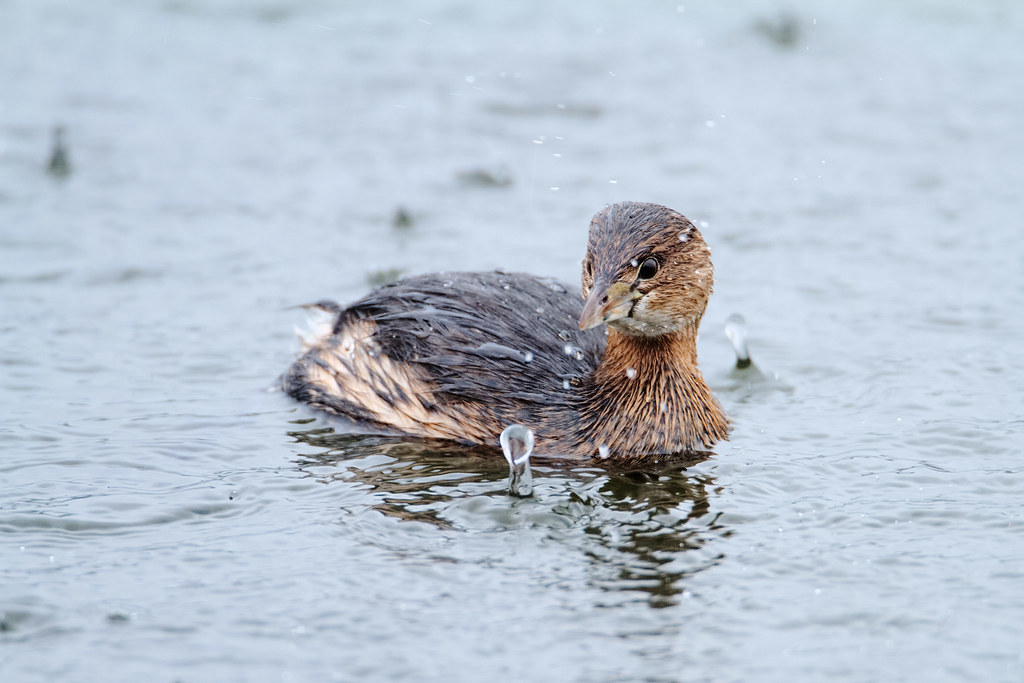
I spent about 20 minutes watching this American bittern in the pouring rain on Christmas afternoon of 2012. I’ve photographed bitterns many times on the auto tour and knew to approach slowly and shut off the car once I got close. It was my first time out in my new car but I treated it the same as the old, I rolled down the window and placed some old towels around the opening to absorb the rain. The bittern wasn’t actively hunting so the water accumulated in giant drops on its head.

The peace and quiet ended when a diesel pickup drove up and idled beside me. The bittern slowly turned around and disappeared into the marsh but I was very thankful for our time together, bitterns are one of my favorite subjects and it was a lovely way to end the day.

Redtail Rain

Redtail Rain

I like to spend each Christmas morning at Ridgefield and in 2012 kept the tradition by making my first visit to the refuge in many months. It poured as I drove out in the dark so I was thankful to be in my new Subaru XV Crosstrek as it handles the rain much better than my previous car. The young redtails at the refuge sometimes hang out on the signs at the edge of the meadow and if you’re quiet, will often let you drive close and watch to your heart’s content. This redtail was soaked through and through and gave me good looks at both its front and back as it kept its eye out for voles in the meadow, and when it turned its head just right let me take a self-portrait of the new car (you can see it reflected in the hawk’s eye).

High Hopes

Crosstrek Christmas

For a car to work as my daily driver, it needs to do well in two situations:

  1. My commute to work
  2. The auto tour at Ridgefield National Wildlife Refuge

I’m in the midst of a long vacation so I (thankfully) haven’t had the chance to test our new Crosstrek on the work commute, but Christmas was lining up to be my first chance to test it at Ridgefield. It’s become a bit of a tradition for me to go to Ridgefield first thing on Christmas morning as sometimes I practically have the refuge to myself, a nice time for quiet contemplation during a hectic time of the year.

Late on Christmas Eve after my wife had gone to bed I went out into the garage and just looked at the car for a while. I was nervous, for the next day would prove whether my high hopes for this car would pan out at the refuge. I sat in it for a while and read the owner’s manual enough until I figured out how to quiet the beeps when you lock the car. My nerves settled, I headed up to bed and set my alarm to wake me before sunrise.

I love photographing in the rain and Christmas delivered the wet in abundance as I drove in the dark to the refuge, giving me a quick feel for how the little Subaru would handle the heavy rain compared to its bigger sibling (thankfully, it handled the soaked streets and big puddles quite well, I was thankful not to be in the Civic).

I was relieved to see the car did well along the auto tour too (the icing on the cake would have been if it had been a hybrid so I could drive more quietly around the refuge, but it was not to be). At this time of year you can’t get out of the car except in the parking lots, so I took a quick picture beside the sign in the entrance lot.

I’m definitely still in the honeymoon phase but so far I’m just loving this little car.

I’ve been back to the refuge and it’s gravel road a few times since Christmas, each time in the rain, and it’s starting to feel less and less like someone else’s car and more and more like mine. But she’s not quite as white as she used to be.

Lifer

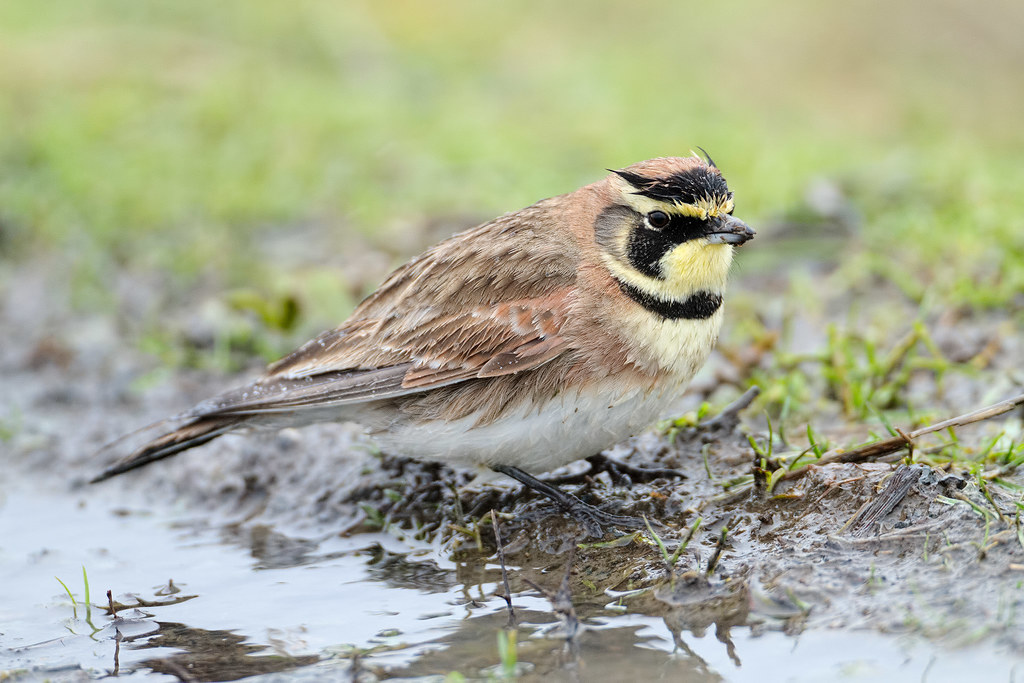
A male horned lark

During the winter horned larks can be found in large numbers in the Northwest, but mostly on the eastern side of the Cascades. There are a few resident populations on the western side where I live but I had never seen a horned lark until this January when I found a male foraging near Schwartz Lake at Ridgefield.

I use Northwest Birds in Winter by Alan Contreras when I want to get more specific info on the distribution of one of our birds during the winter than you can get out of a general purpose field guide. I bought my copy in 1997, about a year after I moved here, when I met Alan at an Audubon event and he signed my copy. It’s definitely not a field guide and not useful for identifying birds, but a nice complement to my army of guides when I want to dig a little deeper.

A close-up view of a male horned lark

Disturbance

A young bald eagle takes to the skies

This young bald eagle was perched on a tree overlooking Canvasback Lake, watching the waterfowl below, when it suddenly took to the skies. Normally I would have liked more empty sky in the upper left corner of the picture but the eagle bolted with no warning, disturbed by the sharp retort of a shotgun blast, so I had no time to properly compose the shot. The birds aren’t normally so perturbed by the blasts, but I do prefer the off-days during duck hunting season, not because I have a problem with hunting per se but because I prefer the quiet.