
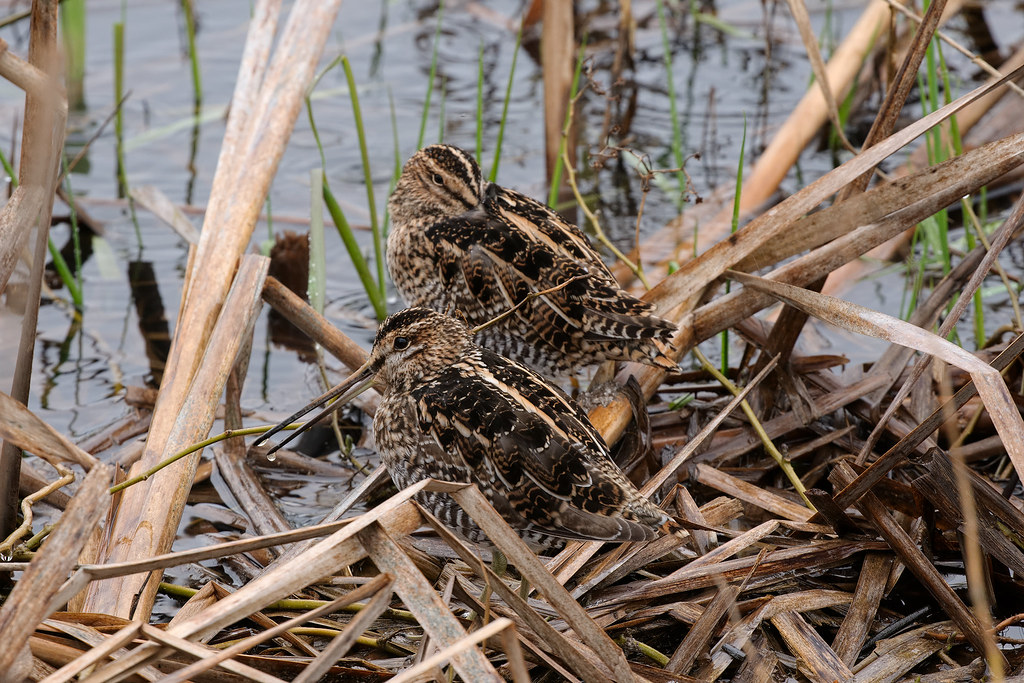
A Wilson’s snipe sings as the rain pours down at South Quigley Lake.
Why so eager to sing little one? Ah, you’re in love.

Scratcher of heads, rubber of bellies
A Wilson’s snipe sings as the rain pours down at South Quigley Lake.
Why so eager to sing little one? Ah, you’re in love.

This bald eagle seems to be looking accusingly at me as the rain pours down at Rest Lake in Ridgefield National Wildlife Refuge. It was a cool and wet spring morning after a cool and wet (and occasionally snowy) winter. Fair enough, I do love the rain and get a little cranky when it’s been sunny too many days in a row (such as today, as we enter another heat wave in May. May! It’s still spring!).
This is another picture where I took 4K video at the same time and the video gives a different feel to the photo and the moment it freezes in time. You can really see the rain hitting the water (and hear it hitting the car) in the video, as well as the current pushing the water past the eagle’s feet. And perhaps most importantly you can see that the eagle almost never looks in my direction, it was much more concerned about what was happening in the marsh, which is as it should be.
But in the photo, it’s gaze is fixed on me forever.

A Columbian white-tailed fawn enjoys its breakfast while sitting in a meadow on a rainy spring morning at Ridgefield National Wildlife Refuge. I got some 4K video of it too, it’s hard to see the rain in the video with the slower shutter speed but you can certainly hear it pounding down, and you can see the deer’s eating motion as it occasionally stops eating to listen. I’ll post the video once I learn how to edit it.

A Wilson’s snipe takes a rest on a bed of reeds on a rainy spring afternoon.

The water levels at Ridgefield National Wildlife Refuge are managed to mimic the seasonal flooding from the Columbia River in the days before the dams. But this flooded field comes courtesy of an unusually wet winter, even for the Pacific Northwest. The fawn is a Columbian whitetail, born to one of the does that was transplanted in the third wave of relocations.

The green tags in this rain-soaked doe’s ears suggest she was part of the third wave of Columbian white-tailed deer that were captured at Julia Butler Hansen National Wildlife Refuge and brought to Ridgefield National Wildlife Refuge. She was hanging out with a group of other does from that transfer, and more importantly, their fawns, part of the reason their status has improved from endangered to threatened.

When I visited Ridgefield a week ago I decided to only shoot with the new Sony camera and the adapter that lets me attach my Canon telephotos. I was expecting to have to rely on manual focus but the autofocus did work sometimes, although not consistently enough for this to be a combination I’ll use often for photos. For these shots I used manual focus, although I was still learning how to do it. I’d normally like a little more depth of field in a shot like this, especially to keep more of the pouring rain in focus, but by shooting wide open I was able to take more of an abstract and turn the grass that surrounded the hunting heron into a sea of green.
With the heron standing tall, you get more of a sense of the large meadow it was hunting in. I had no idea herons hunted in meadows until I moved to the Northwest, but all the voles that live here are well aware.
I didn’t have time to take any 4K videos of this heron, it struck into the ground and walked off when it came up empty, but I did take a few videos of some animals sitting in the pouring rain, including a bald eagle, a white-tailed deer, and some snipe. I’ve never edited video but I’ll see if I can learn enough to put a few clips up in the next month or so.
📷: Sony A6500 | Canon 500mm | Canon 1.4X
🗓️: March 26, 2017

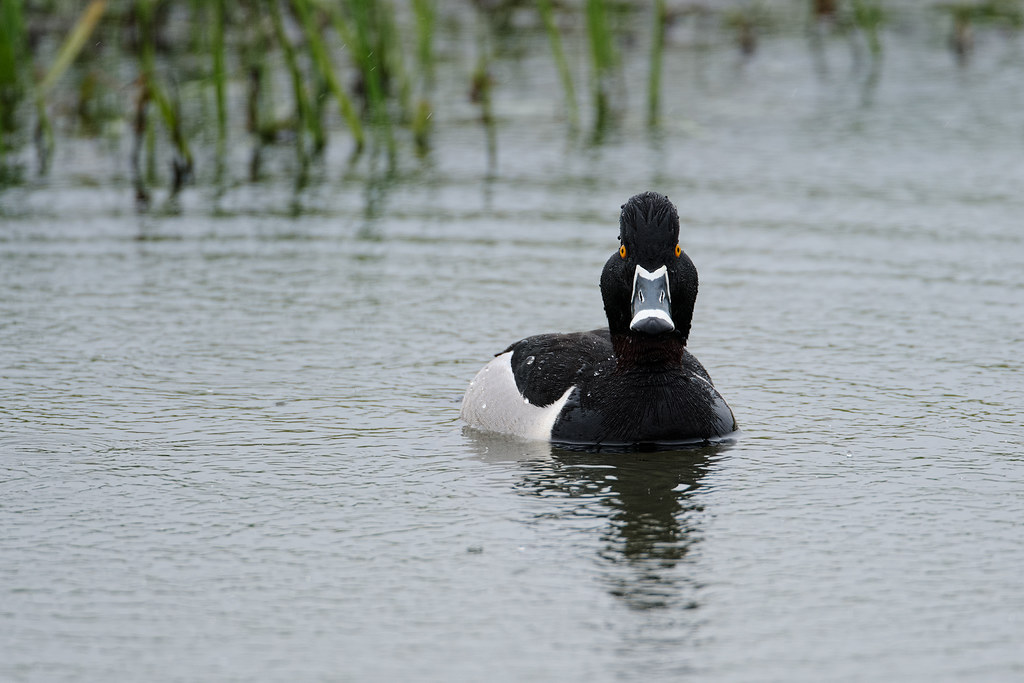
A ring-necked duck gives me a quick look before resuming his feeding on a rainy March morning.
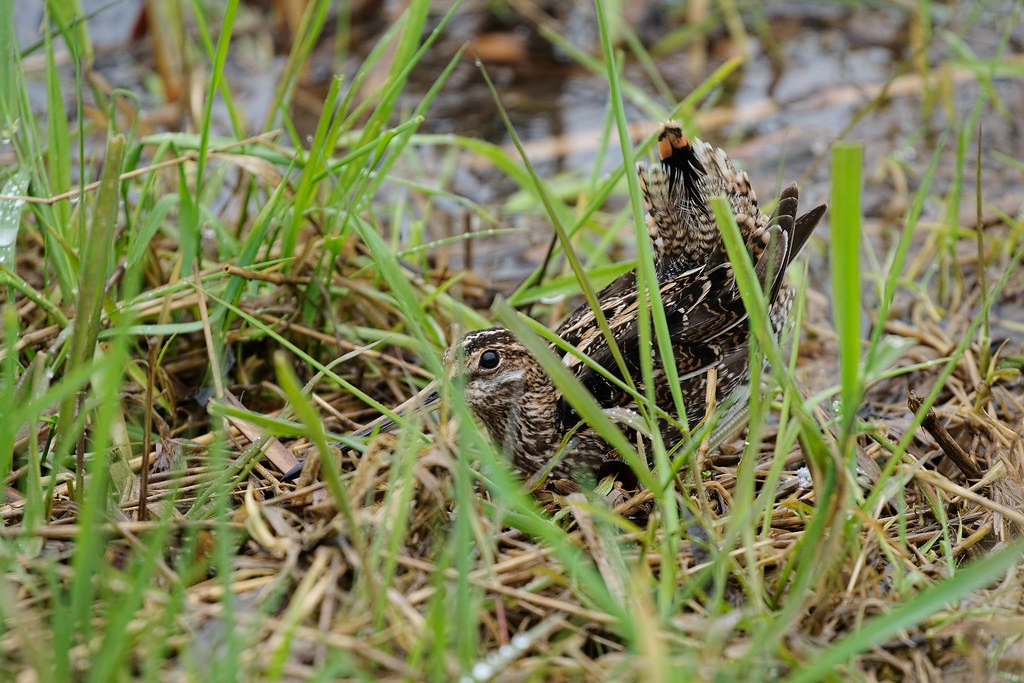
I had been watching this Wilson’s snipe at the edge of the marsh when there was a rustling nearby and it suddenly hunkered down and put on this display. It didn’t hold the display long, the noise was made by its mate flying into the area.

This fall the status of the Columbian white-tailed deer was improved from endangered to threatened. I’d guess this young buck, eating in a meadow beside Long Lake, is one of the offspring of deer that were captured and moved to Ridgefield National Wildlife Refuge as a part of the recovery efforts. I saw him in late December, one of his antlers had already fallen off but the other was not yet ready to let go.
 Boolie