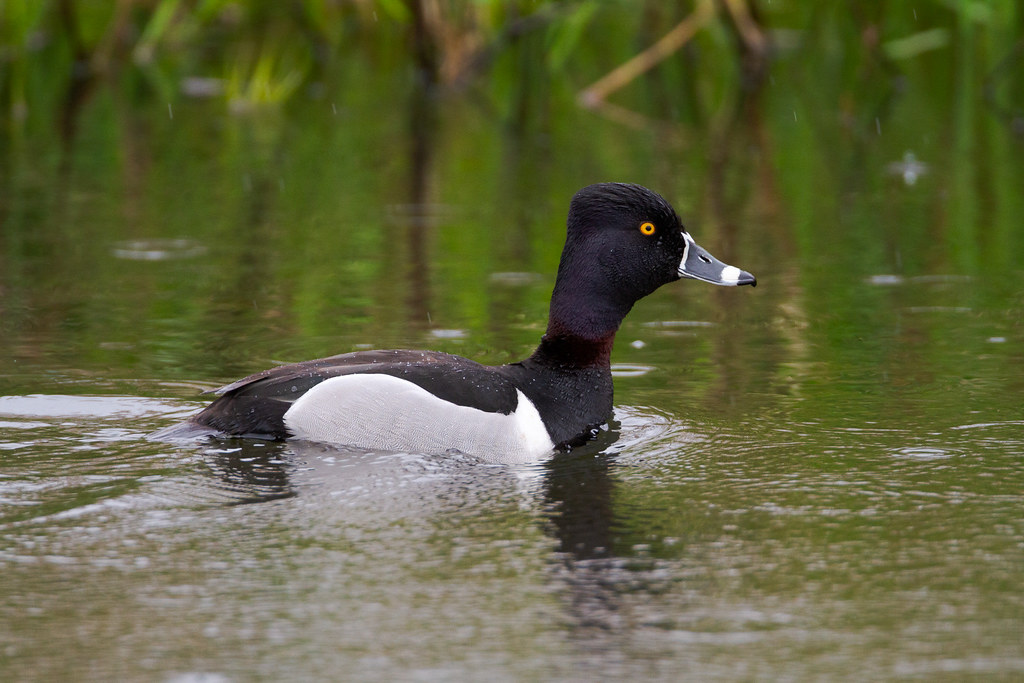
After moving to Arizona I have fallen in love with having a swimming pool in the backyard, swimming has become second only to hiking as my favorite way to exercise in the summer heat, even though I’ll never look as lovely in the water as this northern pintail swimming in Ruddy Lake at Ridgefield National Wildlife Refuge.
Tag: River S Unit
Northern
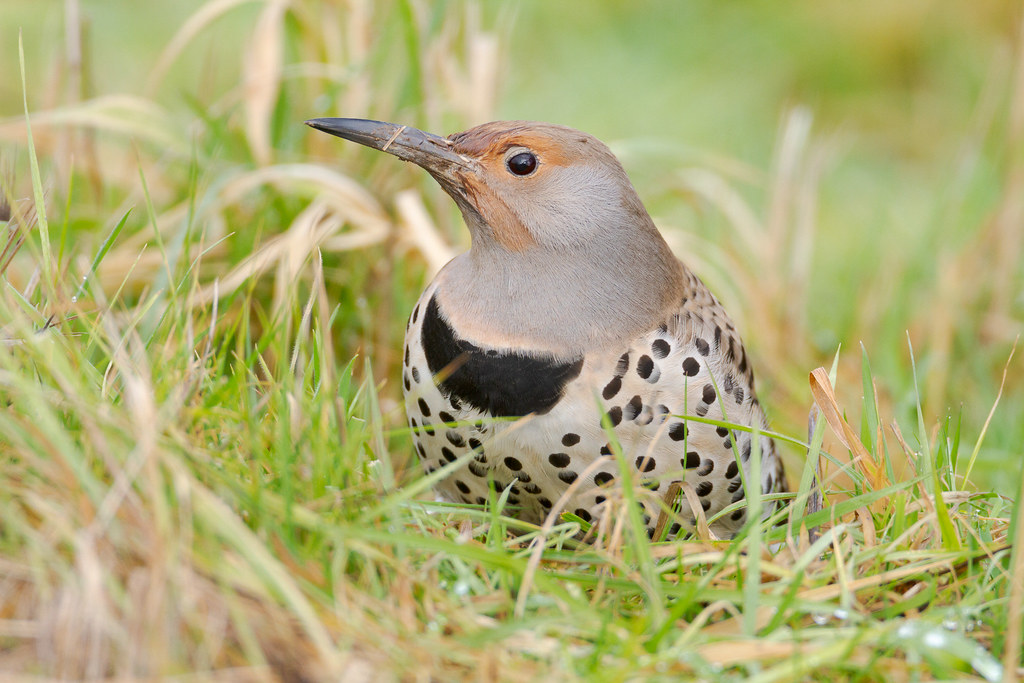
A female northern flicker searches for breakfast in a meadow on a rainy winter morning at Ridgefield in 2012. Given its widespread distribution across my country I wrongly assumed this would be the flicker I’d see most often in Arizona, but so far I’ve only seen the gilded flicker. To be fair I’ve only hiked in the desert, perhaps we’ll be reunited when I visit the forests. The two flickers are quite similar both in appearance and call, so in a way it feels like we were never separated.
Swimming in the Rain
On the Lookout
There was a period of time at Ridgefield where I came across what I called Hawk-on-a-Stick, juvenile red-tailed hawks perched on signs around the large meadow that would allow me to view them from close range. They didn’t often look directly look at me, which was a good thing, as it meant they were comfortable with me and on the lookout either for voles in the meadow or older redtails that might chase them away.
Whiteout
A juvenile red-tailed hawk sits in a meadow in heavy fog at Ridgefield National Wildlife Refuge in Washington. The telephoto lens is exaggerating the whiteout effect as it is picking up all the fog between my car and the distant hawk but it illustrates the point: for an animal that might normally hunt by soaring high above the meadow and looking for voles below, a thick fog changes the dynamic between predator and prey.
The fog didn’t have such an impact on an American bittern stalking the shoreline that winter morning as it looked and listened for small creatures both on the land and in the water. Sometimes it hunted by slowly walking up and down the shoreline, sometimes by standing still, but in either case the thick fog would not obscure the prey such a short distance away.
A Gathering of Bubbles
Goodbye Ridgefield, I Love You
It’s not like Mount Rainier or Olympic National Parks, Ridgefield National Wildlife Refuge, not the sort of place you plan a trip around. It’s not scenic, there are no mountains, no beaches, no waterfalls, no old growth forests. But I spent more time here than anywhere else in the Pacific Northwest. I might have spent more time here than all other parks combined. Not because of what it didn’t have, but because of what it did: the auto tour.
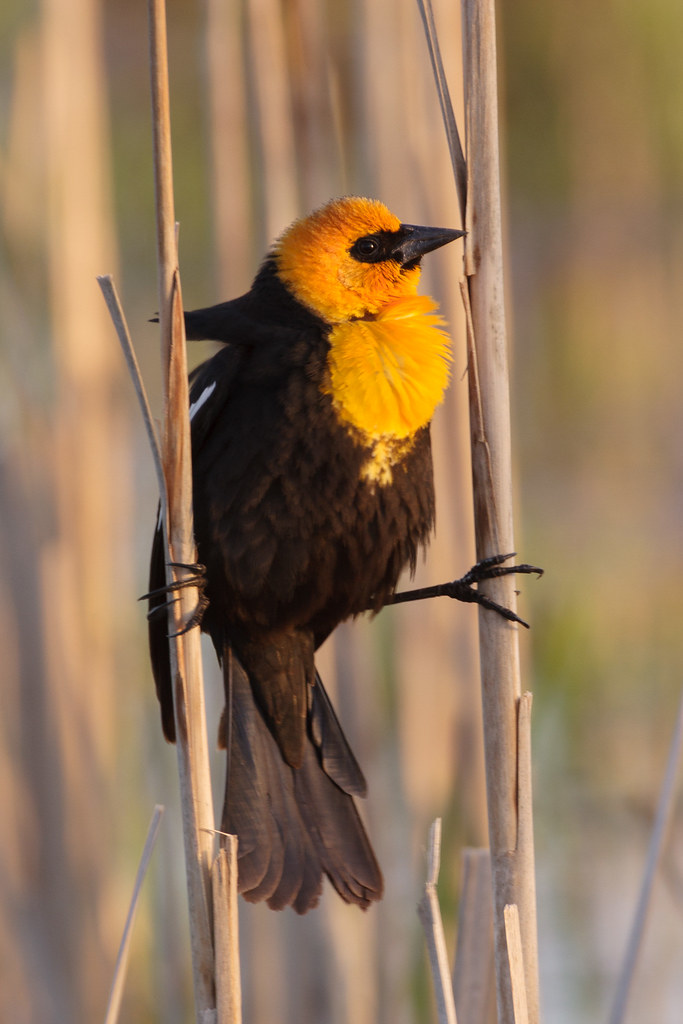
There’s a mostly one-way gravel road that winds through the seasonal ponds and lakes of this unassuming little refuge across the Columbia in Washington where for significant portions of the year you have to stay in your car. Because the animals aren’t spooked so easily if you are in your car compared to when you are not, I watched birds and mammals behave naturally from close distances. I met this yellow-headed blackbird, showing off his acrobatic skills as he straddles two stems, at Rest Lake late on a sunny spring evening.
I stayed dry in the rain and warm in the cold. Relatively warm in the cold, I shut my car off when I stopped and sometimes I stopped for hours. I kept an extra coat to drape over my legs on the cold days, extra towels to drape around the car on wet ones. I started playing around with video towards the end once I got a camera capable of good video but it was too late for me to have taken very many, but those few videos joins thousands of pictures in my archives.
I’d be embarrassed to tell you how many hours I sat in my car and watched bitterns hunting at the edges of the lakes. Or watching herons and coyotes hunting voles in the big meadow at the end of the auto tour. Watching the eagles and swans at Rest Lake. Watching red-winged blackbirds, yellow-headed blackbirds, marsh wrens, song sparrows, common yellowthroats, American goldfinches, all from one spot at South Quigley Lake.
There are a couple of short hiking trails at the refuge, one only open during the warmer months when the cackling geese are gone, but mostly what drew me was the auto tour. Too much so I suppose, I knew I should explore other places more often, if nothing else for the exercise. But I kept having wonderful experiences so I kept coming back.
I haven’t been up as often the past few years, mostly because I was walking Ellie during the hours I would have normally visited the refuge, but Ridgefield I will hold in my heart for all of my days. Goodbye, I love you.
Bringing Up Dinner
The Green Land
Not for the Squeamish
A female American kestrel pulls apart what looks like a mouse at Ridgefield National Wildlife Refuge on a winter morning in 2006. There are a couple of species of mice at the refuge that I’m aware of, deer mice and Pacific jumping mice, but I have no idea which this is (was). Some predators at the refuge swallow their prey whole, while others like kestrels pull them apart and eat just the parts they want and toss aside the rest.