In the Wash

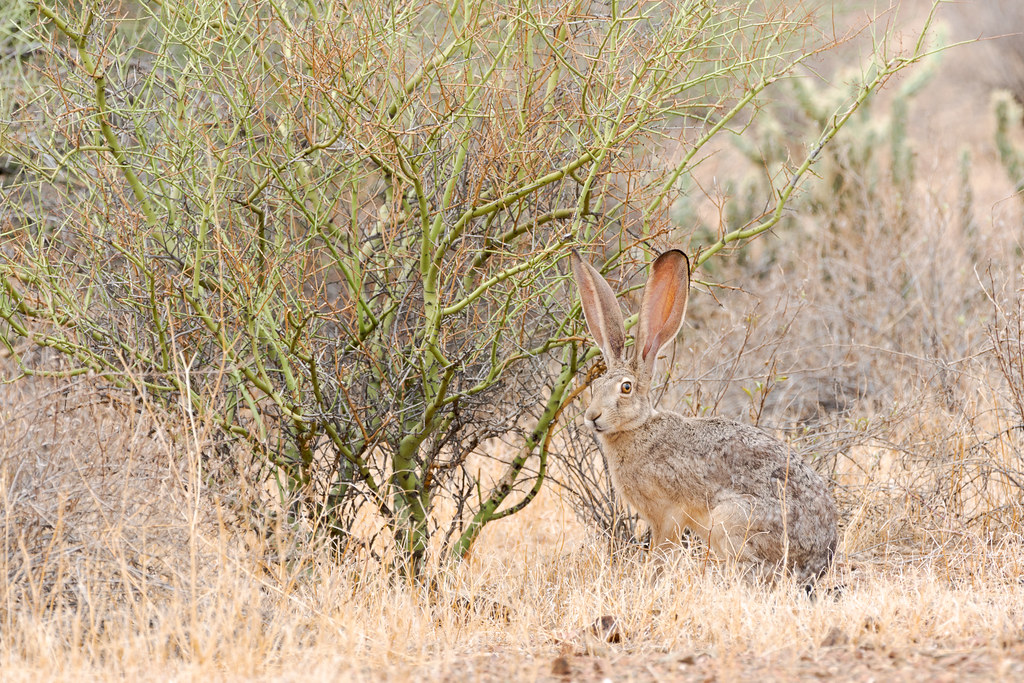
An environmental portrait of a desert cottontail sitting in Apache Wash in Phoenix Sonoran Preserve in Phoenix, Arizona

Most of the desert washes I cross when I hike are fairly small but not so Apache Wash, there are signs as you approach warning you not to enter when flooded and the large debris scattered around tells you why. It was damp on the morning I crossed on my first visit to Phoenix Sonoran Preserve but the rains and thus the danger had long since passed the day before, so I and a pair of desert cottontails enjoyed the quiet before the sun came up.

An close-up portrait of a desert cottontail sitting in Apache Wash in Phoenix Sonoran Preserve in Phoenix, Arizona

A Little Beauty

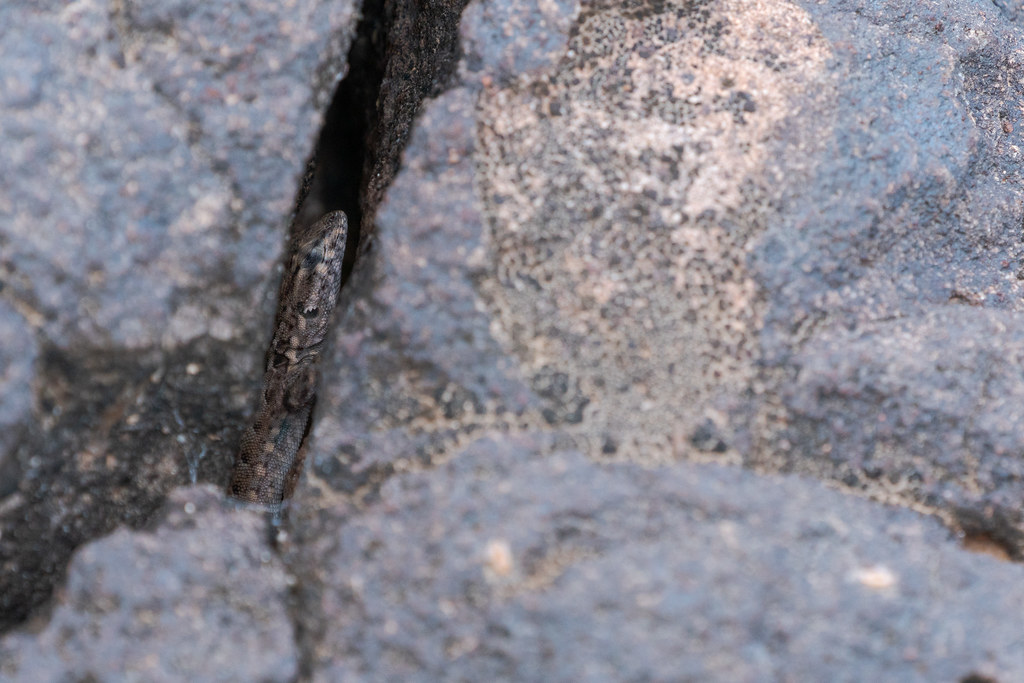
A close-up view of a common side-blotched lizard showing the dark blotch behind his front legs as he perches on a granite rock along the Bootlegger Trail in McDowell Sonoran Preserve in Scottsdale, Arizona

One of the difficulties I had when learning to identify lizards after we moved here was getting a feel for the size of lizards based on pictures. Guide books have typical measurements but that isn’t as helpful until you can narrow down the search. I wish there was an app that would let you sort them first by geography and then by size. Over time I’ve gotten much better at identifying most of the common lizards including the one I see most often, the common side-blotched lizard.

I met this one in July on the Bootlegger Trail near Granite Mountain, he’s nicely showing off the dark blotch behind his front legs for which he is named as he perches on his own granite mountain. I’ve been getting a bit worn down the past few weeks and have only gone out hiking once each weekend so I’m going to take a couple of days off this week to hopefully recharge a bit. I saw a handful of these little lizards on the trail this morning but didn’t see any opportunities for pictures so I enjoyed my time with them instead.

As for their size, it can be hard to tell from a telephoto shot like this but thy are tiny, typically 1.5″ to 2.5″ SV (snout-to-vent, which goes from the tip of the nose to the vent near the base of the tail). They mostly eat insects and the like but lots of things eat them, including larger lizards. They are active throughout the year at my elevation (at least on warm winter days) so I’m happy they’ll keep me company when the other reptiles are hibernating.

Flight

A black-tailed jackrabbit sits next to a foothill palo verde along the Apache Wash Loop Trail in Phoenix Sonoran Preserve in Phoenix, Arizona

On the trails my glimpses of jackrabbits are normally rather brief but this one I got to watch for a while as it casually moved through the desert, feeding as it went. It was aware of me and the others on the trail, mostly mountain bikers and hikers (none of whom stopped to watch). Our time together came to an end when the jackrabbit took flight as a loud plane passed overhead.

Life in Miniature

An ornate tree lizard (I think) clinks to the vertical surface of a granite slab on the Piestewa Peak Summit Trail in Phoenix Mountains Preserve in Phoenix, Arizona

An ornate tree lizard (I think) perches on the vertical face of a granite slab, the jagged top a miniature of the mountains that surround. We met on my first visit to Phoenix Mountains Preserve on the Piestewa Peak Summit Trail as it flitted about the rocks, each unique in appearance. I was especially delighted when it returned to this one and arched its tail to match the curve of the granite. I was not as deft on the rocky trail and didn’t make it to the summit, there was a place where the trail got a little too narrow and triggered my fear of heights.

Oh little one, that I could climb as you climb.

Choose Your Punishment

A close-up view of the spine of a teddy bear cholla along the Chuckwagon Trail in McDowell Sonoran Preserve

If you’re ever captured by a villain who’s going to punish you by tossing you into a thorny desert plant of your choosing, pick the crucifixion thorn (canotia). Despite the fearsome name, the thorns aren’t too sharp and are dense enough that they will likely break your fall more than break your bones. Do not choose the adorably-named teddy bear cholla, its spines are sharp, its spines are many, and the joints break easily so you will carry your pain with you after you escape its embrace.

It does however make a lovely subject in the early morning light.