Washed Away

A foothill palo verde with its roots exposed in a wash at Lost Dog Wash in McDowell Sonoran Preserve

As you hike through the desert you’ll sometimes cross a wash, an area that is normally dry but where water runs after a storm. I’ve not seen a wash run, it doesn’t take long for the water to stop flowing and the monsoons usually arrive in the evenings when I’m not on the trails due to the heat. I’ve seen the aftermath though in the scouring of the trails, I wonder if the roots of this foothill palo verde were recently exposed due to erosion after a summer storm. Most of the shallow roots have been stripped of earth and are angled downstream save for one still plugged into the surviving bank.

It may not look like it but this little tree has leafed out, the trees have tiny leaves that you can see along the thorns if you look at the top of the tree set against the darker green of the larger trees behind it. You can also see the green bark, the palo verde can photosynthesize its food from both the little leaves when they are present and from the green bark and thorns year round. I’m curious to see if it survives or if it will fade away now that its roots are exposed, and perhaps wash away in a future storm. But for now it is holding on, literally.

Smug

A mule deer chews its food along the Chuckwagon Trail in McDowell Sonoran Preserve in Scottsdale, Arizona

I was walking along the Chuckwagon Trail with the sun about to crest the horizon when the pattern recognition part of my brain thought it saw a distant deer hidden behind some plants. On second glance I was less sure and thought “There you go again, turning trees into deer.” I lifted the telephoto lens to my eye anyway and the tree was a deer, it walked out into the open as it ate soft plants as it strolled along its path, then did the little mule deer hop to move down the hillside.

My pattern recognition self was feeling pretty smug the rest of the hike, even when he was spotting marmots in the rocks though there are no marmots in Arizona. That will take a while to go away, after spending a summer in Florida it took years for me to stop thinking I saw alligators in the marshes of Oregon and Washington. I don’t mind, the successes are worth the failures, and if you don’t look you can’t see.

Rib Cage

A close-up view of the ribs of a dead saguaro along the Chuckwagon Trail in McDowell Sonoran Preserve

Supporting the massive weight of a saguaro is a circular skeleton of woody ribs that sometimes remains standing after the cactus dies. I photographed this lovely example in the soft light before sunrise near the start of the Chuckwagon Trail in McDowell Sonoran Preserve. Hiking the Chuckwagon to the Watershed Trail and up to the Cholla Mountain Loop Trail to see The Amphitheater and Cathedral Rock has become one of my favorite desert hikes, although I’ll mix it up with the Latigo, Vaquero, and Maverick trails too.

I Have Departed and I Will Remain

A dead tree stands near a saguaro along the Whiskey Bottle Trail in McDowell Sonoran Preserve in Scottsdale, Arizona

Most of the branches have broken off this long-dead tree but still it reaches for the sky. In life it wouldn’t have approached the heights of the massive saguaros that dominate the landscape but it would have provided welcome shade for young plants trying to gain a foothold in the desert. In death it can provide some shade and shelter, every little bit helps as while the hills and vegetation behind me are providing some protection from the sun at this early hour, as the sun rises there will be little escaping its glare. Yet life flourishes in this desert, it is not the emptiness of sand and rock I imagined in my youth.

Safe in the Arms of the Cholla

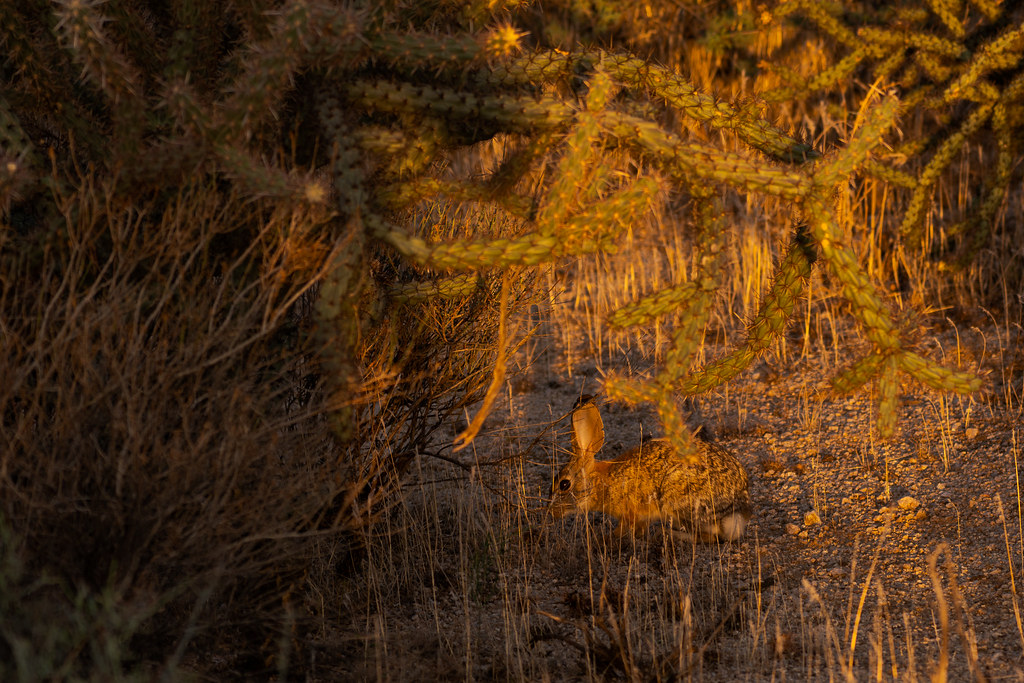
A desert cottontail nibbles grasses at sunrise near a buckhorn cholla along the Chuckwagon Trail in McDowell Sonoran Preserve in Scottsdale, Arizona

The rising sun, so easily blocked by hills and saguaros and even myself, does what I cannot, slip through the outstretched arms of a buckhorn cholla to embrace a cottontail as it feeds beside the Chuckwagon Trail. It is mine but to observe, to record, to be grateful.

Spirits

A black-tailed jackrabbit is visible through the desert scrub at the trailhead to Brown's Ranch in McDowell Sonoran Preserve

I am amazed how effortlessly and silently mammals move through their home while I stumble down the trail. The jackrabbits seem like spirits floating through the desert, I often first notice the black tips of their tall ears moving while the rabbit itself is blocked from sight by the many plants of the scrubland. This lovely creature I found not on the trails but at the trailhead of Brown’s Ranch, we shared a quiet moment before sunup.

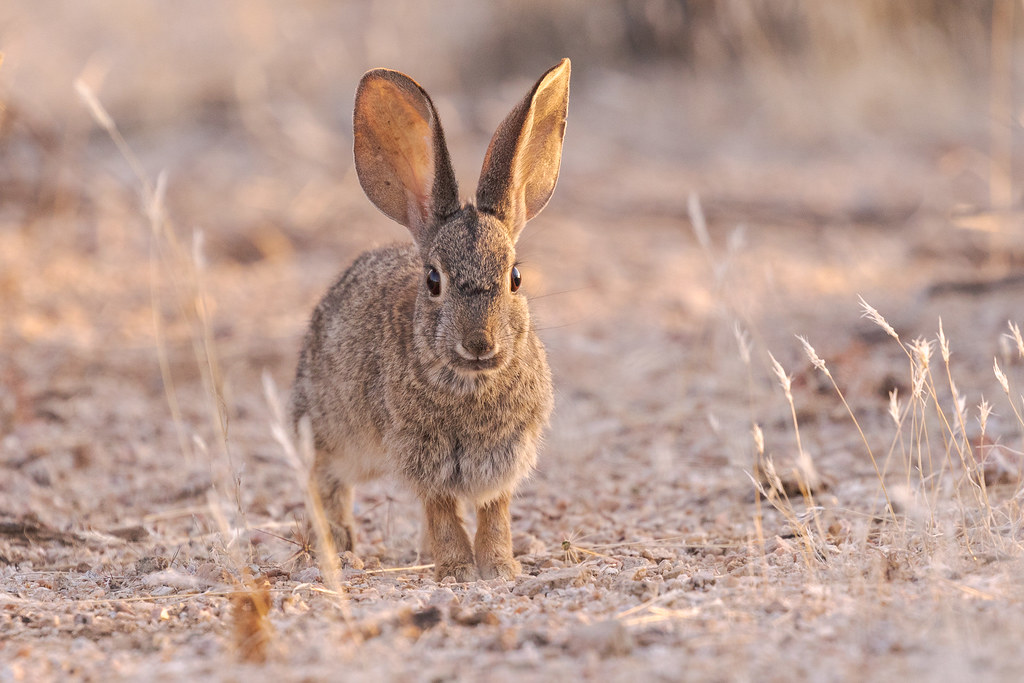
The rabbit you are most likely to see at the trailhead, and on the trail, is the desert cottontail (below). They too move silently through the desert but are so much smaller than the jackrabbits that you see them when you see them, there are no tall black tips dancing in the early light to catch your eye. Like all the mammals your best bet to see them is to arrive early, here also at the trailhead but just as the sun began peeking through to send one of us onto the trails and one to bed.

Walking in the Sonoran Desert at sunrise, seeing the desert both wake up and go to sleep, is a joy and a treasure even to this lifelong night owl.

A desert cottontail looks straight at me as it is partially lit by the rising sun at the trailhead to Brown's Ranch in McDowell Sonoran Preserve

Present, Future, Past

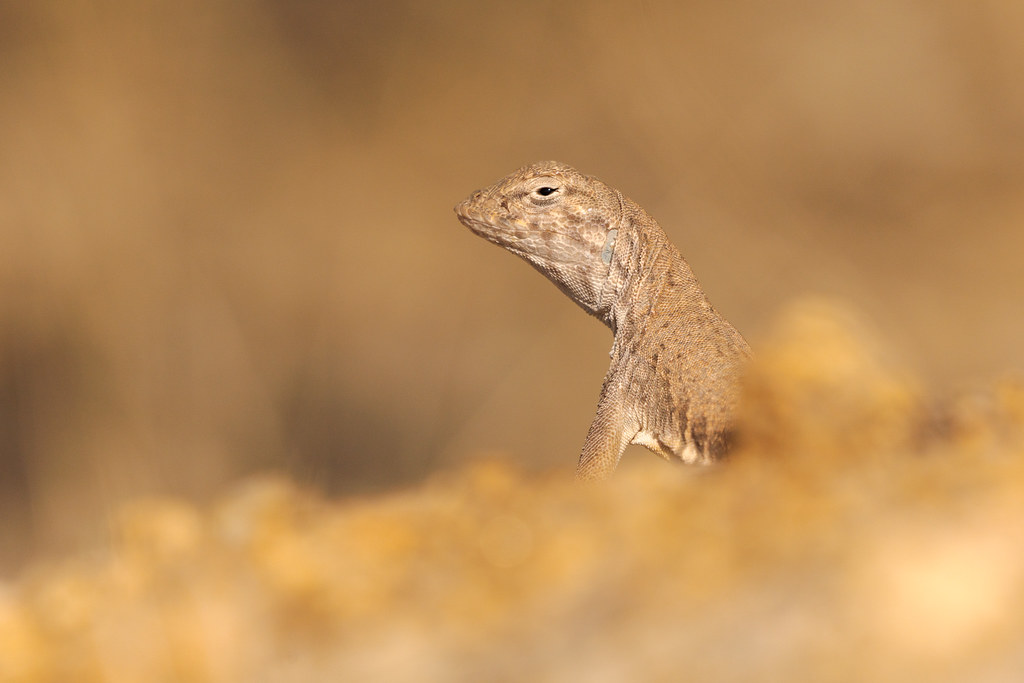
A zebra-tailed lizard viewed from ground level at The Amphitheater in McDowell Sonoran Preserve in Scottsdale, Arizona

With Nikon and Canon about to announce their first serious attempts at the mirrorless market, I’m curious to see what approach the two industry stalwarts take and how Sony responds. I’m hoping to add a second mirrorless camera, not because I haven’t loved my Sony A6500 but because I want to go back to using it for the purpose I bought it, to be my walk around camera and for non-wildlife use. I’ve switched to using it as my wildlife camera as combined with their 100-400mm lens and 1.4x teleconverter it has proven a much better setup for capturing the denizens of the desert than my Canon, like this zebra-tailed lizard at ground level.

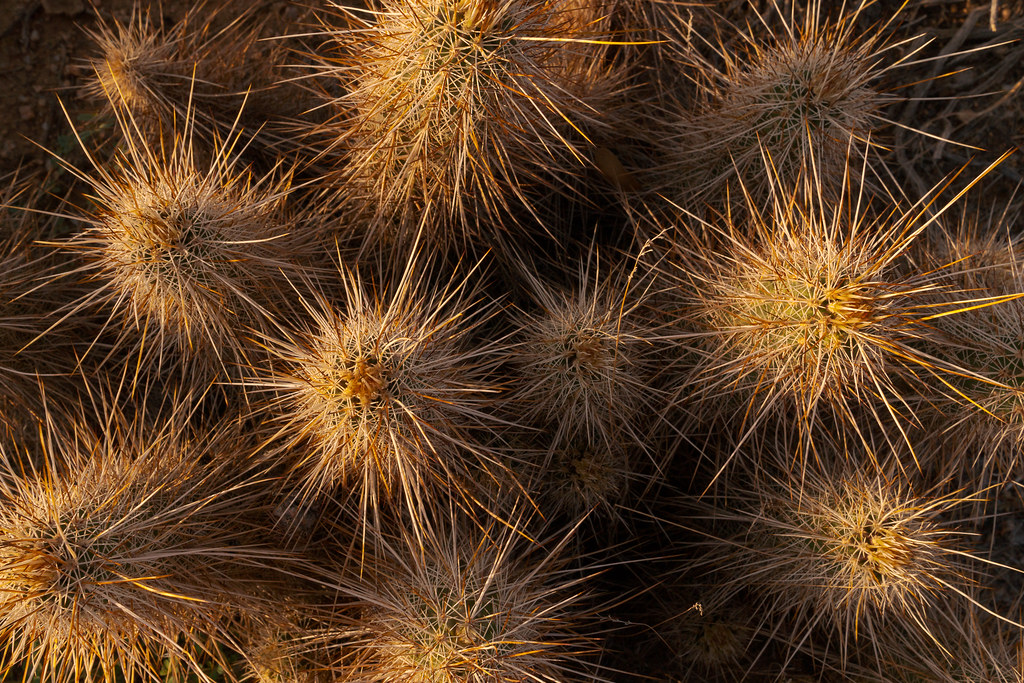
I dislike the weight and size of my Canon so on my last hike I only brought the Sony and switched lenses throughout the morning, it made me so happy to put my beloved 24mm lens on it as I photographed desert scenes, then I switched to the telephoto when I saw a mule deer, a Harris’s hawk, a cottontail, then a black-tailed jackrabbit, and for close-ups of a saguaro, a soaptree yucca, a teddy bear cholla. I just don’t want to have to switch lenses! I don’t mind it on occasion but I’ve always preferred to have one camera for telephotos and one for wider shots, and then switch to other lenses as needed.

A day will come when I can’t manage the weight of heavier lenses as I hike, it isn’t approaching but I can see it in the distance. In the meantime I try to get out as much as I can, photograph what I can, but more than anything delight in the moments as they pass, for they pass ever more quickly. I’m thankful for the handful of cameras I’ve had over the decades for the pictures taken, the memories preserved. I’m amazed at what I can do with today’s gear compared to when I started. Here’s hoping my photographic future is as rewarding as the past.

Lighter than Air

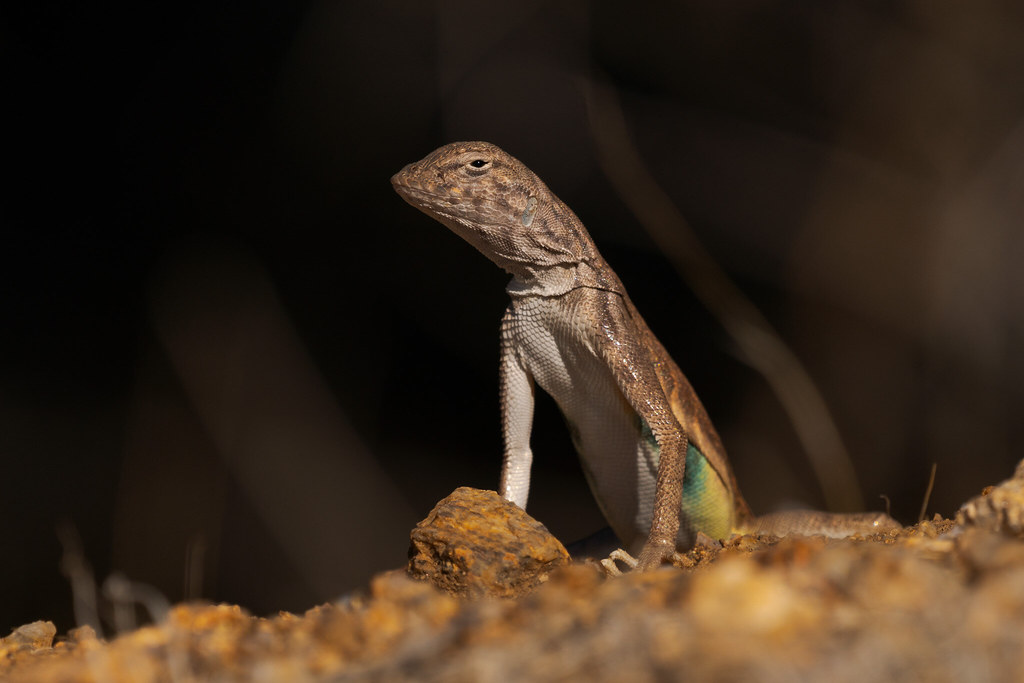
A zebra-tailed lizard raises its body off the ground, showing off his long legs and the coloring on his sides

Most of the lizards I see underfoot scurry across the desert floor at a seemingly impossible speed, as though they were lighter than air, none more so than the zebra-tailed lizard. This one had raised up his body off the ground and showed off his long legs and the coloring along his side although you can’t see the vibrant tail for which he is named. Just once I’d love to run like he runs, to know that effortless speed.