
A black-tailed buck walks the border between a meadow and a small forest of subalpine firs in Hurricane Ridge. It was foggy and poured rain all day, but I was fully decked out in rain gear and stayed dry. The deer wasn’t so lucky of course.
Scratcher of heads, rubber of bellies
A black-tailed buck walks the border between a meadow and a small forest of subalpine firs in Hurricane Ridge. It was foggy and poured rain all day, but I was fully decked out in rain gear and stayed dry. The deer wasn’t so lucky of course.

I love photographing coots, one of the most commonly seen birds at Ridgefield, as I find it fascinating how they do many of the things that diving ducks do yet their bodies differ in many ways. I was shocked the first time I saw their almost comically large feet and was surprised to see that they aren’t webbed like a duck. We had a cold snap to start the year and some of the smaller ponds froze over, leaving the coots a bit exposed as their best defense against an aerial eagle attack is to dive under the water.
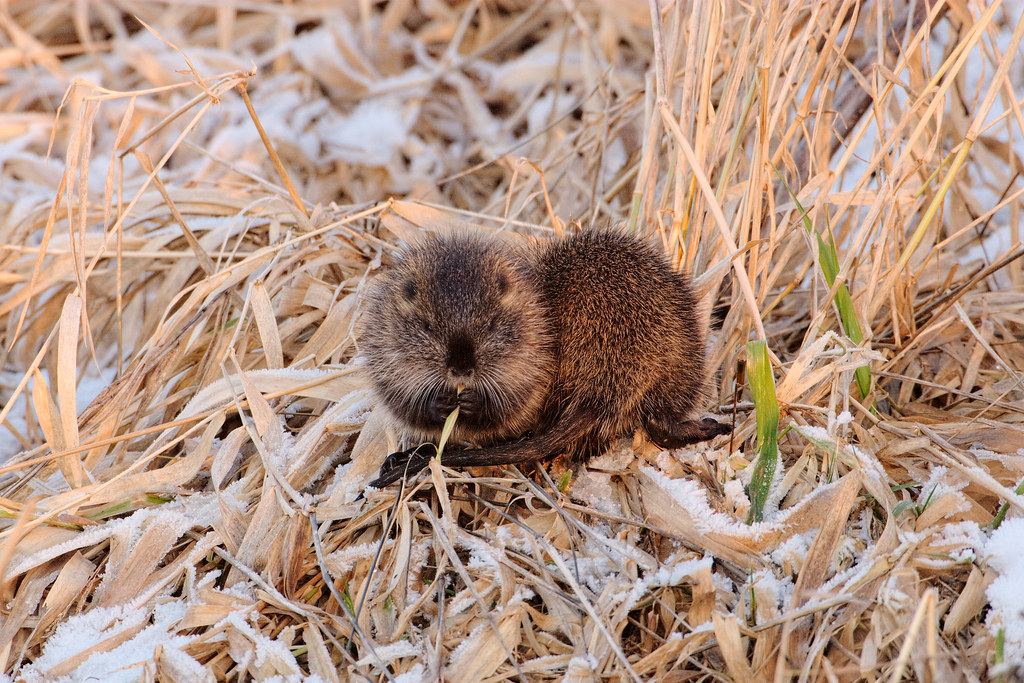
I got lucky with the top picture: the soft, warm light of sunset, the frost from an unusually cold winter day, the perfect pairing of these two baby nutria, one facing forward, the other backward, and the one nutria eating a blade of grass while holding it in its tiny hands. Then they each walked off into the shadows and out of my sight. Nutria are not native to the Northwest but they are by far the most commonly seen of our aquatic rodents, and as you can see are able to give birth and raise young even during winter.


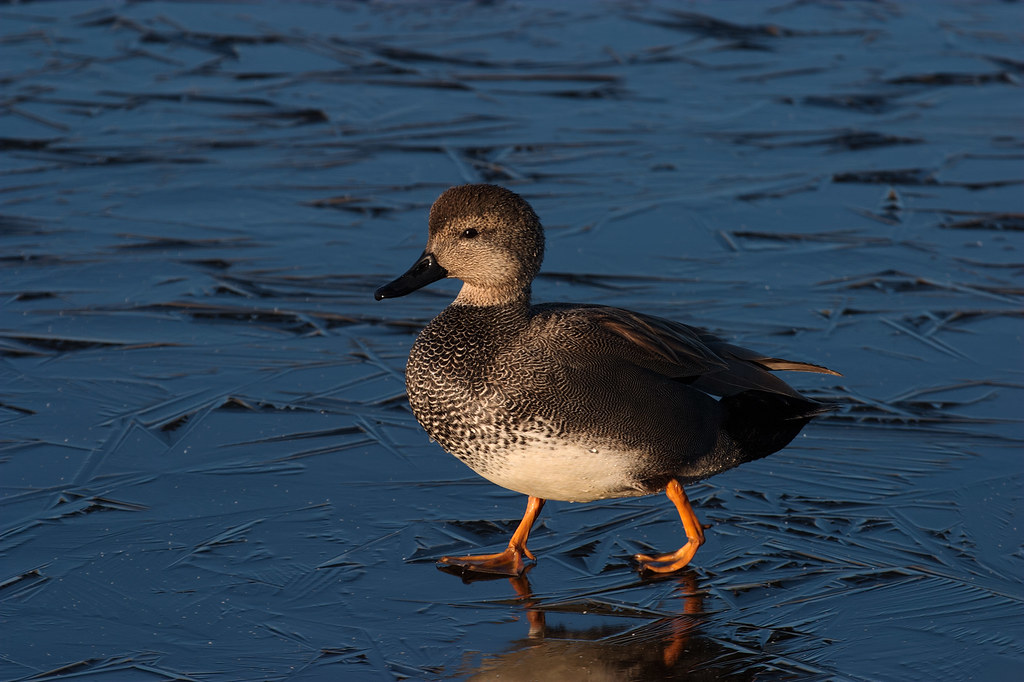
A gadwall drake walks across the ice late on a winter afternoon.
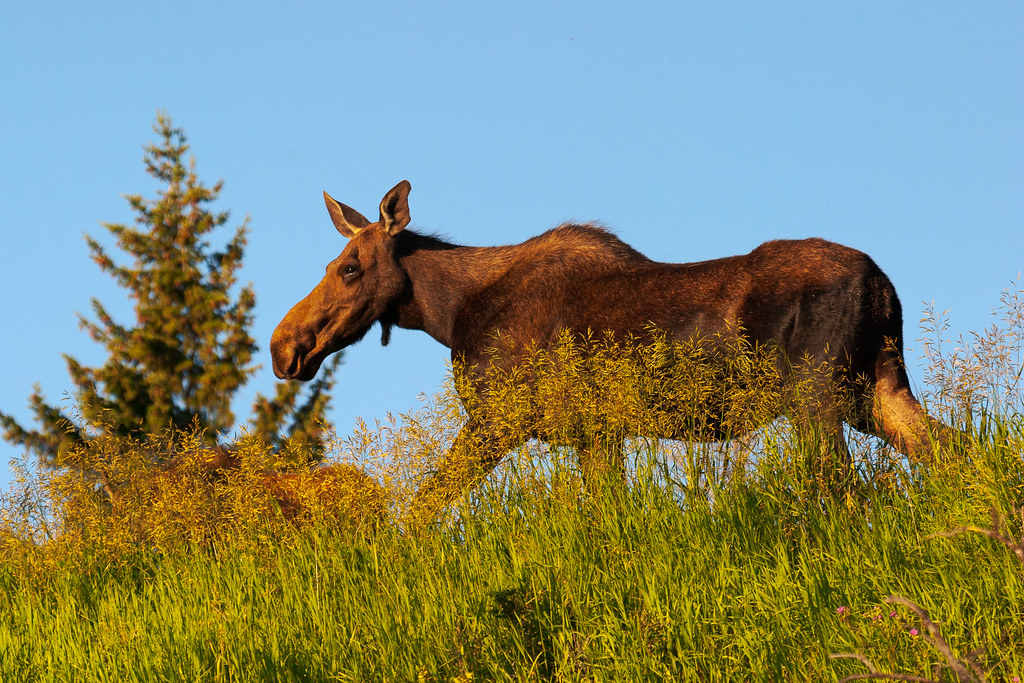
A moose cow walks with her calf (almost completely obscured by the tall grass in front of her) near the road from Mammoth to Tower in Yellowstone National Park. I am not a morning person (to put it mildly) so getting up early for photography is always a struggle. This visit to Yellowstone was in 2004 and I was still learning how productive those early hours can be. I finally decided to get up early to beat the crowds on the last day of the trip and was rewarded with close views of not just this moose and her calf but also a black bear and her two cubs, an elk cow and her calf, and bison as well.
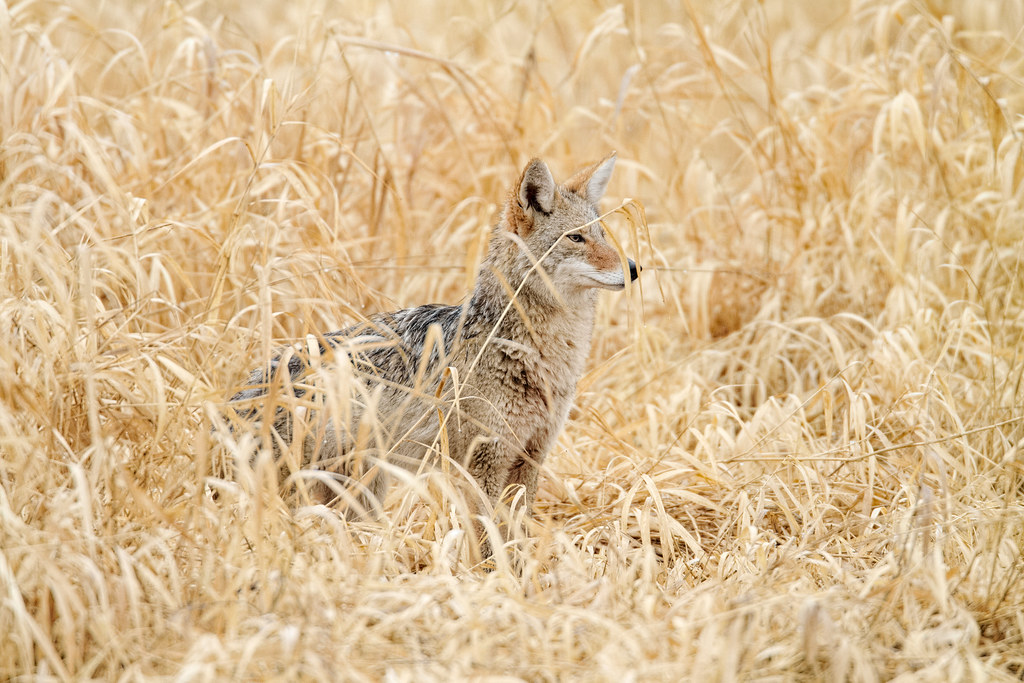
The picture above of a coyote hunting in the marsh is deliberately like this bittern picture, both taken at Rest Lake. The lake is the largest on Ridgefield’s auto tour and has water in it year round, but the marshy areas that ring the lake are my favorite places to watch. To survive in these areas is to avoid being eaten not just by coyotes and bitterns but herons and hawks and harriers and eagles and otters and mink and weasels and raccoons and snakes and bullfrogs and …

 Boolie