Seeing Red in the Desert

Fruit begins to ripen atop a saguaro on the Vaquero Trail in McDowell Sonoran Preserve in Scottsdale, Arizona

I knew even before setting foot in Arizona that my pictures in the desert would draw heavily from a palette of browns rather than the green of the Pacific Northwest. I didn’t know that there would occasionally b red in the desert too, such as the red racer, the house finch, and the northern cardinal. However, for a month or so at the end of spring and the start of summer red explodes across the desert in the fruit of the saguaro.

Fruit splits open atop a saguaro at the Amphitheater in McDowell Sonoran Preserve in Scottsdale, Arizona

Here near The Amphitheater in McDowell Sonoran Preserve a ripe fruit bursts open, exposing the pulp and seeds inside. The fruit is chockfull of seeds, according to the National Park Service there are about 2000 seeds per fruit. Few will develop into a seedling and fewer into an adult saguaro in the harsh desert climate but its not for lack of trying. I noticed multiple birds eating the fruit but mostly it was white-winged doves, who apparently digest the seeds rather than passing them in their waste like some other birds. They end up with so much juice and pulp and seeds on their faces that I imagine some of the seeds will fall to the ground as they preen, so perhaps all is not lost.

Red saguaro fruit along the Upper Ranch Trail in McDowell Sonoran Preserve in Scottsdale, Arizona

As the fruit continues to ripen on the saguaro, even the outside turns red. The dried stalk above them is all that remains of the flowers that grew atop them, the ripened fruit results from flowers that were pollinated. Most of the fruit grows at the top of the saguaro or the ends of its arms but some grows on the sides like the one below that has been cleaned of most of its contents by the denizens of the desert, only a few of the tiny black seeds remain inside.

Saguaro fruit emptied of its contents on the side of a saguaro in Pinnacle Peak Park in Scottsdale, Arizona

Fractured

Fractures split a large granite boulder along the Pinnacle Peak Trail in Pinnacle Peak Park in Scottsdale, Arizona

Fractures split a large granite boulder along the Pinnacle Peak Trail. The message could be that you don’t have to be perfect to be strong. To stand true and resist. Or it could be that those from whom you draw strength are wounded in their own way from the stress of the world and need support as well. Or maybe that nothing lasts forever, whether these rocks will outlast me depends on how many millions of years I live, but we are here now, together, and I am thankful for it.

Turning Rocks Into Lizards

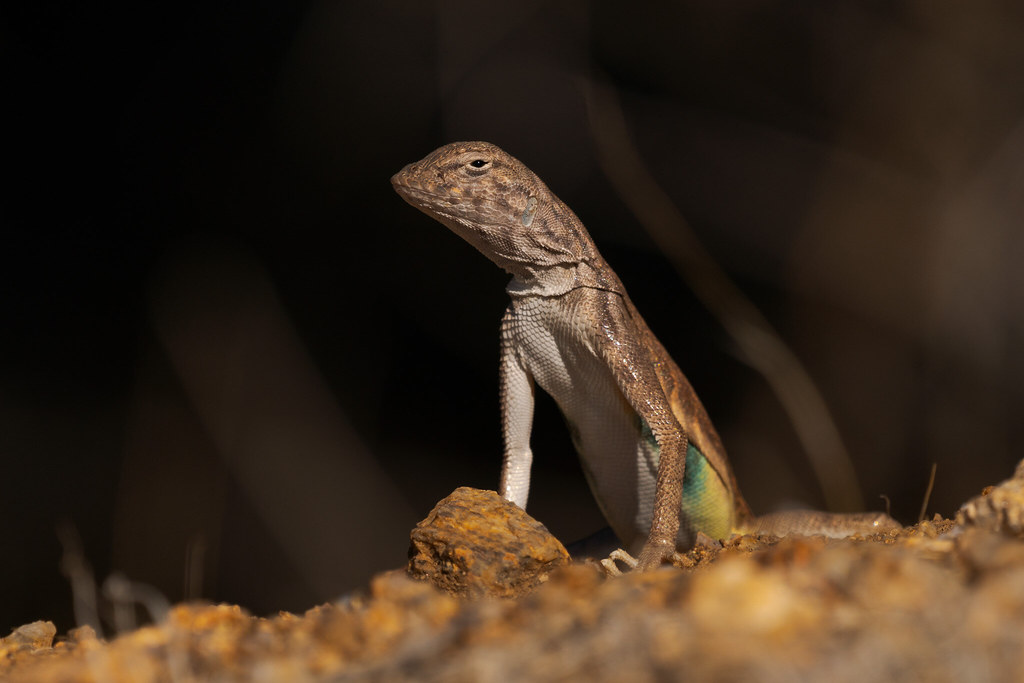
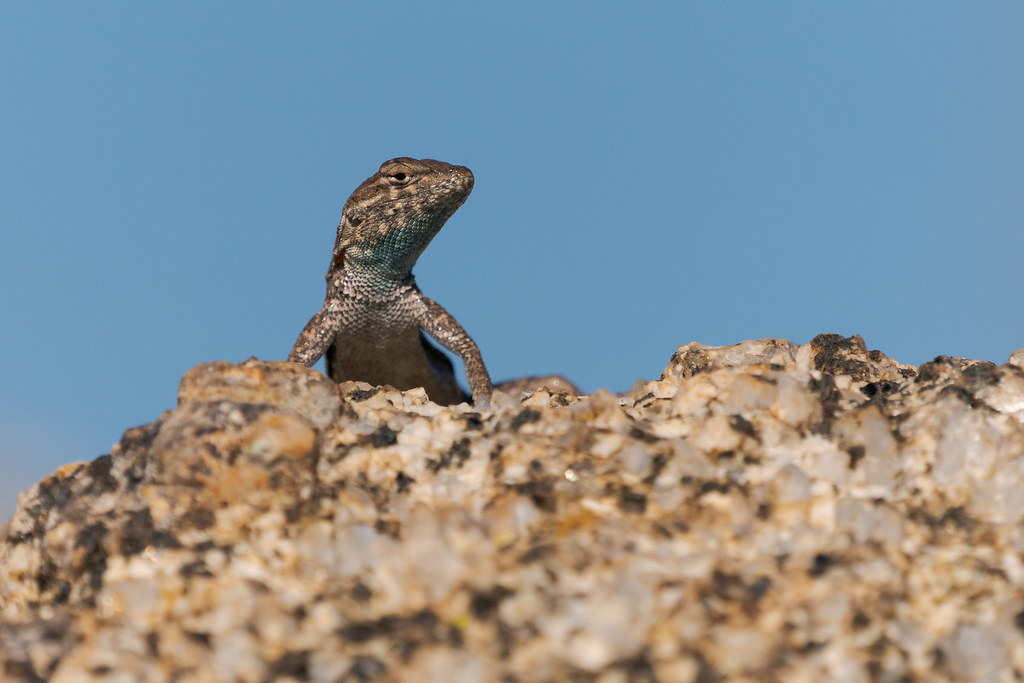
A desert spiny lizard peeks out from behind a rock on the Rustler Trail in McDowell Sonoran Preserve in Scottsdale, Arizona

As I hike the pattern recognition part of my brain is constantly scanning for objects that might be wildlife even though they often turn out not to be. I spent a summer in Florida in the mid-90’s and was delighted by the many alligators there, it took years after we moved to Oregon for that part of my brain to stop trying to identify possible alligators when I hiked in marshland. In Yellowstone on a gravel road there was a large rock in the distance that in the periphery resembled a bear. I loved that road and drove it a number of times and as I approached that spot, I’d tell myself not to be fooled even for an instant by what I came to call Bear Rock. But every time the pattern recognition would kick in for a fraction of a second and say “Hey is that a …” before the rest of my brain would reply “I just told you it wasn’t going to be a bear!”

Here in the Sonoran Desert I am fooled by cholla skeletons that look like rattlesnakes, twigs like small lizards, granite protuberances like large lizards. I try to use my mental powers to turn rocks into lizards but usually I fail, rock stays rock. But sometimes I succeed and the rock comes to life, such as this beautiful desert spiny lizard on the Rustler Trail in McDowell Sonoran Preserve. One success is worth a thousand misses.

Do Not Adjust Your Sets

A wavy pattern in a saguaro cactus along Brown's Ranch Road in McDowell Sonoran Preserve in Scottsdale, Arizona

The early morning light falls on one of my favorite saguaros, I love its wavy pattern and look for it whenever I’m hiking Brown’s Ranch Road. If you’re too young to understand the reference in the title and never experienced adjusting horizontal and vertical hold on a television, consider yourself lucky. In my day …

Disappearing Act

A white-winged dove perches on an ocotillo starting to leaf out after the summer rains in McDowell Sonoran Preserve

This ocotillo had just started leafing out in the middle of July with the arrival of summer thunderstorms in the Sonoran Desert. The white-winged dove perched in the morning light is one of thousands I have seen, they are not only the bird I see most in our backyard but out in the desert as well, never more so when seemingly one or two or three were atop every saguaro as they devoured the ripening fruit. But after a self-imposed two week ban to allow a knee to heal, I returned to the trails twice last weekend and didn’t see a single one. Not one!

From what I’ve read, the white-wings arrived in the desert about the time I did and will be leaving this fall. So I suppose in a month or so they will be gone from our backyard as well. The smaller mourning doves and much smaller Inca doves will appreciate it, the larger white-wings are more aggressive, but our cats and I will miss them.

The One-eyed Towhee

A canyon towhee is missing one of its eyes at Balanced Rock in McDowell Sonoran Preserve

In May I arrived at Balanced Rock on my first visit to this lovely rock formation in the Granite Mountain section of McDowell Sonoran Preserve. After taking some pictures of Balanced Rock itself, I sat down on a large granite slab for some water and cereal bars before heading back. I put my camera away but brought it back out when a pair of canyon towhees flew in. I could tell something was wrong with one of the eyes of one of the pair but couldn’t tell what as it flitted about until I looked at the pictures: one of its eyes was missing. To me it looks like a congenital defect, as though the eye and the surrounding feathers never formed.

I felt a great deal of sympathy for the little bird as life in the desert is hard enough. But even more I felt admiration as it flew about the rocks and perched in trees with all the grace and alacrity typical of birds despite the limited depth perception. Obviously it had survived into adulthood and apparently found a mate (canyon towhees are typically monogamous and often mate for life). I couldn’t say if its mate helps it find food, or if it supplements its diet with crumbs left behind by hikers like me who stop to eat, or if it feeds just fine on its own, but it seemed healthy.

May you have a long happy life, little one.

A side view of a canyon towhee at Balanced Rock in McDowell Sonoran Preserve