
“This is The Box Store, how may I help you?”
“I’m looking for a box.”
“You’ve come to the right place, sir!”
“Do you have anything Boo sized?”
“Boo sized … Boo sized … ah! Here we are! Boo sized!”
“I’ll take it!”
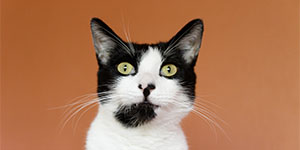
Scratcher of heads, rubber of bellies
“This is The Box Store, how may I help you?”
“I’m looking for a box.”
“You’ve come to the right place, sir!”
“Do you have anything Boo sized?”
“Boo sized … Boo sized … ah! Here we are! Boo sized!”
“I’ll take it!”

A stream flowing to the Sol Duc River reveals the four elements of the Pacific Northwest: earth, air, water, and moss.

There’s a long-running trend in photography of people photographing models in fancy dress in dilapidated buildings, a style I’ve never liked although it is quite popular. But even I couldn’t resist a shot of my lovely model in a run-down location, Boo in the old cat tree that we moved in front of the larger picture window. This part of the cat tree is showing signs of wear but it’s the bottom that has suffered from the love of five different cats, the carpet now in tatters. It’s a shame because we’ve never found another design that we (or the cats) like quite as much, although the newer one in my office does the job.

Boo keeps cool in the darkened living room on the morning of the 4th of July. There’s a dichotomy between his waking and sleeping selves, as he’s a shy and nervous cat in general but he can sleep in any position and often appears chilled out when relaxed or asleep.

Boo and I spent the morning enjoying our favorite sport, Formula 1 racing. Boo was so excited he had to sprawl across my legs and take a nap.

When we adopted Trixie early last year, we kept her in isolation at first, both so she could have time to build up her confidence in her new home and to give the other pets a chance to adapt to her arrival. Ellie hated being kept on the other side of the door while I sat with Trixie so it was a big relief for everyone when Trixie and Ellie hit it off early in the process. It was soon clear that I could trust Ellie with the increasingly active kitten, even if I were to leave the room, with one expected exception: Trixie’s food.
I was delighted to catch Ellie looking wistfully at Trixie’s bowl of cat food just off camera. I knew from past experience that if I were to walk out of the room, Ellie would wait until the moment I was out of sight and then jump down and devour any and all food in the vicinity. It was a struggle to get Trixie to eat so we left her food out all the time, but I’d pick it up if I needed to leave the room for a moment or when we went to bed at night.
But otherwise she was, as she always is, the perfect companion.
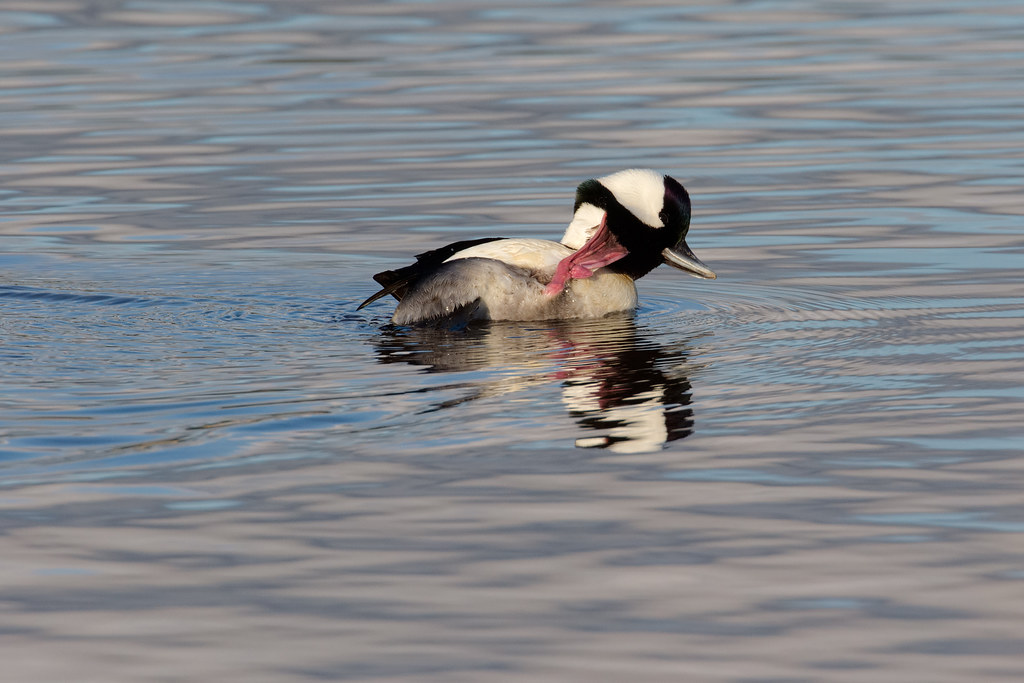
A male bufflehead uses one of his adorable pink feet to scratch an itch while swimming across Rest Lake.

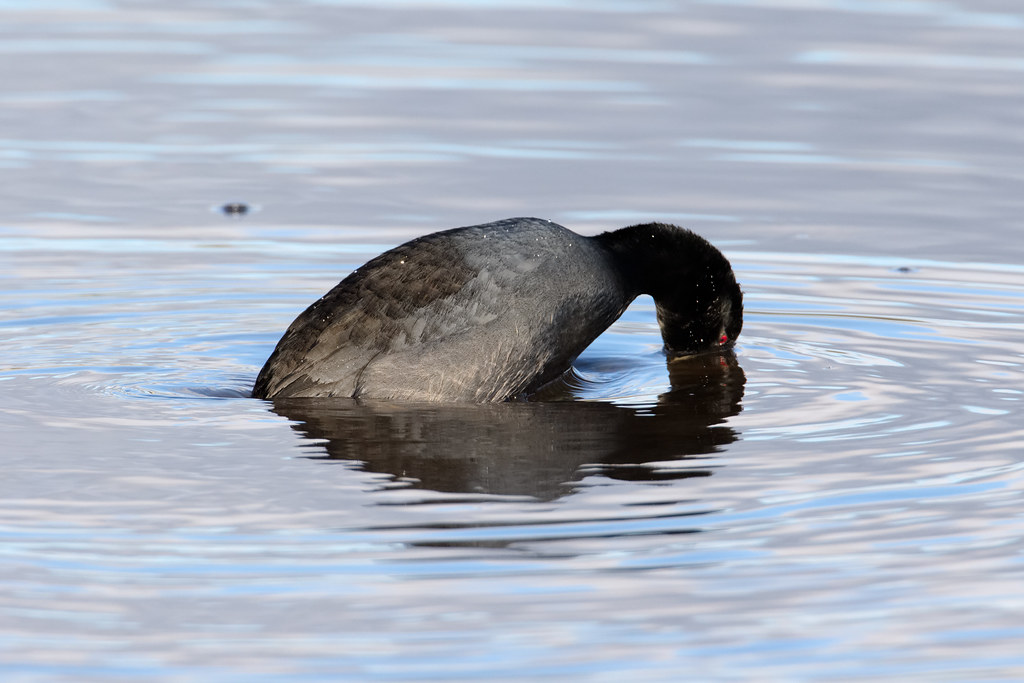
Visit Ridgefield in the winter and you’ll see waterfowl diving under the water to feed, such as this bufflehead at sunset above, or the coot below, its red eye visible just above the water. I like to sit and watch them and have been struck by the many differences in the bodies of coots and diving ducks, even though they both spend much of their lives diving underwater to feed. There are differences in their bills, and their feet (ducks having fully-webbed feet, coots not), but my favorite difference is most visible when they dive.
Both diving ducks and coots spring forward and break the surface tension of the water with their beaks, but ducks leave a vortex behind them at the start of the dive while coots do not, a difference that begins with their ends. Diving ducks like the bufflehead have broad tails that they spread out horizontally on the water before they dive, enabling them to push their tails down and themselves forward as they start their dive. You can see the pattern of their tail feathers, shown below as water flips off the bufflehead’s tail as he finishes the dive, in the water behind the duck in the first picture.

Compare the bufflehead’s tail above to the coot’s below and you’ll see the coot has a stubby little tail and can’t use it to push forward like the diving ducks can. While it might seem that the diving ducks have solved the diving problem much more efficiently than the coots, I should point out that the coots at Ridgefield far outnumber any species of diving duck at the refuge.

A trait they share in common is that they have to get a long run across the water to take to the air, so if a bald eagle attacks, they prefer to dive under the water as a means of escape. It’s usually effective, but sometimes you’ll see an eagle keep flying over a duck or coot repeatedly until its prey tires and surfaces at just the wrong moment and is captured in the eagle’s talons. I’ve seen eagles with a variety of waterfowl in their talons, but coots more than any others, not surprising given their large numbers.

After circle feeding with a female for much of the afternoon, this male northern shoveler swam near my car at the end of the day, minutes before I left to make sure I was off the refuge before the gate closed. I hate leaving when the light and the subject are so beautiful.

A small green hand reaches out from a tree bud as a dormant life awakens. Taken late on a winter afternoon, a reminder: spring is coming.
 Boolie