
It had been raining much of the day but with no wind the surface of Rest Lake was fairly calm. A slight breeze kicked in by afternoon and created a little chop as a nutria swam towards me, creating a small bow wave in the process.

Scratcher of heads, rubber of bellies
It had been raining much of the day but with no wind the surface of Rest Lake was fairly calm. A slight breeze kicked in by afternoon and created a little chop as a nutria swam towards me, creating a small bow wave in the process.

I spent New Year’s Eve at Ridgefield from sunrise to sunset. It was sunny and cold throughout the day and the shallower ponds had partially frozen. Near the end of the day I was parked near the start of the auto tour so it would be easy to leave before the gate closed. A great egret was hunting bullfrogs in the shallow channel beside the road and I expected it would be my last wildlife sighting of the year. Not a bad way to end the year.
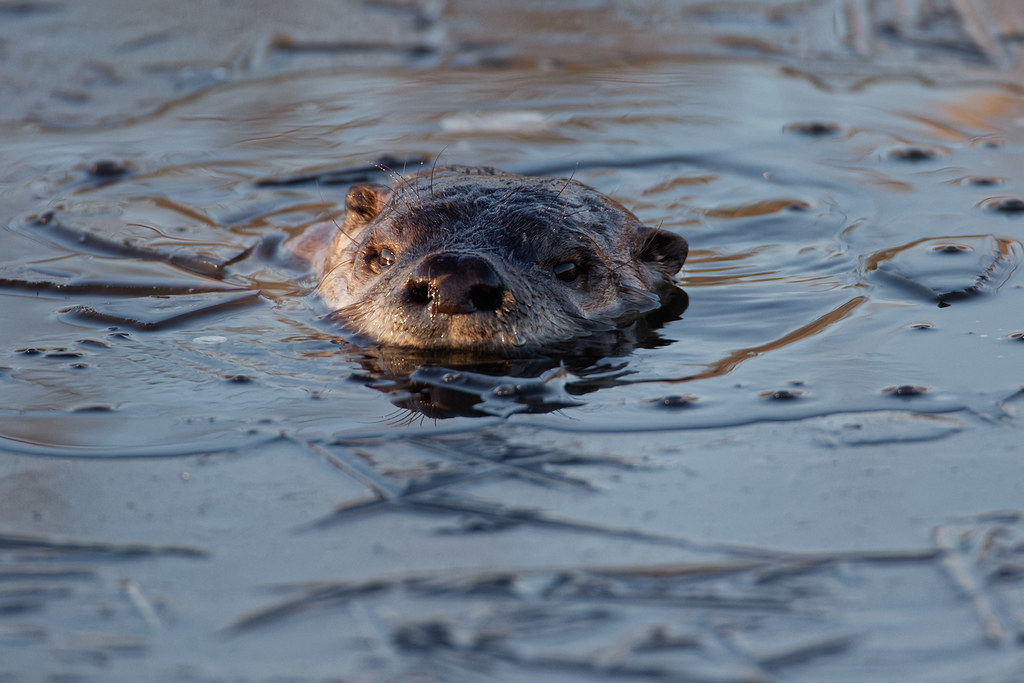
But then I heard a loud crack in the ice and looked down to see that a river otter had punched though the ice to come up for air. It didn’t stay long before submerging and swimming out of sight, but it made me laugh, Ridgefield giving me one last surprise to close out the year.
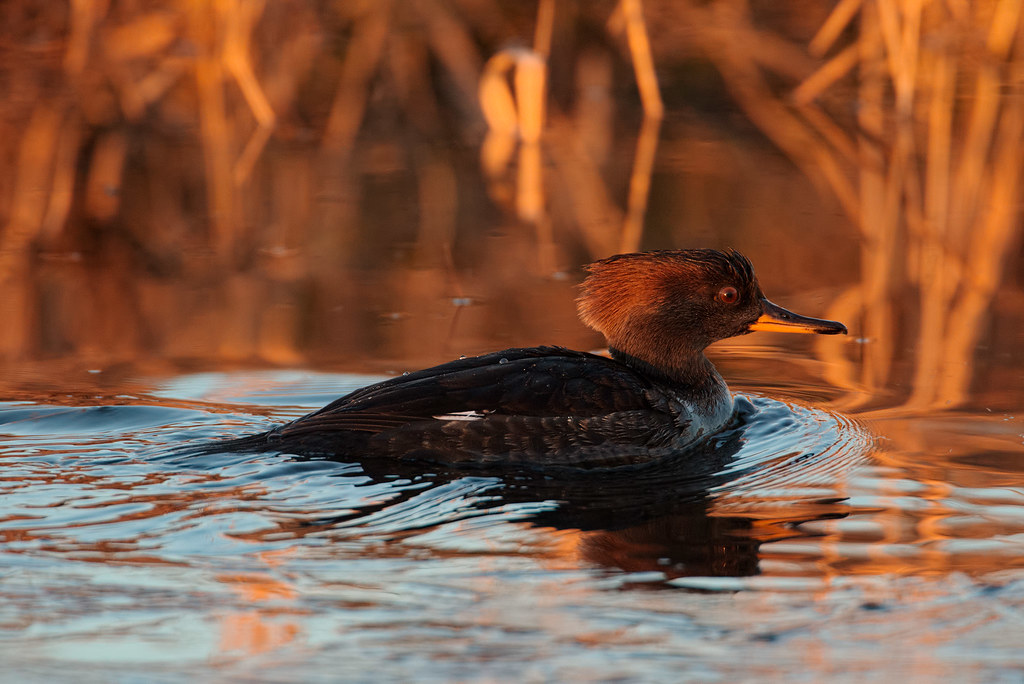
The egret had moved on, the otter had swum away, so I was about to pack up my camera for the trip home when a couple of hooded mergansers swam by in open water beside the ice, beautiful in the last light of the day. My goodness but the refuge was putting on a display. After a quick scan to make sure bigfoot wasn’t hiding in the bushes, I packed up my camera and headed home.

A Townsend’s chipmunk eats on a large boulder in the Paradise section of Mount Rainier National Park.

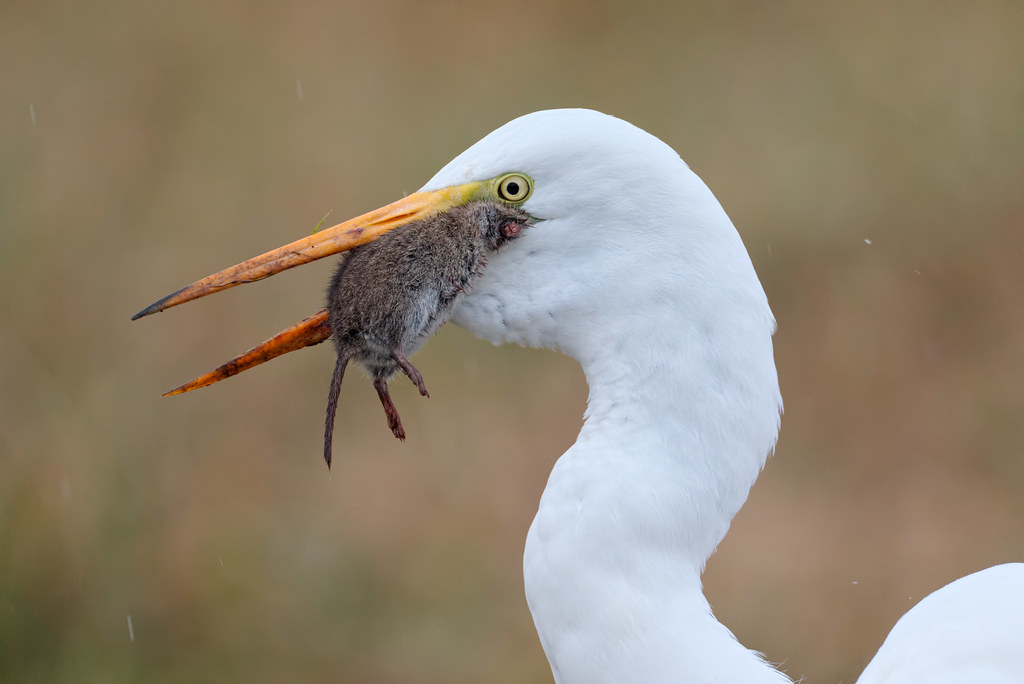
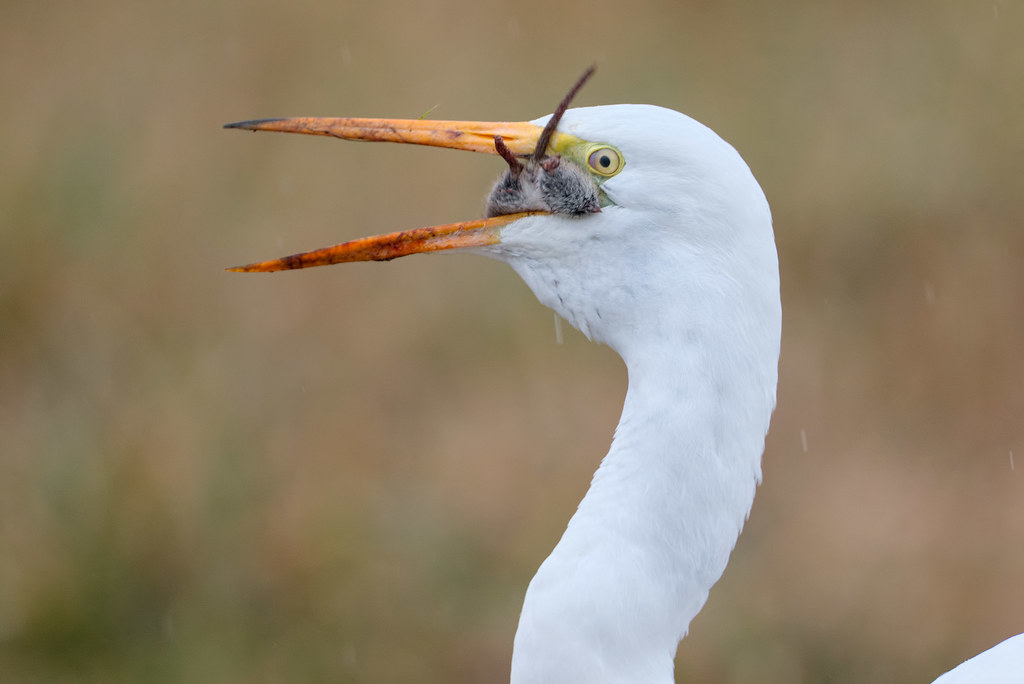
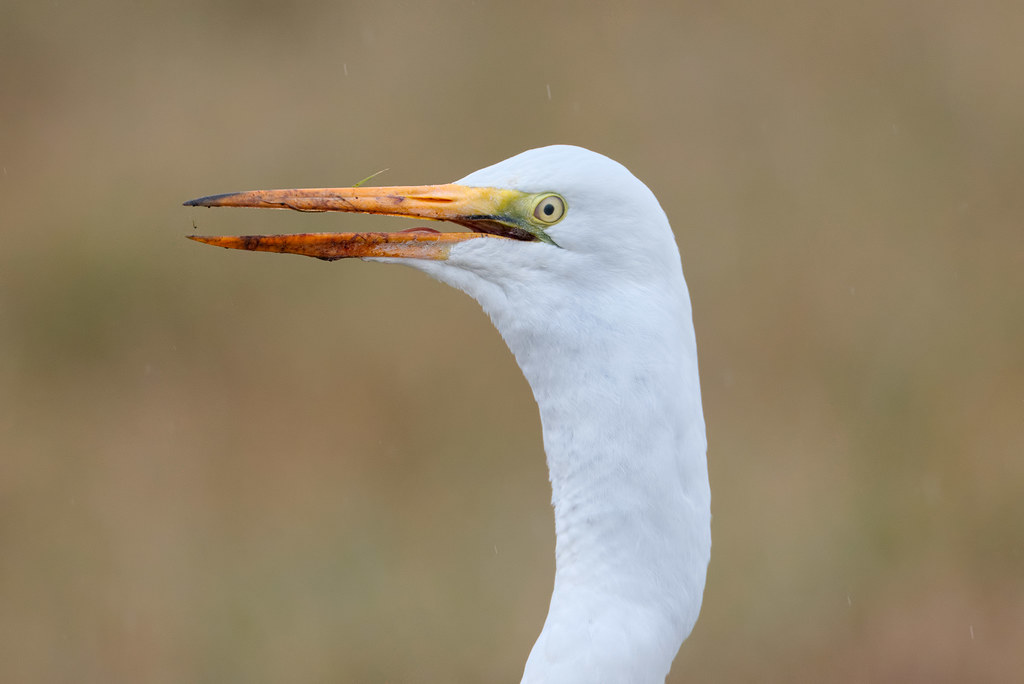
I’ve met people who think it preposterous that birds descended from dinosaurs, a theory that dates back to the 19th century and the discovery of an Archaeopteryx fossil, as they think of birds as being small and cheerful. They might change their minds if they spent some time watching an egret hunt for voles.
As I’ve photographed birds over the years I was struck by how many of the feathers on a bird’s body aren’t actually used for flight. I began to wonder which came first, feathers for flight or feathers in general? This article by Luis Chiappe on dinosaurs and birds gives the answer (spoiler alert: it’s not flight). I’ve only started reading the article but it’s written in plain language and has a lot of information (and importantly, references) on the link between dinosaurs and birds, and how most paleontologists believe that some dinosaur species survived and evolved into the birds we know and love today.
I suppose it’s all splitting hairs to this vole, within seconds of being swallowed on a rainy January afternoon. I sometimes shoot hunting egrets and herons and bitterns with my biggest lens, to show that one life is ending in order for another to continue, and sadly I’ve only ever been able to photograph these voles in the last seconds of their short lives. I keep hoping one day to get a photograph of a vole just sitting in a meadow but for some reason they don’t stay above ground very long.

A young elk bull grazes in a meadow on a rainy fall day in Grand Teton National Park in 2006. He was eating with another young bull, both keeping a watch on the nearby harem of a mature bull.
It’s a little hard to see the rain in the picture at this resolution, but I had just purchased my 500mm lens before this trip and while the lens has weather sealing, I was still a little nervous about exposing it to the elements. Nine years later it’s been through a lot more rain and is still going strong.

A pika brings a mouthful of plants back to its home to store them for the long winter on Mount Rainier.
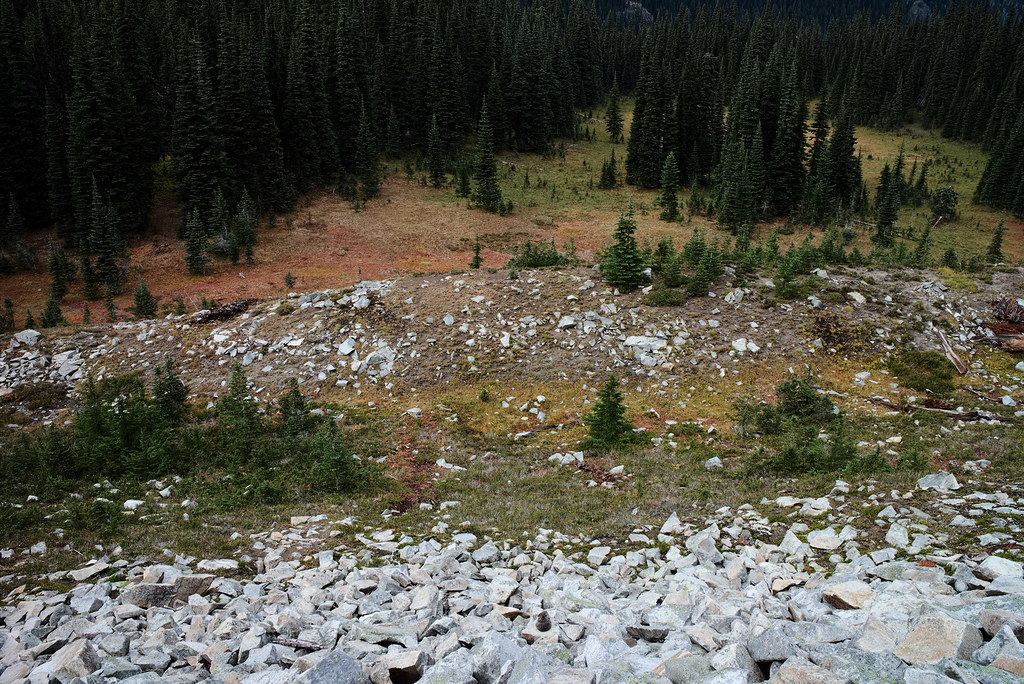
I spent over four hours watching a couple of pikas on the Palisades Lake Trail in Mount Rainier National Park, keeping an eye on the clock as I had a set time when I needed to depart for Olympic National Park. This pika was below the trail, the other above it, and I watched and photographed them through my biggest telephoto lens.
This pika spent most of its time with its back to me, sitting on a rock and looking down the hill, so I grabbed my widest lens to better show the world of these amazing little creatures (the pika is sitting dead center on a rock near the bottom of the frame). Winters are long and harsh here and it’s hard for me to wrap my head around how, without hibernating, pikas can survive a winter that would kill me within hours.
This is the same pika as in my I spent over four hours watching a couple of pikas on the Palisades Lake Trail in Mount Rainier National Park, keeping an eye on the clock as I had a set time when I needed to depart for Olympic National Park. This pika was below the trail, the other above it, and I watched and photographed them through my biggest telephoto lens.
This pika spent most of its time with its back to me, sitting on a rock and looking down the hill, so I grabbed my widest lens to better show the world of these amazing little creatures (the pika is sitting dead center on a rock near the bottom of the frame). Winters are long and harsh here and it’s hard for me to wrap my head around how, without hibernating, pikas can survive a winter that would kill me within hours.
This is the same pika as in my earlier picture, which was taken further up the trail to the right.

I spent my first full day on this visit to Mount Rainier hiking the Skyline Trail and its various offshoots. While I had seen grouse and marmots, based on previous visits I was a bit surprised to not see more wildlife than I did. What I saw most were grasshoppers which were constantly hopping about the trails, many crushed underfoot from the mass of hikers on the previous day.
At the end of a hard day’s hiking I went back up to see if any marmots were out in the biggest colony near the trail, as they had been quite active the previous evening, but was sorry to see that they had all called it a day. I hiked a little further and was delighted to find this Townsend’s chipmunk eating what I assumed were some seeds on a boulder near the trail.
I was a little confused when, after watching it eat for some time, it started coming straight toward me. But it just grabbed some flattened grasshoppers near my shoes and hopped back up onto its boulder and ate them. It was then that I realized that most of this little section of the trail had been cleared of grasshoppers, and when I reviewed my pictures I understood why.
After a while it came back towards me, but this time hopped right between my legs and continued on down the trail. It had its dinner, and as the light faded, it was time for mine.

I’ve tried to hike the Palisades Lake Trail in Mount Rainier National Park three times over the past decade but never gotten very far. Once because of thunderstorms, twice because of pikas. I can’t resist them and spent my last hours of my latest visit watching this pika below the trail and another above it. Normally pikas let out a fairly quick call but thankfully this one let out an extended call as I had already packed up to head back up the trail and had to grab a quick handheld shot.
One day I’ll have to hike the trail with friends who can cover my eyes and stop up my ears and lead me safely past the siren’s call.

The squirrels in my Portland neighborhood are all invaders from the east, either gray or fox squirrels. This eastern fox squirrel was nearly obscured by leaves in a nature park in nearby Beaverton, where the large habitat also supports one of our native squirrels, the Douglas’ squirrel.
 Boolie