Otters at Play

Two river otters play in Bower Slough

At the dog park this morning two young dogs were playing when suddenly in their rough play a line was crossed and things got more serious. Their owners separated them and the aggression quickly dissipated and hopefully each dog made a little progress in their socialization. These two otters were part of a family group catching fish in Bower Slough, and thus were quite familiar with each other, but even so when one otter grabbed the other by the scruff of the neck I wondered if this playful move was a bridge too far. But as you can see the otter’s skin is loose with plenty of fat underneath and the victim took it all in stride.

It Rains Sometimes Here in the Northwest

A great egret in a meadow in the pouring rain

It rains fairly often during winter here in the Pacific Northwest but it is often a gentle, misty rain and hard to convey in images. On this January afternoon, however, great big buckets of rain started pouring from the sky so I took the opportunity to show how predators like this egret, if they want to eat, have to hunt no matter the weather. If you’re wondering how the egret fared under such conditions, this happened about 10 minutes later.

I was playing off the shutter speed (to freeze the rain) with the depth of field (to keep as much rain in focus as possible), but I wish I could have had more depth of field. Hopefully it still conveys a sense of how hard it was raining.

No Shelter From the Rain

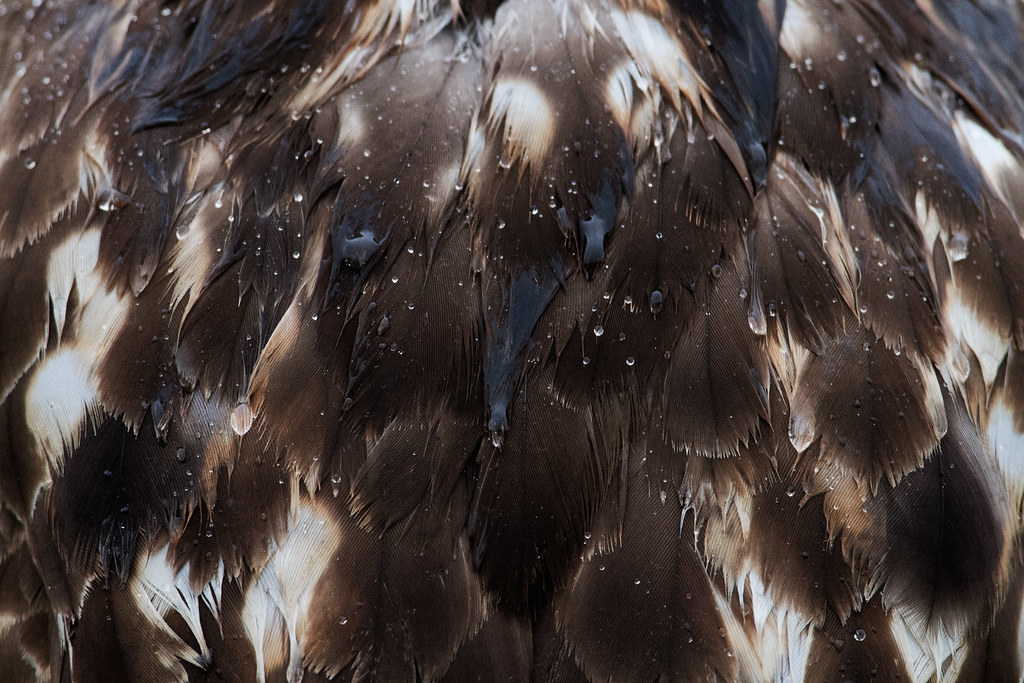
A close-up view of the feathers of a red-tailed hawk with water drops beading up during a heavy rain

A downpour on Christmas morning left this young red-tailed hawk, sitting on a signpost beside the auto tour, drenched from head to toe with water drops beading up on the feathers on its back. The heavy rain and the holiday morning also meant that I had the refuge pretty much to myself and I was able to observe this tolerant hawk at my leisure without having to worry about blocking the road.

Backside

An American bittern scans the water for food

One benefit to earning an animal’s trust is that you can often watch it for a long period of time. The downside is that it often has its back to you as it doesn’t consider you a threat. I had been watching this bittern hunt on the far bank for over an hour when it swam over and sat down right in front of me. It turned around to scan the water and I loved the geometry formed by its body and beak, its two round eyes sticking out from the side of its head.

Late Flight

A tundra swan flies near sunset

After spending a sunny fall day at Ridgefield, I found myself near sunset photographing ducks and coots feeding in Rest Lake. Suddenly a few tundra swans took off from a distant part of the lake and kept coming in my direction until they flew by my car. Sadly I didn’t have time to change settings on the camera so some things weren’t set up the way I would like, besides which I don’t normally shoot birds in flight so it’s not something with which I have much practice.

Nevertheless it was a nice ending to the day. I took a few more pictures of ruddy ducks and then headed for home.

At the Edge of the Ice

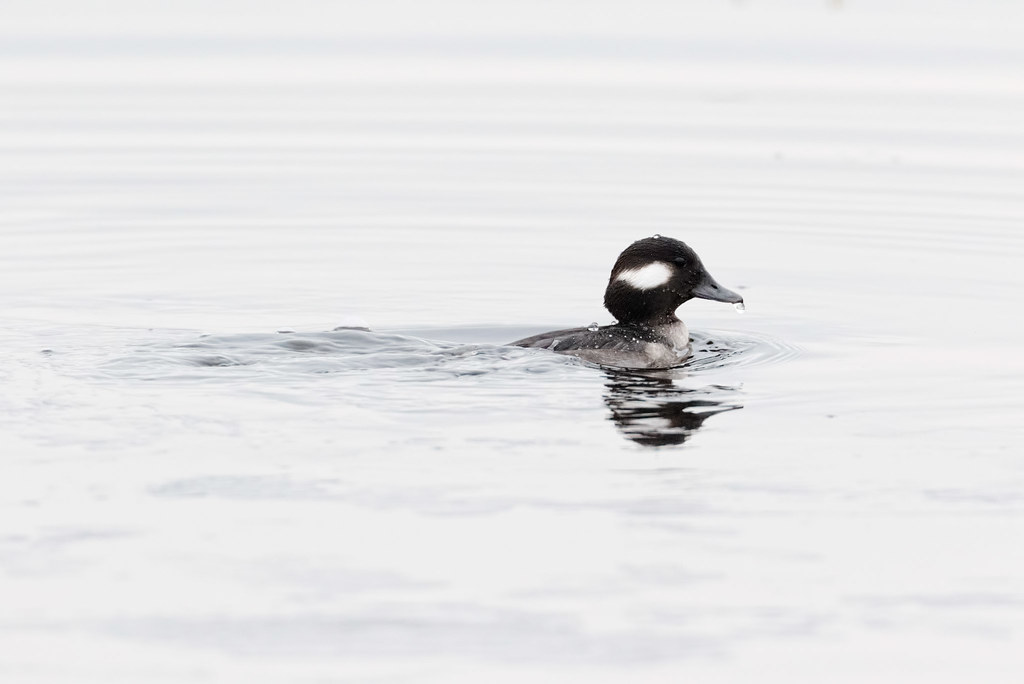
A female bufflehead surfaces next to the ice in a rapidly thawing Horse Lake

A female bufflehead surfaces next to the ice in a rapidly thawing Horse Lake. I felt bad for her, she had been feeding on her own, the only bufflehead on the lake, when a male/female pair flew in and started harassing her. She’d move off on her own, minding her own business, but the other two would still frequently swim over and chase her away. She was the first bird I photographed that morning but this picture is from an hour and a half later near the end of my time watching her.

The Pintails

Six pintails stand on the melting ice in Horse Lake at Ridgefield National Wildlife Refuge in Ridgefield, Washington on January 3, 2015. Original: _L1A2530.CR2

Six pintails stand amidst the melting ice of Horse Lake. They reminded me of teenagers lined up along a wall at a dance, a little too nervous to take to the dance floor, especially the males who looked like they were decked out in formal attire. In truth they were a little ill at ease and anxious for the ice to finish melting, as they are as awkward on the ice as they are graceful in the water.

📷: Canon 7D II | Canon 500mm f/4 + 1.4X
🗓️: January 3, 2015

Sunny Day, Cloudy Day, Same Day

Sunny Days

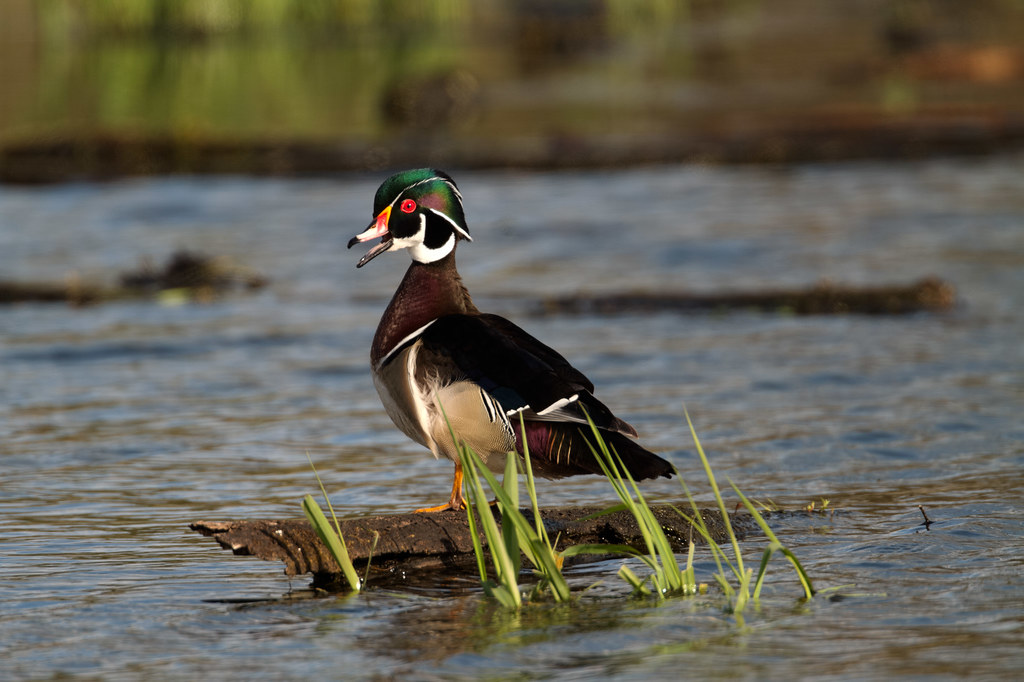
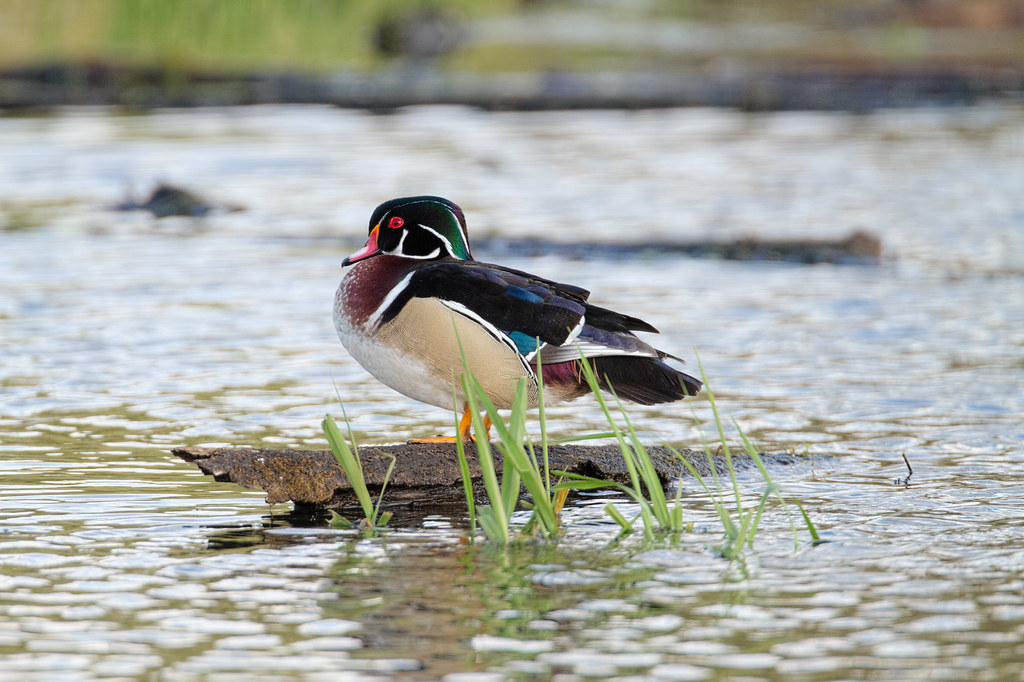
On a sunny afternoon, this seemingly happy wood duck raised his head to stretch before resuming preening some of the hard-to-reach areas. I don’t often see wood ducks in this part of Long Lake so it was a treat to watch him. Five minutes later the clouds rolled in and changed the lighting as he paused during his preening ritual. I love shooting on both sunny and cloudy days and on this day got to do both frequently, but the constantly changing light levels made it challenging to correctly meter the scene and I often didn’t keep up fast enough.

Cloudy Days

Follow the Eyes

An American bittern with its mouth wide open

One thing I’ve long wanted in a camera is the ability for the focus to lock onto and track the eye of an animal I’m photographing. It would have come in handy here, I was testing out my Canon mirrorless camera to see how limiting its poor autofocus would be if used as a backup in case my main camera failed. I had been watching this bittern that had been mostly sitting still, with some occasional preening, when it suddenly threw its mouth wide open and shook its head about. While the camera had focused fine on the bird while it was sitting still, by the time this shot was taken the bittern had already moved far enough that it isn’t in good focus.

The technology is moving in this direction for photographing people at least, but I fear it will be a while yet before we can do it with moving animals. While my main camera would have handled this situation much better, it still requires thinking about it’s many autofocus modes, and I’d love to spend less time thinking about the technical side of photography and instead just enjoy the animals I’m watching.