A couple of years ago we started a hummingbird garden in memory of my mother-in-law. Many of the plants were chosen specifically to attract hummingbirds, while others were selected to expand it into a wildflower garden, plus we added a young dogwood to round things out. We also picked up a pretty little birdbath since we hadn’t had one for years, not since I accidentally knocked over our cheap one and broke it. A number of birds, such as this American robin, have been enjoying the bath ever since.
Purple coneflower is one of my favorites in our garden and we have a vigorous patch at the edge of our back patio. I deadhead them during the summer to encourage new flowers but at the end of the season I leave them be as I knew birds were eating the seeds in the dried-up cones during the winter — I just didn’t know which ones, as I had never seen any birds on the dead flowers. I had assumed my seed-eaters were finches but just discovered their true identity: dark-eyed juncos.
Junco plumages vary across populations, this is a female of the Oregon race which we commonly see in our backyard, she’s perched on one of the coneflower stems.
We’re all waiting on pins and needles here to see what Apple announces on Monday at their Worldwide Developer’s Conference. We’re so anxious we can barely sleep! Well maybe not all of us. And in fact this picture of Lady Em was taken last summer as she tried to beat the heat by catnapping on the glass table on our porch as she and I enjoyed a nice day in Portland.
I do my best to educate the pets on affairs both present and past. After one of our study lessons covered Cleisthenes, a father of Athenian democracy, the little ones were inspired to found the Irvington Democractic Society. They meet weekly to air grievances and propose resolutions. Here, Emma takes the podium in support of one of her proposals, “All pets should only eat the food given to them and not push others out of the way and steal their food.” Emma and Scout voted in favor, Sam and Ellie against. What do we do in the event of a tie?
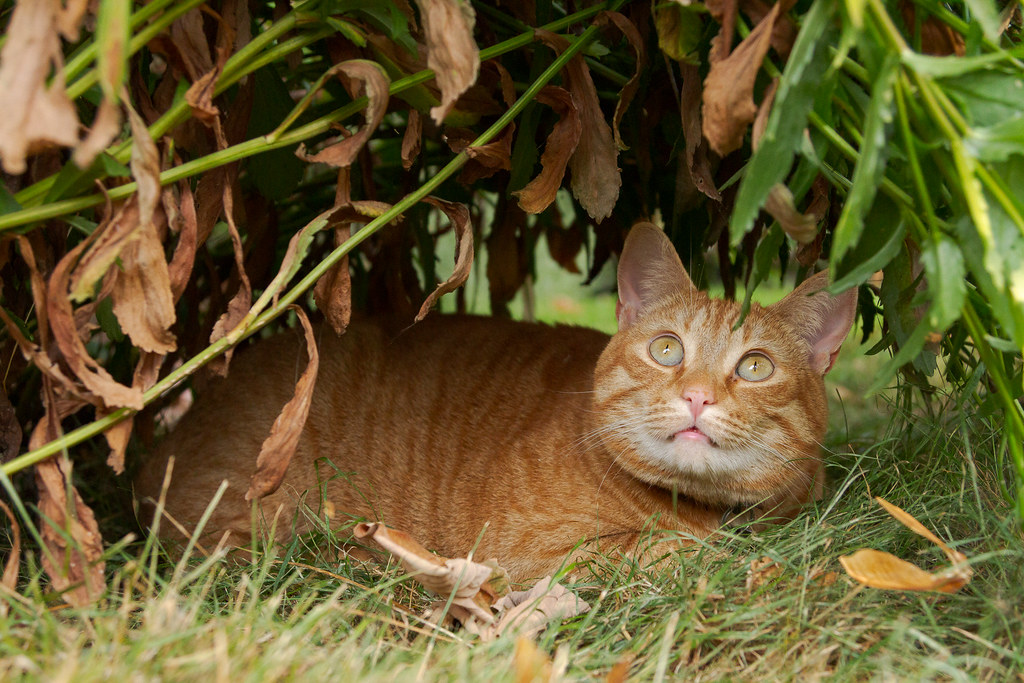
Requirement #1: It should be well-hidden with a secret entrance that only you can fit into.
Requirement #2: It should provide good viewing of your nemesis, Mr. Squirrel.
Requirement #3: It should have enough room for entertaining friends, but not so much that they will stay too long and impinge on your personal freedoms.
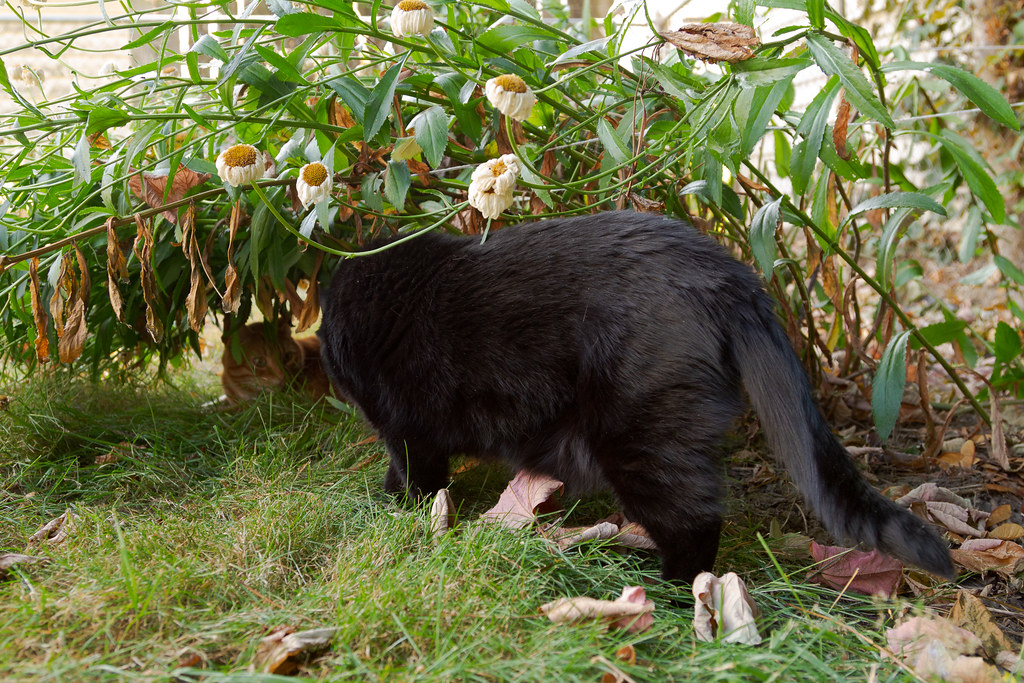
We have a patch of daisies in the backyard that don’t quite get as much sun as they should but I leave them where they are as they are in a good location for insect pictures. I tie them up after they bloom as otherwise they fall over searching for more sunlight, but an unusually heavy downpour this summer knocked them over despite my efforts. Since we didn’t get many insects on the daisies this year, after they fell I was going to cut them down until I realized another creature had taken up residence underneath their canopy.
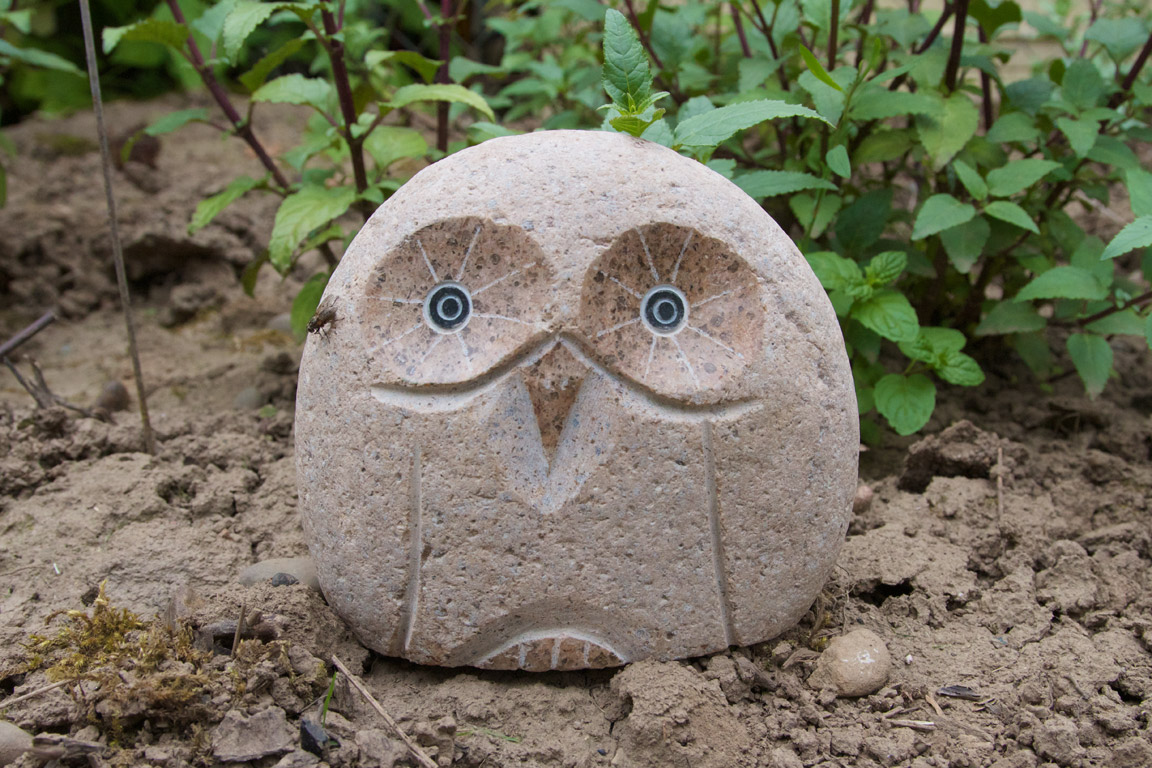
This past weekend we went to the nursery to pick up a few plants for the yard. I wanted to replace the lobelia the slugs devoured last fall, and pick up a couple of hostas and maybe a fern for the shady spot out front. We went to pick up a few plants and came home with twelve. And a bird bath. And a little stone owl.
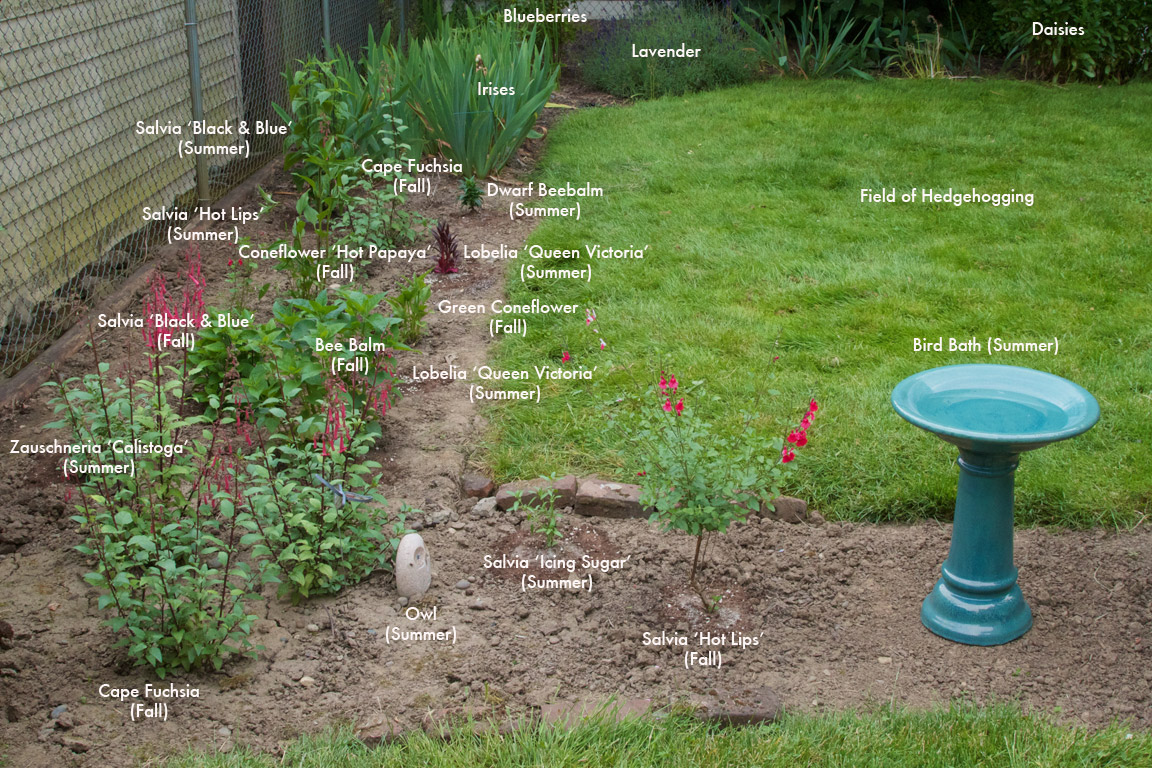
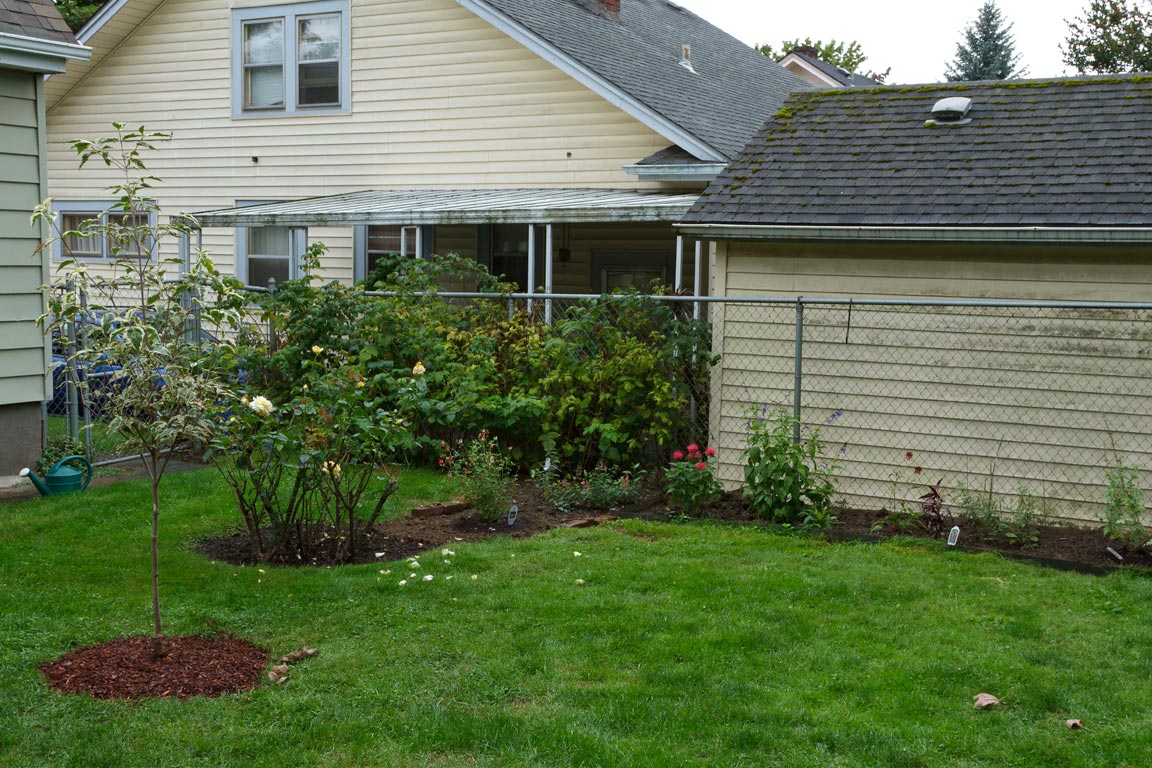
We started a hummingbird garden last fall in memory of my mother-in-law, plus a dogwood for the backyard and a handful of plants for other parts of the garden. This is more of that story. In the first picture, I’ve labeled the plants of the hummingbird garden, as well as whether they were planted last fall or this summer.
I also labeled a few plants in the back I transplanted in previous years. The patch of daisies at the back is where many of my insect pictures are taken, including a ladybug that remains one of my favorite pictures.
When we moved in, this little patch had an overgrown grape vine above and overgrown weeds below. I dug those out and then the raspberries and mint took over until last summer when I cleared it down to bare dirt. And then again and again until it stayed clear enough that I could get the hummingbird garden started.
And while the slugs got the best of the lobelia I planted last fall, I did get to see it bloom, its brilliant red flowers against the maroon stems and leaves, and knew I wanted another. We got two for good measure, we’ll see how long they last. I’m thinking of setting up some really tiny electric fences.
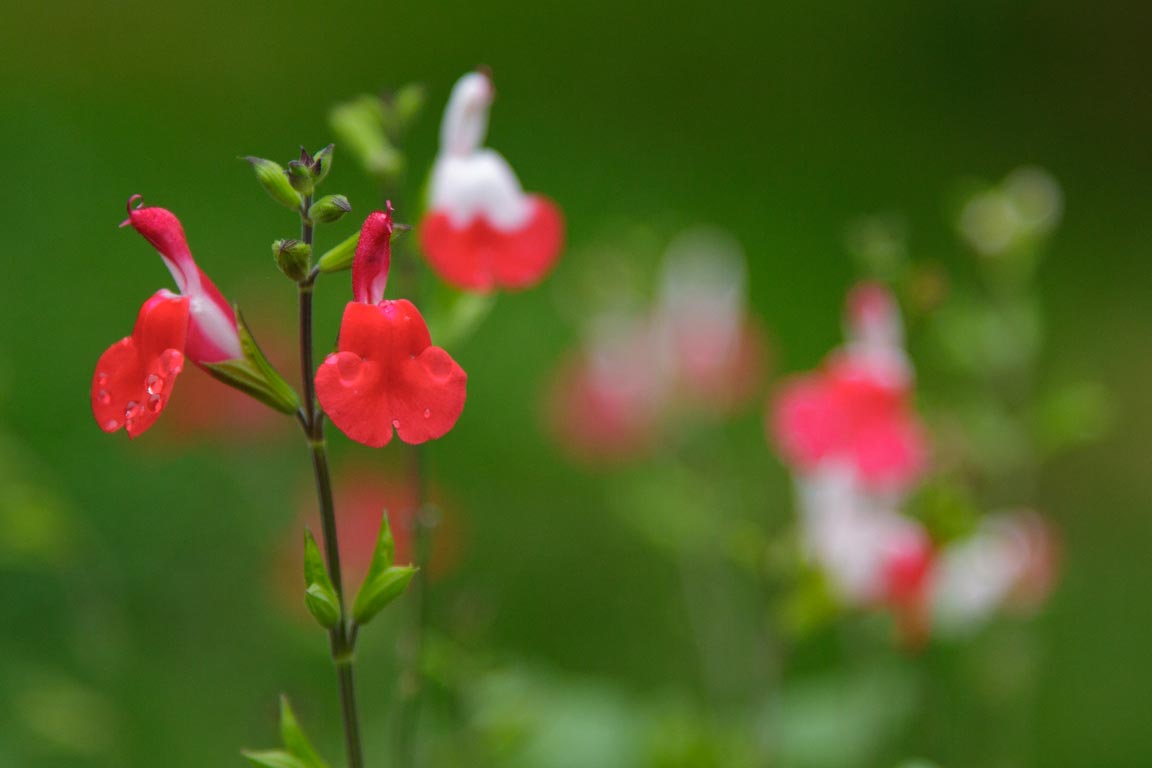
The other plant that appears not to have survived, done in not by slugs but by the long wet spring, is one of the salvias (I haven’t given up complete hope, not yet, and left it in the ground just in case). We picked up another salvia ‘hot lips’ since we like the one we got last fall, as well as another salvia ‘black & blue’ since the black and blue flowers are both arresting and provide a nice change from the red flowers of many of the other plants. And a salvia we haven’t tried before, ‘icing sugar’, with more pinkish flowers.
The bee balm I planted last fall has come back strong so we added a little dwarf beebalm at the far edge. Both varieties of coneflowers survived the winter and spring, the little green coneflower in the front and the ‘hot papaya’ variety behind it (of all the plants I was most worried about that one as it isn’t as hardy, but it has grown like a champ and is about to bloom).
Then there’s the zauschneria, a native to the Western U.S., which has soft leaves and should bloom orange-red flowers in the fall. Our cat Emma was giving it such rapt attention that I thought she was eating it, but on closer inspection she was just sniffing each and every leaf. I thought back to last summer when she discovered the catnip for the first time and had such a wild look in her eyes that I began to fear for the safety of Sam and Scout.
Finally there are the cape fuchsias that I grew by transplanting runners from the plant out front. I planted half a dozen runners in this part of the garden during the fall, hoping one would take, and now five are thriving. I may remove a couple that are in the back since it does spread quickly, but for now it’s filling in the garden nicely.
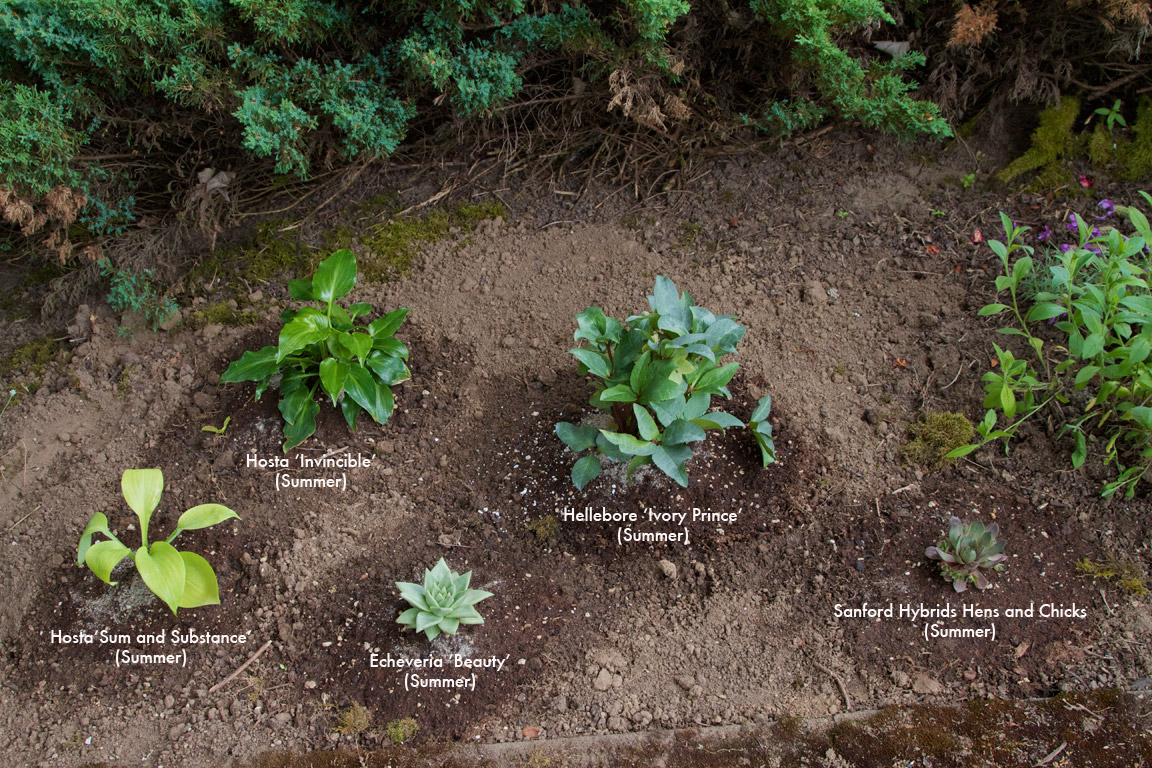
I’m glad the transplants are doing well because the original cape fuchsia out front, planted by a previous owner, wants full sun but gets full shade. It has never thrived there and was looking rather ragged after the long wet spring, so it was time to dig it up and put in some shade-tolerant plants. This little strip shown below sits beside the steps leading up to the front of the house. The hostas are probably too close together but I didn’t want to leave too much of a gap since it’s such a visible area, I’ll move them later if need be.
The hummingbird garden in memory of my mother-in-law got off to a slow start. I first needed to clear out some of the raspberries, but when I dug down into the clay to remove raspberry and root, the next week another young plant sprouted up and it was once more down into the clay. This continued week after week until it was time for Ellie’s surgery, our trip to Maine, and suddenly we were well into the summer.
I didn’t want to risk planting new plants during the dry season, but since there was a Cape fuchsia out front (a sun-loving plant that a previous owner planted in total shade), I dug up some of its runners and transplanted them to the back. Unfortunately I didn’t have any potting soil to ease them into their new homes, so it was clay-to-clay for them. I hoped at least one would survive, and if not, it was no great loss.
To my surprise, all but one not only survived but even bloomed during the summer, and then grew quite a bit in the fall. An occasional hummer came by, a surprise given how low the plants were when they blossomed, but it was a promising start. Still, they stood alone until cooler weather returned.
When it did, I was ready list-in-hand and we were off to local nurseries recommended by a friend. We started off at Cornell Farms since my wife’s friends had kindly gotten us a gift certificate to start us on our way, and when we got there I realized it’s just minutes from where I work. It’s also close to Ellie’s surgeon, I had almost driven right past it on the way to one of Ellie’s appointments after a wrong turn sent me astray.
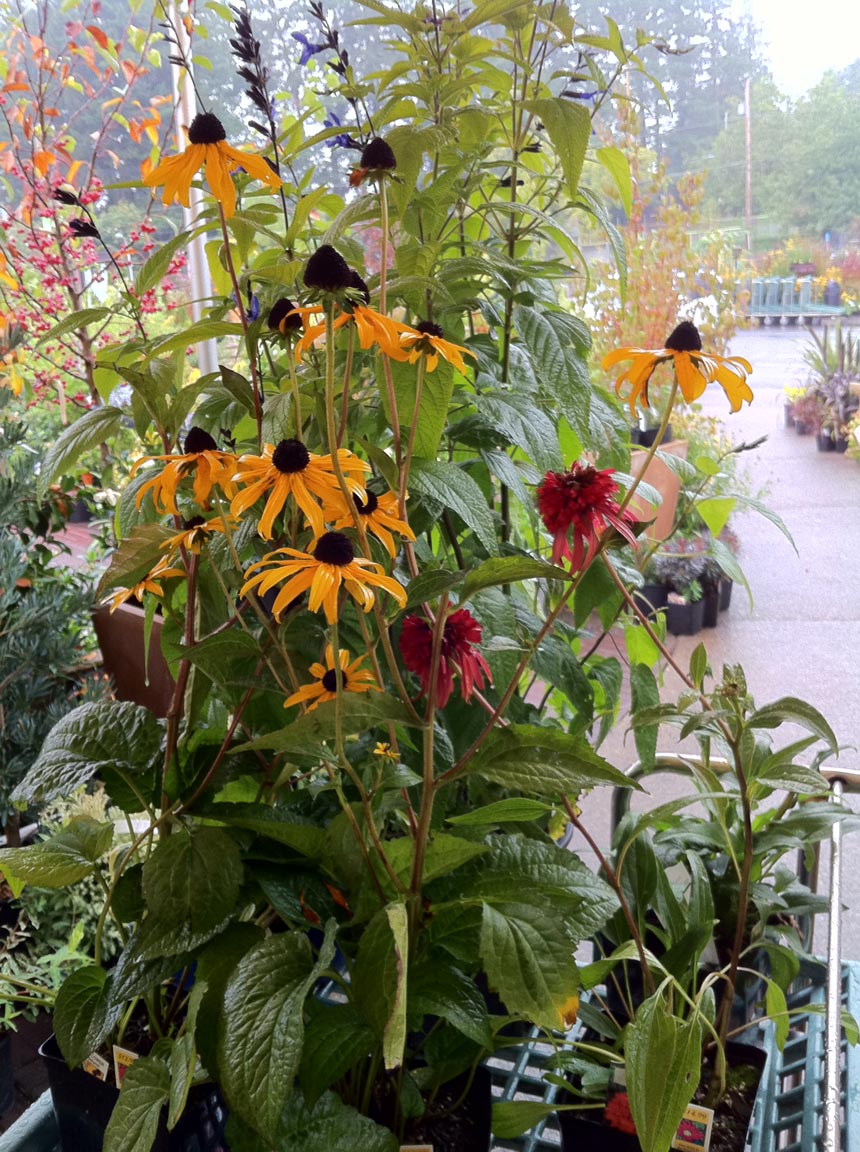
For the hummingbird garden we started with a showy ‘hot papaya’ coneflower balanced by a subdued green coneflower, as well as a distinctively pretty black-and-blue salvia. We also picked up a couple each of black-eyed Susans and hostas for other parts of the garden.
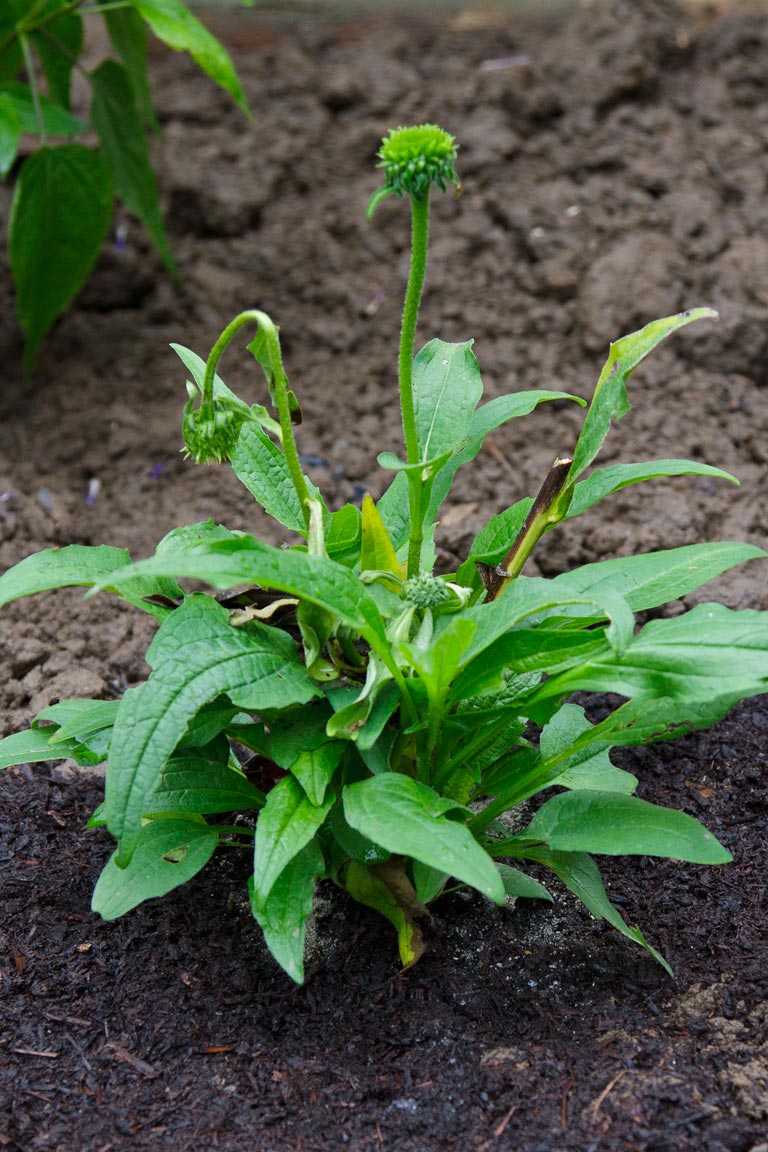
The first wave of new plants from the good folks at Cornell Farms, the first picture on my blog taken with my iPhoneGood pictures of the new plants will have to wait until spring, but even this snapshot shows the distinctive blossoms that give the black-and-blue salvia its nameThe all-green subtlety of this small coneflower will contrast nicely with the colorful blossoms all around itWill the hot papaya coneflower survive the winter and bloom again next year? Here’s hoping!
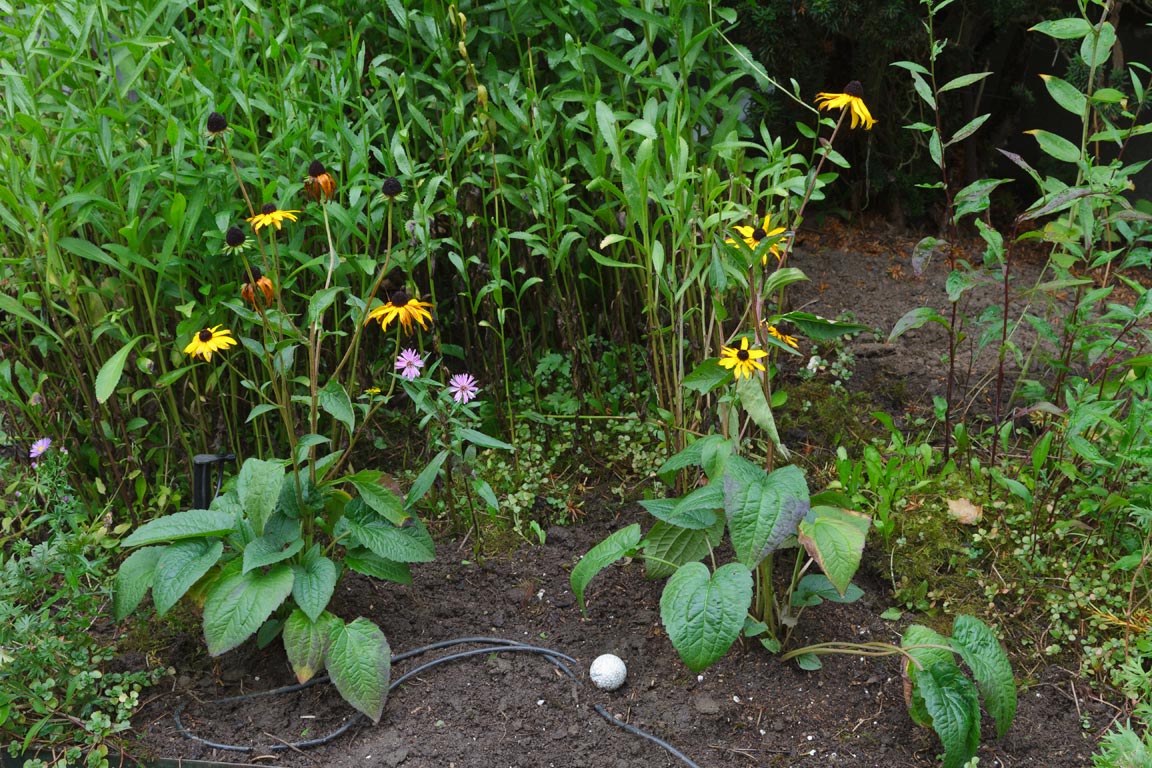
The black-eyed Susans were added to the wildflower garden in front to add color beneath the ever-encroaching mass of daisies. When we moved here all of the landscaping was completely overrun with weeds and this garden was the first to be rescued, but this is the first time I’ve added new plants to the survivors. When I first started pulling weeds back then, I found a golf ball buried below the plants and while not a golfer myself, decided to keep it in place in honor of my golf-loving stepfather. It now serves in his memory since he passed away a few years back, a pleasant reminder each time I work in this part of the garden and discover it anew.
The new black-eyed Susans joined the golf ball out front to add some color in front of the daisies
I’m not traditionally a fan of ferns but got religion while hiking in the redwoods surrounded by the ancient plants carpeting the forest floor. We had some ferns along a side of the house where they literally can’t be seen, so I moved them beside the trillium to create my own Redwood Corner, just like the redwood forests but for the minor point that I have no redwoods. The two new hostas sit nestled in among the ferns.
One sad note is that to make way for Redwood Corner I dug up Sam’s Grove, a patch of daisies that I moved to the backyard a few years ago. They just weren’t getting enough sun and needed to be tied up to avoid falling over. Little Sam loved playing in the daisies so I was sorry to do it, but I think he will enjoy the ferns even more than his old grove.
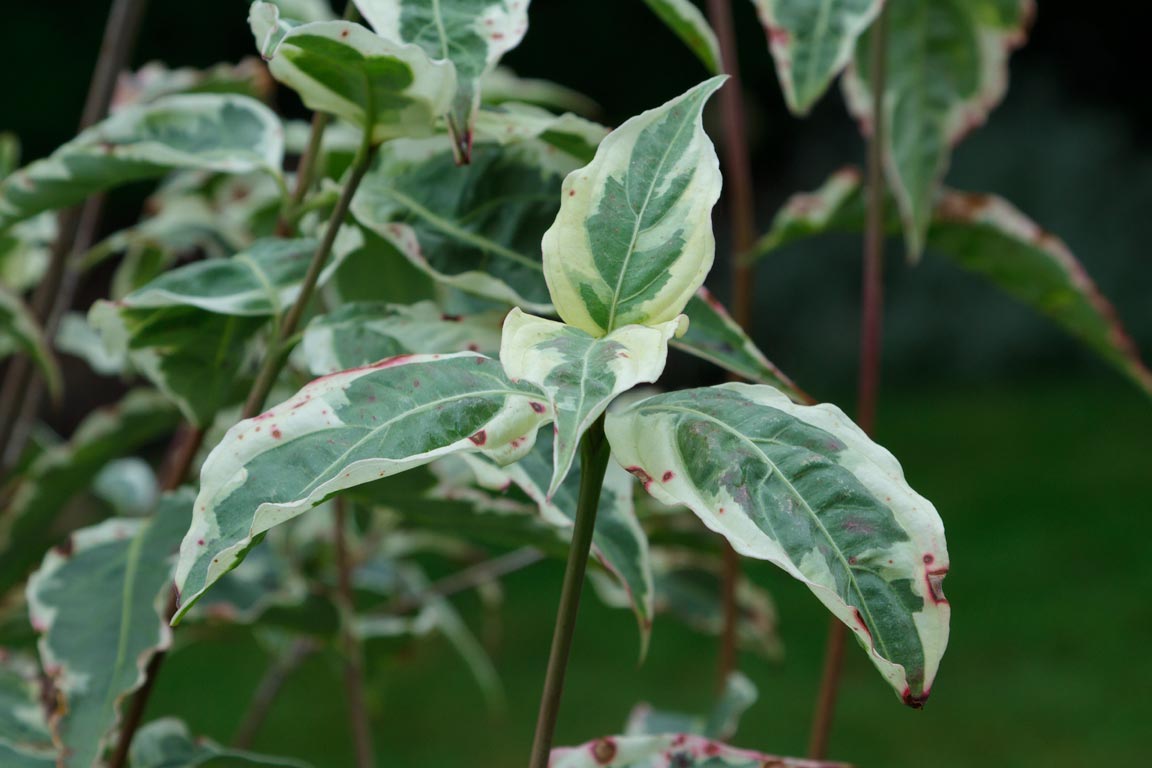
The next week we were off to Portland Nursery in SE Portland, starting off with a white dogwood for the back to complement the pink dogwood out front. The new one is a Korean dogwood (Cornus kousa) that is more disease-resistant than our native dogwood (native to the US, not Oregon), although our biggest consideration was finding one that would fit into the space available in the backyard — that is, it couldn’t impinge upon the hedgehog field of play. Some things are sacred.
The leaves of the Korean dogwood just starting to turn red with the fall
The hummingbird garden swelled with two new salvias, hot lips and Mexican sage, plus bee balm. A hummingbird hovered above me as I held the hot lips salvia before I even had it planted, then returned the following morning to work over all of the blossoms. I haven’t seen hummers much since, although I also haven’t spent much time out there between travel and the weather and the early approach of darkness.
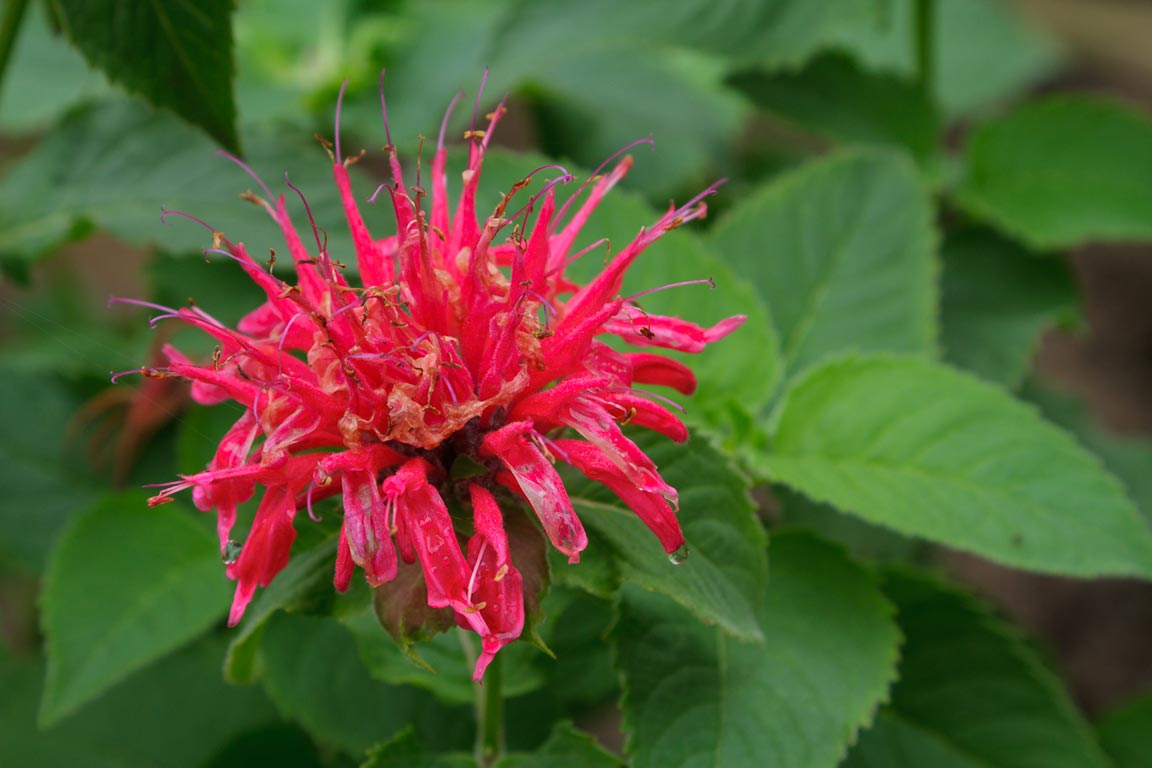
The bee balm was past its prime but still gave some nice color until it finally yielded to the fall
We also picked up a stunning Lobelia hybrid, Queen Victoria, which unfortunately the slugs love as much as I do. It will be difficult to photograph, as even viewing with the naked eye it’s blooms seem impossibly red. Its dark maroon stem and leaves contrast nicely both with the red flowers as well as the green leaves of the surrounding plants. It was flopped over when we bought up but straightened right up until the wind and rain finally humbled it. It was still actively blooming last I checked so it should give us a nice explosion of color late in the season.
The lobelia (the maroon plant on the left) straightened up and prepared to bloom, setting a good example for the others. It has since bloomed the most violent red flowers I’ve ever seen.
So far everything has survived despite by lack of experience, we’ll see what survives the winter. The hot papaya coneflower is the biggest risk as it doesn’t like the cold, so hopefully it will at least survive one winter so I can see it bloom. Just once is all I ask.
And I have to say, I did enjoy myself putting in the new plants even if it did keep me from hiking in the Gorge, gardening is a lot more fun when you love the plants you’re working with. You’re on notice plants-of-the-garden-I-don’t-like, sleep tight this winter but don’t say I didn’t warn you if the shovel comes digging your way come spring.
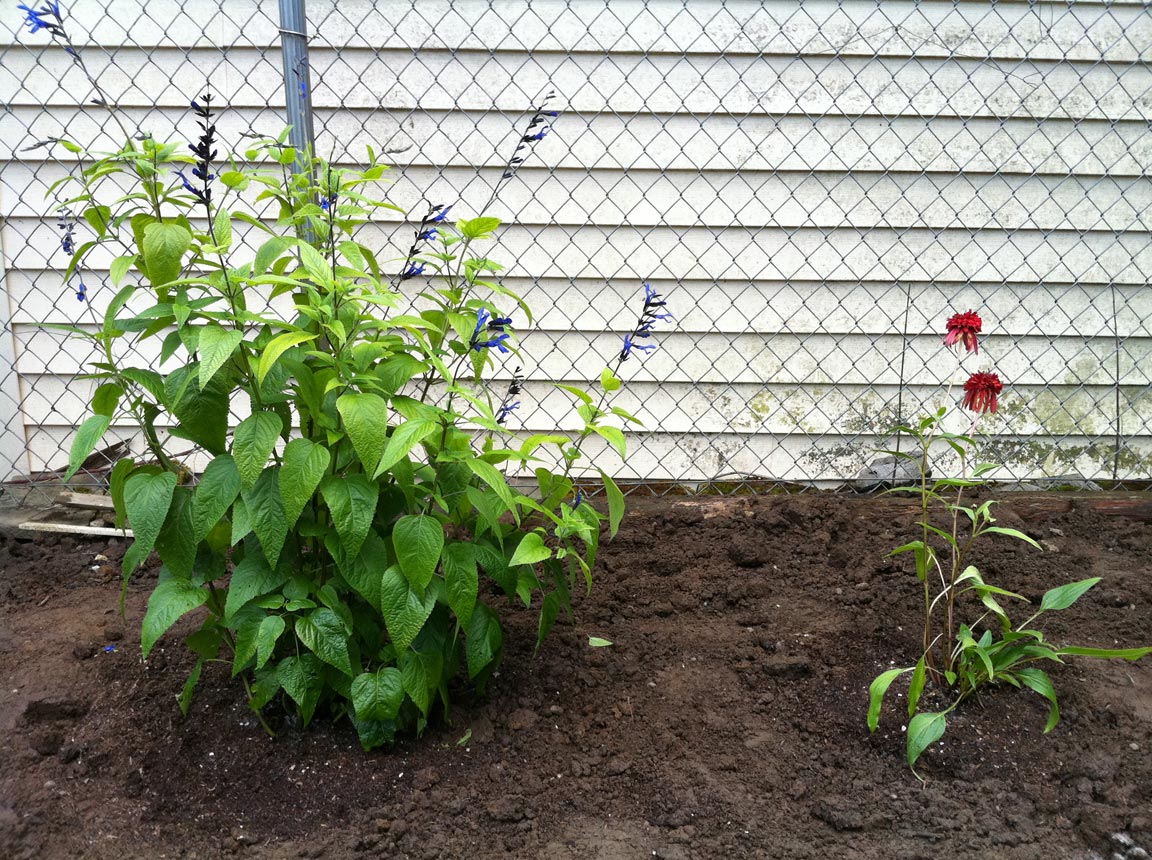
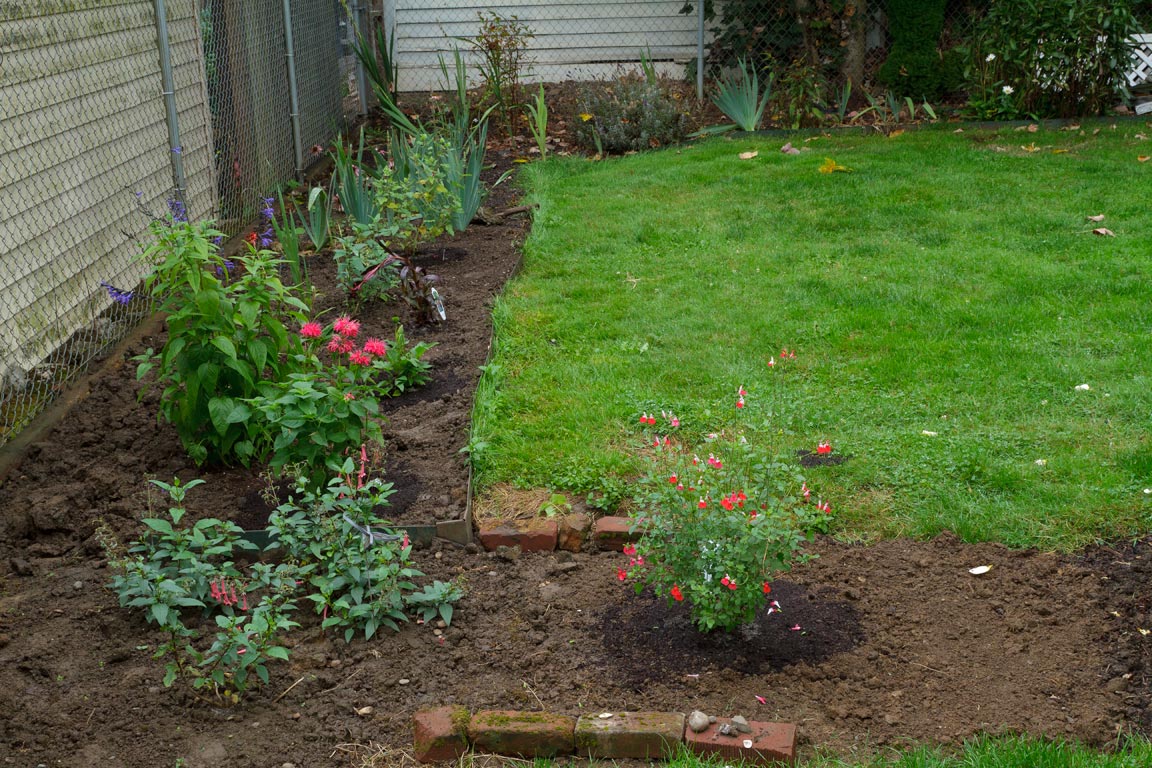
The humble start of our hummingbird garden, with the ever menacing raspberries in backAll of the plants in the lower two-thirds of the picture are new, the cape fuchsia in the lower left was transplanted from the front while the rest were purchased at nurseries.
One of the previous owners of the house must have really loved this one type of bulb because they are literally planted everywhere around the house. Unfortunately that includes some places where they shouldn’t be, such as in and around my favorite rose bush (which is actually a few rose bushes planted together). While the bulbs do have a pretty flower, they also are so thick they keep the roses from drying out, leaving them susceptible to the black spot fungus which has plagued our roses.
So earlier this summer I dug out as many of the bulbs as I could from underneath these roses. I tried to avoid damaging the roses but it was slow going as many of the bulbs were up tight against their roots. Also because the thorns of these old roses are both large and malevolent. The going got even slower when Sam came over to help. The stalks were still attached to many of the bulbs, as I pulled a few of them up he started playing with them. So we turned it into a game, I’d drag the stalks through the grass and he’d try to catch them and knock the seed pods off. When the stalk was sufficiently flayed, I’d toss it up and he’d somersault through the air after it.
Eventually I dug up as many bulbs as I could and all of Sam’s organic cat toys were gone. I took this picture of him after our fun and games were over.
Suddenly a great company of the heavenly host appeared with the angel, praising God and saying, “Glory to God in the highest, and on earth peace to dogs who can hedgehog again.”
Luke 2:13-14, more or less
Where were you this morning? Did you see the heavens open? Did you hear the angels rejoice?
I know one dog who did.
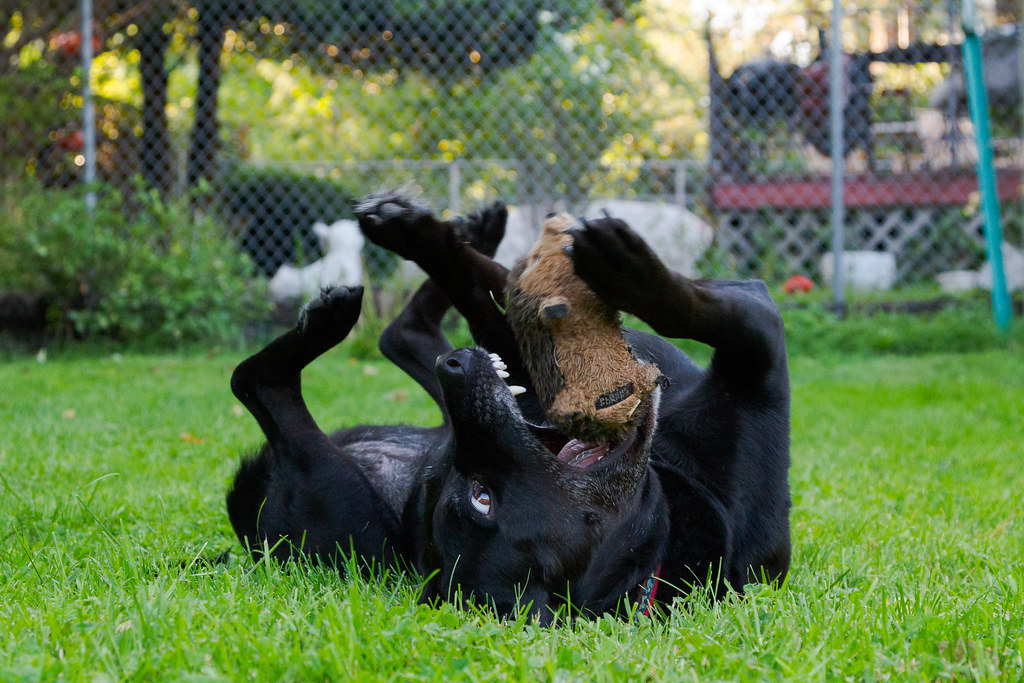
Ellie had her final visit to the surgeon today and Dr. Munjar said the x-rays showed a nice boring joint, meaning she had healed nicely and we can start easing her back into her normal routine. Ellie and I celebrated with a few hedeghog throws in the backyard before I had to head in to work.
If you’re in the Portland area and need surgery for your pet, I highly recommend Dr. Munjar and the Veterinary Surgical Center of Portland. Dr. Munjar has a great (doggy) bedside manner and explained everything very clearly and did great work. He provided detailed instructions for her post-op recovery and everything proceeded just like he said. From the moment we met him we felt we had made the right decision. The staff is friendly and knowledgable and took good care of us.
If I ever need surgery I can only hope to be in such good hands!






 Boolie