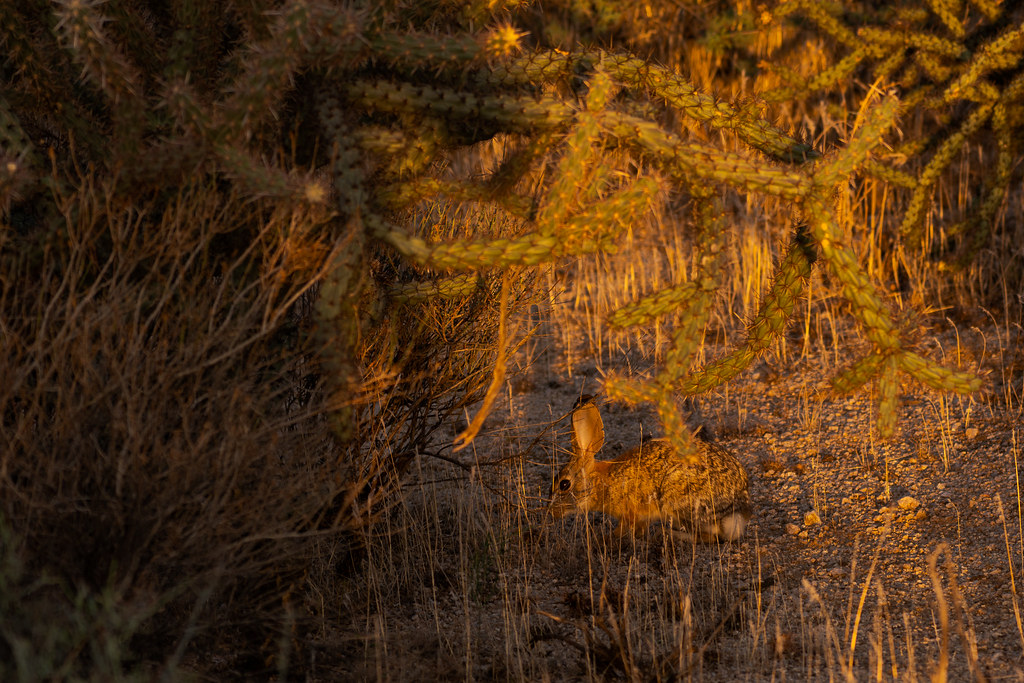
The rising sun, so easily blocked by hills and saguaros and even myself, does what I cannot, slip through the outstretched arms of a buckhorn cholla to embrace a cottontail as it feeds beside the Chuckwagon Trail. It is mine but to observe, to record, to be grateful.
Tag: cactus
Seeing Red in the Desert
I knew even before setting foot in Arizona that my pictures in the desert would draw heavily from a palette of browns rather than the green of the Pacific Northwest. I didn’t know that there would occasionally b red in the desert too, such as the red racer, the house finch, and the northern cardinal. However, for a month or so at the end of spring and the start of summer red explodes across the desert in the fruit of the saguaro.
Here near The Amphitheater in McDowell Sonoran Preserve a ripe fruit bursts open, exposing the pulp and seeds inside. The fruit is chockfull of seeds, according to the National Park Service there are about 2000 seeds per fruit. Few will develop into a seedling and fewer into an adult saguaro in the harsh desert climate but its not for lack of trying. I noticed multiple birds eating the fruit but mostly it was white-winged doves, who apparently digest the seeds rather than passing them in their waste like some other birds. They end up with so much juice and pulp and seeds on their faces that I imagine some of the seeds will fall to the ground as they preen, so perhaps all is not lost.
As the fruit continues to ripen on the saguaro, even the outside turns red. The dried stalk above them is all that remains of the flowers that grew atop them, the ripened fruit results from flowers that were pollinated. Most of the fruit grows at the top of the saguaro or the ends of its arms but some grows on the sides like the one below that has been cleaned of most of its contents by the denizens of the desert, only a few of the tiny black seeds remain inside.
Do Not Adjust Your Sets
The early morning light falls on one of my favorite saguaros, I love its wavy pattern and look for it whenever I’m hiking Brown’s Ranch Road. If you’re too young to understand the reference in the title and never experienced adjusting horizontal and vertical hold on a television, consider yourself lucky. In my day …
Sniffing the Saguaro
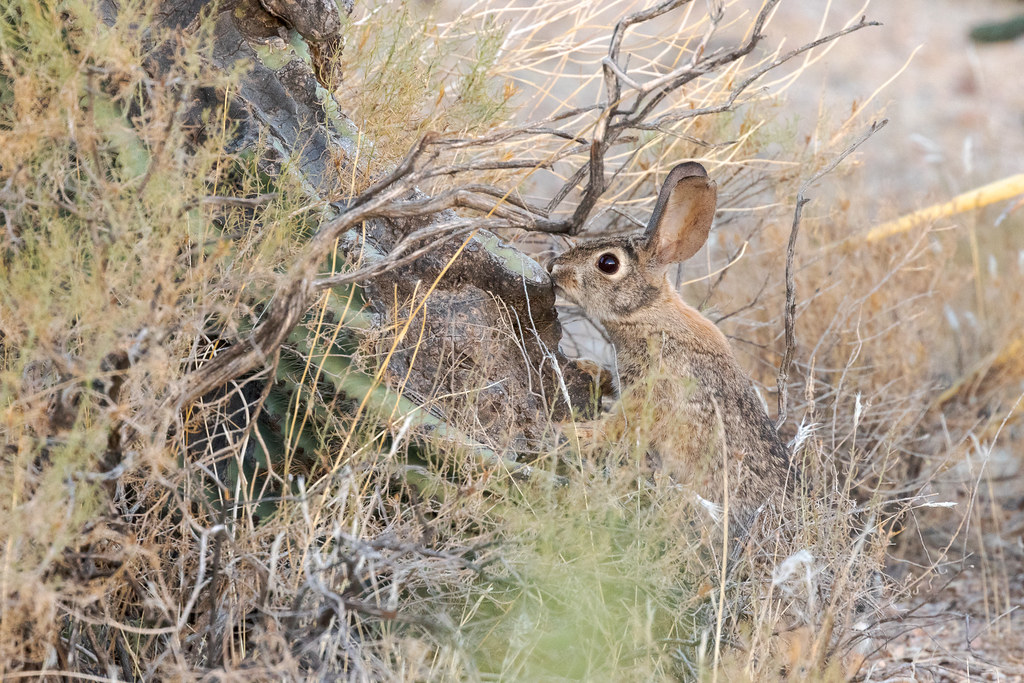
This cottontail kept sniffing the base of the old saguaro and hopping up where there were no spines, hopping down, and sniffing some more. Cottontails are the mammal I see most frequently both in the desert and in our neighborhood. Fortunately our dog Ellie pays them no mind, she’s never cared about wildlife even in her younger years. Although we still see them on our walks it’s been a week or two since one has been in our backyard, is there a number I can call to complain about this?
Bigfoot! At Last I’ve Found You!
Look How Far the Light Came
Look how far the light came
To paint you
This way
Bruce Cockburn “Look How Far”
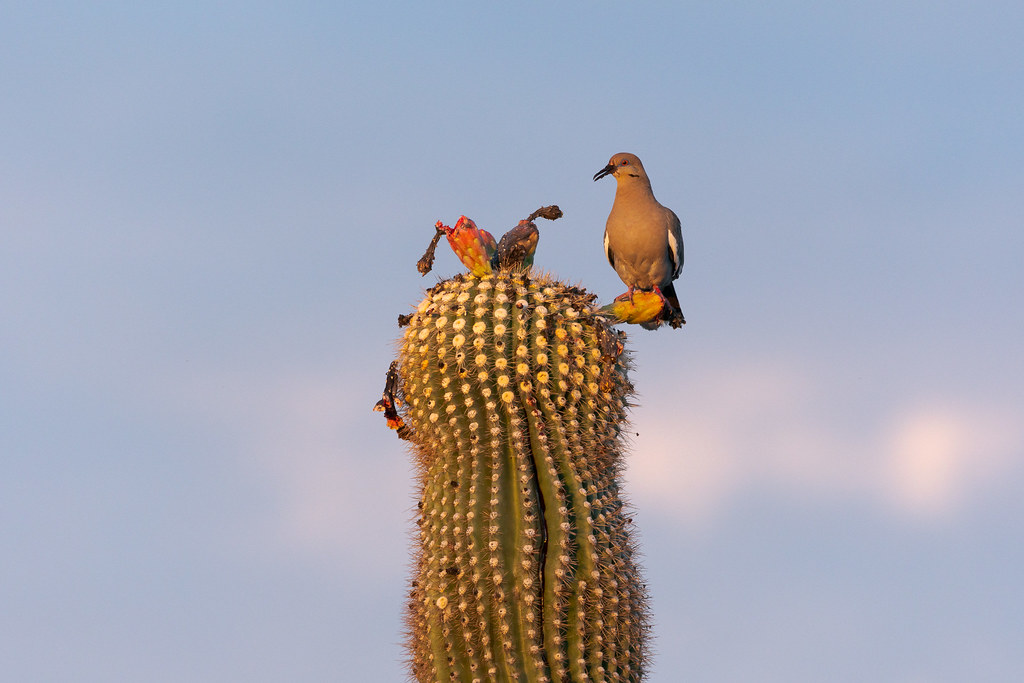
It was 5:30 a.m. on July 4th as I walked along the Latigo Trail, most of the desert still in darkness. I stopped when the rising sun fell upon this tall saguaro and the white-winged dove feeding on its fruit. Minutes later the clouds in the east obscured the sun and its rays no longer fell upon the clouds in the west nor the cactus before me, save for the tip top where the dove stood. A moment later all was in shadow. I was struck by how much had to occur for me to be standing there, to catch the light that traveled many millions of miles in mere minutes, to behold its beauty and bear witness to its passing.
Eye of the Saguaro
The Desert Cottontail
All part of my goal to photograph everything sitting on a saguaro, although in truth I never expected to see anything but birds on them given the sharp spines. Early one morning I came across two desert cottontails feeding near a large saguaro shortly before the sun rose high enough to illuminate the desert floor. I noticed this one kept sniffing the base of the cactus and jumping onto it where there were no spines. I got lucky when the rabbit jumped up one last time right as the sun fell upon us, as it only stayed for a moment before the pair hopped off into the shadows and out of sight.
Red, White, and Blue
I spent the morning of the 4th of July amidst a double splendor of red, white, and blue. The rays of the rising sun illuminated the top of the cactus amidst blue skies, white clouds, and the ripened red fruit of the saguaro. Eating that fruit was a white-winged dove, with the white wing patches for which it is named, a blue eye ring, and red eyes. And on this morning, as with all the other doves since the fruit ripened, a face covered with the red juice and pulp of the saguaro’s fruit, as they stick their entire heads in to get every last bit of this short-lived bounty of food.
The Warriors
The old saguaros are warriors. It’s remarkable they can survive in this climate at all, astounding they can do it while sustaining heavy damage. I don’t know how recent the damage to the base of this cactus is but as you can tell from its long shadow it is still growing at a great height with a couple of the iconic arms near the top (the arms usually don’t start growing for 50 to 100 years, depending on the amount of rain). I saw one saguaro that had fallen over and little remained except a short stump, but enough of the internal plumbing and root system survived that a new arm was growing. I hope they prove a metaphor for my country, for all the damage it has sustained and with more to come, I hope the promise of America overcomes its reality.