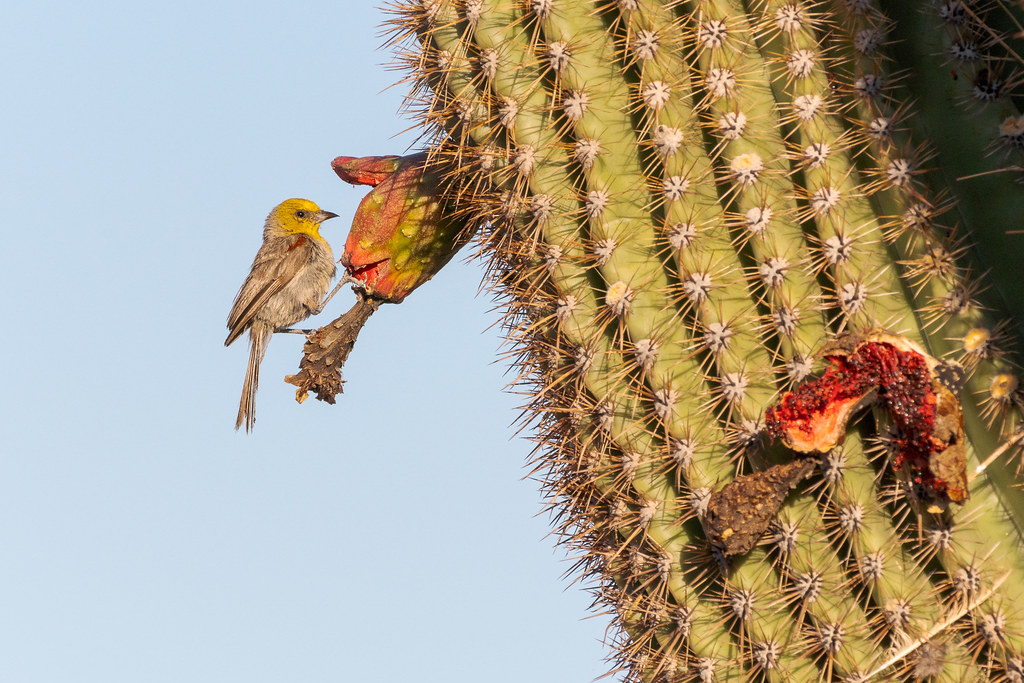
Verdin remind me of ketchup and mustard with their yellow heads and red shoulders. On this summer morning there was an extra dose of red as one of the diminutive birds perched to feed on an open saguaro fruit.

Scratcher of heads, rubber of bellies
Verdin remind me of ketchup and mustard with their yellow heads and red shoulders. On this summer morning there was an extra dose of red as one of the diminutive birds perched to feed on an open saguaro fruit.

Saguaro fruits provide a handy perch for a young cactus wren, now fully fledged, born in a nest in the arms of this self-same cactus.

Early on a summer morning, a white-winged dove uses its tongue to eat from deep within the fruit of a saguaro. The red covering many of the spines atop the cactus is not blood but rather pulp and juice from already-eaten fruit.
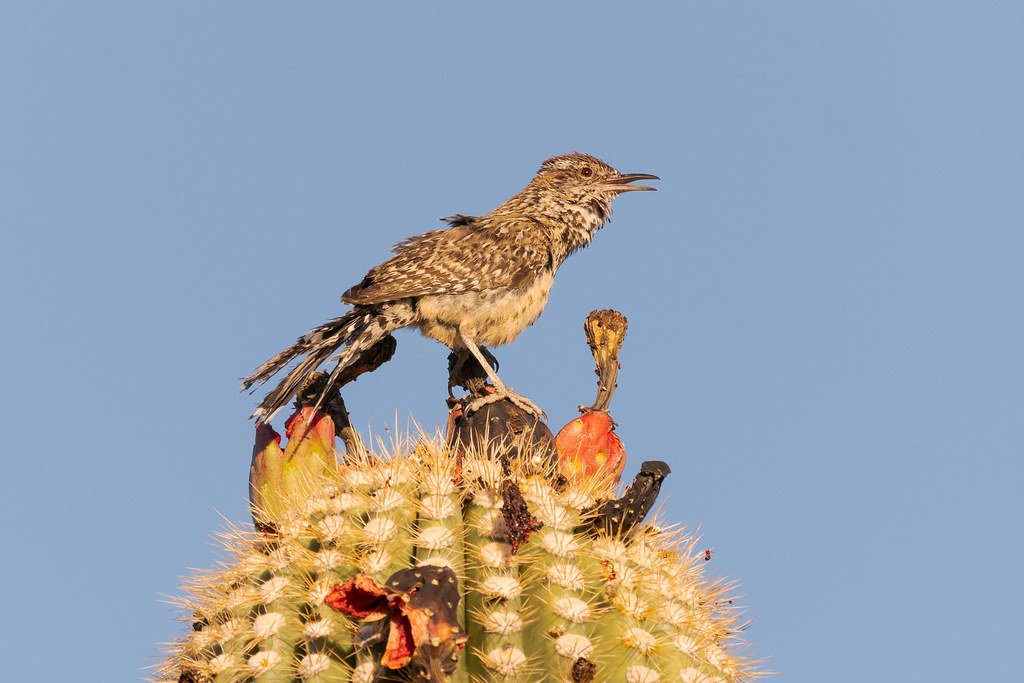
A cactus wren sings amidst mostly eaten fruit atop a saguaro on the Latigo Trail. Its feathers were looking rather ragged, understandably so, it had just raised its young in the harsh desert environment.
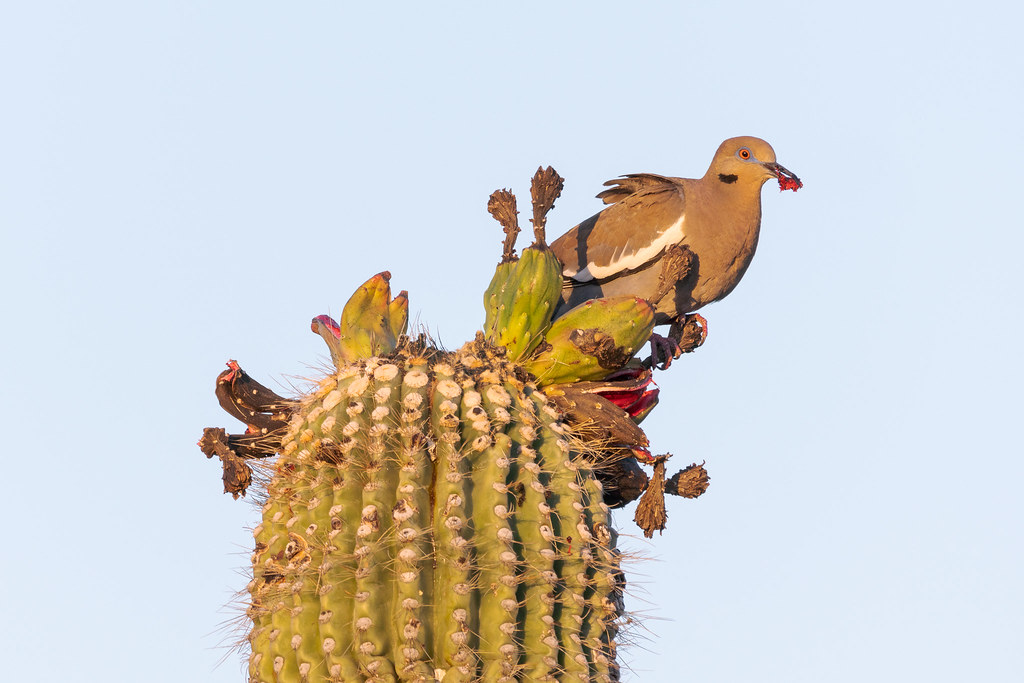
A white-winged dove eats the red fruit of a saguaro early on a summer morning. The doves make the most of the short-lived bounty of the fruiting saguaros before migrating further south.
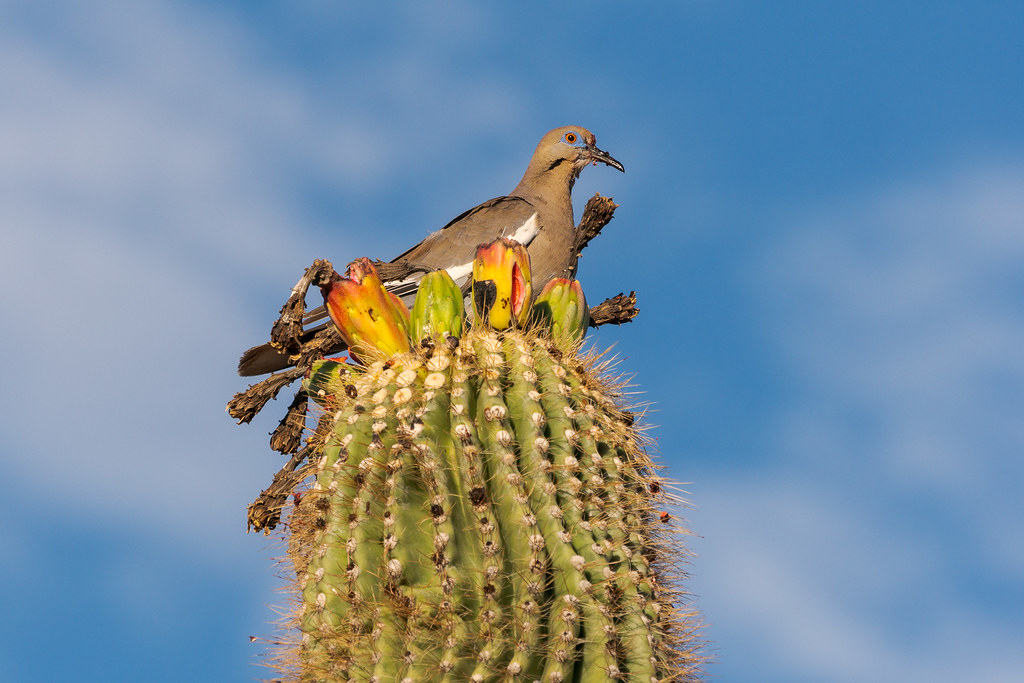
The skies on the 4th of July exploded in color as a white-winged dove fed from fruit bursting at the seams atop a saguaro. Taken early in the morning along the Latigo Trail in McDowell Sonoran Preserve.
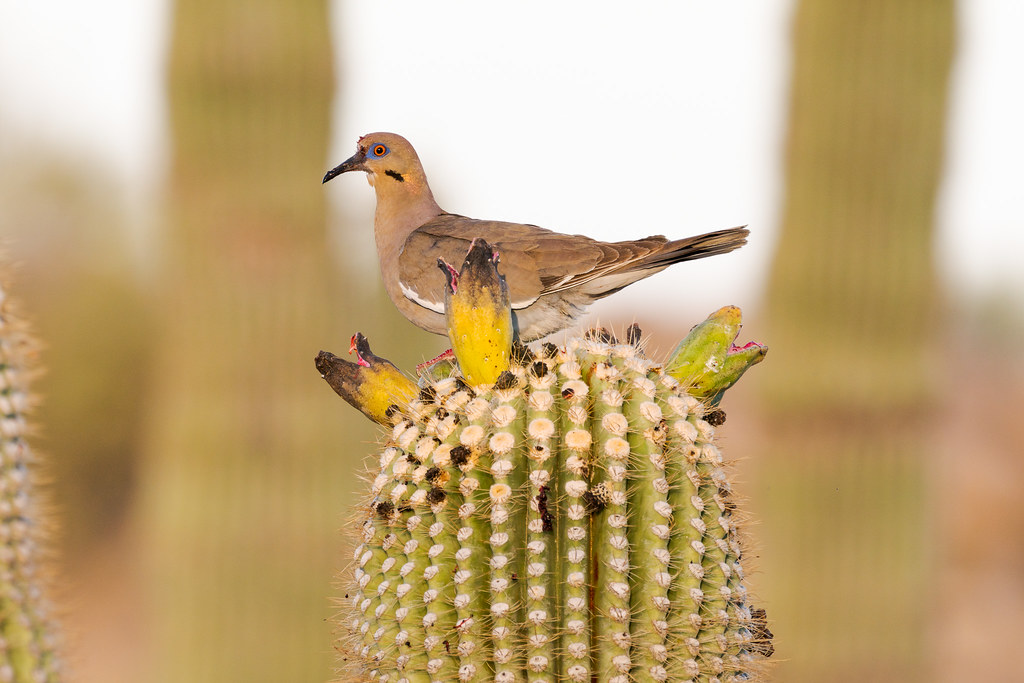
The sun was up and shining on the tops of the saguaros but when this white-winged dove dropped down to feed on the fruit on a lower arm I was able to photograph it in the soft reflected light. The full sun arrived seconds later. Taken on July 4th while the saguaro were fruiting and the white-wings still flew above the desert.
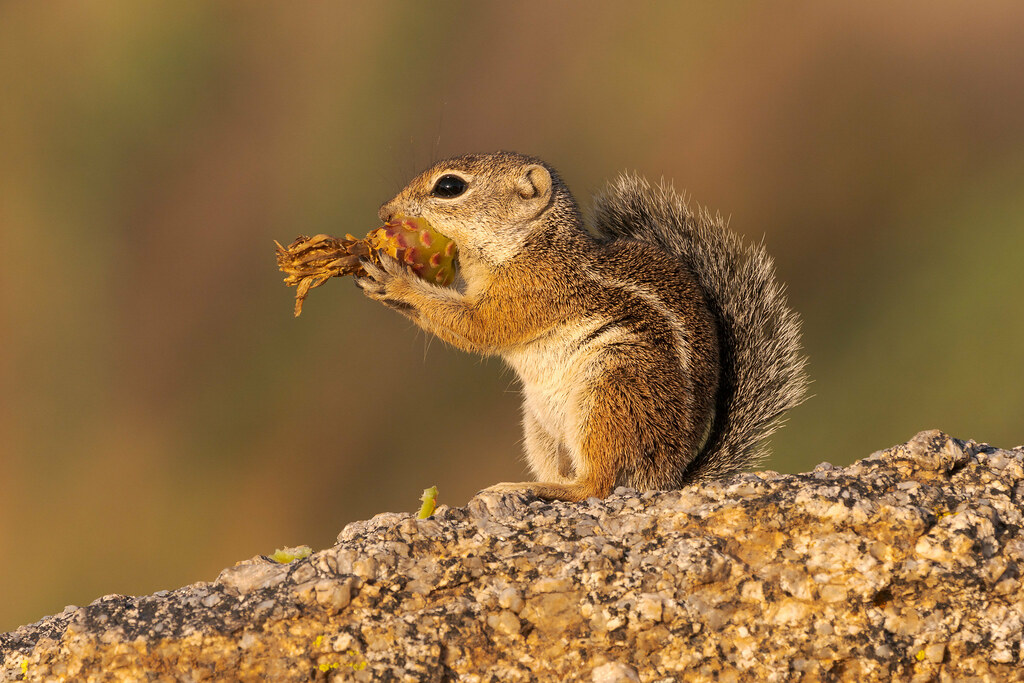
A Harris’s antelope squirrel eats a cactus fruit (not sure what kind, compass barrel cactus perhaps?) by sticking its face into the center of the fruit.

I knew even before setting foot in Arizona that my pictures in the desert would draw heavily from a palette of browns rather than the green of the Pacific Northwest. I didn’t know that there would occasionally b red in the desert too, such as the red racer, the house finch, and the northern cardinal. However, for a month or so at the end of spring and the start of summer red explodes across the desert in the fruit of the saguaro.

Here near The Amphitheater in McDowell Sonoran Preserve a ripe fruit bursts open, exposing the pulp and seeds inside. The fruit is chockfull of seeds, according to the National Park Service there are about 2000 seeds per fruit. Few will develop into a seedling and fewer into an adult saguaro in the harsh desert climate but its not for lack of trying. I noticed multiple birds eating the fruit but mostly it was white-winged doves, who apparently digest the seeds rather than passing them in their waste like some other birds. They end up with so much juice and pulp and seeds on their faces that I imagine some of the seeds will fall to the ground as they preen, so perhaps all is not lost.

As the fruit continues to ripen on the saguaro, even the outside turns red. The dried stalk above them is all that remains of the flowers that grew atop them, the ripened fruit results from flowers that were pollinated. Most of the fruit grows at the top of the saguaro or the ends of its arms but some grows on the sides like the one below that has been cleaned of most of its contents by the denizens of the desert, only a few of the tiny black seeds remain inside.


Look how far the light came
To paint you
This way
Bruce Cockburn “Look How Far”
It was 5:30 a.m. on July 4th as I walked along the Latigo Trail, most of the desert still in darkness. I stopped when the rising sun fell upon this tall saguaro and the white-winged dove feeding on its fruit. Minutes later the clouds in the east obscured the sun and its rays no longer fell upon the clouds in the west nor the cactus before me, save for the tip top where the dove stood. A moment later all was in shadow. I was struck by how much had to occur for me to be standing there, to catch the light that traveled many millions of miles in mere minutes, to behold its beauty and bear witness to its passing.
 Boolie