The robin is one of the most familiar birds in the United States and I had a fondness for them growing up, partly because they were easy to see in the many trees around our house and partly because they were the state bird of my state at the time, Michigan. I love photographing them but funnily enough don’t see them that often in the places I visit most. This male was feeding on the ground on a rainy winter afternoon at my favorite wildlife refuge and was the last shot I took on the day.
Tag: rain
Birds of a Feather
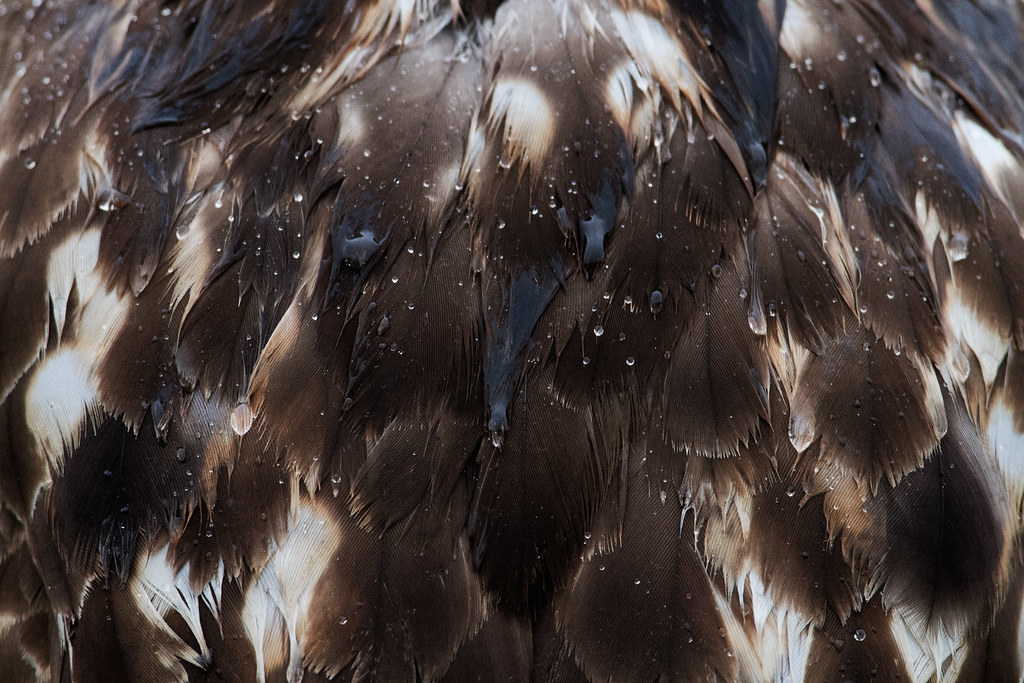
I’m amazed by how diverse the feathers on a single bird can be in size and shape and color and function. The feathers in the upper left are wet with rain, it was pouring up at Hurricane Ridge when I came across a handful of grouse that were huddling near some trees for a little protection from the elements. I had on a full complement of rain gear and was nice and dry, and thankfully my camera and lens had enough weather-sealing that they shook off the rain as well.
You’ve Got a Little Something …
I’ve often thought about creating an album called “You’ve Got a Little Something …” to highlight animals that are carrying around a bit of their environment they picked up along the way. Diving ducks like this lesser scaup sometimes surface with plants that snagged on their back during their last feeding foray, but they often shed them on their next (as happened here, she surfaced after her next dive with a clean back).
Wet Lunch
Mammals vs. Dinosaurs
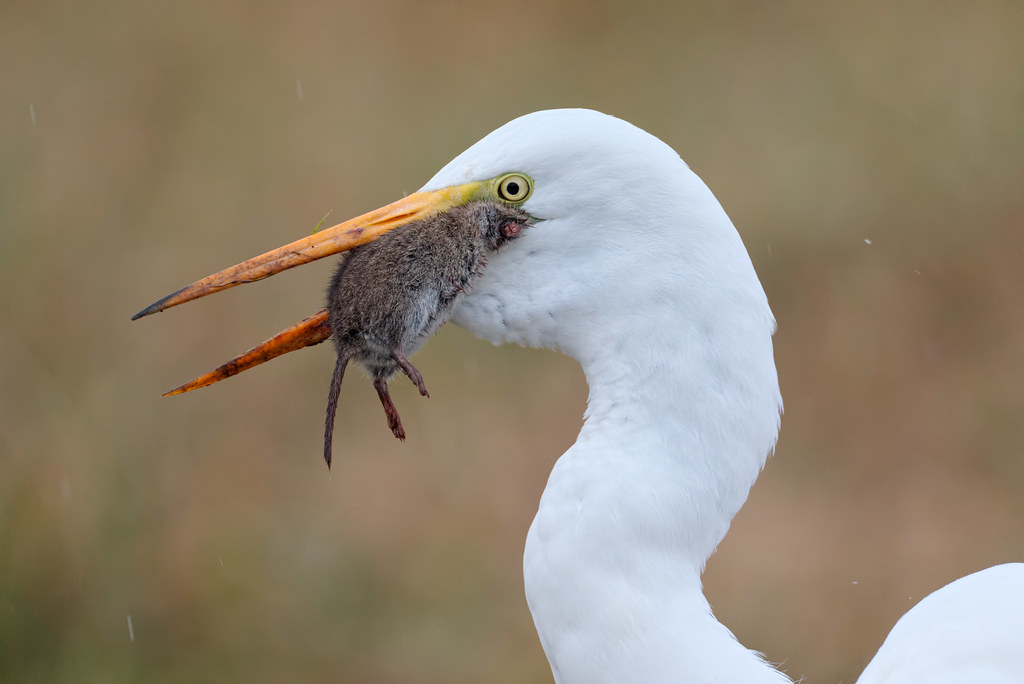
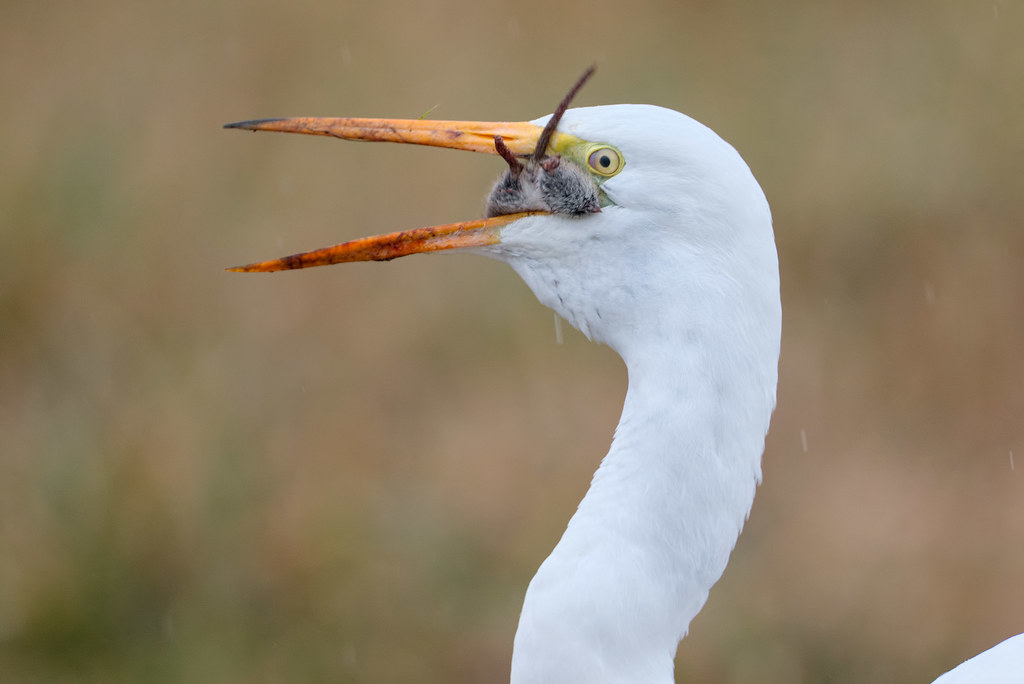
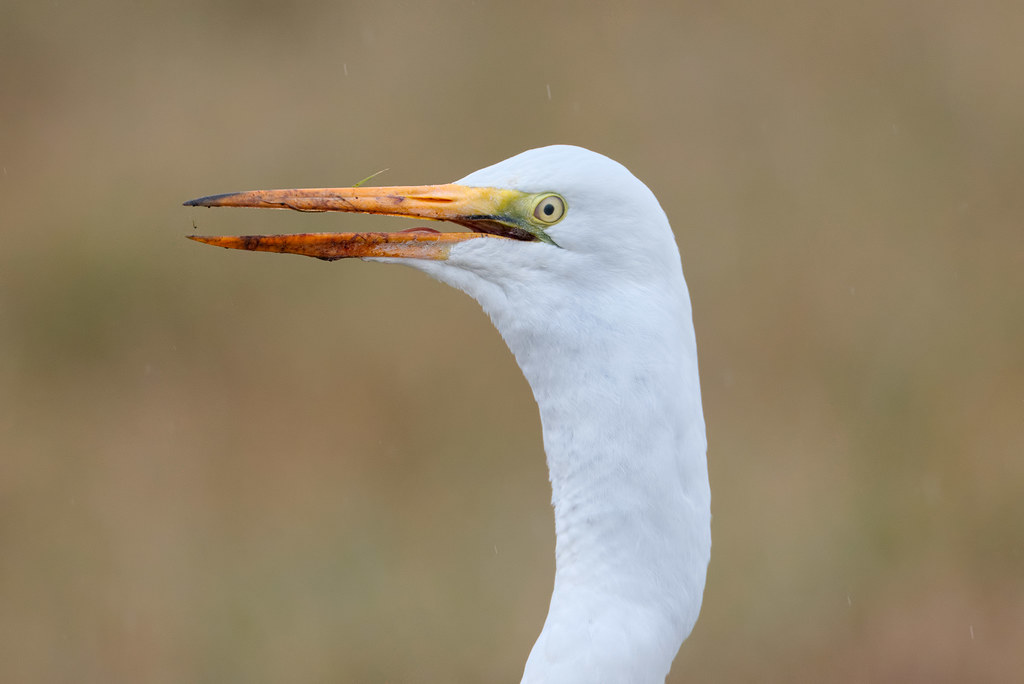
I’ve met people who think it preposterous that birds descended from dinosaurs, a theory that dates back to the 19th century and the discovery of an Archaeopteryx fossil, as they think of birds as being small and cheerful. They might change their minds if they spent some time watching an egret hunt for voles.
As I’ve photographed birds over the years I was struck by how many of the feathers on a bird’s body aren’t actually used for flight. I began to wonder which came first, feathers for flight or feathers in general? This article by Luis Chiappe on dinosaurs and birds gives the answer (spoiler alert: it’s not flight). I’ve only started reading the article but it’s written in plain language and has a lot of information (and importantly, references) on the link between dinosaurs and birds, and how most paleontologists believe that some dinosaur species survived and evolved into the birds we know and love today.
I suppose it’s all splitting hairs to this vole, within seconds of being swallowed on a rainy January afternoon. I sometimes shoot hunting egrets and herons and bitterns with my biggest lens, to show that one life is ending in order for another to continue, and sadly I’ve only ever been able to photograph these voles in the last seconds of their short lives. I keep hoping one day to get a photograph of a vole just sitting in a meadow but for some reason they don’t stay above ground very long.
Ring Ripples
A male ring-necked duck relaxes on a winter morning as raindrops create ripples in the water. Taken on the last day of an almost three week vacation over the Christmas break. I made a note in my journal about how much I enjoyed watching him before he swam off when more cars arrived, as Emma’s health was worrisome and the refuge was a nice distraction while my wife was home with Emma. Emma died a few days later and I wasn’t in the mood to edit the pictures from this trip (particularly an egret picture I’ll post later), but it is easier now with a little more distance.
Drizzle
A young elk bull grazes in a meadow on a rainy fall day in Grand Teton National Park in 2006. He was eating with another young bull, both keeping a watch on the nearby harem of a mature bull.
It’s a little hard to see the rain in the picture at this resolution, but I had just purchased my 500mm lens before this trip and while the lens has weather sealing, I was still a little nervous about exposing it to the elements. Nine years later it’s been through a lot more rain and is still going strong.
Water
In 2001 I bought what at the time was my most expensive lens, Canon’s 100-400mm lens. Since then it’s gone with me on every hike and nearly every trip and been one of my most treasured lenses. However the image stabilization system needs repair but I haven’t sent it in as I was hesitant to spend much money on a lens that could benefit from a modern re-design.
To my great delight, Canon finally brought out a new 100-400 lens and I pre-ordered the day of the announcement. It arrived on Friday so Saturday morning I opened it up and took it to my favorite refuge to try it out. One of the nice new features is that the lens has some weatherproofing, which I got to test with my very first pictures when I encountered this egret in the pouring rain. The egret was on the passenger’s side of the car so I slid over, stuck the lens out the window into the rain, and had just got the exposure and focus set when the egret struck into the water, pulling out this small bullfrog.
I meant to frame a little looser but in my haste to even get the shot I didn’t keep the camera quite level, so I rotated and cropped in post. Still I was pleased that with the zoom I was able to pull back and show a bit of the world these animals live in. The egret with its long featherless legs is built to wade in shallow water like this, able to hunt along the water’s edge, looking for frogs and fish in the water and frogs and voles on the land.
I’ve always loved photographing in the rain, especially to show how animals still have to go out into the rain to live their lives, and I’m thankful my favorite hiking lens now can as well.

Birth of a Cone
While the previous day poured rain, sunshine arrived in the morning. I spent the early hours looking for marmots on Hurricane Hill but found none, and as the sunny Saturday attracted crowds, I decided on one last loop around the Meadow Trails before heading over to the western side of the peninsula.
I stopped when I found one small section of trees still in shade and noticed their needles were covered in water drops and tiny little cones were beginning to grow. Normally I’d use a macro lens for shots like this but you can’t leave the trail in this fragile environment and the needles were too far from the trail, so I used my 500mm lens, teleconverter, and extension tubes instead. My tripod isn’t sturdy enough for this much weight but I used a remote release and hoped for the best.
I had to work quickly as the sun was lighting up branch after branch as I photographed them (it’s even lighting up a drop on this branch). It was the last of my pictures as after this all the branches were drying in the sunlight. I didn’t notice it at the time I took the picture, but I love how the two small needles look like arms cradling the small cone. I think this is a subalpine fir but don’t quote me on it.
Leaving Paradise
My little Subaru on the road between Paradise and Sunrise in Mount Rainier National Park. I’ve taken it on a trip before but this was its first big hiking trip with all of my camera gear. I used to take our old Outback on trips like this but bought the Crosstrek with the hopes of using it both as my daily driver and for hiking trips short and long. The storage in the hatch is much smaller than the Outback so I was worried all of my stuff wouldn’t fit but most of it did, I only had to put some drinks and snacks behind the front seats. With some different luggage in the future it should all stay hidden in the hatch.
On this day with rain and low clouds I practically had Mount Rainier to myself as I drove up to Sunrise and then on to Olympic National Park. I was thankful for the car’s visibility, both the view out of the car and the visibility of the white paint to other drivers, as it poured rain for much of the drive. As I drove off the bridge and onto the Olympic Peninsula in the rainy darkness, police were directing traffic around an accident that had occurred not much before, so I was thankful for the improved safety of this car compared to my old one even though I didn’t have to put it to the test.
Really love this little car.