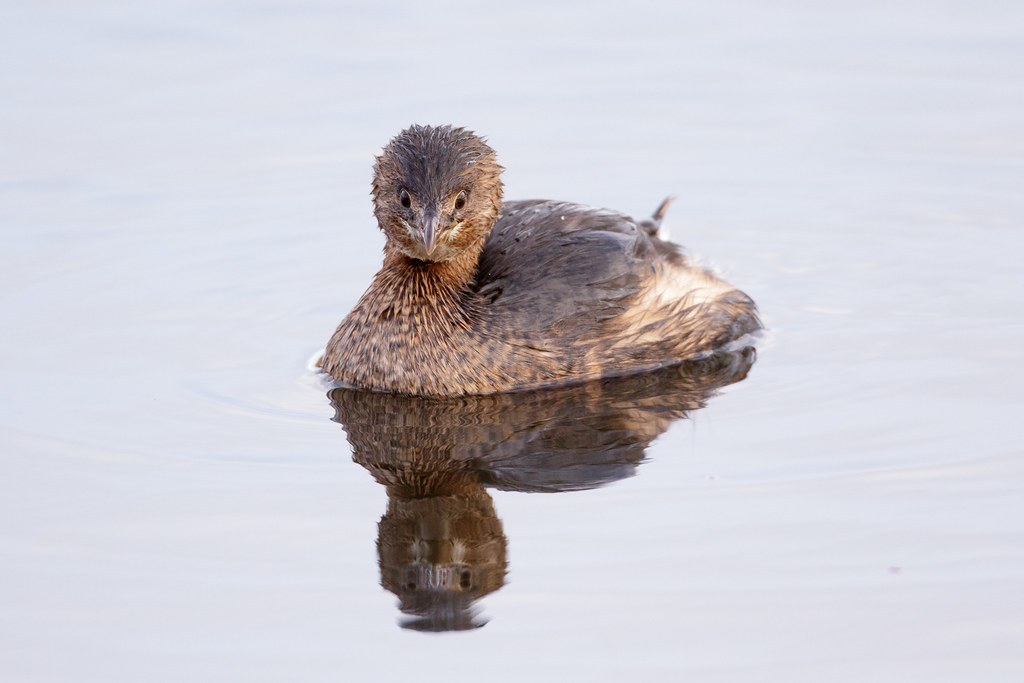
I was watching a bittern that had mostly moved out of view when this pied-billed grebe swam over as it hunted for fish. The sun was just starting to push the fog away and bathed the grebe in a gentle light.
Scratcher of heads, rubber of bellies
I was watching a bittern that had mostly moved out of view when this pied-billed grebe swam over as it hunted for fish. The sun was just starting to push the fog away and bathed the grebe in a gentle light.

I visited Ridgefield a handful of times over the Christmas break and was saddened to see that my favorite spot to watch bitterns, a little strip along Rest Lake, had been mowed close to the ground. There is plenty of cover in other areas near this strip so the bitterns still have ample places to hunt, they just won’t be visible from the road. So I was ecstatic on my last visit, when I had stopped to watch some bufflehead in an earlier section of Rest Lake, to notice this bittern hunting in the tall grasses. I only had a little window through the grasses to see it but it was a real delight to watch one of my favorite birds again.

A peregrine falcon throws up its wings to maintain its balance atop a dead tree as the wind blows across Canvasback Lake.

A male northern pintail swims across Rest Lake on a rainy winter afternoon, his back covered in tiny water droplets from the gentle rain.

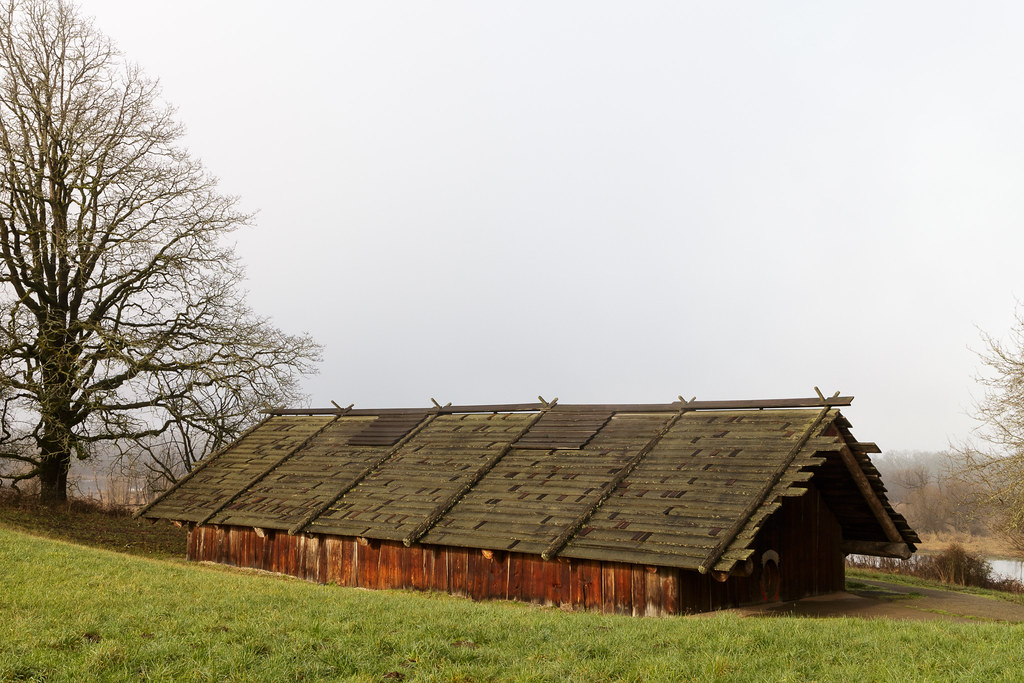
A full view of the Cathlapotle plankhouse as the fog clears on a cold winter morning.
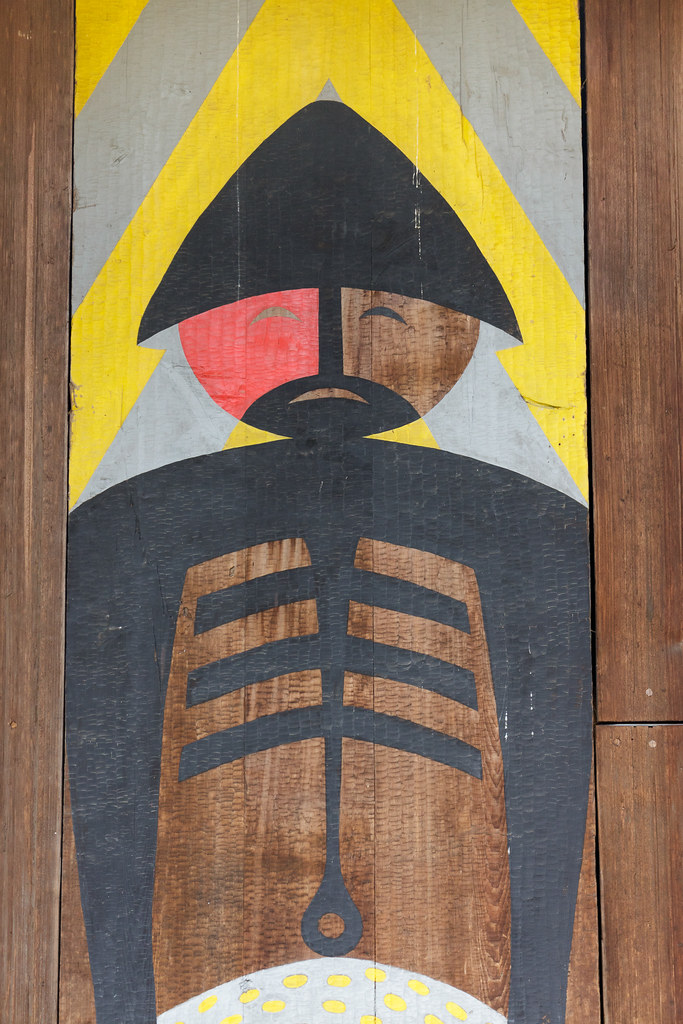
This entrance artwork sits above the oval entrance to the Cathlapotle plankhouse at Ridgefield National Wildlife Refuge. The art was designed by Tony Johnson from the Chinook Nation and executed by Adam McIsaac.

It never seems to matter, the tears I cry,
there’s a well inside of me that never runs dry.
The Weepies, “How Will He Find Me”
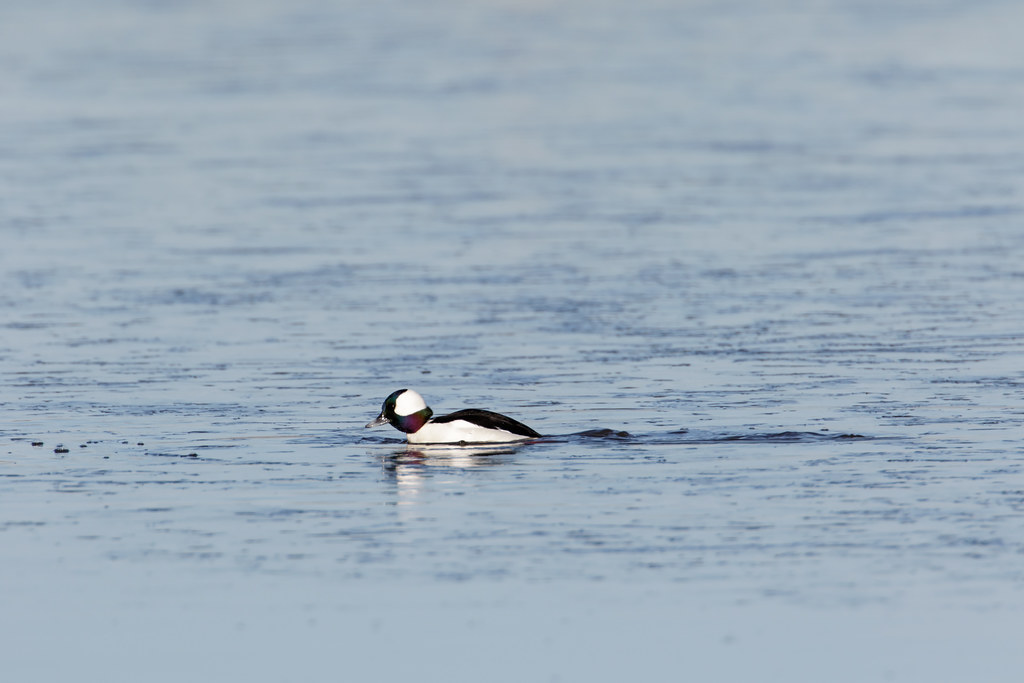
I visited Ridgefield a number of times as my Christmas break was winding down late in December. On the 30th I spent the morning watching a great blue heron by Rest Lake as the sun rose and then another a bit further on in a large meadow, then on another loop of the auto tour a great egret by the Quigley Lakes and ring-necked ducks and hooded mergansers in Bower Slough. After that the light was a bit high and bright for my tastes so I settled in to watch the male bufflehead above diving for food in a partially frozen Bull Lake. He’s elevated more than normal as he’s pushing through the melting ice in preparation for a dive.
Since he’d often swim to the far side of the pond to feed, to pass the time until he swam close again, I started looking back through my hiking journal. Normally it’s just a description of my experiences while out hiking or taking pictures, but sometimes the outside world makes its way into my writing. As I flipped through the pages I came to this section from the start of the year and burst into tears:
My last day of an almost three week vacation. Been great in many ways but worry over Emma’s health has left me a bit worn out. The refuge has been a welcome respite. She’s up to 9.5 pounds now thanks to the baby food, but her appetite waned a bit yesterday and this morning. Don’t know if it’s meaningful or not.
The opening entry in my hiking journal on January 4, 2015
I wasn’t that surprised that thinking about Em would bring me to tears, even though she had died a year earlier. I was over-tired and over-stressed and that often leaves me over-emotional. But I was caught off-guard because the tears just didn’t stop. I was already parked beside the road to watch the bufflehead, and since this pond is on the right side of the road, I had moved over to the passenger’s side. Since passing cars couldn’t see me, I let the tears flow until I cried myself out.
What broke me was seeing myself a year ago, almost afraid to even put into words a rising fear that our last hope of keeping our sweet little Em alive was about to fade, knowing now that the fear was justified and that we were about to run out of options and she’d be dead in three days. Sometimes it seems there’s nothing more cruel than hope: uplifting when given, devastating when taken away.
I realized then and now that is a sign of how blessed my life is that the death of my cat a year prior, no matter how beloved, was the source of my grief. The tears soon passed, the catharthis welcomed, and I laughed to myself and whispered “Emma, you were loved, you are missed.” Feeling better I resumed my tour of the refuge. Late in the day I finally saw a bittern after coming up empty on many visits, and wrote this in my journal:
Almost embarrassing how euphoric I was after finding the bittern, especially after being so upset over Emma earlier … overall a really fun day!
My hiking journal on December 30, 2015
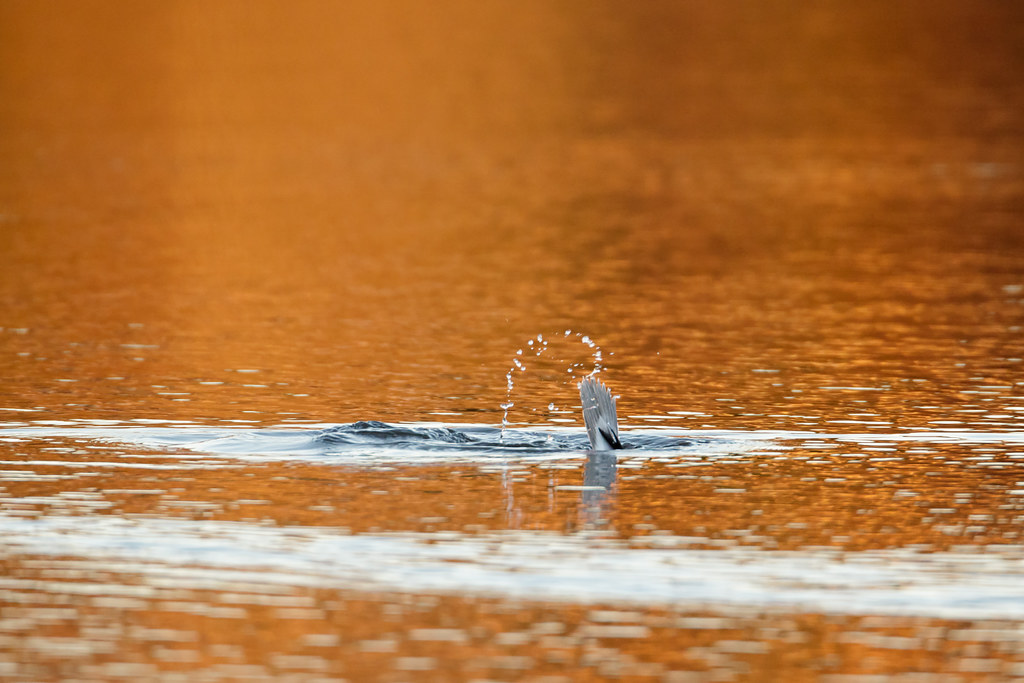
And I wrote that even before the last light of the day, when I watched a heron and egret hunting as the sun set. I had to leave to get off of the refuge before the automatic gate closed, but as I drove past Bull Lake on the way out, I stopped for a few more pictures when I saw the bufflehead still diving for food, this time with the water painted orange by the reflections of the setting sun on the hills above the refuge.
The perfect bookend for the day, a day that started in ice and ended in fire.
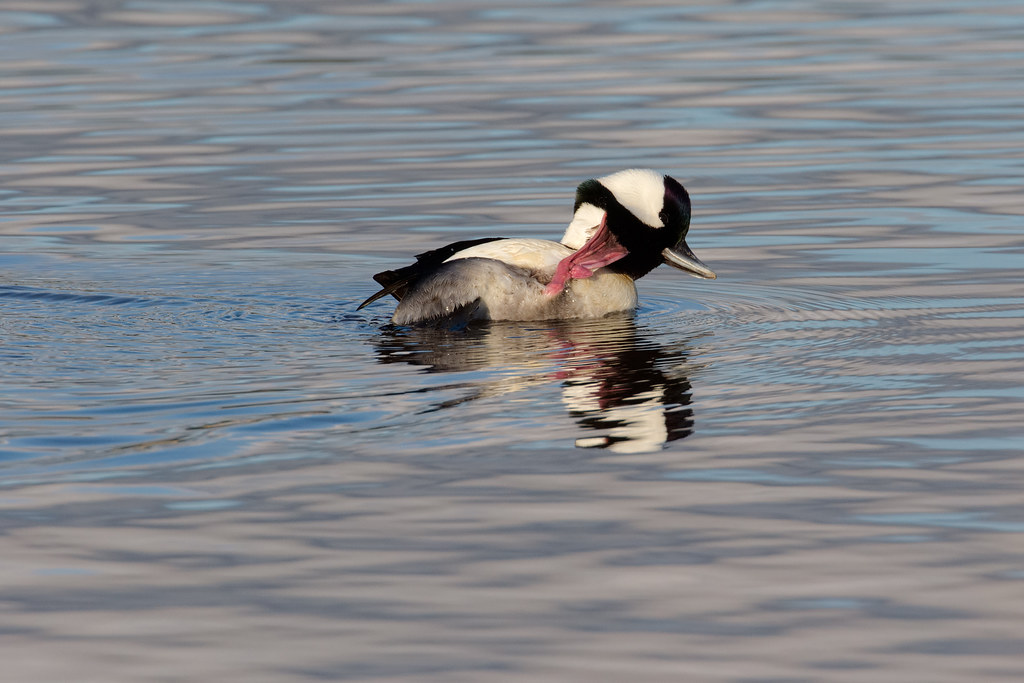
A male bufflehead uses one of his adorable pink feet to scratch an itch while swimming across Rest Lake.

Visit Ridgefield in the winter and you’ll see waterfowl diving under the water to feed, such as this bufflehead at sunset above, or the coot below, its red eye visible just above the water. I like to sit and watch them and have been struck by the many differences in the bodies of coots and diving ducks, even though they both spend much of their lives diving underwater to feed. There are differences in their bills, and their feet (ducks having fully-webbed feet, coots not), but my favorite difference is most visible when they dive.
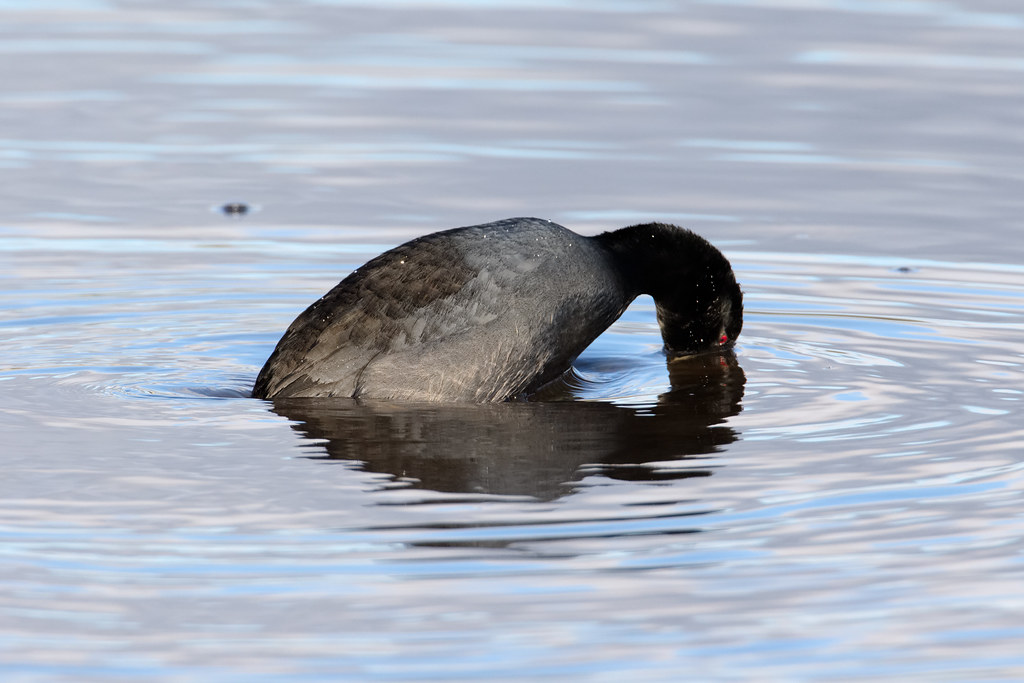
Both diving ducks and coots spring forward and break the surface tension of the water with their beaks, but ducks leave a vortex behind them at the start of the dive while coots do not, a difference that begins with their ends. Diving ducks like the bufflehead have broad tails that they spread out horizontally on the water before they dive, enabling them to push their tails down and themselves forward as they start their dive. You can see the pattern of their tail feathers, shown below as water flips off the bufflehead’s tail as he finishes the dive, in the water behind the duck in the first picture.

Compare the bufflehead’s tail above to the coot’s below and you’ll see the coot has a stubby little tail and can’t use it to push forward like the diving ducks can. While it might seem that the diving ducks have solved the diving problem much more efficiently than the coots, I should point out that the coots at Ridgefield far outnumber any species of diving duck at the refuge.

A trait they share in common is that they have to get a long run across the water to take to the air, so if a bald eagle attacks, they prefer to dive under the water as a means of escape. It’s usually effective, but sometimes you’ll see an eagle keep flying over a duck or coot repeatedly until its prey tires and surfaces at just the wrong moment and is captured in the eagle’s talons. I’ve seen eagles with a variety of waterfowl in their talons, but coots more than any others, not surprising given their large numbers.
 Boolie