Oh Ridgefield!

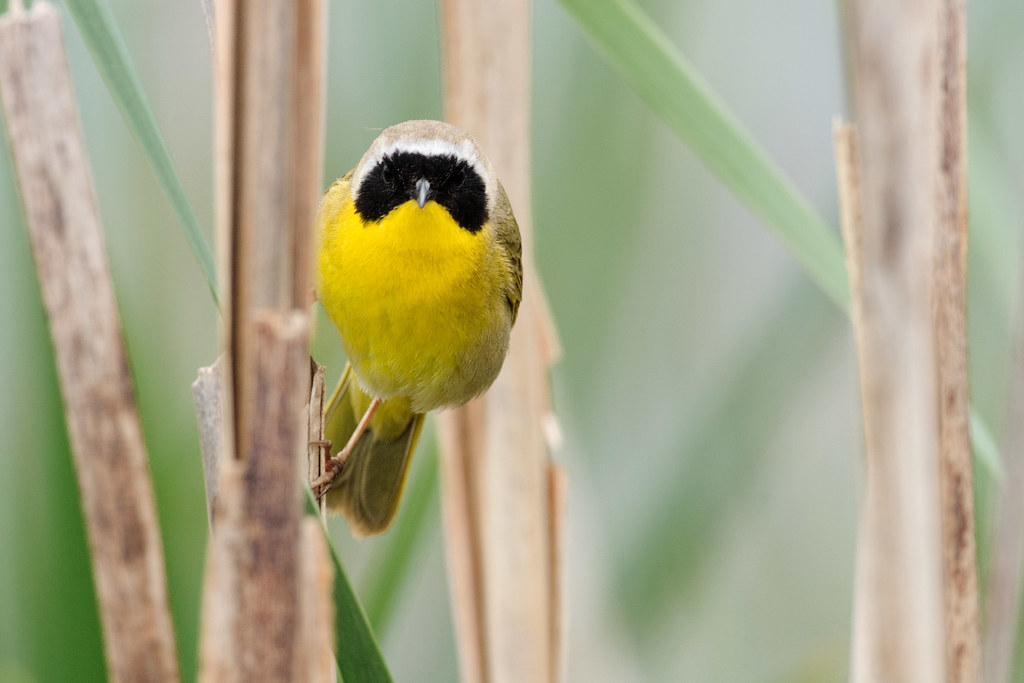
A common yellowthroat looks out from a patch of cattails at Ridgefield National Wildlife Refuge

I got up at 5am this morning with yellow on my mind.

Like last week, I hoped to photograph yellow-headed blackbirds up at Ridgefield National Wildlife Refuge. However, the yellowheads were staying more in the interior of the marsh this week. I can’t say that I blame them, last week the red-winged blackbirds were harassing them a bit but this week they would mob the yellowheads mercilessly every time they came to the edge.

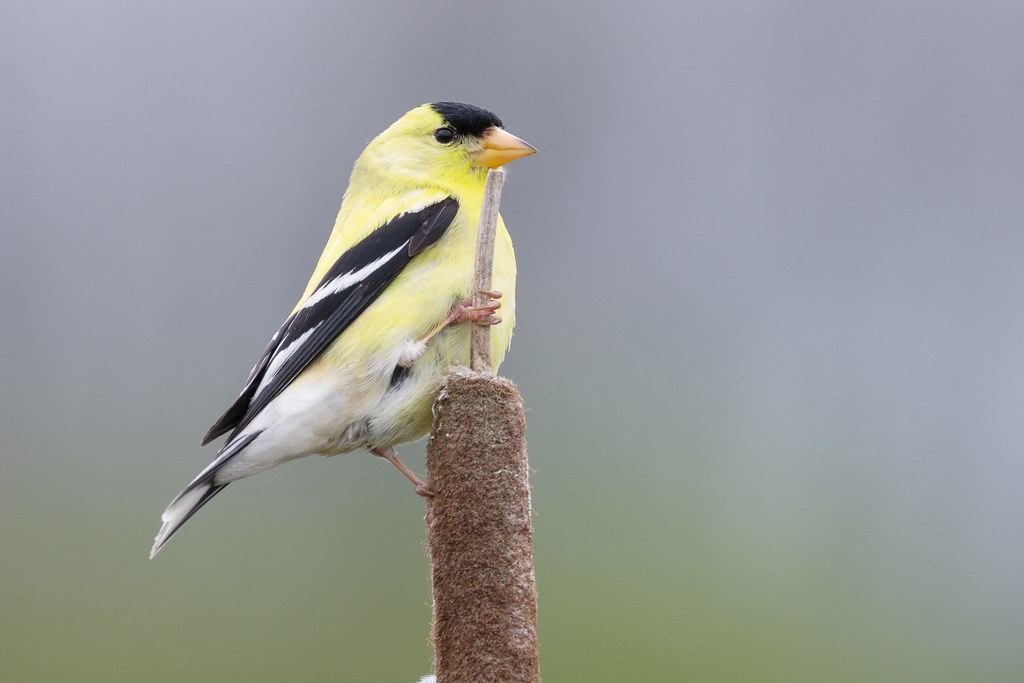
Even so, my morning did turn out to be about yellow — not from blackbirds but yellowthroats and goldfinches. After spending six hours at the refuge last week, today I stayed for ten hours. I would have stayed longer but the weather was supposed to be sunny and I had only played to stay for a couple of hours and hadn’t brought enough food and water.

Remind me to ignore the weatherman next time.

I took far fewer pictures than last week but my quarry was more elusive. The yellowthroats were staying mostly out of sight, and when they did pop up to sing they were either chased by the redwings or by other competing yellowthroats. I was ready to call it a day and about to start the car to leave when a goldfinch popped into view. That convinced me to wait a while longer but again was ready to leave when this male yellowthroat finally appeared.

I wish the out-of-focus cattail wasn’t in front of the cattail that he is actually clinging to, but I still think it’s a cute picture. I got a few others I was happy with so stay tuned for those, plus a few goldfinch pictures.

The Only One Not Singing

A barn swallow perches on a cattail with his mouth wide open at South Quigley Lake at Ridgefield National Wildlife Refuge in Ridgefield, Washington in May 2008

On a day I spent watching birds sing, from yellow-headed and red-winged blackbirds to song sparrows and marsh wrens, this little barn swallow was the only one not singing. After swarming over the lake hunting insects with the rest of the barn and tree swallows, he landed on this cattail for just a moment, opened his mouth wide a couple of times, preened a few feathers, then took to the skies once more.

Blackbird

A male red-winged blackbird perches on a cattail at Ridgefield National Wildlife Refuge

I got up early this weekend hoping to see blackbirds at Ridgefield and wasn’t disappointed, both redwings and yellowheads were active near the edge of South Quigley Lake. My yellowhead pictures aren’t as good as previous years but it was still nice to see them singing and chasing each other around. I didn’t catch this male redwing singing but I love the colors of the early morning light. Song and savannah sparrows were also out and about and singing their hearts out, those pictures are yet to come.

A Nice Quiet Weekend

The past few weeks at work have brought added stress even though my workload was usually not bad, as we knew layoffs were coming. I survived the axe once more but can’t say the same for some of my friends. A nice quiet weekend was just what I needed.

The weather here in Portland was projected to be beautiful so I got up before dawn Saturday morning and headed out to Ridgefield. No great pictures as the best subjects came after the first hour of sunlight when the light wasn’t so good, but it was an enjoyable morning nonetheless. The yellow-headed blackbirds have indeed returned, they stayed in the interior of the marsh but their singing could be heard from the road. Hopefully I’ll catch them near the road sometime over the next couple of months before they leave us.

The savannah sparrows were out singing in the meadows as well but I didn’t get the good looks I got last year. Two coyotes were out and about but just out of reach, one had something dark and duck-sized in its mouth. Red-winged blackbirds were numerous and singing, and while watching them I noticed a young bittern just a few feet away at the edge of the marsh.

As I was about ready to leave I spotted a river otter nearby in a narrow channel. I waited to see if it would resurface but they swim fast and can hold their breath for a long time, so it was probably already off fishing somewhere far away.

The rest of the day was spent in yardwork, as was Sunday afternoon. I can barely move but it was lovely weather to be outside. I moved a blueberry bush that was struggling due to lack of sunlight, as well as some strawberries that were too close to the fence. They are both survivors from when I weeded the forest of weeds that was growing under the grapes when we moved in, and from when I dug up the grapes as well.

The strawberries in particular have done well since I sent the grapes on their longest journey, there were only a few straggly plants but with the grapes gone they get a lot more sunlight and now there’s a whole patch of ’em. The berries are surprisingly delicious so I hope the transplants will survive.
Frost

A female juvenile northern harrier sits in a frosty meadow

I arrived at Ridgefield at sunrise but only had an hour before needing to head home to take our cats Sam and Emma to the vet. I thought the refuge would be fogged in given the heavy fog when I crossed the Columbia, but the refuge was clear and a lovely frost coated the meadows. I wanted to take advantage of the frost since it is not typical here, so I continued around the refuge until I found a good subject.

This female juvenile northern harrier was sitting in the large meadow at the end of the auto tour. I’d never gotten harrier pictures I’ve been happy with, so since she was a ways off I put the 2X teleconverter on my biggest lens and hoped for the best. She’s all puffed out in the cold looking a little larger than she is, and you can see the ring around her face that helps give harriers an owlish look. As she grows older, she will develop streaking down her chest and her eyes will turn from dark brown to yellow.

Is It Morning Already?

A rough-legged hawk yawns at sunrise

I had the chance to photograph this rough-legged hawk over several weeks as she was often hanging out near the auto tour at Ridgefield, but I wasn’t happy with the close-up shots as the skies were always a dull gray overcast. I arrived at sunrise on Saturday morning specifically with the hope of photographing her under clear skies, so I ignored all of the other animals at the refuge and headed straight to where I had seen her last. Thankfully not only did I get my blue sky but she was waiting on a sign post near the road. There was little traffic at the refuge at that hour so I had the chance to watch her for some time. She eventually let out a large yawn in the beautiful morning light, and I was very lucky that she turned back towards the sun when she yawned so that the sun illuminated her mouth.

I laughed to myself thinking that I wasn’t the only one who thought it was awfully early in the morning to be out and about.

Hawk On A Stick

A close-up view of a young red-tailed hawk raising its head high while preening on the auto tour at Ridgefield National Wildlife Refuge in Ridgefield, Washington in February 2008

It’s not uncommon to see hawks perched at close range on the many signposts around the auto tour at Ridgefield — what I like to call hawks on a stick. I loved the pose when this preening redtail stretched its neck out to an unusually tall height. Young birds like this one often have pale brown eyes that will darken with age.

Red-spotted Breakfast

An American bittern eats a red-spotted garter snake at Ridgefield National Wildlife Refuge

Red-spotted snakes are almost too beautiful for words. They are not too beautiful for breakfast, apparently, at least not if you’re a hungry bittern. I came across this bittern after it had captured a red-spotted garter snake early one morning. It killed the snake by applying pressure with its beak, often to the snake’s head. The snake was already bleeding a little bit and not putting up much of a fight.

While it adjusted the snake’s position in its beak from time to time, it never let the head get too far from its beak so the snake couldn’t swing up and bite any soft tissue. It took a while for the snake to die, this shot is from right at the end of the snake’s life, it went limp after this final crushing of its head. The bittern made sure the snake was dead before swallowing it by thrashing it around.

Probably a good idea when your breakfast can bite you back.