Follow the Eyes

An American bittern with its mouth wide open

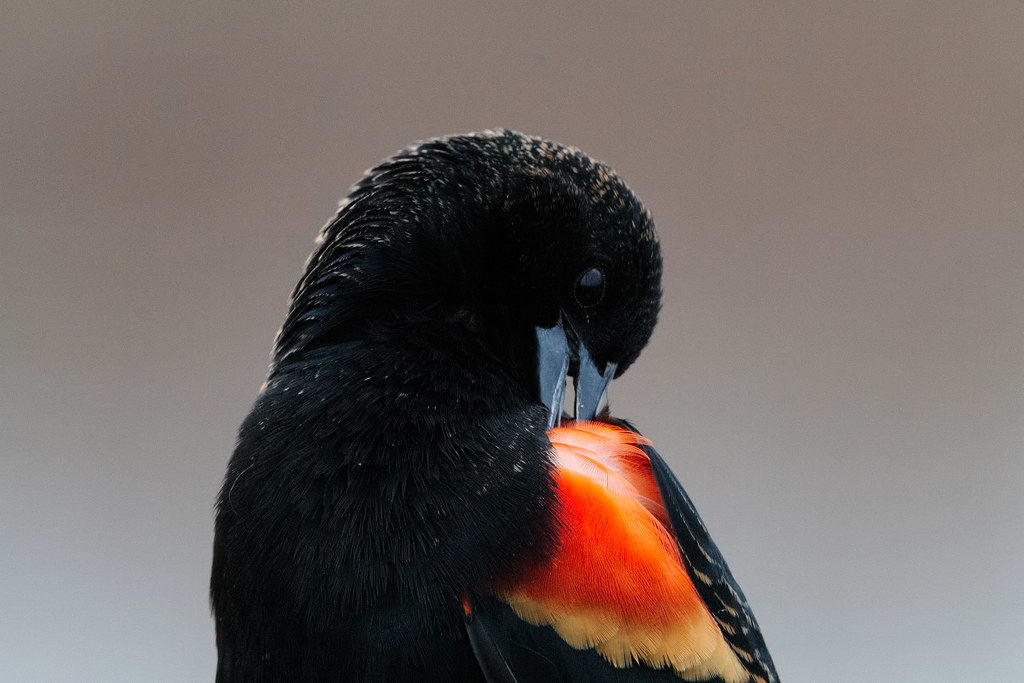
One thing I’ve long wanted in a camera is the ability for the focus to lock onto and track the eye of an animal I’m photographing. It would have come in handy here, I was testing out my Canon mirrorless camera to see how limiting its poor autofocus would be if used as a backup in case my main camera failed. I had been watching this bittern that had been mostly sitting still, with some occasional preening, when it suddenly threw its mouth wide open and shook its head about. While the camera had focused fine on the bird while it was sitting still, by the time this shot was taken the bittern had already moved far enough that it isn’t in good focus.

The technology is moving in this direction for photographing people at least, but I fear it will be a while yet before we can do it with moving animals. While my main camera would have handled this situation much better, it still requires thinking about it’s many autofocus modes, and I’d love to spend less time thinking about the technical side of photography and instead just enjoy the animals I’m watching.

The Wayward Feather

A song sparrow eats seeds while standing on a floating branch

This song sparrow was working the same bit of floating branches as this red-winged blackbird but with a different technique. While the blackbird hunted for food by moving debris about with her beak, the sparrow was using its feet to do the same. Curiously it had one tail feather askew but it didn’t seem to be impeding it in any way that I could see. I saw the same bird on another day with its downward-facing feather but I suspect it fell off in short order as days later I saw a sparrow working the branches with all feathers cooperating.

Seed Bill

Wren-sized Hole

A house wren peers out of a wren-sized hole of an old tree on the auto tour in Ridgefield National Wildlife Refuge in Ridgefield, Washington on May 31, 2010. Original: _MG_7675.CR2

In terms of its own health, this tree had seen better days. Partly covered in moss and lichen, its cracked bark was dotted with holes from woodpeckers either seeking insects or creating shelter. But there was still life within this tree, and soon there would be lives within it, as this house wren found a perfectly sized entrance hole into an old cavity where it could make its nest and soon, raise its young.

📷: Canon 7D | Canon 500mm f/4
🗓️: May 31, 2010

Stately

A male American robin stands on the ground

The robin is one of the most familiar birds in the United States and I had a fondness for them growing up, partly because they were easy to see in the many trees around our house and partly because they were the state bird of my state at the time, Michigan. I love photographing them but funnily enough don’t see them that often in the places I visit most. This male was feeding on the ground on a rainy winter afternoon at my favorite wildlife refuge and was the last shot I took on the day.

The Approaching Light

A great blue heron sits amongst frost and ice as the distant marsh is lit by the rising sun

A cold snap at the end of the year meant the new year dawned to frost and ice. I started New Year’s morning the way I had New Year’s Eve, watching egrets and herons at Ridgefield. I had arrived before the sun and had been sitting watching this heron when I was struck by how the rising sun was already illuminating the far side of the marsh. Within minutes it would crest the hill and bring us the warmth of its light as well.

As I watched the animals that morning I knew our sweet little cat Emma was in a fight for her life but I didn’t know we only had a week left together. And of course I couldn’t know that on this day, or perhaps a day or two before, a little kitten was being rescued far away in southern Oregon, and that a few weeks later she’d be transferred to Portland and welcomed into our home, bringing us light at the end of a dark and depressing month.

The Ice Walker

An American coot walks across the ice

I love photographing coots, one of the most commonly seen birds at Ridgefield, as I find it fascinating how they do many of the things that diving ducks do yet their bodies differ in many ways. I was shocked the first time I saw their almost comically large feet and was surprised to see that they aren’t webbed like a duck. We had a cold snap to start the year and some of the smaller ponds froze over, leaving the coots a bit exposed as their best defense against an aerial eagle attack is to dive under the water.