Ring-necked Thieves

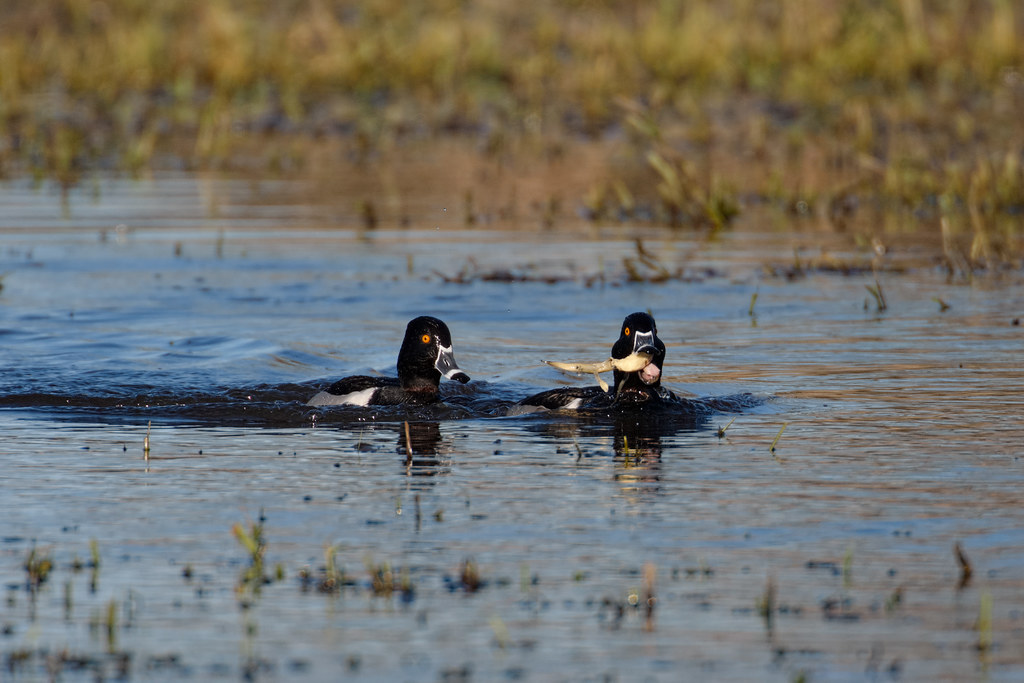
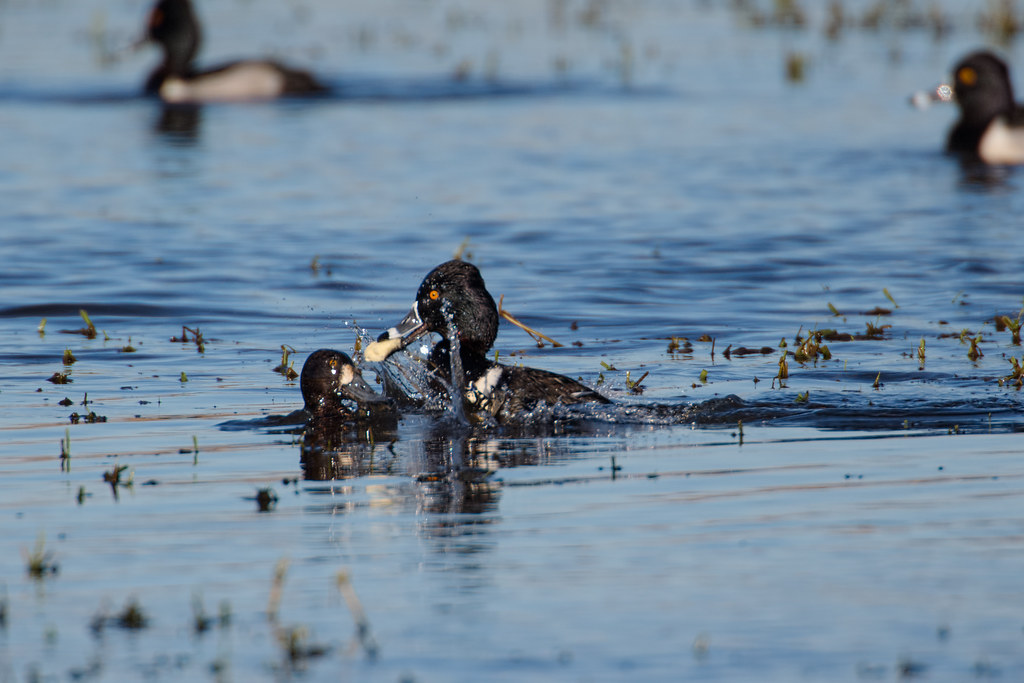
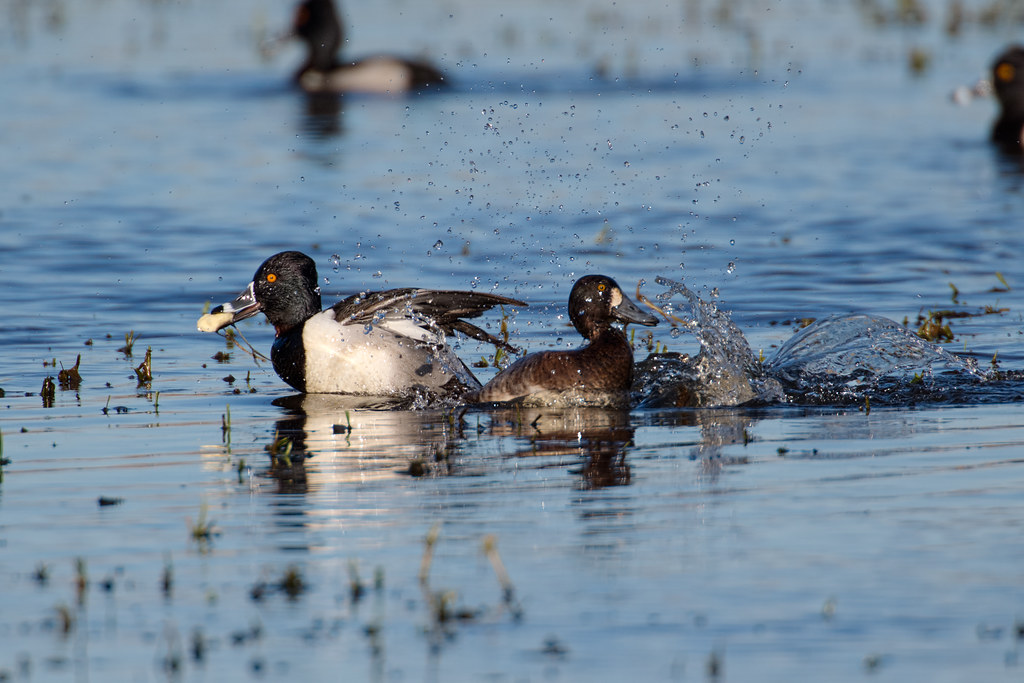
One ring-necked duck chases another to try and steal his food

Sometimes animal behavior seems all too familiar to our own.

A small flock of ring-necked ducks was diving under the shallow waters of Bull Lake to feed, sometimes bringing up what I’m guessing is the root of an aquatic plant. Whatever it was, the ducks were very fond of it, and the one that surfaced with it would swim away from the others while trying to quickly eat it, all while any nearby ducks would try to swim over and steal it and eat it for themselves. I wasn’t sure which of these two males actually surfaced with the plant but the chase was on.

While in a mad dash to escape with his food, the ring-neck swam directly over a lesser scaup as she was surfacing, leaving her rather startled but none the worse for wear. He held onto his prize and was able to eat it at last.
Whoops!

Collision Course

Open Water

A flock of coots swims in a tight pack

Coots often hang out in large groups and when it gets cold enough to freeze the ponds at Ridgefield, such as this cold New Year’s Eve morning, the constant movement of the flock helps keep part of the pond from freezing. This not only benefits them, as they dive under the water both to feed and to avoid hunting eagles, but other waterfowl as well, such as the bufflehead who would join them the following morning.

Not Endemic

A male dark-eyed junco perches in a subalpine fir in Olympic National Park

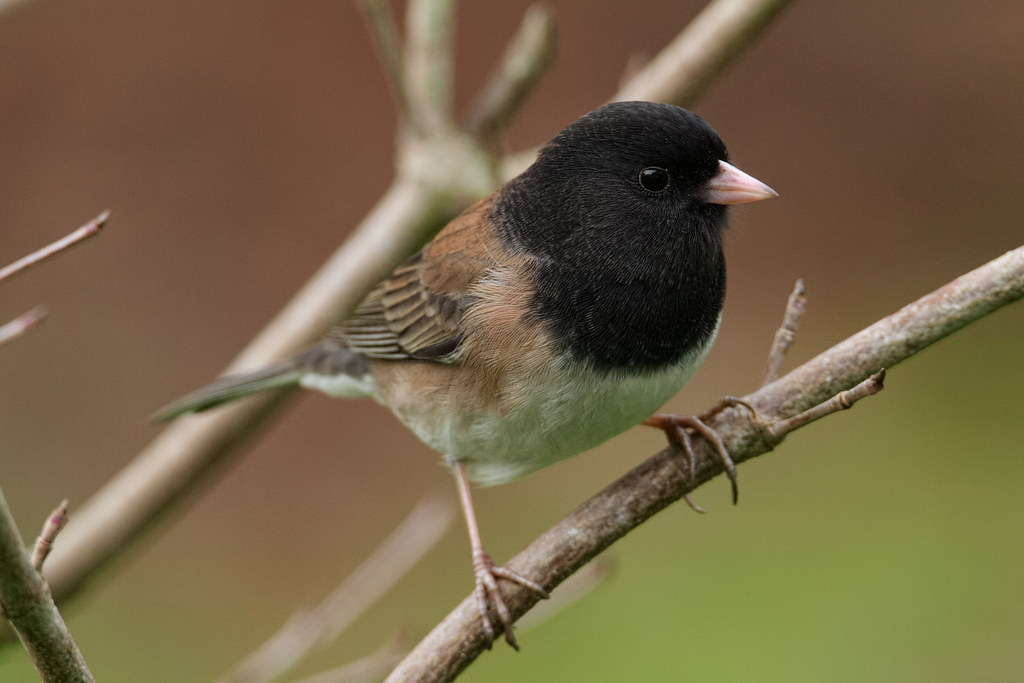
While some species in Olympic National Park are endemic to the peninsula, others like this dark-eyed junco can be found elsewhere – including my backyard. The junco in the top picture is perching in a subalpine fir at Hurricane Ridge, the one on the bottom in a dogwood in our backyard. Earlier this week one was flitting about in a tree just a few feet away as I walked to the cafeteria at work, while others were feeding on the ground near the track across the street from my office where I walk when I need a break from programming.

Junco in the Dogwood