Comfort

Our dog Ellie sleeping on my loveseat

We bought this Kivik loveseat from Ikea for one sole purpose: to give our sixty-five pound lapdog a place in my office to snuggle. We weren’t exactly looking for heirloom furniture given the abuse of paw and claw it will endure, and also went for comfort over style.

I’d say we chose wisely, wouldn’t you, Ellie? Ellie? Ellie?

I’m sure she’ll get back to us.

The Comforter Has Come

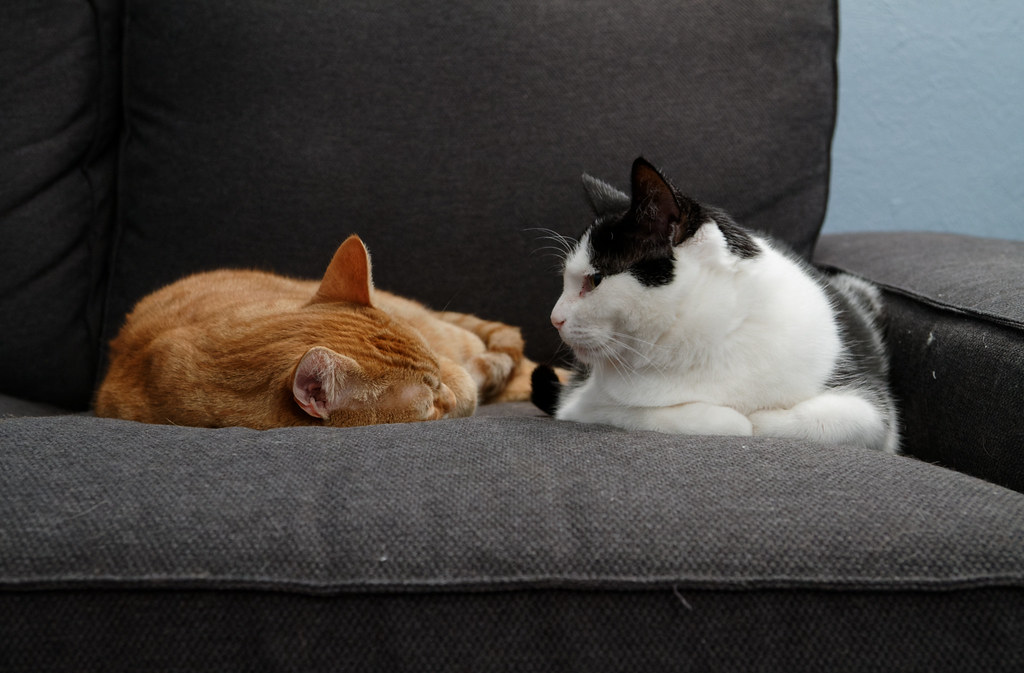
Our cat Sam sleeps next to our cat Scout on the love seat in our house in Portland, Oregon on July 4, 2012. Original: _MG_2747.CR2

Sam lay beside me on the loveseat, too agitated by the 4th of July fireworks to sleep. Scout came in but walked past her normal spot in my lap or her cat bed and instead lay down beside him. Sam immediately curled into a ball and fell into a deep sleep, safe and secure in his sister’s shadow. Sleep wouldn’t come so easily for Scout, but hours later exhaustion took hold and she too fell asleep.

Soon sleep beckoned me as well and I walked to the bedroom with the darkness murmuring at my feet. The murmurs jumped onto the bed as I approached and I eased myself under the covers so as not to crush them. As Sam and Scout curled up on me the murmurs turned to purrs, the purrs to silence, and at last we all were at rest.

Clues Two

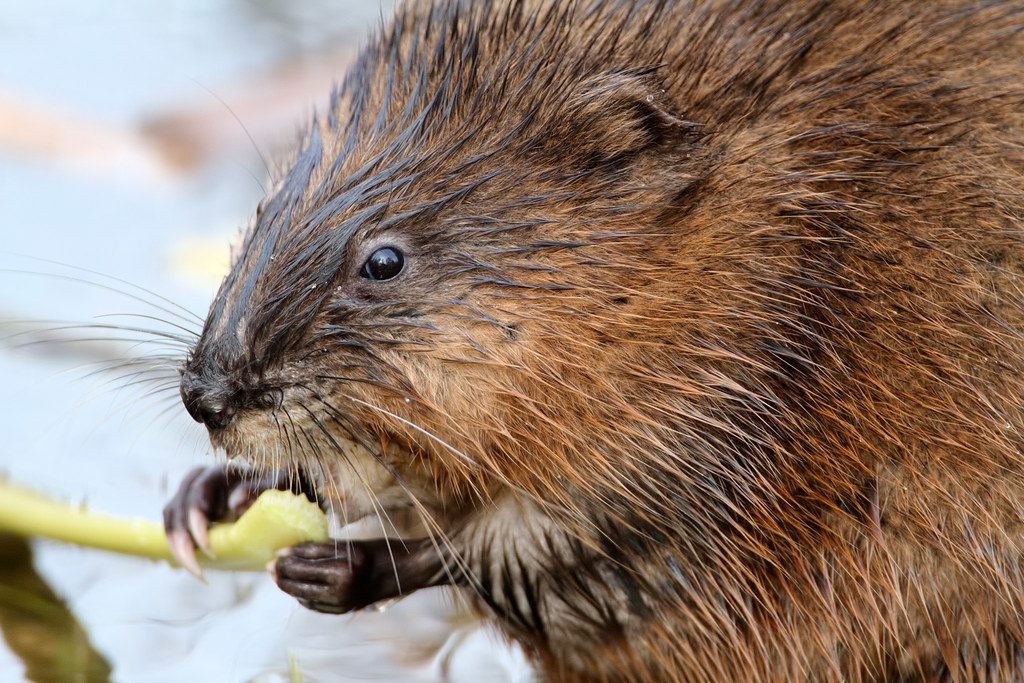
A close-up view of a common muskrat eating plants

I saw my first muskrat at the Virginia Tech Duck Pond back when I was first getting into photography. Sadly I found it dead not much later, but my fascination with these rodents was born. So I was particularly pleased when we moved to the Northwest to find them here as well. Over the years I’ve seen one in most of the ponds and lakes around the auto tour at Ridgefield, although surprisingly I seem to be the only one who is excited to see these adorable creatures.

While the face of the muskrat is unique compared to the other aquatic rodents at the refuge, its distinctive white claws are also an important clue, visible here on the front paws of this hungry muskrat. While I have seen muskrats many times, they are shy creatures and my glimpses are usually brief. Thankfully though this one let me photograph from close range to my heart’s content as it dined on plants at the edge of Canvasback Lake.

This is why I can’t stop going to Ridgefield.
Clues

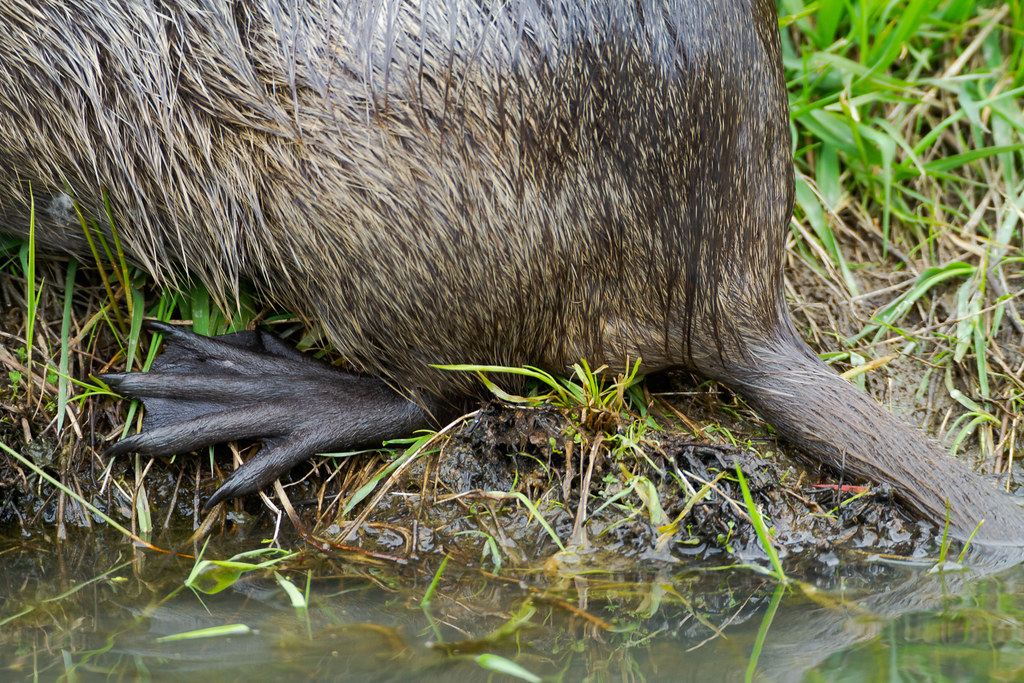
A close-up view of the rear foot of a nutria

Nutria are by far the most commonly seen of the aquatic rodents at Ridgefield, with muskrats being relatively common, beavers not common at all. There are enough clues in this picture to identify which of these rodents this is. The tail is the most obvious indicator, but the rear foot all by itself holds enough clues. A muskrat has white claws while those of a nutria and beaver are dark. Both beavers and nutria have heavily webbed rear feet, but all five of the beaver’s toes are webbed, on a nutria only the inner four.

Which begs the question: why?

I don’t know the answer but I do know this is a nutria.

Howling

A coyote howls at Ridgefield National Wildlife Refuge

I first met this coyote when we surprised each other on the short trail to the observation blind at Ridgefield. When I got back to the car I moved on to the Kiwa Trail parking lot and discovered the coyote had as well. I drove to the far side of the lot to get a better angle on the sunlight then gently swung the car into place. The coyote didn’t pay me much heed and hunted in the meadow for a while, then surprised me once more by howling a few times (unanswered). It then slipped through the gate and disappeared up the trail.

I’ve heard coyotes howl many times but it was fun to finally get to see it.

Mr. Ambassador

Our cat Templeton inspecting the box of my 15 inch Powerbook shortly after it was delivered

I’ve been doing a lot of work on my home office lately, but it isn’t just my physical life that’s getting organized. I’ve been shooting digitally since Christmas of 2000 and over the years my pictures ended up pretty scattered around. Worse yet I have gotten hopelessly behind in sorting and editing. Worst of all I wasn’t sure which ones were properly backed up.

So it was time to start getting my digital life in order too.

Thanks to a few days of drudgery, all my pictures are now stored in a common directory format on one big hard drive, loaded into Aperture, and being backed up onto a second hard drive as I type. While loading in my older pictures, I couldn’t help but take a break every so often to play around with a few.

For some reason I never edited this picture of Templeton back in the day, he was inspecting my 15″ Powerbook shortly after it was delivered in May of 2004. I’ve written about the two of them before, so it was kind of funny to see them together at the moment the laptop arrived. I was rather ambivalent about cats until I met him, but he was such an ambassador for the feline kind that I can’t imagine my life without them now.

What a wonderful little creature he was.

Attack Dog

Our dog Ellie sleeping on a homemade dog bed with one of her favorite stuffed hedgehogs in May 2012

When we first adopted Ellie a few years ago, it seemed pretty clear she hadn’t been in an urban environment before as she wasn’t particularly good on her leash and she was much worse when off it, at least in open areas. Inside the house, or in a fenced backyard, she was in top form, no worries there.

In the hopes of one day being able to let her off leash at the nearby dog park, I began working with her in the backyard on learning to heel & stay & come, even when excited, and eventually she got the hang of it. I got brave enough to try her in the dog park and she did well, but we also started a little game where I would sprint from one side of the park to the other and, if she stayed by my side the whole time, she got a treat.

We still run wind sprints together whenever possible, even though she has long outgrown the need for the training, because she just loves it. But the other day as she caught me from behind she bumped into my legs and sent me sprawling face first into the mud. I had been running pretty fast so I hit hard and as I tried to sit up, found it hard to breathe. It was hard to tell exactly where the pain was coming from, I suppose that must have been the adrenaline kicking in, useful for when you’re trying to escape a lion but not so much when you’ve been attacked by a giant goofball and only want to know what is broken. I forced a few deep breaths and was relieved there were no sharp pains in my chest.

I was also relieved when I could stand and put weight on both my legs without shooting pain, so my streak of never having broken a bone stays alive. Once I got home and a little time had passed, a bruise the size of a dollar bill appeared on my thigh with a matching silver dollar bruise on my knee. All from an accidental bump.

Although word around the house is that it may not have been so accidental but payback for having had to smell ribs cooking all day and then I didn’t even share one bite with her during dinner.

Lately she’s been sidelined not by my leg but by hers, she somehow hurt it so she’s been on bed rest but I think we’ll start up short walks tomorrow, because boy howdy is she ready. I lost count of how many times she pelted me with hedgehogs today. Here she is curled up with one of her favorites (as you can tell from the stuffing that is escaping) on the dog bed in my office.

Lifer

A male horned lark

During the winter horned larks can be found in large numbers in the Northwest, but mostly on the eastern side of the Cascades. There are a few resident populations on the western side where I live but I had never seen a horned lark until this January when I found a male foraging near Schwartz Lake at Ridgefield.

I use Northwest Birds in Winter by Alan Contreras when I want to get more specific info on the distribution of one of our birds during the winter than you can get out of a general purpose field guide. I bought my copy in 1997, about a year after I moved here, when I met Alan at an Audubon event and he signed my copy. It’s definitely not a field guide and not useful for identifying birds, but a nice complement to my army of guides when I want to dig a little deeper.

A close-up view of a male horned lark

Skittish

A close-up view of the face of a female northern flicker on a rainy day at Ridgefield National Wildlife Refuge in Ridgefield, Washington on January 15, 2012. Original: _MG_2234.CR2

I loved the little woodpeckers in the woods behind our house when I was growing up but I didn’t discover flickers until I got into birds & photography in graduate school. I put my neophyte bird guide skills to the test as I tried to identify the bird making a ruckus in the tree outside my apartment. I found my mark and have loved flickers ever since.

The race we typically see in the west, the red-shafted flicker, is slightly different from the race I first met in the east. I have long hoped to get a close-up of the red-shafted male with his spectacular red mustache, and one was calling out from the nearby trees when I photographed this female at Ridgefield, but he never joined her down in the grass. She gave me great looks as she fed in the rain, however, and I was thankful for the opportunity as flickers are usually pretty skittish.

We even have them in our yard, they are a particular favorite of our resident bird-watcher Emma, and she and Sam and I got a great look from my office this afternoon as a male bathed in our birdbath. No way to get pictures without disturbing him, I can’t park my car in the backyard and photograph him Ridgefield-style. But he gave us a nice long look at his feathers as he splayed them about in the water and seemed nonplussed by his furry fan chirping at him from the cat tree.

📷: Canon 7D | Canon 500mm f/4L IS USM + 1.4x III
🗓️: January 15, 2012

Visibility

A close view of the face of an eastern cottontail

As a fan of small cars, I’ve been thinking my next one should be in a bright color to make it more visible to other drivers, like the metallic red on the Chevy Sonic or the orange on the upcoming Subaru Crosstrek (although as much as it pains me to say it, perhaps it is too orange). But when I look at my tight animal close-ups and see my car reflected in the eye, I wonder if these brighter colors would also be more visible in the picture?

For some reason car reviews don’t touch on this sort of thing.

Not that I’ll lose any sleep over it since it could be fixed in post if necessary, plus for the most part I do prefer calmer colors like a nice sky blue or maroon or green or — oh wait, am I talking about cars again?