The Pintails

Six pintails stand on the melting ice in Horse Lake

Six pintails stand amidst the melting ice of Horse Lake. They reminded me of teenagers lined up along a wall at a dance, a little too nervous to take to the dance floor, especially the males who looked like they were decked out in formal attire. In truth they were a little ill at ease and anxious for the ice to finish melting, as they are as awkward on the ice as they are graceful in the water.

Sunny Day, Cloudy Day, Same Day

Sunny Days

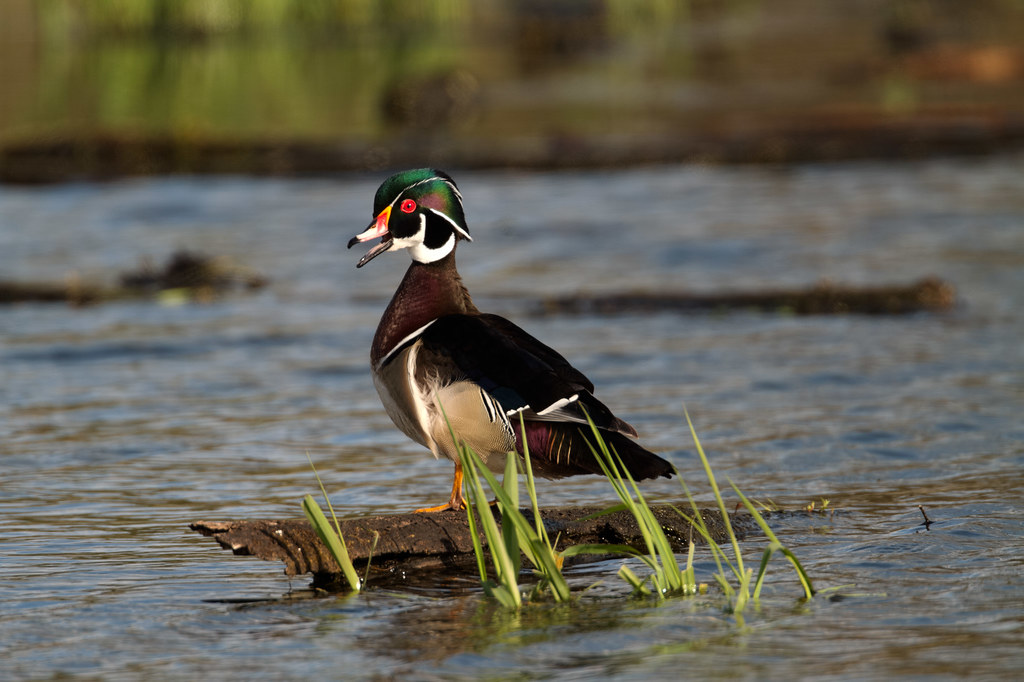
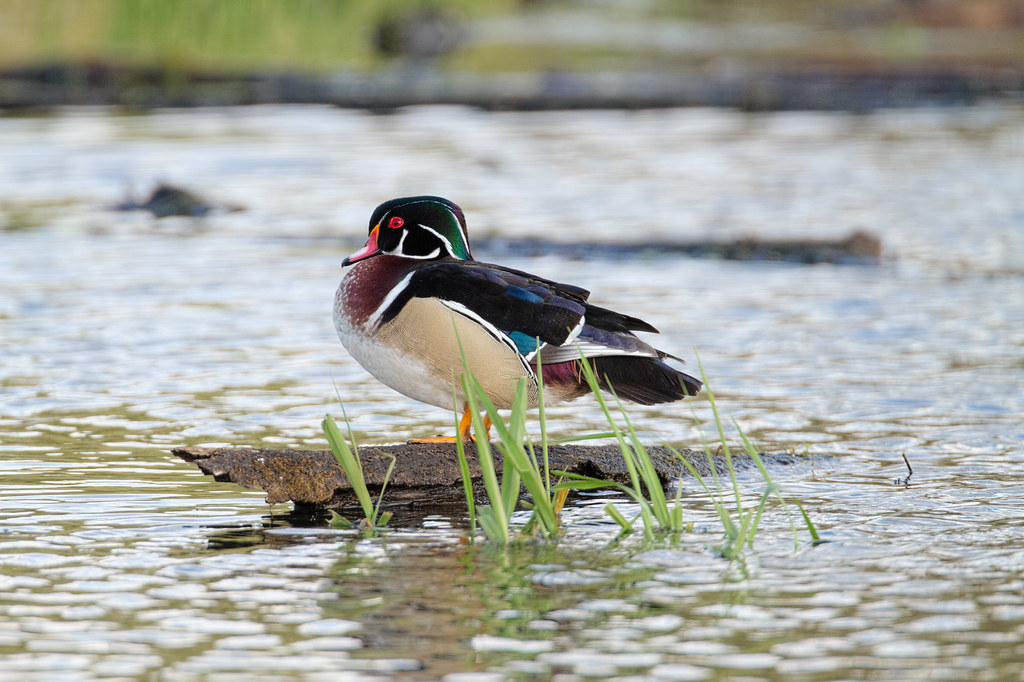
On a sunny afternoon, this seemingly happy wood duck raised his head to stretch before resuming preening some of the hard-to-reach areas. I don’t often see wood ducks in this part of Long Lake so it was a treat to watch him. Five minutes later the clouds rolled in and changed the lighting as he paused during his preening ritual. I love shooting on both sunny and cloudy days and on this day got to do both frequently, but the constantly changing light levels made it challenging to correctly meter the scene and I often didn’t keep up fast enough.

Cloudy Days

Follow the Eyes

An American bittern with its mouth wide open

One thing I’ve long wanted in a camera is the ability for the focus to lock onto and track the eye of an animal I’m photographing. It would have come in handy here, I was testing out my Canon mirrorless camera to see how limiting its poor autofocus would be if used as a backup in case my main camera failed. I had been watching this bittern that had been mostly sitting still, with some occasional preening, when it suddenly threw its mouth wide open and shook its head about. While the camera had focused fine on the bird while it was sitting still, by the time this shot was taken the bittern had already moved far enough that it isn’t in good focus.

The technology is moving in this direction for photographing people at least, but I fear it will be a while yet before we can do it with moving animals. While my main camera would have handled this situation much better, it still requires thinking about it’s many autofocus modes, and I’d love to spend less time thinking about the technical side of photography and instead just enjoy the animals I’m watching.

The Wayward Feather

A song sparrow eats seeds while standing on a floating branch

This song sparrow was working the same bit of floating branches as this red-winged blackbird but with a different technique. While the blackbird hunted for food by moving debris about with her beak, the sparrow was using its feet to do the same. Curiously it had one tail feather askew but it didn’t seem to be impeding it in any way that I could see. I saw the same bird on another day with its downward-facing feather but I suspect it fell off in short order as days later I saw a sparrow working the branches with all feathers cooperating.

Seed Bill

Life Finds a Way

A hoary marmot sits in front of Mount Rainier

I had been photographing this hoary marmot with telephoto lenses when I decided to switch to a wider angle to show the amazing landscape that this animal calls home (the waterfall in the background on the far right is at the end of the Nisqually Glacier on Mount Rainier). That’s when I noticed that a small collection of plants was growing underneath the lip of the big rock, protected not only from wind and snow but also from being crushed by hiker’s shoes. I like photographing plants growing in seemingly inhospitable locations as I’m intrigued by how often life can take root if given the chance.

Alarmed

A Townsend's chipmunk waves its tail in alarm

A Townsend’s chipmunk whips its tail back and forth. I had been watching it for a while and it didn’t seem bothered by my presence, so I didn’t think it was upset with me, but on the other hand I couldn’t see anything in the vicinity that would give it pause. I think it was testing me though, as when I didn’t move it ran down to collect some of the dead grasshoppers around me that had gotten trampled on the trail by hikers earlier in the day.

Wren-sized Hole

A house wren peers out of a wren-sized hole of an old tree on the auto tour in Ridgefield National Wildlife Refuge in Ridgefield, Washington on May 31, 2010. Original: _MG_7675.CR2

In terms of its own health, this tree had seen better days. Partly covered in moss and lichen, its cracked bark was dotted with holes from woodpeckers either seeking insects or creating shelter. But there was still life within this tree, and soon there would be lives within it, as this house wren found a perfectly sized entrance hole into an old cavity where it could make its nest and soon, raise its young.

📷: Canon 7D | Canon 500mm f/4
🗓️: May 31, 2010