
As the heron slowly stalked its prey through the tall brown grasses, mostly obscured from sight, it paused and stood upright for a moment. When it glanced over in my direction, a gust of wind blew out its neck feathers and I had my picture.
Scratcher of heads, rubber of bellies
As the heron slowly stalked its prey through the tall brown grasses, mostly obscured from sight, it paused and stood upright for a moment. When it glanced over in my direction, a gust of wind blew out its neck feathers and I had my picture.

It amuses me that a bird that tries so hard not to be seen has a call that can be heard from so far away. The bittern has a distinctive ooomm-ka-chooom call that is one of my favorite sounds of the marsh, it reminds me more of a gurgling swamp than a bird. In this picture it has spread its throat out, sending out its call across the marsh.
📷: Canon 20D | Canon 500mm f/4 | Canon 1.4X
🗓️: May 10, 2009
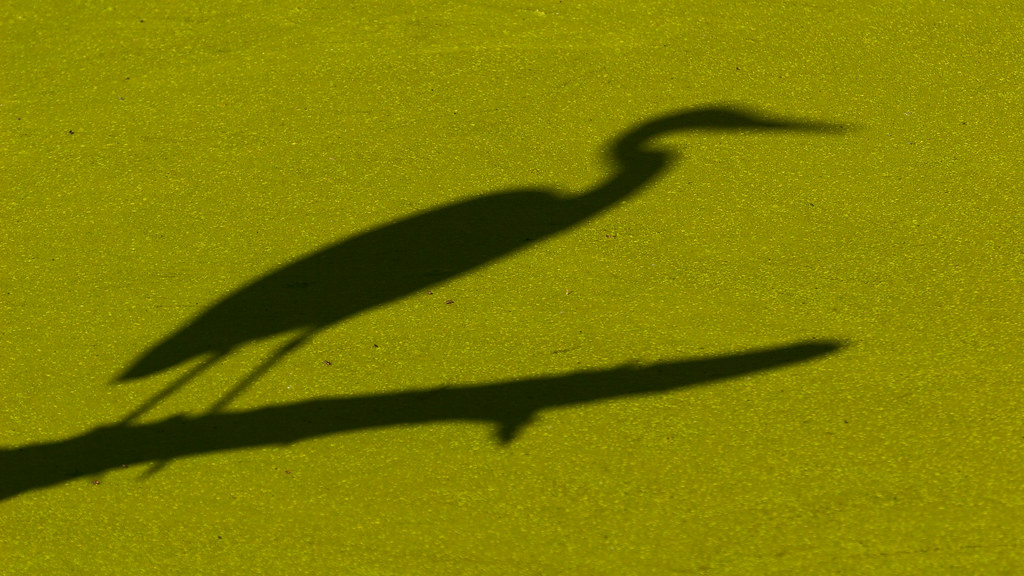
A great blue heron perches on a downed tree as its shadow is cast over the green water. Even though it was actively scanning and listening for movement in the water below, its perch seemed too high to have a chance at capturing any frogs or fish, so it may have been in reconnaissance mode. It eventually started hunting closer to the water.

Can you guess who owns this feathery back?
I took the picture of the feathers while the heron hunted for fish in the shallows of Rest Lake, then focused on its face when it wheeled around to listen for voles in the grasses on the shoreline.
📷: Canon 20D | Canon 500mm f/4 | Canon 1.4X
🗓️: February 17, 2009


When I think of bird feathers, I usually think of the large wing feathers. But birds have feathers of all sizes, and one of the fun things about close-up pictures like this is getting to see the individual feathers of all sizes. For example, although the eye ring of this sooty grouse looks like a solid band from a distance, up close you can see that it is actually a ring of tiny little feathers.
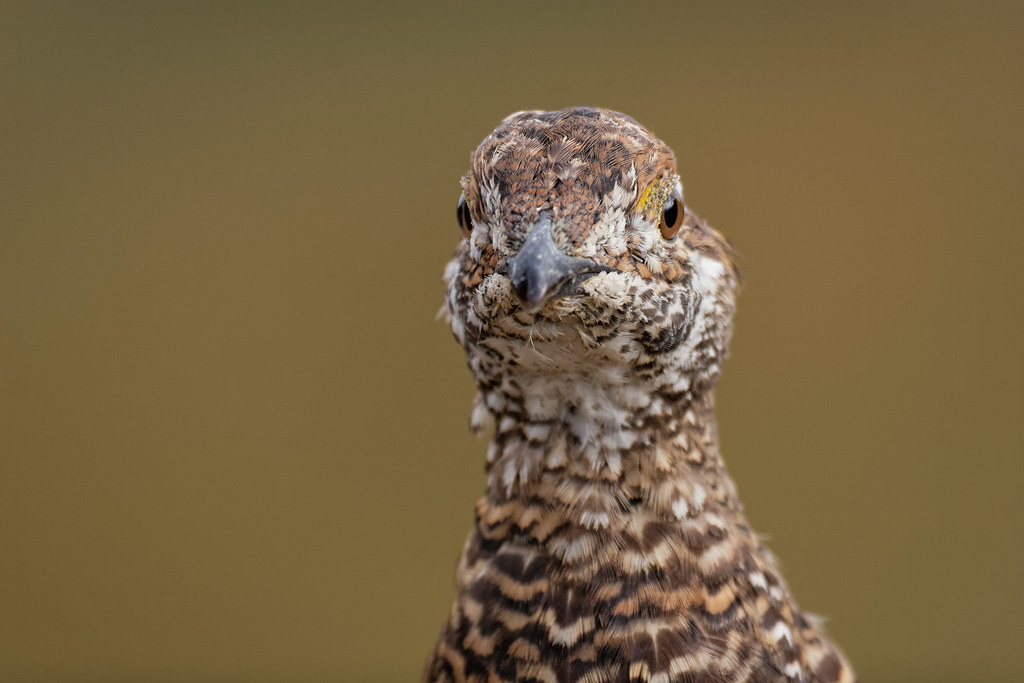
If you’ve followed my blog for a while and have a photographic memory, this picture will seem a little familiar. It certainly seemed familiar to me when I took it. This view of a sooty grouse is very similar to a picture I took last year of a dusky grouse while in the Tetons. Not exactly the same of course, the head is turned at a different angle and the light and colors are different, but I certainly had the older picture in mind when I took this one.
Sooty and dusky grouse used to be considered two races of one species, blue grouse, but were recently split into separate species. Here in the Northwest, the sooty grouse tend to be in the areas from the Cascades and west to the coast, while duskies tend to be in the eastern interior.
This picture is from the Sourdough Ridge Trail in the Sunrise area of Mount Rainier National Park, the trail where I saw grouse the most often. I also saw them down by the Paradise Inn, and saw one in Olympic National Park at the end of my trip.
That last encounter in the Olympics was the most like my experience with the grouse I photographed in the Tetons, I was driving out of the park when I saw one in the road in front of me. I stopped the car and turned on my hazard lights, as the bird was moving slowly and in no hurry to get out of the way. I got out of my car and encouraged it to hurry across the road, which is fortunate as a pickup came driving past right afterwards.
That’s twice now I’ve played crossing guard for grouse.

After driving in the rain all day to get to Mount Rainier, I had a couple of hours before sunset. I started up the Sourdough Ridge Trail to Frozen Lake, hiking in a cold wind and rain and sometimes snow, fearing that the weather had turned and I had waited one week too long to start my trip.
But then I saw a hoary marmot near the trail and my mood brightened considerably. After reaching Frozen Lake I headed back down the trail and saw my second surprise of the short hike, four sooty grouse that were near the trail. They were remarkably tolerant of my presence so I knelt or sat on the ground to get at their eye level and slowly moved with them as they fed along the trail. At times they literally walked beside and around me, I’d be photographing one of them and would turn around and see another just inches away from me.
My gloves were the one part of my outfit that weren’t waterproof, so by this time my hands were wet and cold enough that I fumbled a bit with my camera. Knowing that it was about to get dark and needing to warm my hands, I reluctantly said goodbye to the four and headed back to the car.

There’s an invasive species of blackberry that has spread across the Northwest and is prevalent at Ridgefield. A variety of animals will use the berries as food or the thickets as cover, but this young hawk was using it as a place to listen for breakfast, every sound from below drawing its eyes downward. It didn’t end up catching anything, at least not during our time together.

The yellowthroats weren’t staying still for very long, so even if I got a clear view of one I had to move quickly. For a few seconds this male flew into the middle of the cattails, not so high as to draw the ire of the blackbirds. His eye was obscured by the cattail in front nearly the entire time, but he stuck his head out far enough for me to get one picture before he flew off.
My favorite picture of the day.
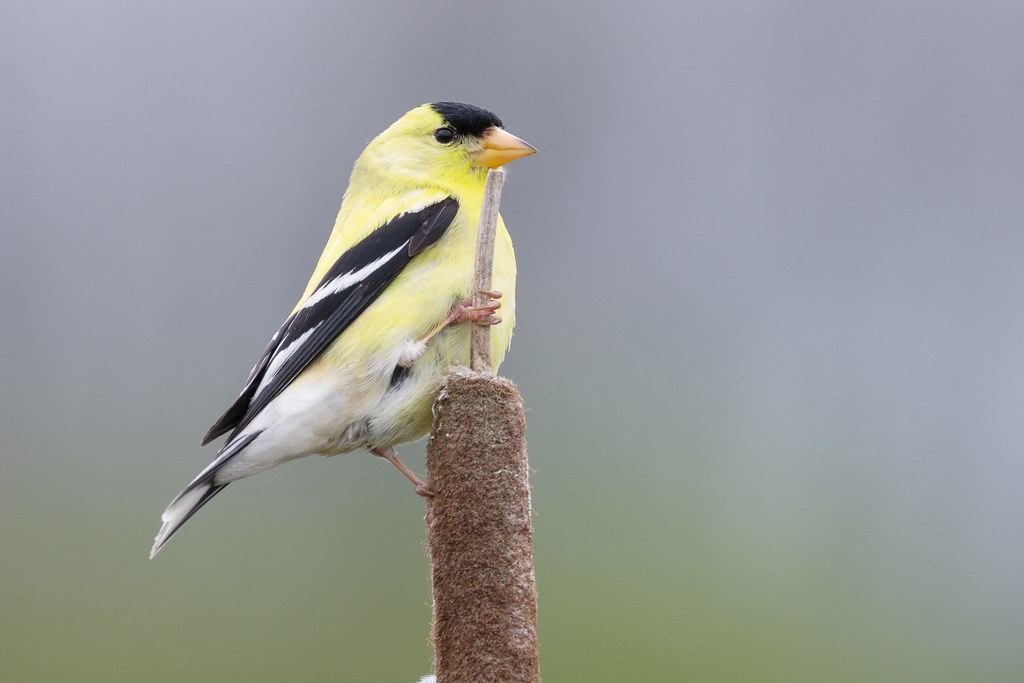
I sat in my car at Ridgefield for hours hoping in vain to photograph migrating common yellowthroats. I was getting ready to leave when this male goldfinch and a female flew into the cattails. I only had time for a few quick pictures of the male before a territorial red-winged blackbird flew in to chase off the intruders. So happy to get a look, however brief, of goldfinches I decided to stick around a while longer and was rewarded with nice views of a male yellowthroat as well.
 Boolie