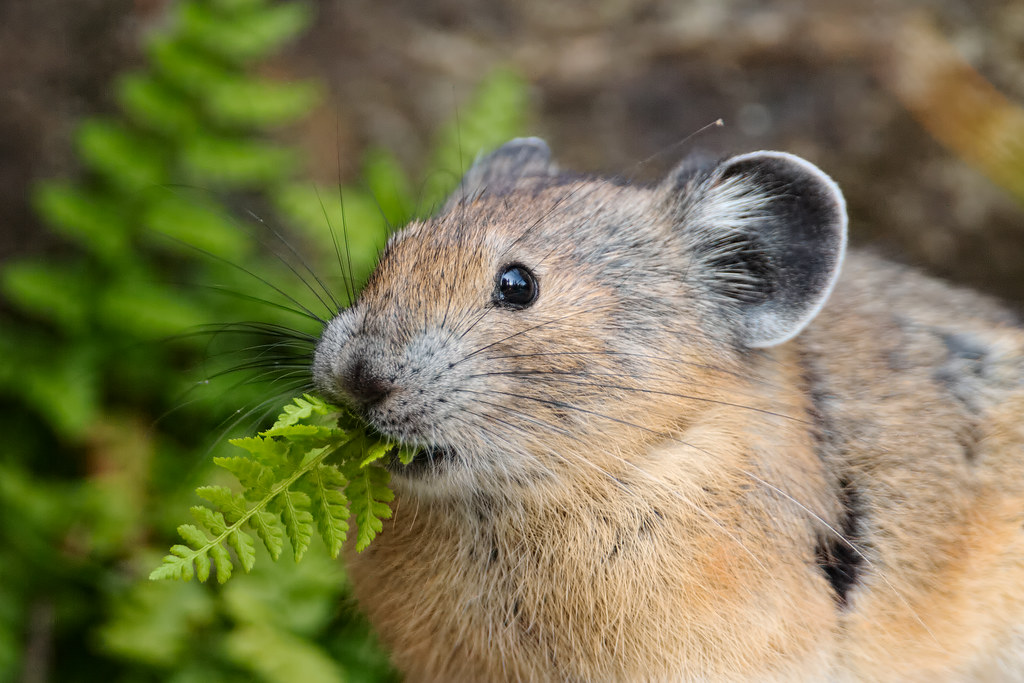
Pika in the Clouds

A pika sits on a rock in a talus field

I had been watching this pika for a while and decided to use the rocks of the talus field near me to blur the bottom of the frame and make it seem almost as though the pika was emerging from the clouds. Unfortunately I only had a moment to attempt the shot, trying to get my tripod positioned in the jumbled rock field at just the right height while sitting uncomfortably on the rocks, and I ended up blurring its ears a little more than I would like.

Nevertheless one of my favorite pictures of one of my favorite creatures.

Life Finds a Way

A hoary marmot sits in front of Mount Rainier

I had been photographing this hoary marmot with telephoto lenses when I decided to switch to a wider angle to show the amazing landscape that this animal calls home (the waterfall in the background on the far right is at the end of the Nisqually Glacier on Mount Rainier). That’s when I noticed that a small collection of plants was growing underneath the lip of the big rock, protected not only from wind and snow but also from being crushed by hiker’s shoes. I like photographing plants growing in seemingly inhospitable locations as I’m intrigued by how often life can take root if given the chance.

Alarmed

A Townsend's chipmunk waves its tail in alarm

A Townsend’s chipmunk whips its tail back and forth. I had been watching it for a while and it didn’t seem bothered by my presence, so I didn’t think it was upset with me, but on the other hand I couldn’t see anything in the vicinity that would give it pause. I think it was testing me though, as when I didn’t move it ran down to collect some of the dead grasshoppers around me that had gotten trampled on the trail by hikers earlier in the day.

The Trixie Marmot?

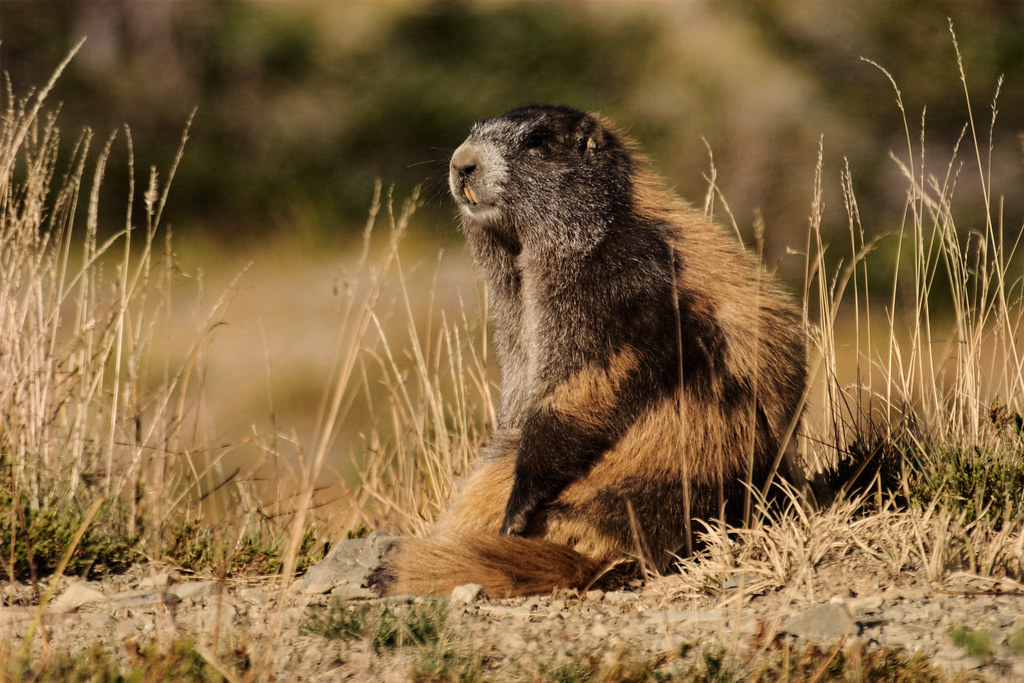
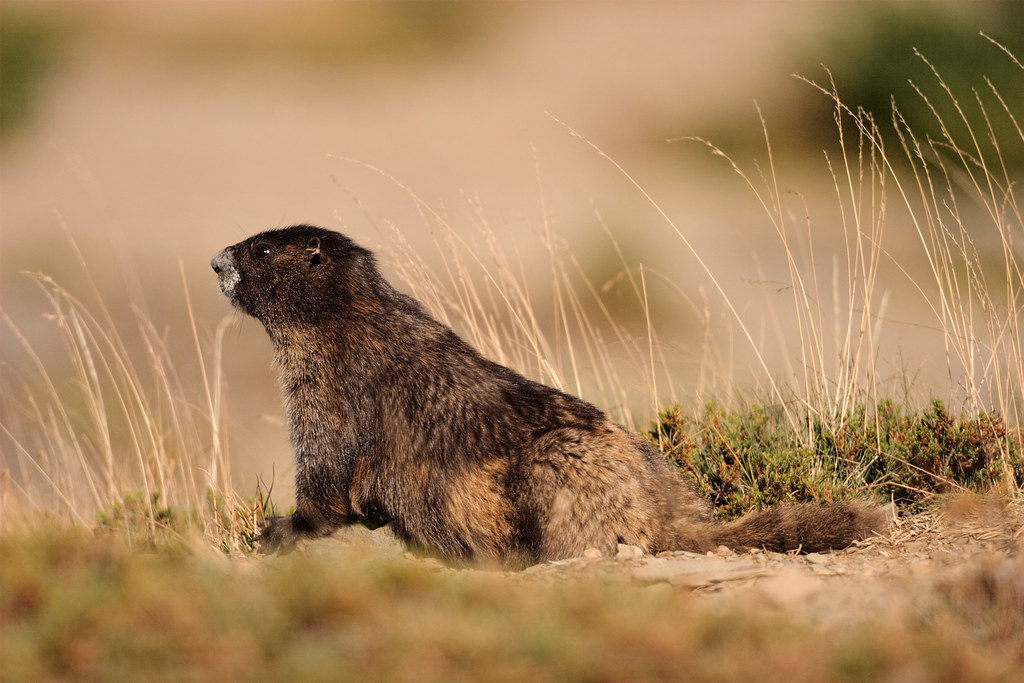
An Olympic marmot sits in a meadow in Olympic National Park

Looking back at these Olympic marmot pictures I was struck by how they resemble our tortoiseshell cat, Trixie. In cats the mixed brown & black fur pattern can occur in females (or rarely in males with two XX chromosomes) where the primary color varies randomly from cell to cell, but in the marmots I think their coats are changing from light brown early in the season to dark brown near the end, and the marmots I saw on this occasion in the fall were in the process of transition.

Two Halves

Two Halves

I got lucky with the top picture: the soft, warm light of sunset, the frost from an unusually cold winter day, the perfect pairing of these two baby nutria, one facing forward, the other backward, and the one nutria eating a blade of grass while holding it in its tiny hands. Then they each walked off into the shadows and out of my sight. Nutria are not native to the Northwest but they are by far the most commonly seen of our aquatic rodents, and as you can see are able to give birth and raise young even during winter.

A baby nutria walks across ice on a cold winter's day.

A baby nutria walks across frost and grass at the end of a cold winter's day.