Safe in the Arms of the Cholla

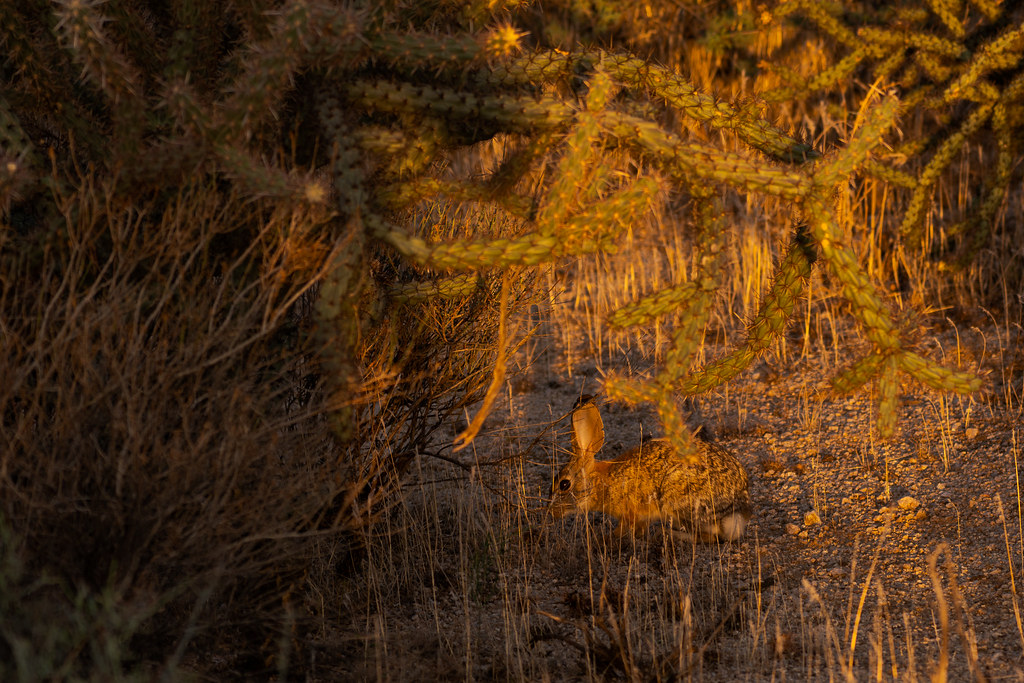
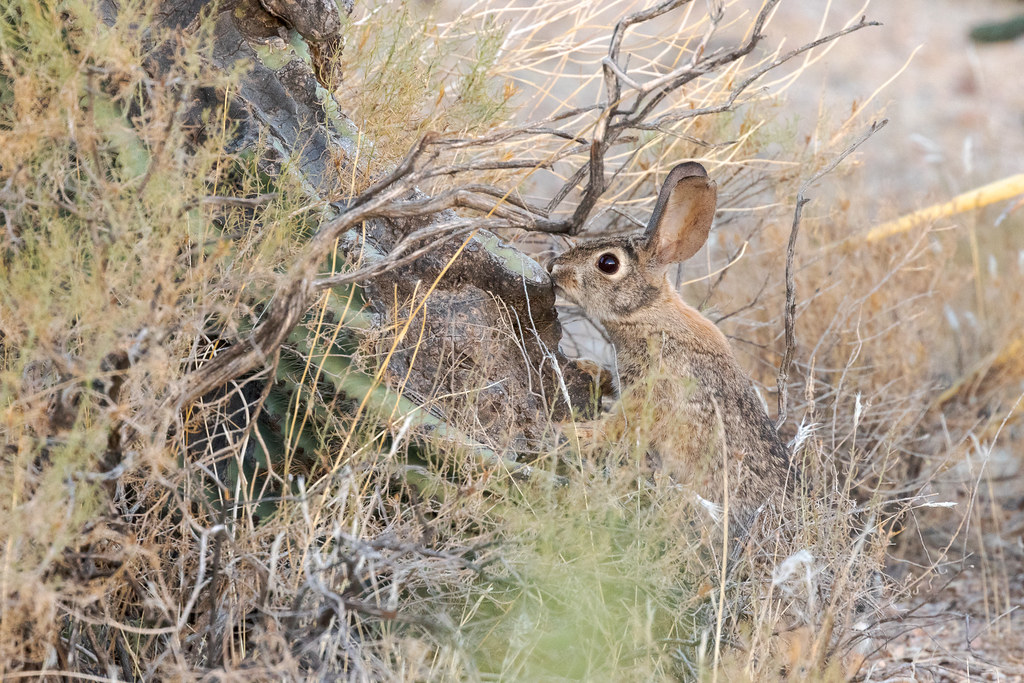
A desert cottontail nibbles grasses at sunrise near a buckhorn cholla along the Chuckwagon Trail in McDowell Sonoran Preserve in Scottsdale, Arizona

The rising sun, so easily blocked by hills and saguaros and even myself, does what I cannot, slip through the outstretched arms of a buckhorn cholla to embrace a cottontail as it feeds beside the Chuckwagon Trail. It is mine but to observe, to record, to be grateful.

Spirits

A black-tailed jackrabbit is visible through the desert scrub at the trailhead to Brown's Ranch in McDowell Sonoran Preserve

I am amazed how effortlessly and silently mammals move through their home while I stumble down the trail. The jackrabbits seem like spirits floating through the desert, I often first notice the black tips of their tall ears moving while the rabbit itself is blocked from sight by the many plants of the scrubland. This lovely creature I found not on the trails but at the trailhead of Brown’s Ranch, we shared a quiet moment before sunup.

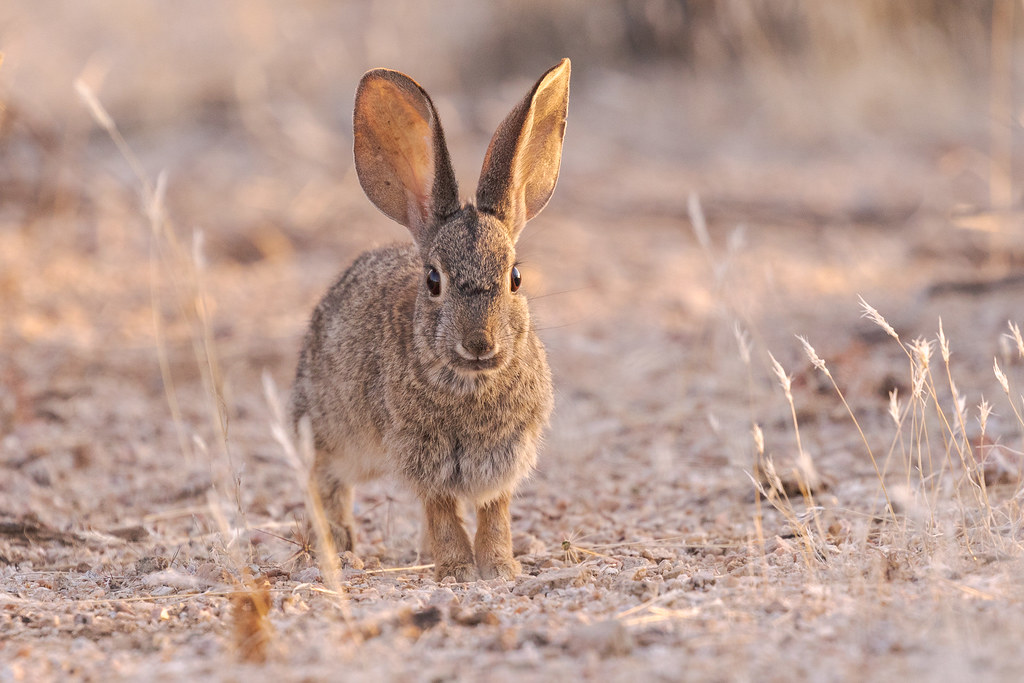
The rabbit you are most likely to see at the trailhead, and on the trail, is the desert cottontail (below). They too move silently through the desert but are so much smaller than the jackrabbits that you see them when you see them, there are no tall black tips dancing in the early light to catch your eye. Like all the mammals your best bet to see them is to arrive early, here also at the trailhead but just as the sun began peeking through to send one of us onto the trails and one to bed.

Walking in the Sonoran Desert at sunrise, seeing the desert both wake up and go to sleep, is a joy and a treasure even to this lifelong night owl.

A desert cottontail looks straight at me as it is partially lit by the rising sun at the trailhead to Brown's Ranch in McDowell Sonoran Preserve

Soft Browns

A desert cottontail eats dried grasses in the soft light before the sun was up on a warm spring morning in the Brown's Ranch section of McDowell Sonoran Preserve in Scottsdale, Arizona

A desert cottontail eats dried grasses in the soft light before the sun was up on a warm spring morning. I was back on the trails this morning after taking a couple of weeks off to let a sore left knee heal and didn’t see a single cottontail (or jackrabbit), most of the time I see at least one if not a handful so either today I was unlucky or perhaps they are not as visible in the summer. I meant to go hiking yesterday but forgot to set my alarm so I walked the pup instead, Ellie and I saw four cottontails on a short walk in the neighborhood.

Under Tom’s Thumb

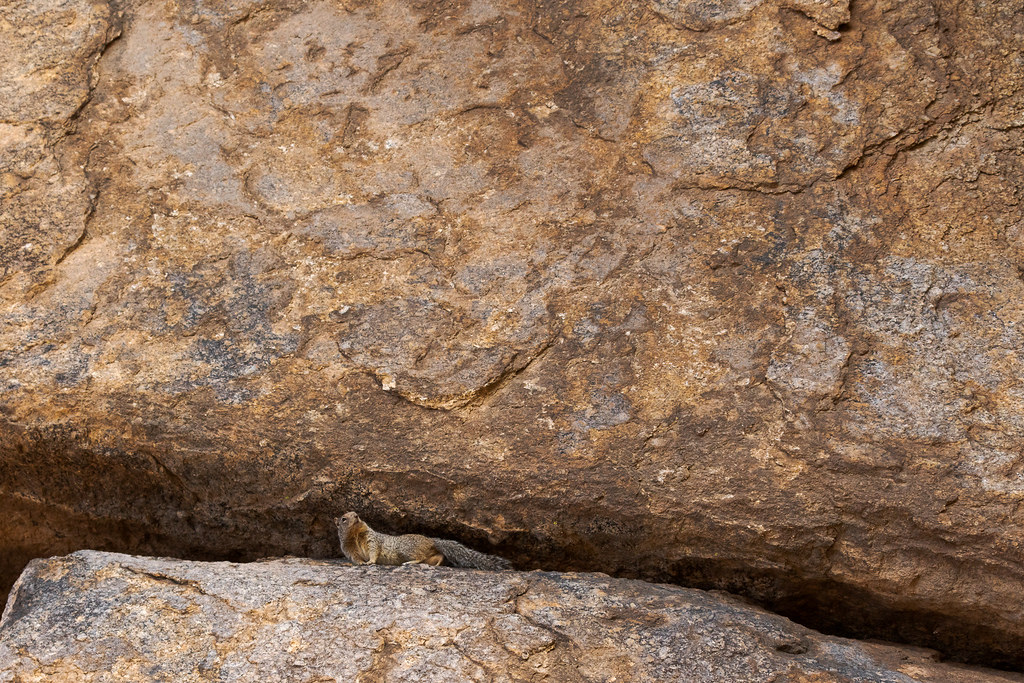
An environmental portrait of a rock squirrel between two massive granite rocks at Tom's Thumb in McDowell Sonoran Preserve

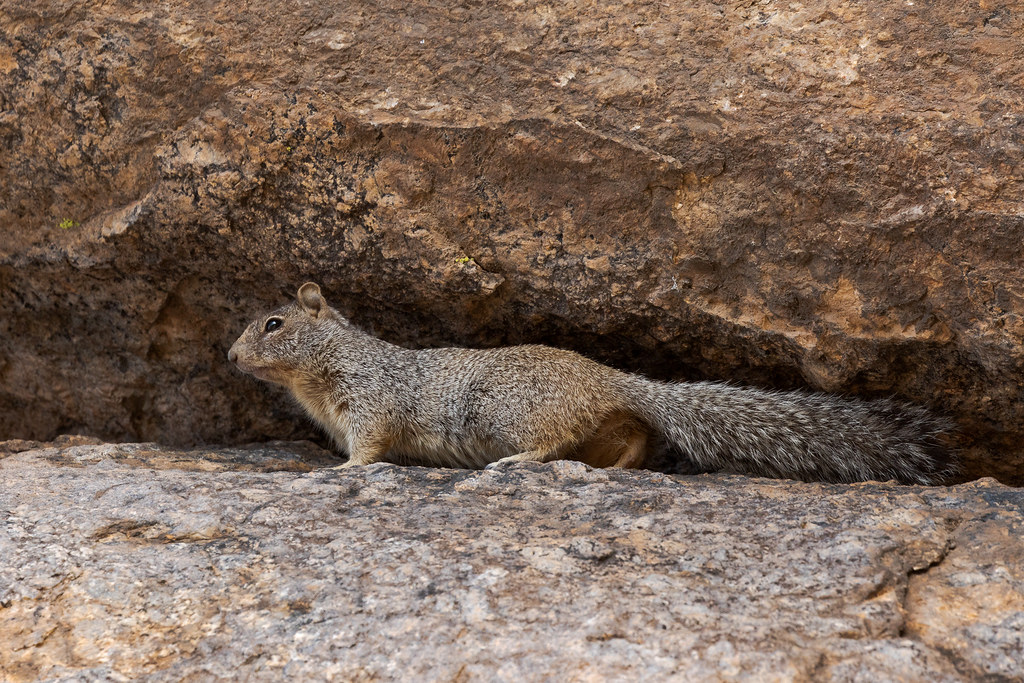
I met this rock squirrel back in April a few weeks after we moved here. One of the reasons I love a telephoto zoom like the 100-400mm lens so much (this is the Canon, I only got the Sony recently) is that you can zoom in and take a traditional portrait of a small animal far away, like the shot below, but you can zoom out and take an environmental portrait as well like the picture above (when the scenery allows it). In this case I vastly prefer the environmental portrait as you get a feel for the massive rock this squirrel is perching under. Given more time I would have preferred an ever wider perspective with a different lens to show that it was perched high off the ground between much more massive granite boulders above and below than you can see here, but the squirrel only paused for a moment as it ran up the rocks at the approach of a dog on the trail.

I was struck by how at ease this rock squirrel was in the rocks as it moved about the narrow passages and great heights as easily and gracefully as a tree squirrel in the trees. I was delighted to find both rock squirrels and Harris’s antelope squirrels in the desert as I had mistakenly surmised I was leaving squirrels behind when we left Oregon. I fell in love with chipmunks and squirrels at an early age, we had a forest behind our house as a child in Michigan, I can’t remember ever not loving them. They’re a rarer treat now than then, but a treasured treat always.

A rock squirrel between two massive granite rocks at Tom's Thumb in McDowell Sonoran Preserve

Sniffing the Saguaro

A desert cottontail sniffs the base of an old saguaro in McDowell Sonoran Preserve

This cottontail kept sniffing the base of the old saguaro and hopping up where there were no spines, hopping down, and sniffing some more. Cottontails are the mammal I see most frequently both in the desert and in our neighborhood. Fortunately our dog Ellie pays them no mind, she’s never cared about wildlife even in her younger years. Although we still see them on our walks it’s been a week or two since one has been in our backyard, is there a number I can call to complain about this?

The Desert Cottontail

A desert cottontail sits on the base of a large saguaro cactus

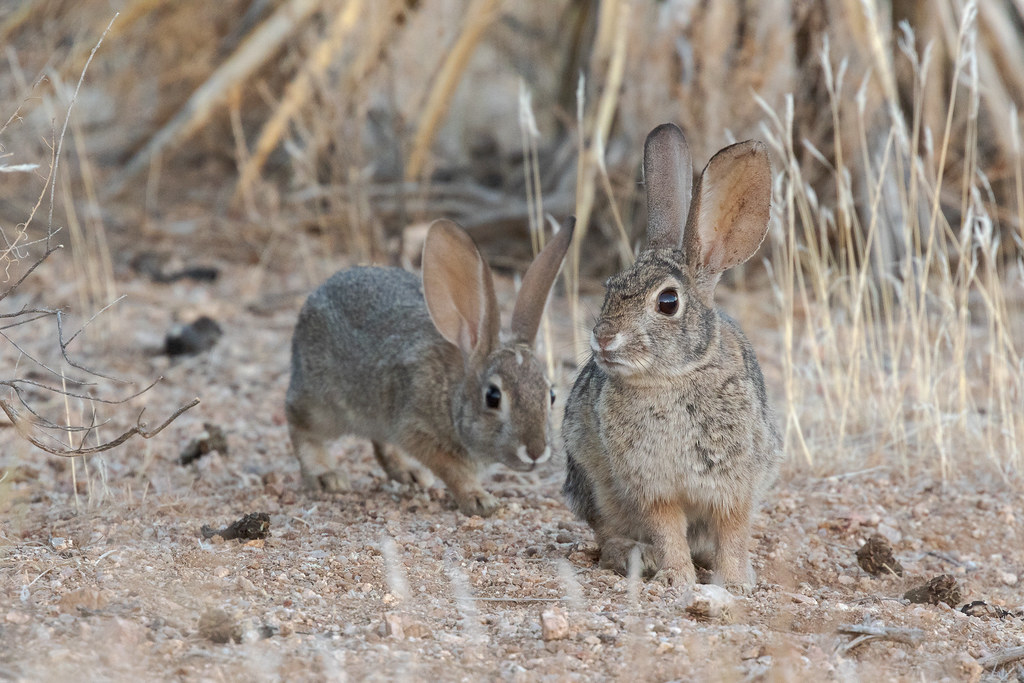
All part of my goal to photograph everything sitting on a saguaro, although in truth I never expected to see anything but birds on them given the sharp spines. Early one morning I came across two desert cottontails feeding near a large saguaro shortly before the sun rose high enough to illuminate the desert floor. I noticed this one kept sniffing the base of the cactus and jumping onto it where there were no spines. I got lucky when the rabbit jumped up one last time right as the sun fell upon us, as it only stayed for a moment before the pair hopped off into the shadows and out of sight.

The Desert Giraffe

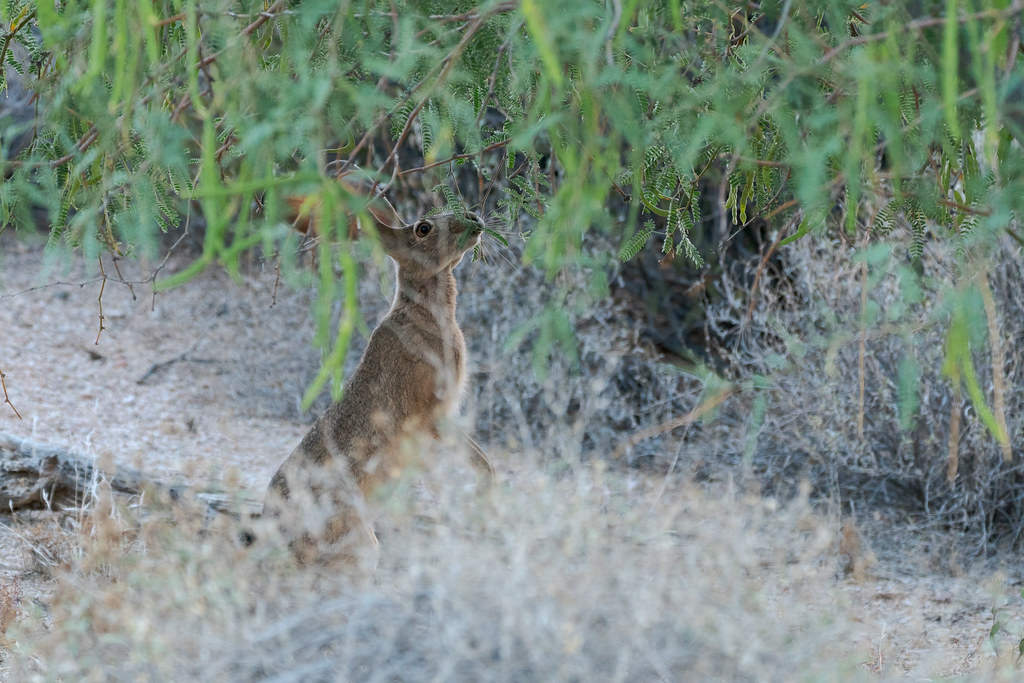
The Desert Giraffe

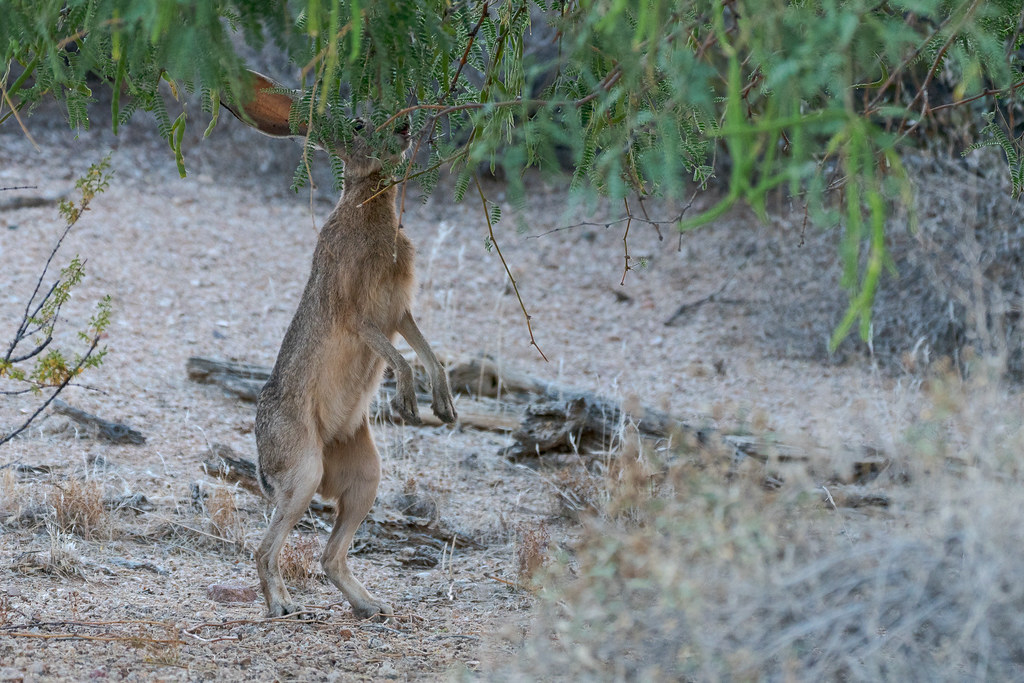
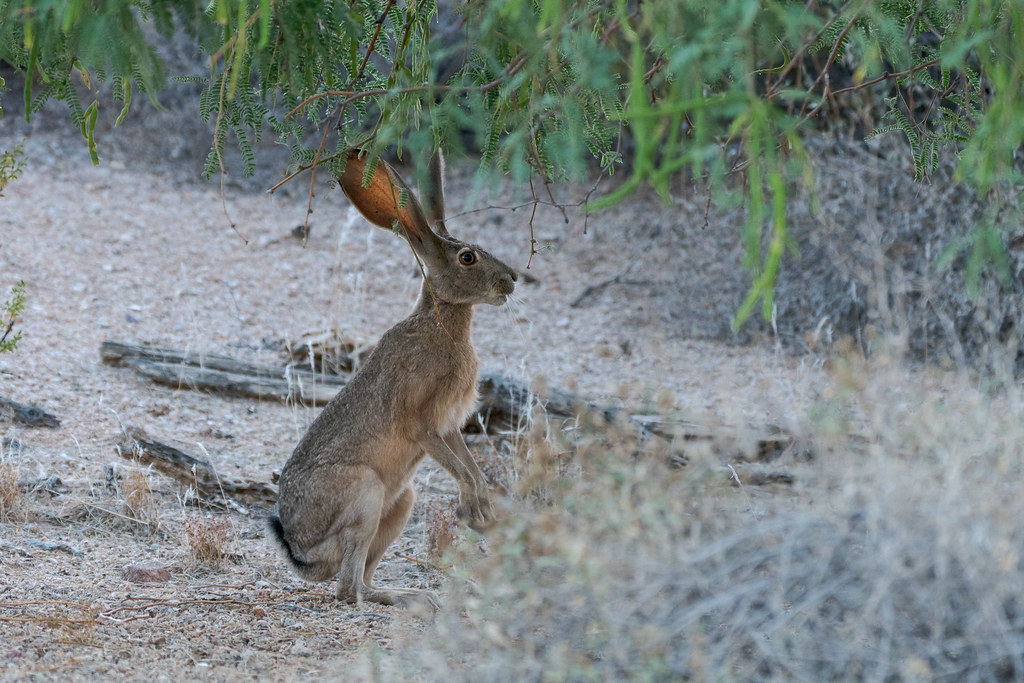
The sun hadn’t yet risen above the mountains when I met this hungry black-tailed jackrabbit. They share their habitat with the more numerous desert cottontail but the larger jackrabbit with its long legs can get to food that the cottontail cannot, reminding me of a giraffe using its long neck to eat leaves high in the trees. I hadn’t seen a rabbit spend so much time up on its hind legs before, this desert is full of surprises.

Long Legs

Both the black-tailed jackrabbit and the desert cottontail are named for their tails. The cottontail has a round white tail like a giant cotton ball, while the black-tailed jackrabbit has a tail that is black on top, as you can see as it sits up off the ground as it eats leaves it has pulled from the tree. It’s hard to tell from these pictures but the tops of their ears have black tips as well. Apparently they can run quite fast and jump in long leaps but the three times I’ve seen them they’ve casually hopped through the desert.

The Black Tail

Rock Climbing

A Harris's antelope squirrel stands up as it looks out from a rock in McDowell Sonoran Preserve in Scottsdale, Arizona

I love this little spot on the Vaquero Trail. I first started stopping here to look for the Harris’s antelope squirrels that use the rocks as a lookout, replete with a surrounding network of holes leading underground. It’s a nice spot for a water break and a little breakfast and in that quiet I’ve seen a variety of other desert wildlife, from birds to mammals to reptiles. Including a remarkably beautiful creature I didn’t know existed and which I hope didn’t eat my beloved little squirrels.