An End to Hibernation

End of Hibernation: The Dunk

Bullfrogs hibernate during the winter so their metabolism slows significantly and they aren’t very active but they don’t bury themselves in the mud the way a turtle might. Many bullfrogs at Ridgefield found their hibernation cut short this winter by the herons and egrets and bitterns that worked the shallow channels and ponds of the refuge.

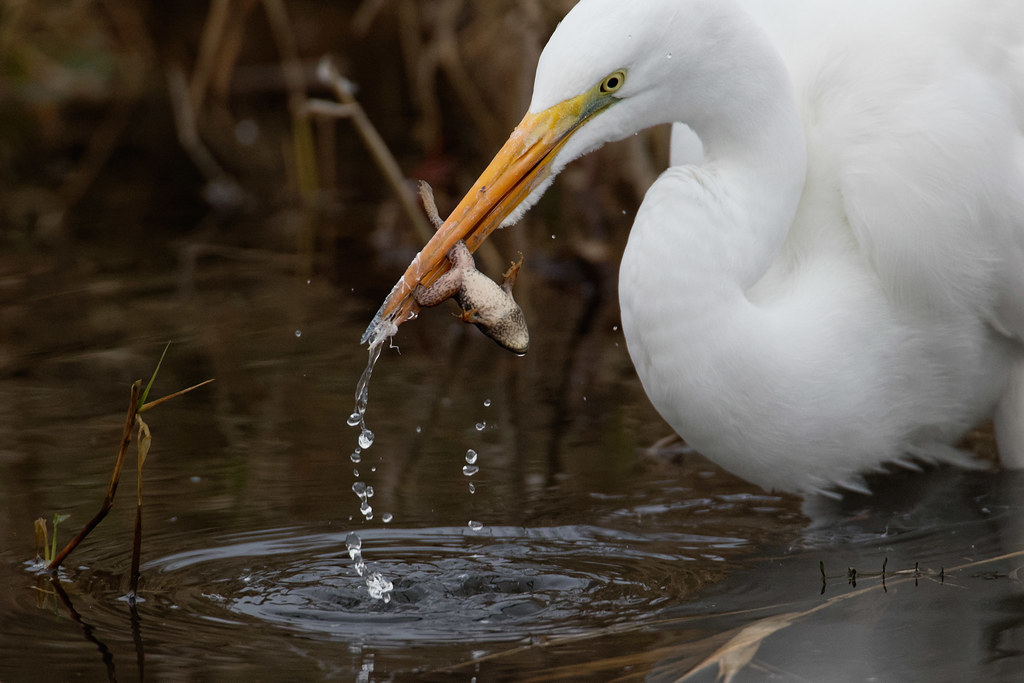
This egret in particular was just walking up and down one such channel, avoiding a great blue heron doing the same, striking at bullfrog after bullfrog, following a familiar process between catching the frog and eating it. First, the frog would be dunked quickly into the water, as shown above. Next, the egret would spin the frog rapidly, presumably causing massive internal injuries to the frog, as shown in the following two pictures. In the first picture, the egret has closed the nictitating membrane in its eyes, a transparent third eyelid that protects the eye from damage while still allowing the egret to see, as water spins off the frog and its clawed feet flail about, while in the second picture the membrane has been retracted.
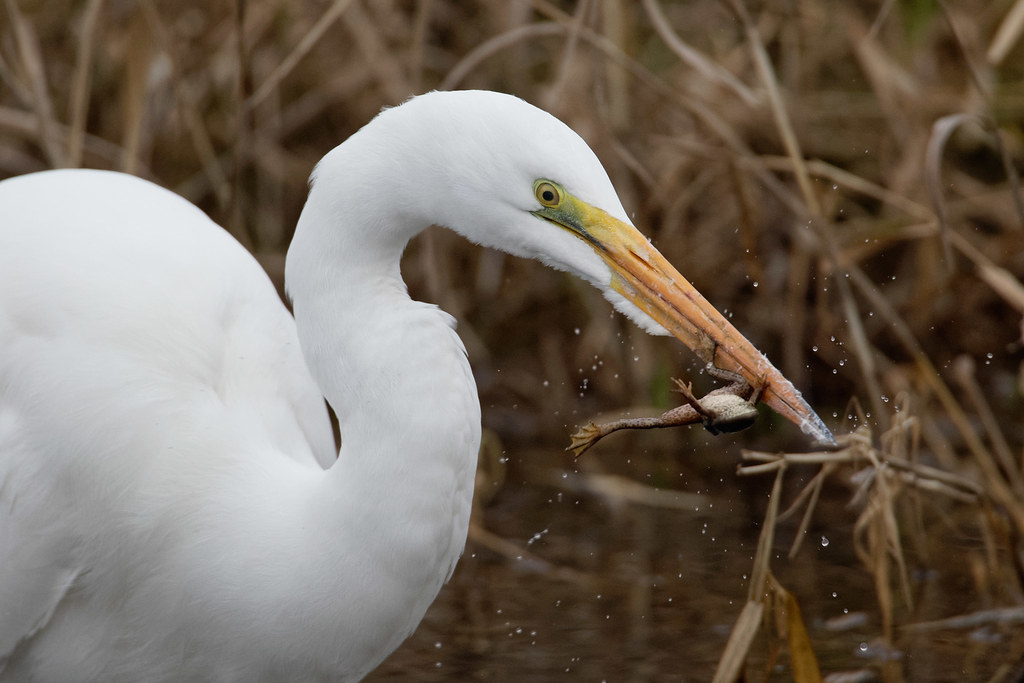
End of Hibernation: Spin Cycle No. 1

End of Hibernation: Spin Cycle No. 2

Then the egret would toss the frog into the air, catching it in a different place on its body, and either repeat the process again if it caught it by a leg, or perhaps crush it in its beak if it caught it by the body. This would happen multiple times until I gather the frog had died or given up fighting, although with the egret constantly keeping the frog moving it was hard to tell exactly when or if the frog itself stopped moving.

End of Hibernation: Throw & Catch

The final step was to position the frog head first in its beak and swallow it whole. Bullfrogs are voracious predators and, as they aren’t native to the area, have had a big impact on some of the other small creatures in the ponds and sloughs. However I’ve seen the bullfrogs themselves become prey for the larger predators of the refuge, including not just egrets and herons and bitterns but otters, raccoons, and grebes.
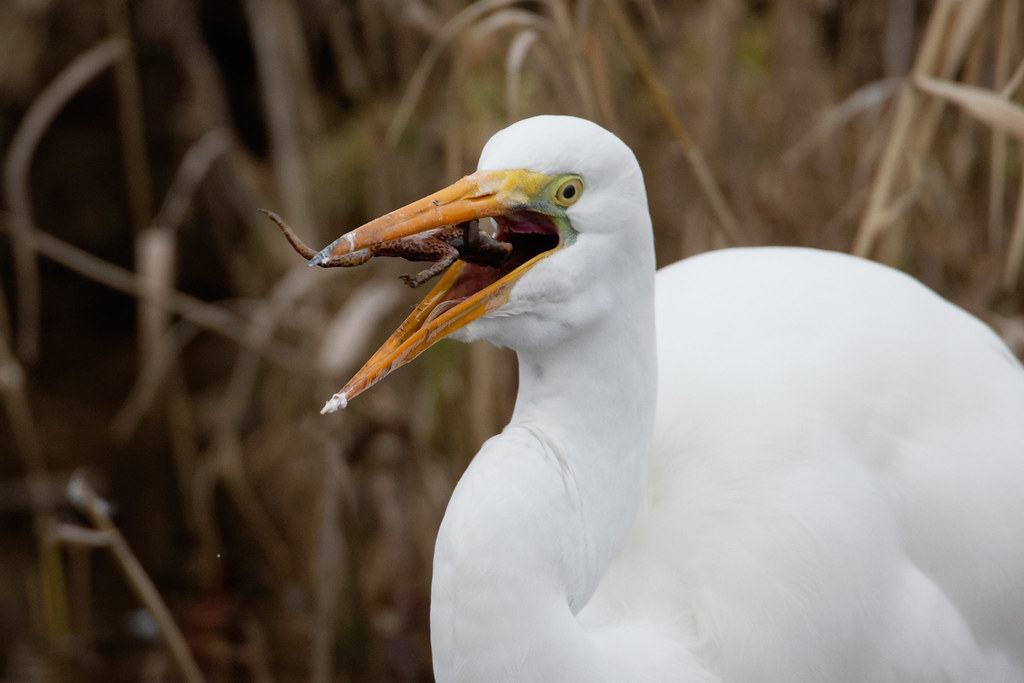
End of Hibernation: The End

Four Hours

A close-up view of the head of an American bittern

In December 2013 I visited Ridgefield after a long absence and came across this bittern late in the day as the sun momentarily peaked through the clouds, giving me some beautifully soft light. It lasted but a moment and the bittern was moving as it hunted along the shoreline, so I was thankful I got a nice picture when it paused for a moment in the open in front of water that was reflecting a patch of blue sky.

The funny thing is, I came across this same bittern four hours earlier in a very similar spot and a very similar pose, but then it was completely overcast and raining, leaving some small drops on the bittern’s head. I like each picture for different reasons, but it clearly shows the impact of not just the different light but also the different reflections in the water, as in this picture all of the sky was gray.

A close-up view of the head of an American bittern

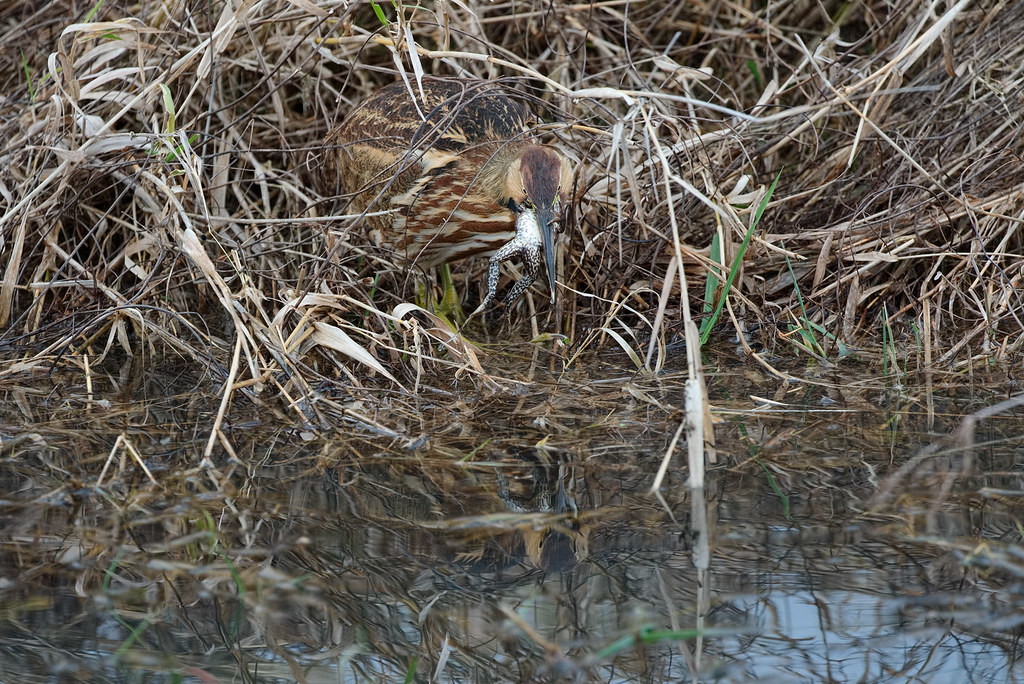
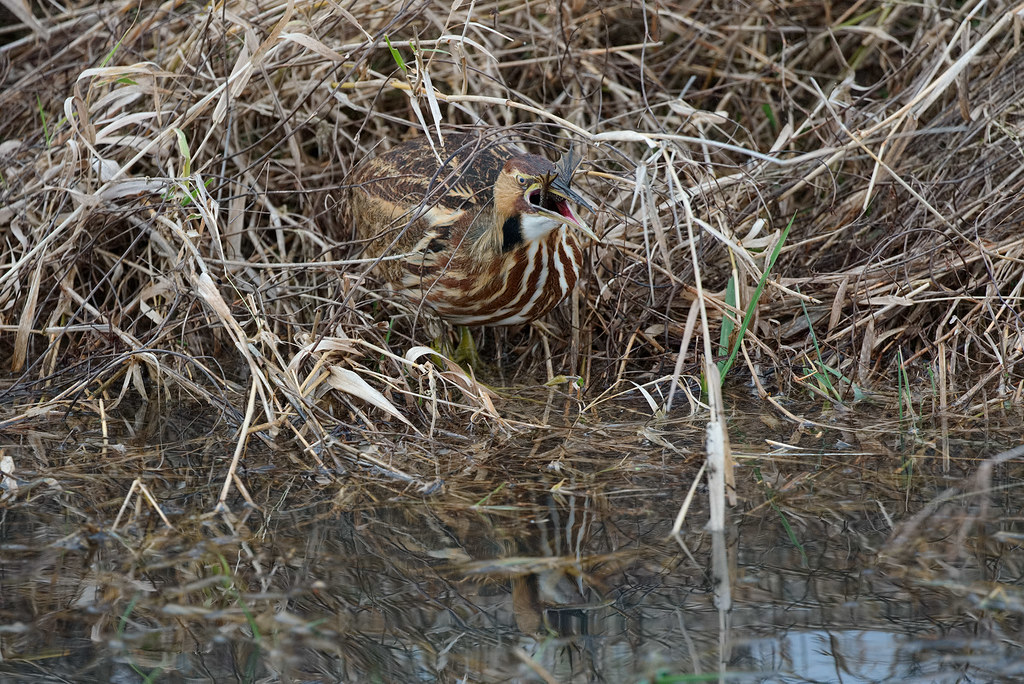
A Mouthful of Bullfrog

An American bittern prepares holds a large bullfrog in its mouth

Normally I’m pretty good at spotting bitterns at Ridgefield but I saw them on only three out of ten visits to the refuge over the Christmas break. I worried I was losing my touch until I found this bittern on Christmas Eve slowly working the channel beside Rest Lake. I suspect the real reason I haven’t seen as many this year is that the grasses in this area, normally my best spot for seeing them, have been cut lower in places, eliminating cover for both the bitterns and the animals they are hoping to catch.

The bittern snagged a large bullfrog from the water as you can see in the top picture. In the picture below the bittern has swallowed most of the frog with only the rear feet sticking out of its mouth. The bittern has protected its eyes from the frog’s claws with a nictitating membrane, a common tactic in the chaos of swallowing something that doesn’t want to be swallowed.

An American bittern swallows a large bullfrog

New Year’s Day

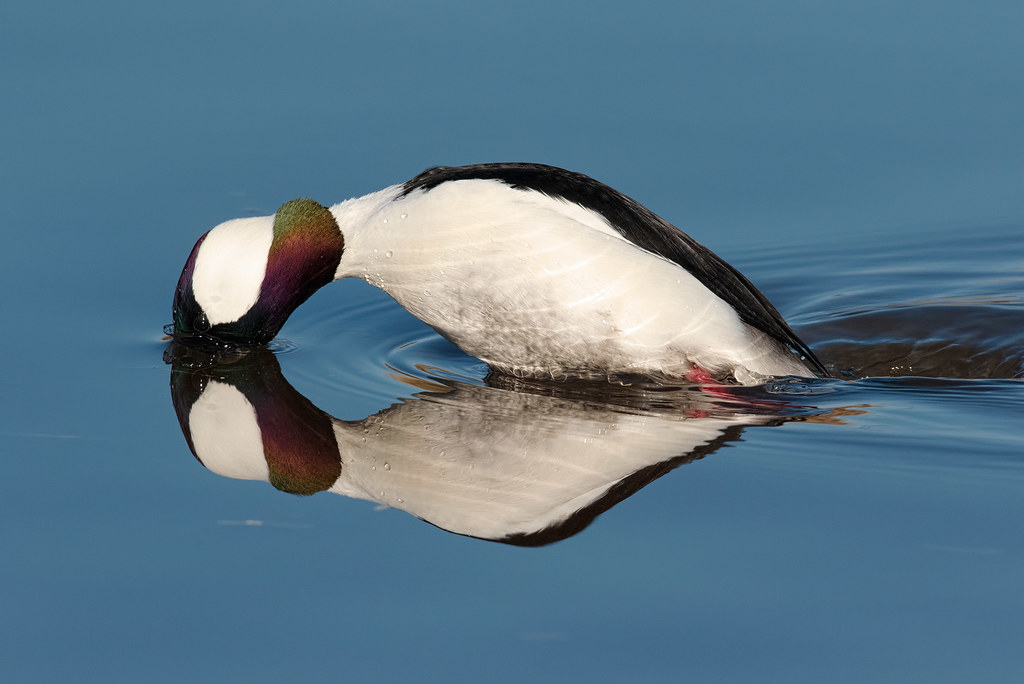
A male bufflehead dives under the water to feed

I started 2015 the way I ended 2014, visiting my favorite little wildlife refuge. We had a cold snap that froze some of the smaller ponds and this male bufflehead was one of two that were hanging out with a flock of American coots working a small section of open water near the road. Like other diving ducks, bufflehead flatten out their tails on the surface of the water and push themselves forward into the dive, using their beaks to break the surface tension of the water.

Lovely way to start the year.

Water

A great egret eats an American bullfrog in the rain at Ridgefield National Wildlife Refuge

In 2001 I bought what at the time was my most expensive lens, Canon’s 100-400mm lens. Since then it’s gone with me on every hike and nearly every trip and been one of my most treasured lenses. However the image stabilization system needs repair but I haven’t sent it in as I was hesitant to spend much money on a lens that could benefit from a modern re-design.

To my great delight, Canon finally brought out a new 100-400 lens and I pre-ordered the day of the announcement. It arrived on Friday so Saturday morning I opened it up and took it to my favorite refuge to try it out. One of the nice new features is that the lens has some weatherproofing, which I got to test with my very first pictures when I encountered this egret in the pouring rain. The egret was on the passenger’s side of the car so I slid over, stuck the lens out the window into the rain, and had just got the exposure and focus set when the egret struck into the water, pulling out this small bullfrog.

I meant to frame a little looser but in my haste to even get the shot I didn’t keep the camera quite level, so I rotated and cropped in post. Still I was pleased that with the zoom I was able to pull back and show a bit of the world these animals live in. The egret with its long featherless legs is built to wade in shallow water like this, able to hunt along the water’s edge, looking for frogs and fish in the water and frogs and voles on the land.

I’ve always loved photographing in the rain, especially to show how animals still have to go out into the rain to live their lives, and I’m thankful my favorite hiking lens now can as well.

Cold Confusion

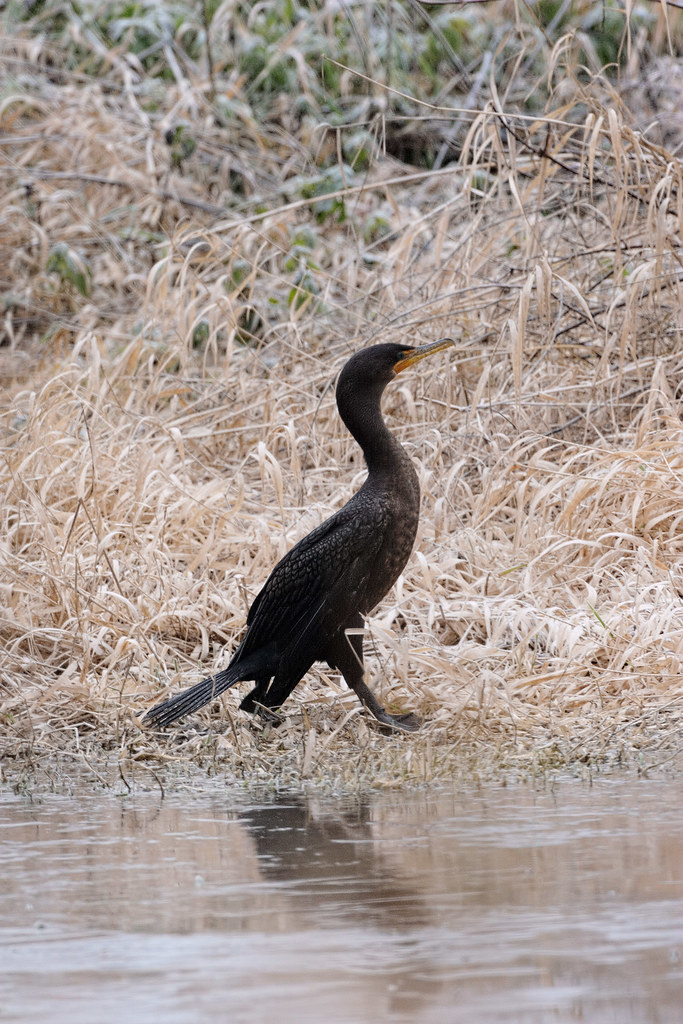
A double-crested cormorant walks beside a frozen Bower Slough

I wasn’t sure what I was seeing when I first spotted a dark form walking along the opposite shore on a cold winter morning. It took me a moment to recognize it as a double-crested cormorant as while it’s a bird I’ve seen many times, it’s always been flying or swimming, not walking. I wonder if it was as confused as I was, as we had a rare day cold enough to freeze the water of the slough, icing over its favorite fishing hole.