Lifer

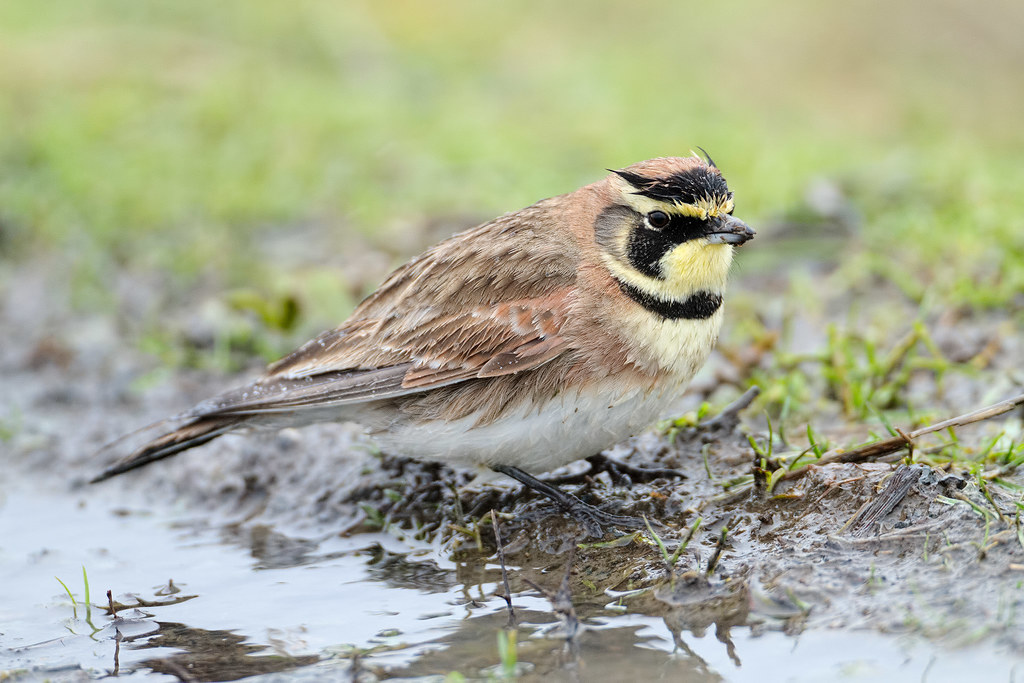
A male horned lark

During the winter horned larks can be found in large numbers in the Northwest, but mostly on the eastern side of the Cascades. There are a few resident populations on the western side where I live but I had never seen a horned lark until this January when I found a male foraging near Schwartz Lake at Ridgefield.

I use Northwest Birds in Winter by Alan Contreras when I want to get more specific info on the distribution of one of our birds during the winter than you can get out of a general purpose field guide. I bought my copy in 1997, about a year after I moved here, when I met Alan at an Audubon event and he signed my copy. It’s definitely not a field guide and not useful for identifying birds, but a nice complement to my army of guides when I want to dig a little deeper.

A close-up view of a male horned lark

Skittish

A close-up view of the face of a female northern flicker

I loved the little woodpeckers in the woods behind our house when I was growing up but I didn’t discover flickers until I got into birds & photography in graduate school. I put my neophyte bird guide skills to the test as I tried to identify the bird making a ruckus in the tree outside my apartment. I found my mark and have loved flickers ever since.

The race we typically see in the west, the red-shafted flicker, is slightly different from the race I first met in the east. I have long hoped to get a close-up of the red-shafted male with his spectacular red mustache, and one was calling out from the nearby trees when I photographed this female at Ridgefield, but he never joined her down in the grass. She gave me great looks as she fed in the rain, however, and I was thankful for the opportunity as flickers are usually pretty skittish.

We even have them in our yard, they are a particular favorite of our resident bird-watcher Emma, and she and Sam and I got a great look from my office this afternoon as a male bathed in our birdbath. No way to get pictures without disturbing him, I can’t park my car in the backyard and photograph him Ridgefield-style. But he gave us a nice long look at his feathers as he splayed them about in the water and seemed nonplussed by his furry fan chirping at him from the cat tree.

Visibility

A close view of the face of an eastern cottontail

As a fan of small cars, I’ve been thinking my next one should be in a bright color to make it more visible to other drivers, like the metallic red on the Chevy Sonic or the orange on the upcoming Subaru Crosstrek (although as much as it pains me to say it, perhaps it is too orange). But when I look at my tight animal close-ups and see my car reflected in the eye, I wonder if these brighter colors would also be more visible in the picture?

For some reason car reviews don’t touch on this sort of thing.

Not that I’ll lose any sleep over it since it could be fixed in post if necessary, plus for the most part I do prefer calmer colors like a nice sky blue or maroon or green or — oh wait, am I talking about cars again?

Rest Lake

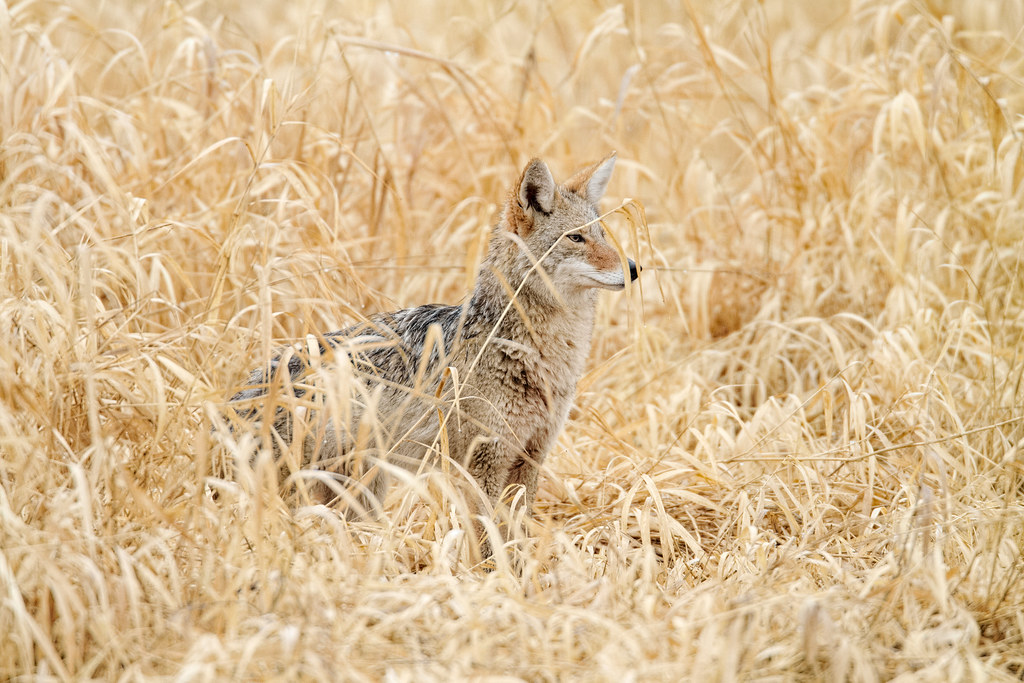
A coyote stands in a marsh

The picture above of a coyote hunting in the marsh is deliberately like this bittern picture, both taken at Rest Lake. The lake is the largest on Ridgefield’s auto tour and has water in it year round, but the marshy areas that ring the lake are my favorite places to watch. To survive in these areas is to avoid being eaten not just by coyotes and bitterns but herons and hawks and harriers and eagles and otters and mink and weasels and raccoons and snakes and bullfrogs and …

A coyote with wet fur walks along the edge of Rest Lake

(Almost) Missed You

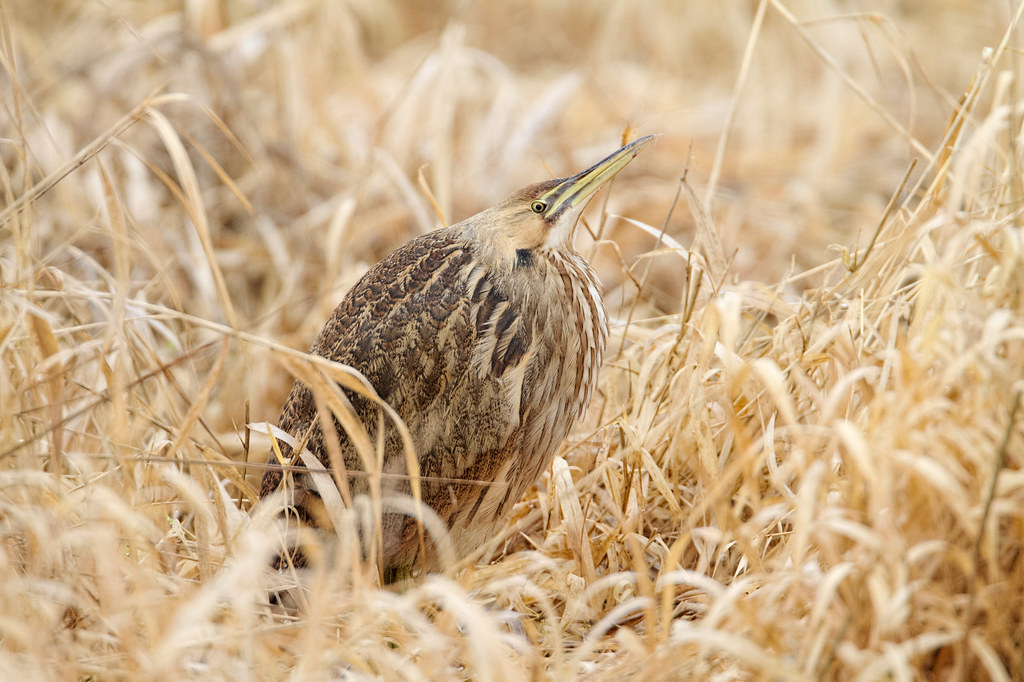
An American bittern sits in dried grasses

As you know by now, one of my favorite things to do at Ridgefield is to photograph bitterns. After having such great success last winter and spring, this year I’ve seen them mostly in glimpses and rarely had a chance to photograph them. I was tickled to have the chance to photograph this one in January, showing how well it’s coloring matches that of the dried grasses in which it loves to hunt.

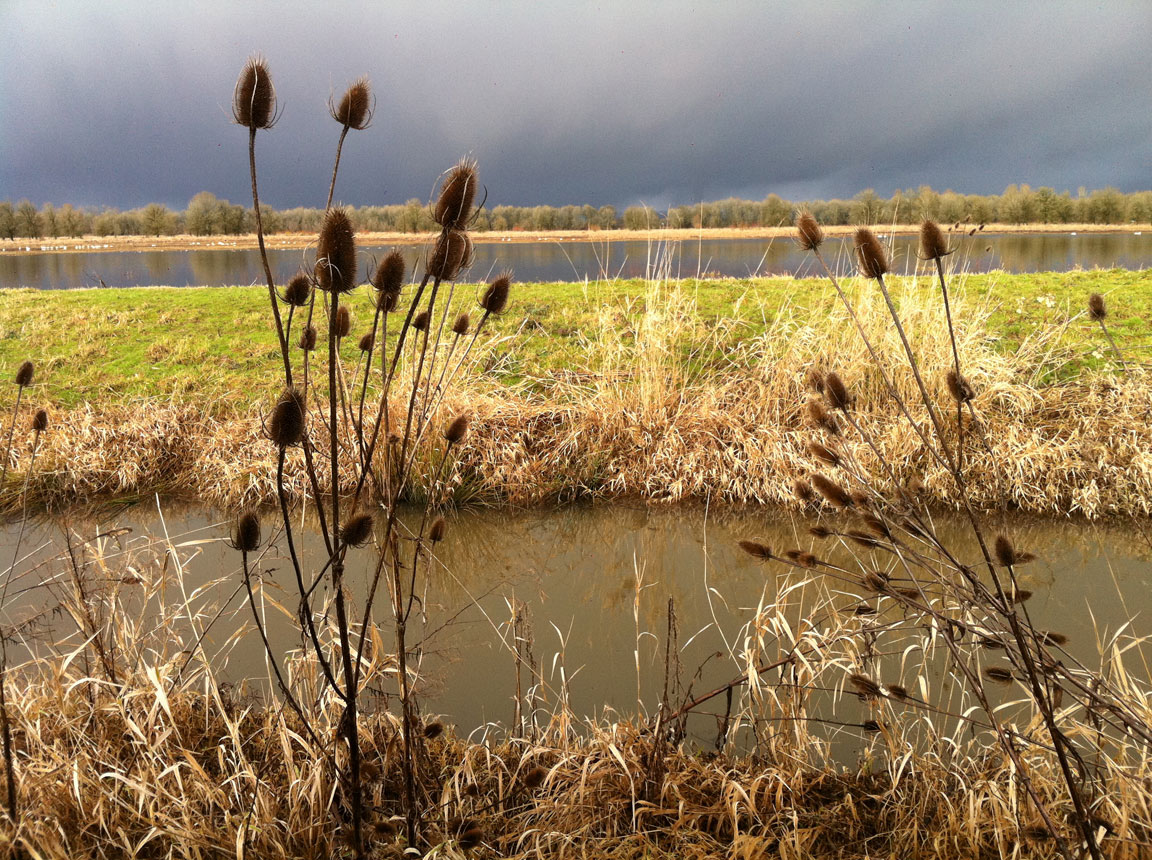
I took the picture below last winter with my iPhone, just wanted a quick shot of my favorite place to look for bitterns, I took it with the phone since the view is similar to what I see with my eyes as I drive along. It’s a bit hard to see but there’s a bittern almost dead center in the picture, on the opposite side of the channel a few feet up from the water line.

Suffice it to say they’re hard to see but I’ve gotten pretty good at it. Once I get to my favorite bittern areas, I wait until there’s no traffic behind me and then let the car creep along as slow as possible as I scan the grasses for these elusive birds. I normally take our Subaru to the refuge but this spring I’ve been taking our Civic, mostly to see if I could tolerate driving a stick shift at the refuge.

The biggest problem I encountered is exactly this scenario. At these speeds, the car is right at the stall speed and it requires a lot of pedal work to keep the car front stalling out. It’s doable, but annoying, and probably not so great for the clutch. So my preference for the next car will be an automatic, although if the stick is a particularly good one, the irritation at Ridgefield might be balanced out by fun on the commute.

And honestly, I’m done talking about cars, starting now!

By the by, the body of water on the other side of the the berm is Rest Lake, and those white dots are tundra swans that winter at the refuge in the hundreds. The bittern above was also at Rest Lake, but at a different spot than this one.

IMG_0494_1152

A Good Year

One of a Pair

I knew it was going to be a good year for coyotes.

During a two week stretch in mid-to-late January, I saw a coyote pair frequently and took some of my best coyote pictures ever. But not long after I jammed up my ankle and took a two month sabbatical from Ridgefield. Even after the ankle healed, I’ve only been back to Ridgefield three times this spring with not a coyote picture to show for it. While it’s been an extremely wet spring here in the Northwest, many of the weekends have been sunny. The refuge gates are locked until well after sunrise and before sunset at this time of year, so the best light on sunny days is lost. And sunny days bring out the crowds, so I prefer to stay home and get in some extra hedgehogging.

I did see a young coyote on my visit a week ago. It was so close that getting a picture was going to be difficult from my angle without risking spooking it, so I just pulled over and watched as it hunted beside the road. But I saw a Subaru coming up quickly down the road, a car I recognized since we have one just like it. I knew they had seen the young coyote, and I also knew what was going to happen next. The coyote watched them approach and as they got on the brakes on the gravel road, the coyote bolted at the sound.

In the real world they weren’t going fast at all, just Ridgefield fast, and even a tolerant coyote won’t tolerate that.

This adult is one of the pair that I watched with such success in January, it’s coat drenched on a wonderfully wet winter’s day. And I know I said I wasn’t going to talk about cars anymore, but this is why I’ve been on the hunt for a quiet car. When I’ve worked to earn an animal’s trust, the sound of the gas engine firing up feels like a betrayal of that trust.

Disturbance

A young bald eagle takes to the skies

This young bald eagle was perched on a tree overlooking Canvasback Lake, watching the waterfowl below, when it suddenly took to the skies. Normally I would have liked more empty sky in the upper left corner of the picture but the eagle bolted with no warning, disturbed by the sharp retort of a shotgun blast, so I had no time to properly compose the shot. The birds aren’t normally so perturbed by the blasts, but I do prefer the off-days during duck hunting season, not because I have a problem with hunting per se but because I prefer the quiet.

Not As Easy As It Looks

An adult and baby pied-billed grebe

I’ve hoped to photograph pied-billed grebe chicks each spring, as their fantastic faces look nothing like the birds they will become, but this is the first year I’ve had the chance. The two parents had a handful of chicks and were busy feeding them, catching a variety of underwater creatures and feeding them to the hungry chicks. It seemed to me the adults were killing their prey before handing it off to the youngsters, but even so the chicks often dropped their food into the water as they learned to move items about in their bills. The adult was always nearby if necessary to retrieve the food, but in this case the chick was able to pluck it from the water on its own.

An Almost Car for the Ages

Bald Perch

I’m at that age where I should be having a mid-life crisis, so in addition to my practical little hatchbacks I should be looking at a mid-life crisis car. My choice would be the same as any other man’s — a Volvo.

Ahem.

I’ve always had a soft spot for Volvos although I don’t know why. I’ve never owned one, and while we had one while I was a kid, we sold it before I was of driving age. But I’d occasionally see a beautiful little Volvo hatchback as I drove to work, and was vexed enough to want to know more, yet I never could get a good look at its nameplate. I searched Volvo’s website for hatchbacks but nothing came up, and even looked for it at the auto show in January but didn’t see it. Perhaps we just missed it at the end of a long day. But I discovered one in the neighborhood while walking Ellie and finally identified my mysterious beauty — the Volvo C30.

Volvo doesn’t call it a hatchback, even though it has a hatch in the back, but never mind. It’s not only still being made, it’s for sale here in the States and could be mine for the asking. Both inside and out I think the C30 is one of the prettiest cars on the road, at any price, and it’s quick but not at all fuel-efficient. So I think it qualifies as a mid-life crisis car, just with a Boolish twist. Not a sports car, but nevertheless a car for my heart and not my head.

But even that’s not quite true. This along with the Lexus CT would be two of the best cars for my commute, and would be comfortable for those winter and spring days at Ridgefield when I sit in the car for hour after hour, waiting for those lucky moments like this bald eagle at Long Lake. I’ve been taking our Civic to the refuge the past couple of months, mostly to see if I could tolerate a stick shift at the refuge, but I was caught off guard but how much less comfortable I was by the end of the day in the Civic compared to our Subaru. We’ve had both cars for about 12 years so it’s not as if they are new to me, but I guess I just haven’t spent long days in the Civic before.

If the C30 was available in all-wheel drive, I think my head would follow my heart on this one, but sadly it is not. Rumor has it the C30 is being discontinued in any event, so I suppose it’s a moot point.

2012_C30_600

Make a Joyful Noise

A male bullfrog croaks and creates ripples in the water

But let all who take refuge in you be glad; let them ever sing for joy.
Psalm 5:11

The bullfrogs were singing in rare form at the refuge this weekend. Breeding season was in full swing and the males were croaking and wrestling and leapfrogging each other, and a few lucky ones were mating with the females. They were in a channel beside Bull Lake so I had to shoot down on them between the tall grass. Between a gentle breeze that constantly moved the grass about and my temporary bout of photographic incompetence, it took me a while to settle in and find my way.

This male was one of my favorites. I wanted to catch the ripples made by his croaking but was a bit surprised that my favorite view of the ripples is before his throat fully expands. The problem was that by the time his throat is fully extended, the ripples interfered with each other as they bounced off his rear legs, breaking up the pattern.

Beautiful creature, this one. Beautiful.

A male bullfrog croaks and creates ripples in the water