The classic image of the saguaro is of arms lifted towards the sky, and many do grow that way, but the arms may twist and turn in all directions, even growing down, like this splendid old example along one of the off-map trails at Brown’s Ranch. I especially liked the unusual ones when we moved here as I could remember them and they helped orient me on a web of trails winding through an unfamiliar environment.
Tag: cactus
I Will Sing
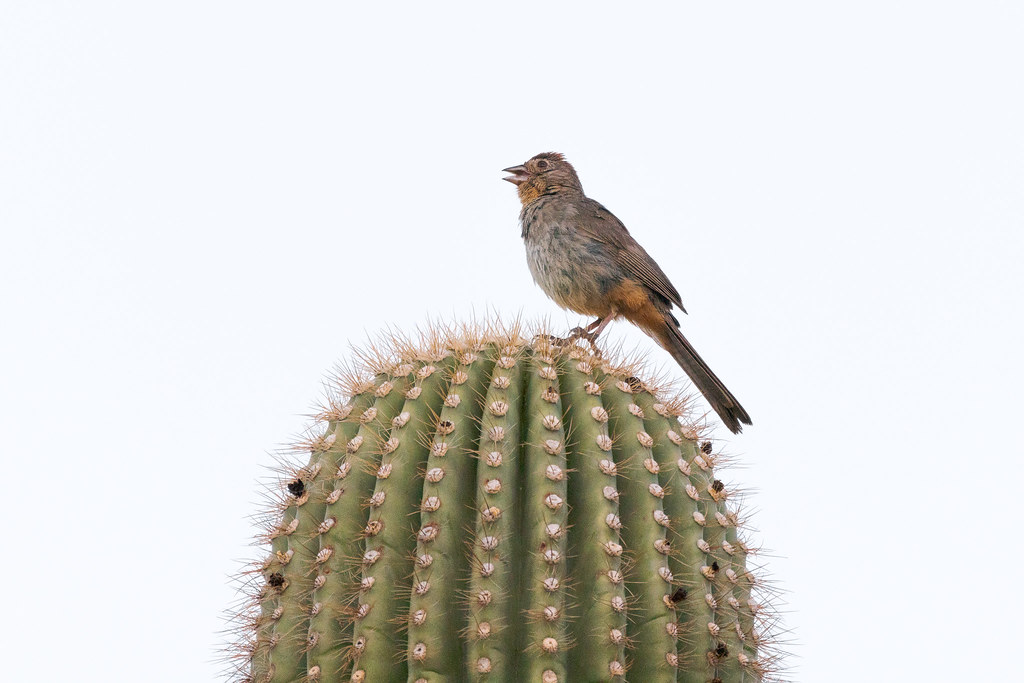
The sun had not yet crested the distant hills as this canyon towhee serenaded me atop a saguaro, a lovely reward for getting out of bed so early on the weekend. It was the only picture I took that day but it was a lovely day on the trails nevertheless. This morning I deliberately slept in as I knew I would be too tired to feel safe driving if I got up at 4 a.m. so I chose a good night’s sleep instead. I see many of the same birds in our backyard as on the trails (we even had a couple of Harris’s hawks perching in the palm trees recently) but with the towhees it’s a bit different, a pair of Abert’s towhees are regular visitors to our feeders but I’ve never seen them in the desert, while canyon towhees have never graced our yard but I’ve seen them many places around the preserve.
In the Shadows
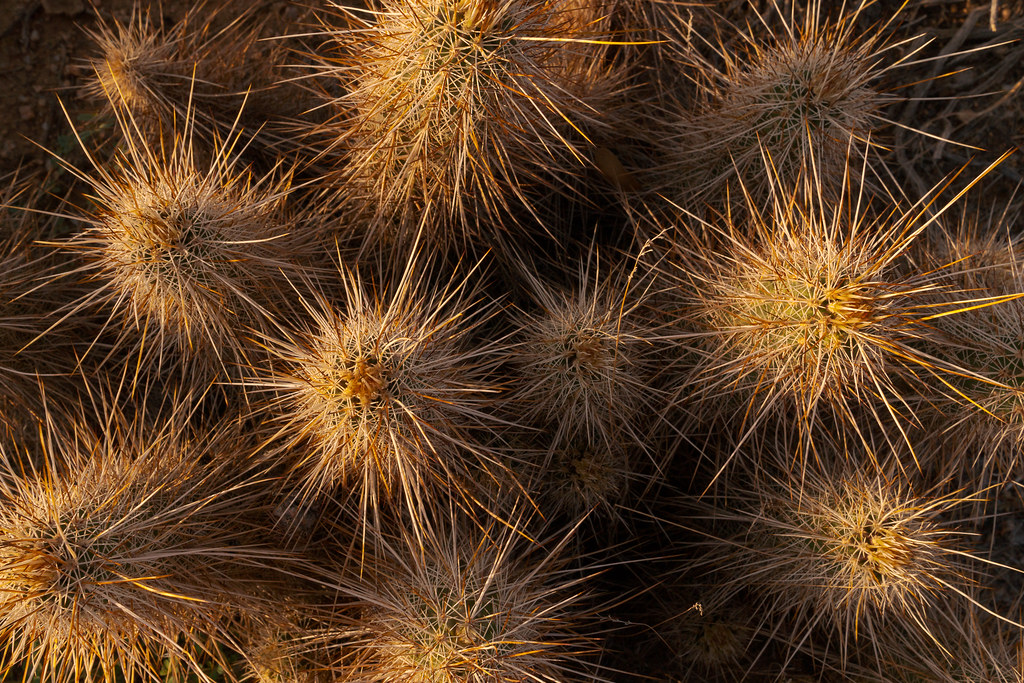
When we first moved here I assumed this was a baby cactus but upon further reading realized it was a pincushion cactus, a small cactus that cannot grow in full sun and thus relies on partial shade to survive. The teddy bear cholla it was growing next to has died and fallen over but the surrounding rocks provide some shade in the early light, though it will be exposed to the brunt of the sun in the middle of the day.
Identification
At first every view in Arizona was a bit unsettling because it was so unfamiliar. The chance to explore somewhere quite different than my beloved Northwest was one of the attractions of moving here and the undercurrent of unease dissipated with each passing day. It took longer on the trails as nearly everything in my view was new to me and I couldn’t even put names to most of what I saw. I hiked as often as I could and studied when I got home and the desert changed beneath my feet into my home.
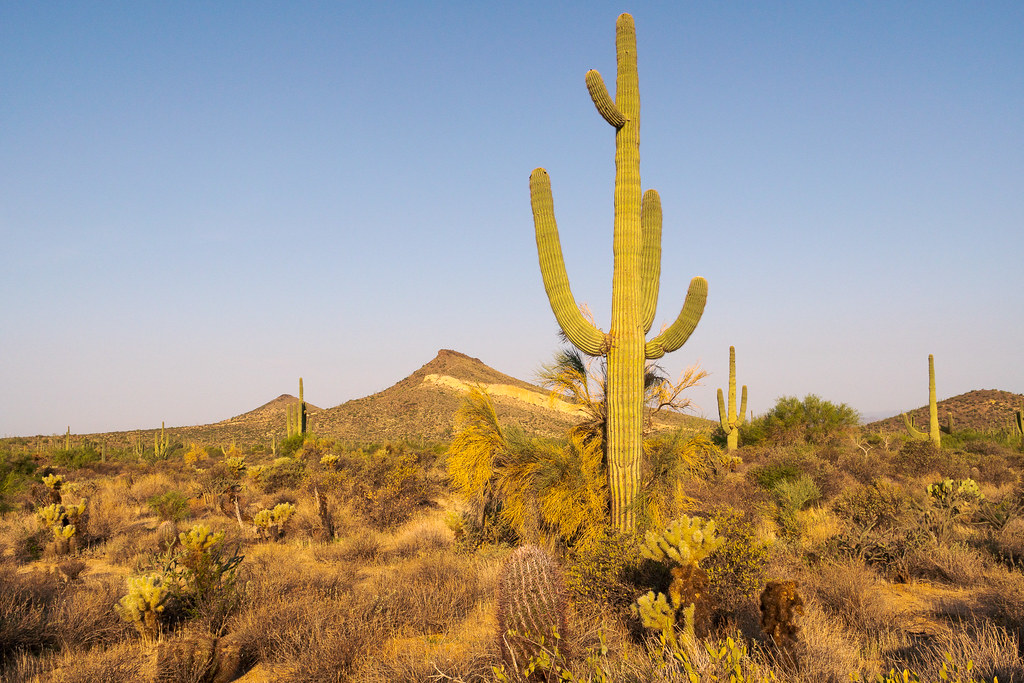
One picture can’t encapsulate all that is the McDowell Sonoran Preserve, nor even the Brown’s Ranch area that I haunt the most, but this is a mix of much of what I see. The tall cactus you probably recognize as a saguaro, that one I could identify even before I arrived. Embracing the saguaro in the center is a crucifixion thorn (there are several plants with this name, this is the canotia). Scattered around are teddy bear cholla, buckhorn cholla, compass barrel cactus, foothill palo verde, and Engelmann prickly pear. And a bunch of plants I can’t yet identify.
In the background with the long scar running down its flank is Brown’s Mountain with Cone Mountain behind and to the left. From where I was standing Cholla Mountain was to my right, Granite Mountain behind me. Each of these hills has a distinctive look which made it easier to orient myself on the many interconnected trails.
Love Hurts
Rib Cage
Supporting the massive weight of a saguaro is a circular skeleton of woody ribs that sometimes remains standing after the cactus dies. I photographed this lovely example in the soft light before sunrise near the start of the Chuckwagon Trail in McDowell Sonoran Preserve. Hiking the Chuckwagon to the Watershed Trail and up to the Cholla Mountain Loop Trail to see The Amphitheater and Cathedral Rock has become one of my favorite desert hikes, although I’ll mix it up with the Latigo, Vaquero, and Maverick trails too.
I Have Departed and I Will Remain
Most of the branches have broken off this long-dead tree but still it reaches for the sky. In life it wouldn’t have approached the heights of the massive saguaros that dominate the landscape but it would have provided welcome shade for young plants trying to gain a foothold in the desert. In death it can provide some shade and shelter, every little bit helps as while the hills and vegetation behind me are providing some protection from the sun at this early hour, as the sun rises there will be little escaping its glare. Yet life flourishes in this desert, it is not the emptiness of sand and rock I imagined in my youth.
Safe in the Arms of the Cholla
Seeing Red in the Desert
I knew even before setting foot in Arizona that my pictures in the desert would draw heavily from a palette of browns rather than the green of the Pacific Northwest. I didn’t know that there would occasionally b red in the desert too, such as the red racer, the house finch, and the northern cardinal. However, for a month or so at the end of spring and the start of summer red explodes across the desert in the fruit of the saguaro.
Here near The Amphitheater in McDowell Sonoran Preserve a ripe fruit bursts open, exposing the pulp and seeds inside. The fruit is chockfull of seeds, according to the National Park Service there are about 2000 seeds per fruit. Few will develop into a seedling and fewer into an adult saguaro in the harsh desert climate but its not for lack of trying. I noticed multiple birds eating the fruit but mostly it was white-winged doves, who apparently digest the seeds rather than passing them in their waste like some other birds. They end up with so much juice and pulp and seeds on their faces that I imagine some of the seeds will fall to the ground as they preen, so perhaps all is not lost.
As the fruit continues to ripen on the saguaro, even the outside turns red. The dried stalk above them is all that remains of the flowers that grew atop them, the ripened fruit results from flowers that were pollinated. Most of the fruit grows at the top of the saguaro or the ends of its arms but some grows on the sides like the one below that has been cleaned of most of its contents by the denizens of the desert, only a few of the tiny black seeds remain inside.
Do Not Adjust Your Sets
The early morning light falls on one of my favorite saguaros, I love its wavy pattern and look for it whenever I’m hiking Brown’s Ranch Road. If you’re too young to understand the reference in the title and never experienced adjusting horizontal and vertical hold on a television, consider yourself lucky. In my day …