In the Shadows

A pincushion cactus grows next to a dead teddy bear cholla near the Amphitheater in McDowell Sonoran Preserve

When we first moved here I assumed this was a baby cactus but upon further reading realized it was a pincushion cactus, a small cactus that cannot grow in full sun and thus relies on partial shade to survive. The teddy bear cholla it was growing next to has died and fallen over but the surrounding rocks provide some shade in the early light, though it will be exposed to the brunt of the sun in the middle of the day.

Present, Future, Past

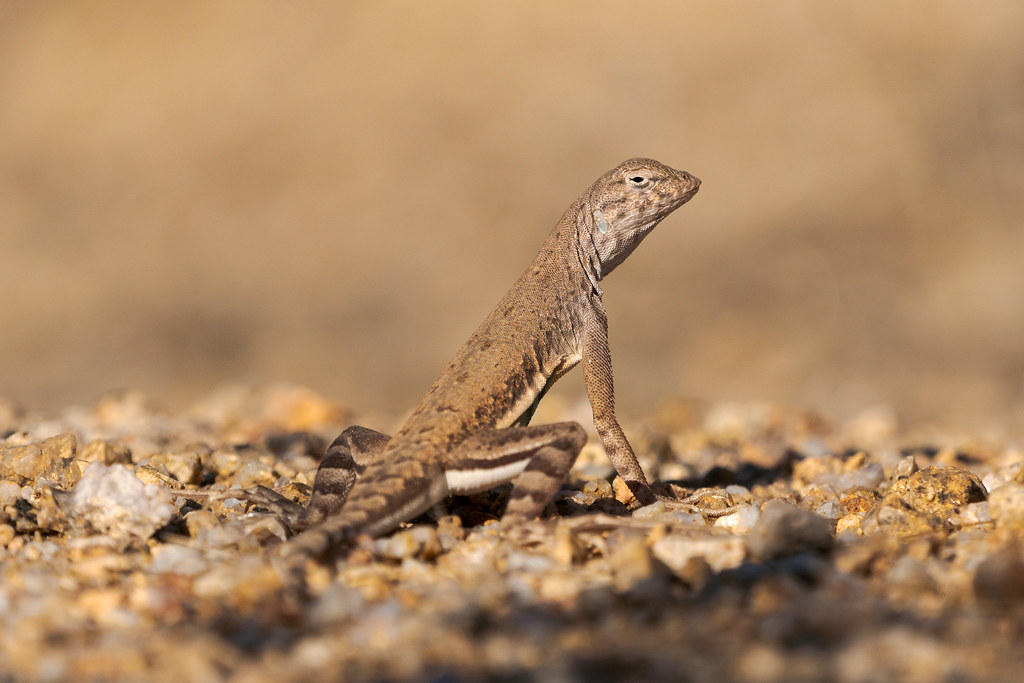
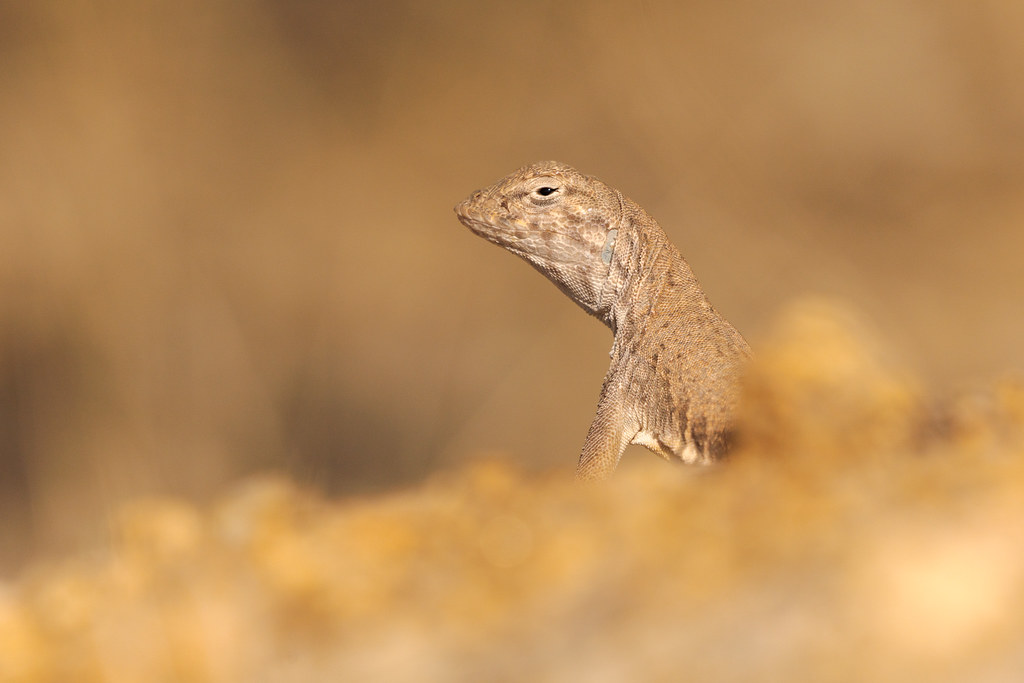
A zebra-tailed lizard viewed from ground level at The Amphitheater in McDowell Sonoran Preserve in Scottsdale, Arizona

With Nikon and Canon about to announce their first serious attempts at the mirrorless market, I’m curious to see what approach the two industry stalwarts take and how Sony responds. I’m hoping to add a second mirrorless camera, not because I haven’t loved my Sony A6500 but because I want to go back to using it for the purpose I bought it, to be my walk around camera and for non-wildlife use. I’ve switched to using it as my wildlife camera as combined with their 100-400mm lens and 1.4x teleconverter it has proven a much better setup for capturing the denizens of the desert than my Canon, like this zebra-tailed lizard at ground level.

I dislike the weight and size of my Canon so on my last hike I only brought the Sony and switched lenses throughout the morning, it made me so happy to put my beloved 24mm lens on it as I photographed desert scenes, then I switched to the telephoto when I saw a mule deer, a Harris’s hawk, a cottontail, then a black-tailed jackrabbit, and for close-ups of a saguaro, a soaptree yucca, a teddy bear cholla. I just don’t want to have to switch lenses! I don’t mind it on occasion but I’ve always preferred to have one camera for telephotos and one for wider shots, and then switch to other lenses as needed.

A day will come when I can’t manage the weight of heavier lenses as I hike, it isn’t approaching but I can see it in the distance. In the meantime I try to get out as much as I can, photograph what I can, but more than anything delight in the moments as they pass, for they pass ever more quickly. I’m thankful for the handful of cameras I’ve had over the decades for the pictures taken, the memories preserved. I’m amazed at what I can do with today’s gear compared to when I started. Here’s hoping my photographic future is as rewarding as the past.

Lighter than Air

A zebra-tailed lizard raises its body off the ground, showing off his long legs and the coloring on his sides

Most of the lizards I see underfoot scurry across the desert floor at a seemingly impossible speed, as though they were lighter than air, none more so than the zebra-tailed lizard. This one had raised up his body off the ground and showed off his long legs and the coloring along his side although you can’t see the vibrant tail for which he is named. Just once I’d love to run like he runs, to know that effortless speed.

Green and Blue in the Desert

A common side-blotched lizards perches on a rock in front of the green of an out-of-focus saguaro

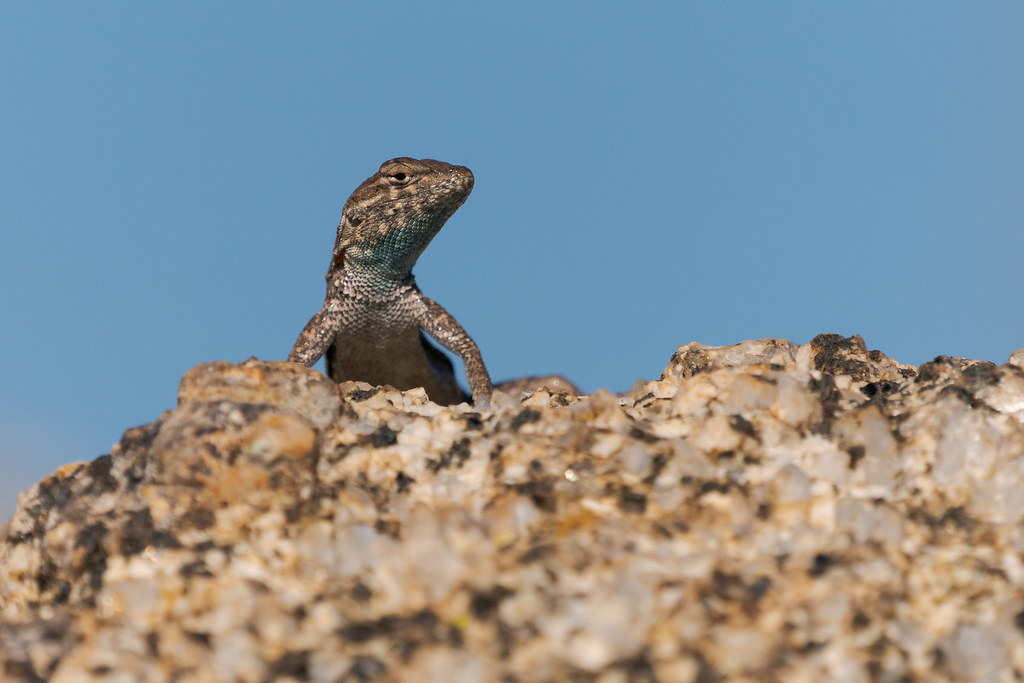
I was sitting below this little common side-blotched lizard, shooting up at it against a blue sky (below), when I realized if I moved the camera slightly I could shift the background to green courtesy of a massive saguaro standing behind it. There is green in the desert, not the ubiquitous saturated greens of the forests of the Northwest but a soft, muted green, always in the saguaros and palo verdes but on many more plants now that the summer monsoons have arrived.

Blue is easy to find in the skies of the desert but some lizards, especially the males, may have blue throats or sides or blue speckled throughout their scales. Blue too is the skin around the eyes of adult white-winged and mourning doves. All of these blues can be seen where I photographed this lizard at The Amphitheater in McDowell Sonoran Preserve, a rock formation on the Cholla Mountain Loop Trail that is one of my favorite places to hike.

A common side-blotched lizards perches on a rock in front of blue skies

Seeing Red in the Desert

Fruit begins to ripen atop a saguaro on the Vaquero Trail in McDowell Sonoran Preserve in Scottsdale, Arizona

I knew even before setting foot in Arizona that my pictures in the desert would draw heavily from a palette of browns rather than the green of the Pacific Northwest. I didn’t know that there would occasionally b red in the desert too, such as the red racer, the house finch, and the northern cardinal. However, for a month or so at the end of spring and the start of summer red explodes across the desert in the fruit of the saguaro.

Fruit splits open atop a saguaro at the Amphitheater in McDowell Sonoran Preserve in Scottsdale, Arizona

Here near The Amphitheater in McDowell Sonoran Preserve a ripe fruit bursts open, exposing the pulp and seeds inside. The fruit is chockfull of seeds, according to the National Park Service there are about 2000 seeds per fruit. Few will develop into a seedling and fewer into an adult saguaro in the harsh desert climate but its not for lack of trying. I noticed multiple birds eating the fruit but mostly it was white-winged doves, who apparently digest the seeds rather than passing them in their waste like some other birds. They end up with so much juice and pulp and seeds on their faces that I imagine some of the seeds will fall to the ground as they preen, so perhaps all is not lost.

Red saguaro fruit along the Upper Ranch Trail in McDowell Sonoran Preserve in Scottsdale, Arizona

As the fruit continues to ripen on the saguaro, even the outside turns red. The dried stalk above them is all that remains of the flowers that grew atop them, the ripened fruit results from flowers that were pollinated. Most of the fruit grows at the top of the saguaro or the ends of its arms but some grows on the sides like the one below that has been cleaned of most of its contents by the denizens of the desert, only a few of the tiny black seeds remain inside.

Saguaro fruit emptied of its contents on the side of a saguaro in Pinnacle Peak Park in Scottsdale, Arizona

Disappearing Act

A white-winged dove perches on an ocotillo starting to leaf out after the summer rains in McDowell Sonoran Preserve

This ocotillo had just started leafing out in the middle of July with the arrival of summer thunderstorms in the Sonoran Desert. The white-winged dove perched in the morning light is one of thousands I have seen, they are not only the bird I see most in our backyard but out in the desert as well, never more so when seemingly one or two or three were atop every saguaro as they devoured the ripening fruit. But after a self-imposed two week ban to allow a knee to heal, I returned to the trails twice last weekend and didn’t see a single one. Not one!

From what I’ve read, the white-wings arrived in the desert about the time I did and will be leaving this fall. So I suppose in a month or so they will be gone from our backyard as well. The smaller mourning doves and much smaller Inca doves will appreciate it, the larger white-wings are more aggressive, but our cats and I will miss them.

Learning to See in the Desert

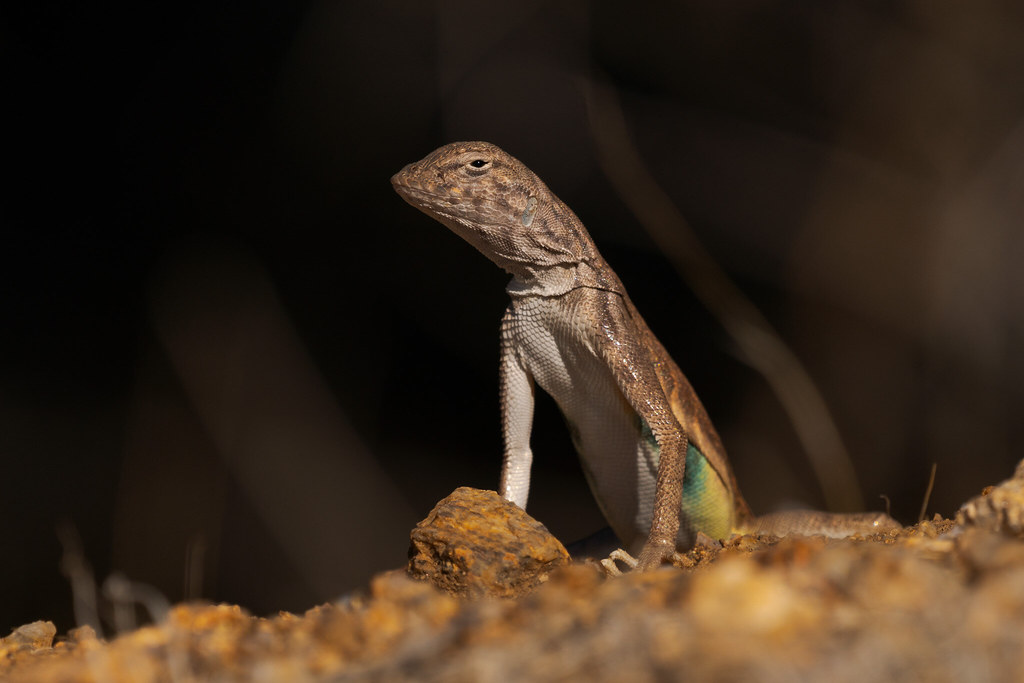
A zebra-tailed desert on the ground near The Amphitheater in McDowell Sonoran Preserve

Hiking in the desert feels both normal and unfamiliar. I know so much more about this unique environment than when we moved here but I have so much more to learn. As I hike the trails I’m well aware that the animals are living their lives perhaps not far from where I’m walking but even for those within my sight I wonder how many I actually see. I’m still developing eyes for the desert.

I am making progress, each hike is an opportunity both to look and to see. While taking a water break near the Amphitheater I spotted what I thought might be a lizard in the scrub and walked closer with my camera, almost turning around on a couple of occasions when I became convinced it must be a stick or bit of dried cactus. Thankfully I kept going and discovered this lovely zebra-tailed lizard. It happened again this morning, out on the Rustler Trail I thought I saw another zebra-tail in the middle of the trail so I slowed my approach, but repeatedly doubted myself until I was close enough to remove all doubt.

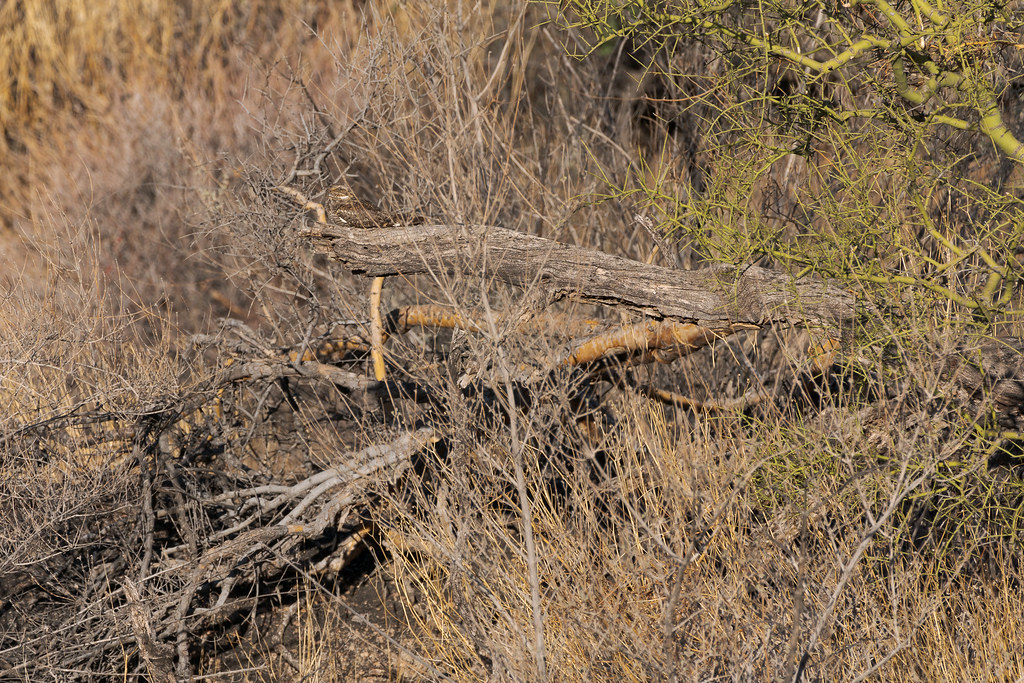
Sometimes though I think I could live here for decades and still not see what lies before me. The only reason I saw the lesser nighthawk below was that I stopped for a water break and it flew towards a nearby rock before seeing me and settling down further off on this fallen tree, hidden in plain sight. I’ve seen them flying low over the desert numerous times but I now wonder how many I’ve passed that were settled in for the morning.

A lesser nighthawk is barely visible as it rests on a fallen tree in McDowell Sonoran Preserve