Goodbye Oregon, I Love You

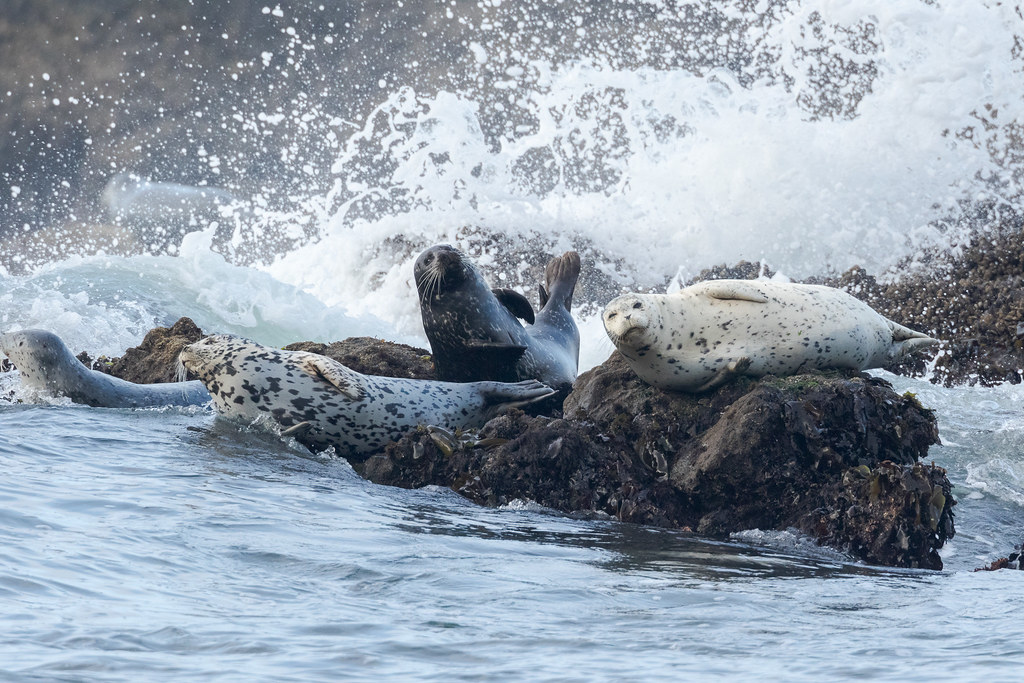
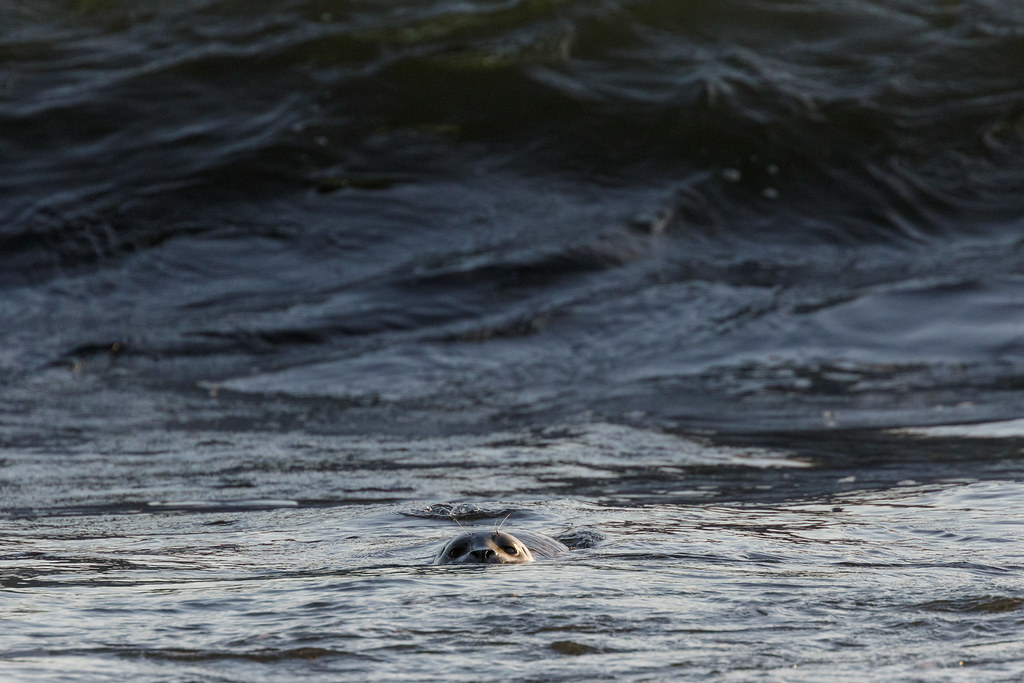
A harbor seal watches from the surf near Cobble Beach on a rainy day at Yaquine Head Outstanding Natural Area in Newport, Oregon

I discovered right away during my interview trip 21 years ago that Oregon was where I belonged. One of the managers found out I liked to hike and took me hiking in the Columbia River Gorge, then the other students and I had the weekend to go out the coast and explore whatever we wanted.

That wonderful Gorge is a half hour drive to the east. My beloved Ridgefield National Wildlife is half an hour to the north (across the river in Washington). Snow-capped Mount Hood and Mount St. Helens are visible from Portland and an easy drive too. Well known for its waterfalls and wetlands and lush forests and rugged coast, all of which I dearly love, there are also high deserts and sand dunes and even redwoods all the way south.

Scenes like this, a curious harbor seal poking up out of the surf at Yaquina Head on a rainy day at the coast, gave me as much pause about moving to Arizona as the summer heat. Oregon has so much to offer, so much that delights me, so much I will miss. Goodbye, I love you.

Elephant Skin

Rock formations resemeble an elephant's skin on a vertical cliff face at Cobble Beach in Yaquina Head Outstanding Natura Area in Newport, Oregon

There is so much I will miss about the Pacific coast, but there are three places I’ll miss most of all: Rialto Beach in Olympic National Park in Washington, Enderts Beach in Redwood National and State Parks in California, and Cobble Beach in Yaquina Beach Outstanding Natural Area in Oregon. All three are scenic and all three have good tide pools. But the reason I’ll miss Yaquina Head so much is not just that it also has a beautiful lighthouse, but it has harbor seals. Up close. I could watch them for hours, and I have.

It also has elephants, of a sort.

While watching the harbor seals swim near the southern end of Cobble Beach, I turned around and saw an elephant in the cliff wall right behind me, or at least an elephant’s skin. The rock formations of the vertical cliff face are fascinating, to the point that I stopped photographing the seals for a while and started photographing the rocks.

The Snail Pace

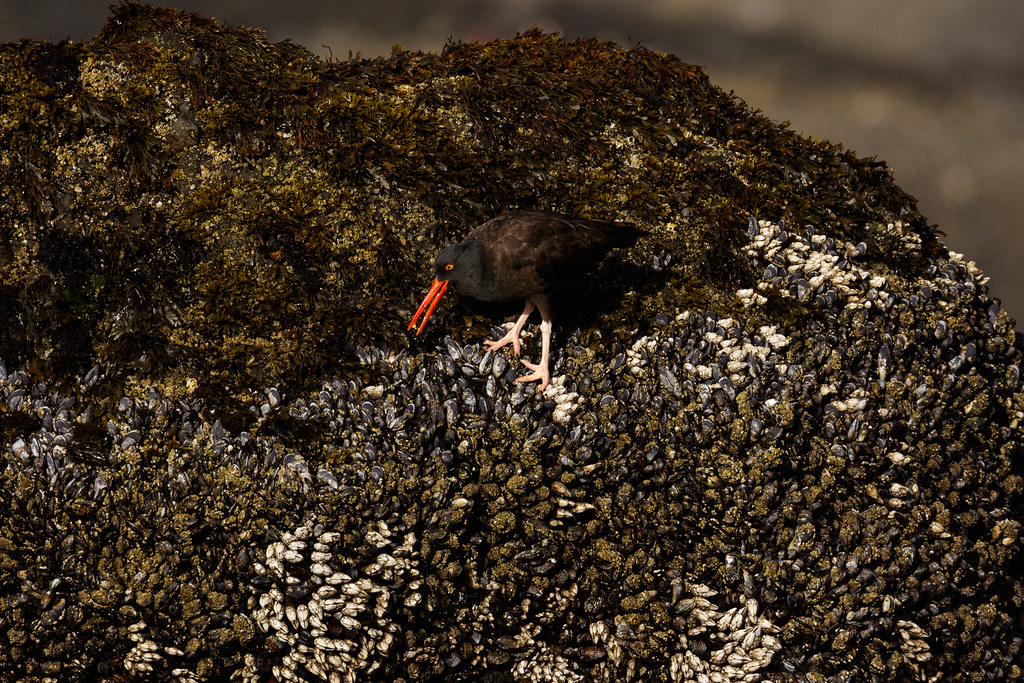
A black oystercatcher swallows the soft part of a snail it has extracted from its shell at Yaquina Head Outstanding Natural Area in Newport, Oregon

Life is precarious in tide pools. Mussels and barnacles that live too low on the rock surface are within reach of predatory starfish. Those too high are at risk of drying out while they wait for the rising tide. And in this case, the high spots also had just enough purchase for a black oystercatcher to walk along their perimeter, feeding as it went. But its target on this day was not the mussels and barnacles but the snails that feed on the algae on their shells, here it is about to swallow the soft part of a snail it has extracted from its shell.

The oppressive summer heat might be the biggest obstacle I had to overcome to be willing to move to the desert, but not far behind was saying goodbye to the coast (and in California, the nearby wetlands). I was rather taken with tide pools and the coast in general on visits to the redwoods in California and the rain forests in Washington and decided to make a concerted effort to visit the coast more often, which is why I was at the Oregon coast on this day in early October. A few weeks later I’d find out my team was getting laid off and thus started the process that would take me from the Northwest.

I changed the lock screen on my phone to this picture of a harbor seal as soon as moving to Arizona became a possibility, before it even became a strong possibility, to force myself to think repeatedly about whether I could really give up the coast. I decided I wasn’t ready to say goodbye to the coast, and never would be, but I was ready to say hello to the desert. And to the desert I go.

The World of Water

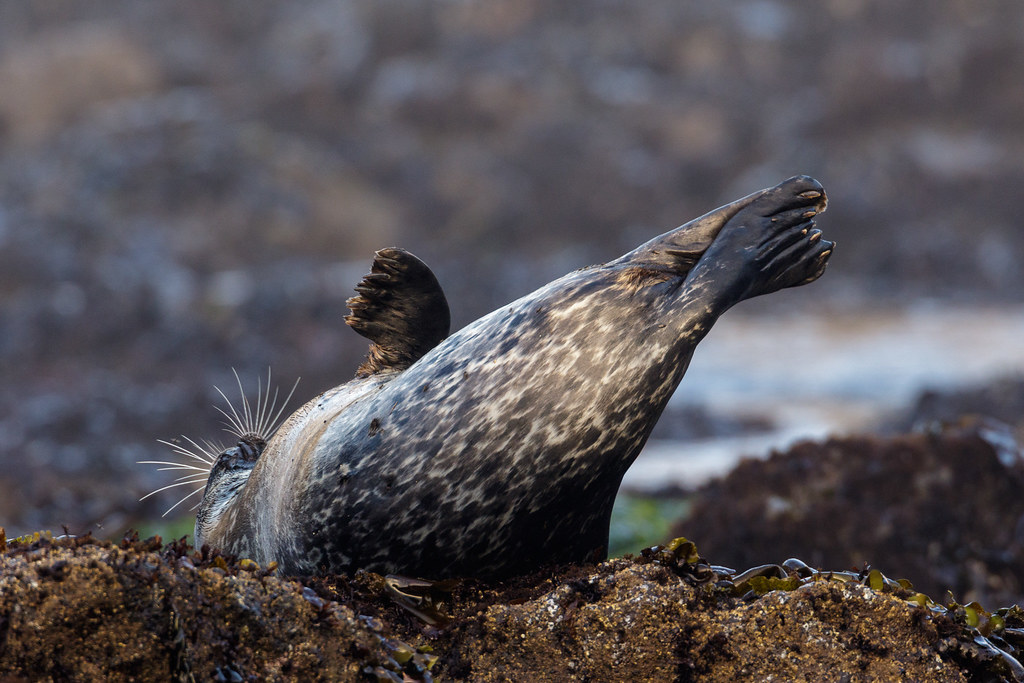
A harbor seal peaks over the waves in the pouring rain at Yaquina Head Outstanding Natural Area in Newport, Oregon

Ours is a world of water but not so much as theirs, particularly on days of water above and below. You should have seen the smile on my face when the rain really started chucking it down as I watched the harbor seals frolic in the surf. Water defines so much of what I love about the Pacific Northwest, the lush greens of the forests, the snow on the mountains, the waterfalls, the seasonal ponds, the wetlands, the mountain streams, the rivers, the oceans, the tide pools. All the animals therein. I’m trying to soak it in while I can in case I end up in a world still defined by water, but by its absence rather than its abundance. But I’ll love photographing those places too, I learned long ago to focus on what you love about where you are rather than what you miss about where you were.

Things Are Not Always As They Appear

A western gull holds a dead red rock crab in its beak on Cobble Beach at Yaquina Head Outstanding Natural Area in Newport, Oregon

It might look like this western gull has just caught a red rock crab but the crab was long dead. No flesh yet remained, yet the shell and legs were still held together by a thin material. Usually the dead crabs are scattered in pieces around the beach so I was surprised to see the crab of a piece, and perhaps the gull was too, as it quickly dropped it when it realized there was nothing left to eat.