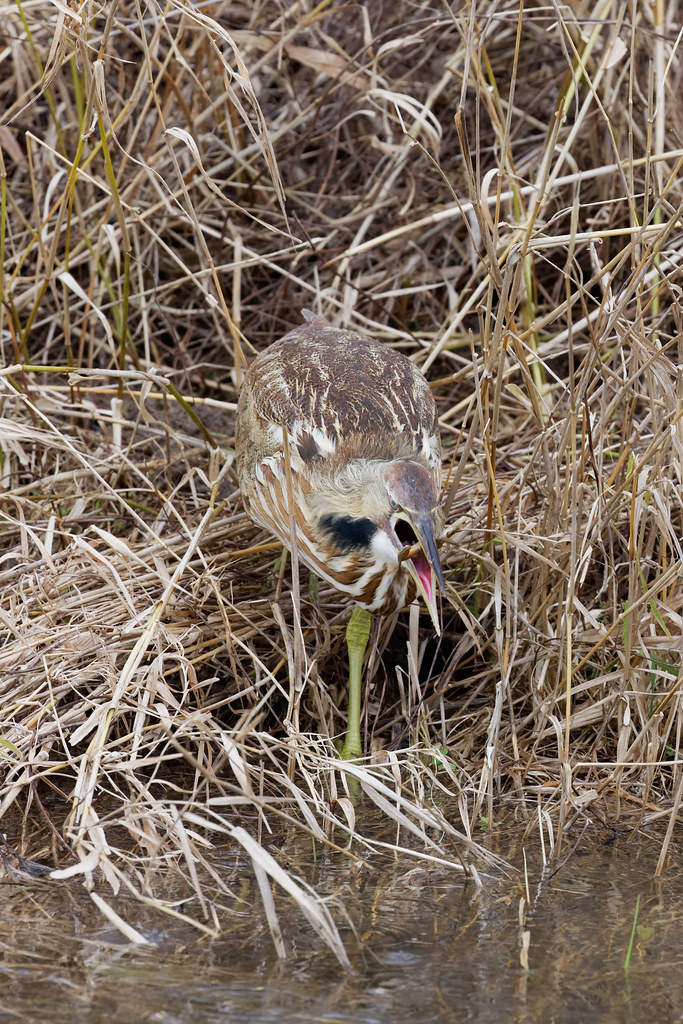
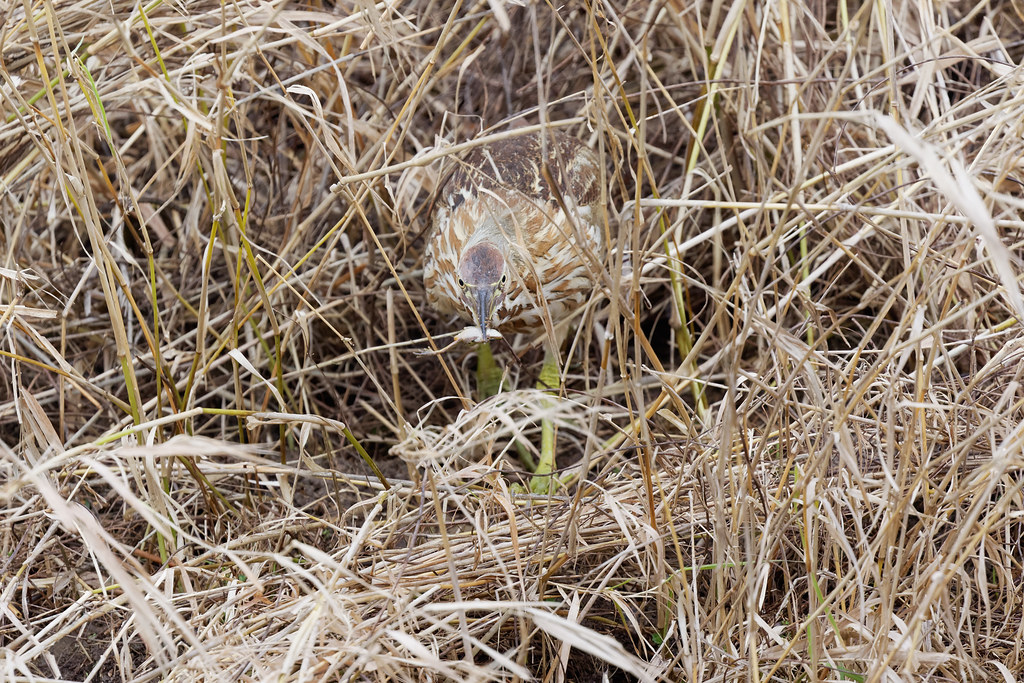
They say pictures never lie but they can certainly give the wrong impression. This American bittern, swallowing a treefrog it just caught, caught it further away from the water but came down to the water, dunked it, and swallowed it. As adults treefrogs often live near water but spend most of their time on land (and more often near the ground rather than in trees). The bittern has covered both its eyes with a nictitating membrane to protect them as it flips the frog down towards its throat.
Tag: Rest Lake
Your Treefrog, Sir
It Rains Sometimes Here in the Northwest
It rains fairly often during winter here in the Pacific Northwest but it is often a gentle, misty rain and hard to convey in images. On this January afternoon, however, great big buckets of rain started pouring from the sky so I took the opportunity to show how predators like this egret, if they want to eat, have to hunt no matter the weather. If you’re wondering how the egret fared under such conditions, this happened about 10 minutes later.
I was playing off the shutter speed (to freeze the rain) with the depth of field (to keep as much rain in focus as possible), but I wish I could have had more depth of field. Hopefully it still conveys a sense of how hard it was raining.
Backside
One benefit to earning an animal’s trust is that you can often watch it for a long period of time. The downside is that it often has its back to you as it doesn’t consider you a threat. I had been watching this bittern hunt on the far bank for over an hour when it swam over and sat down right in front of me. It turned around to scan the water and I loved the geometry formed by its body and beak, its two round eyes sticking out from the side of its head.
Late Flight
After spending a sunny fall day at Ridgefield, I found myself near sunset photographing ducks and coots feeding in Rest Lake. Suddenly a few tundra swans took off from a distant part of the lake and kept coming in my direction until they flew by my car. Sadly I didn’t have time to change settings on the camera so some things weren’t set up the way I would like, besides which I don’t normally shoot birds in flight so it’s not something with which I have much practice.
Nevertheless it was a nice ending to the day. I took a few more pictures of ruddy ducks and then headed for home.
Follow the Eyes
One thing I’ve long wanted in a camera is the ability for the focus to lock onto and track the eye of an animal I’m photographing. It would have come in handy here, I was testing out my Canon mirrorless camera to see how limiting its poor autofocus would be if used as a backup in case my main camera failed. I had been watching this bittern that had been mostly sitting still, with some occasional preening, when it suddenly threw its mouth wide open and shook its head about. While the camera had focused fine on the bird while it was sitting still, by the time this shot was taken the bittern had already moved far enough that it isn’t in good focus.
The technology is moving in this direction for photographing people at least, but I fear it will be a while yet before we can do it with moving animals. While my main camera would have handled this situation much better, it still requires thinking about it’s many autofocus modes, and I’d love to spend less time thinking about the technical side of photography and instead just enjoy the animals I’m watching.
Matted
This coyote was hunting along the edge of Rest Lake with another coyote on a winter afternoon. I saw them on multiple occasions, moving about the refuge together, this one had matted fur under its neck and was easy to recognize.