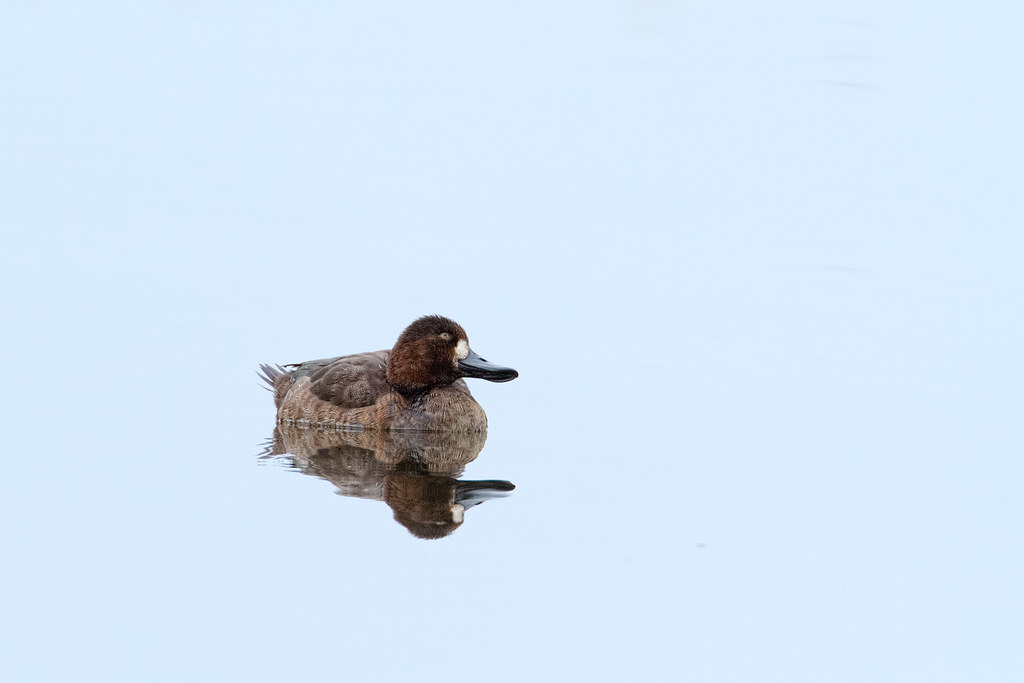
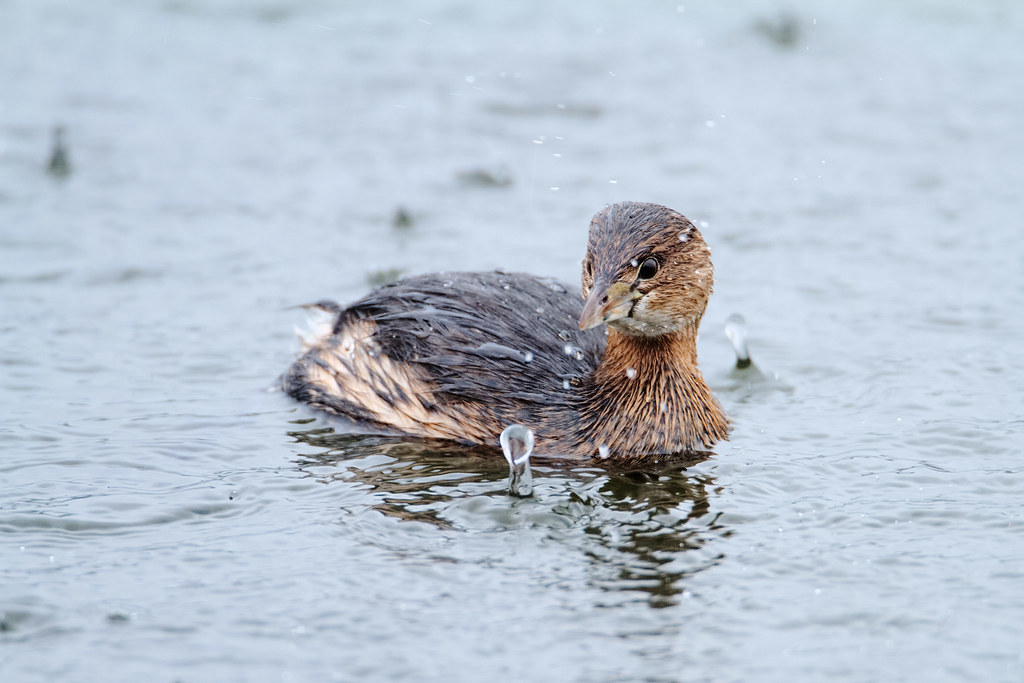
High Hopes

Crosstrek Christmas

For a car to work as my daily driver, it needs to do well in two situations:

  1. My commute to work
  2. The auto tour at Ridgefield National Wildlife Refuge

I’m in the midst of a long vacation so I (thankfully) haven’t had the chance to test our new Crosstrek on the work commute, but Christmas was lining up to be my first chance to test it at Ridgefield. It’s become a bit of a tradition for me to go to Ridgefield first thing on Christmas morning as sometimes I practically have the refuge to myself, a nice time for quiet contemplation during a hectic time of the year.

Late on Christmas Eve after my wife had gone to bed I went out into the garage and just looked at the car for a while. I was nervous, for the next day would prove whether my high hopes for this car would pan out at the refuge. I sat in it for a while and read the owner’s manual enough until I figured out how to quiet the beeps when you lock the car. My nerves settled, I headed up to bed and set my alarm to wake me before sunrise.

I love photographing in the rain and Christmas delivered the wet in abundance as I drove in the dark to the refuge, giving me a quick feel for how the little Subaru would handle the heavy rain compared to its bigger sibling (thankfully, it handled the soaked streets and big puddles quite well, I was thankful not to be in the Civic).

I was relieved to see the car did well along the auto tour too (the icing on the cake would have been if it had been a hybrid so I could drive more quietly around the refuge, but it was not to be). At this time of year you can’t get out of the car except in the parking lots, so I took a quick picture beside the sign in the entrance lot.

I’m definitely still in the honeymoon phase but so far I’m just loving this little car.

I’ve been back to the refuge and it’s gravel road a few times since Christmas, each time in the rain, and it’s starting to feel less and less like someone else’s car and more and more like mine. But she’s not quite as white as she used to be.
A Mystery

An American bittern stands in the water next to Rest Lake at Ridgefield National Wildlife Refuge in Ridgefield, Washington

This is one of my favorite bittern pictures as it shows the way I often wind down a day at Ridgefield, watching bitterns near the end of the auto tour before I have to leave to beat the closing of the automated gate, the setting sun leaving the bittern to hunt in shadow. These last moments always make me wonder — what do bitterns do in the dark?

Clues Two

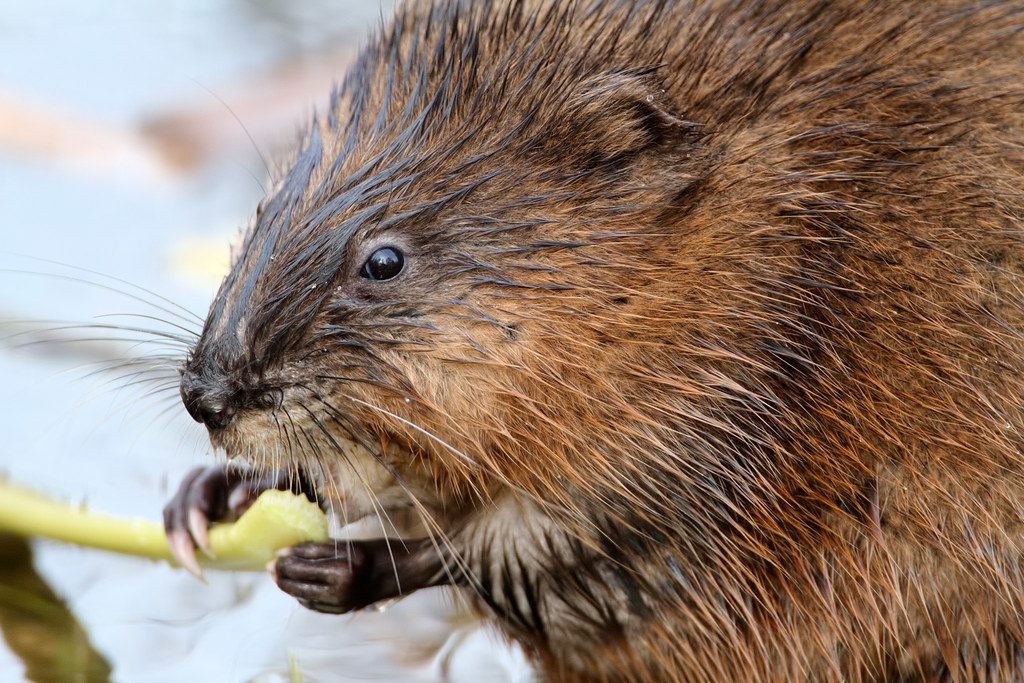
A close-up view of a common muskrat eating plants

I saw my first muskrat at the Virginia Tech Duck Pond back when I was first getting into photography. Sadly I found it dead not much later, but my fascination with these rodents was born. So I was particularly pleased when we moved to the Northwest to find them here as well. Over the years I’ve seen one in most of the ponds and lakes around the auto tour at Ridgefield, although surprisingly I seem to be the only one who is excited to see these adorable creatures.

While the face of the muskrat is unique compared to the other aquatic rodents at the refuge, its distinctive white claws are also an important clue, visible here on the front paws of this hungry muskrat. While I have seen muskrats many times, they are shy creatures and my glimpses are usually brief. Thankfully though this one let me photograph from close range to my heart’s content as it dined on plants at the edge of Canvasback Lake.

This is why I can’t stop going to Ridgefield.

Clues

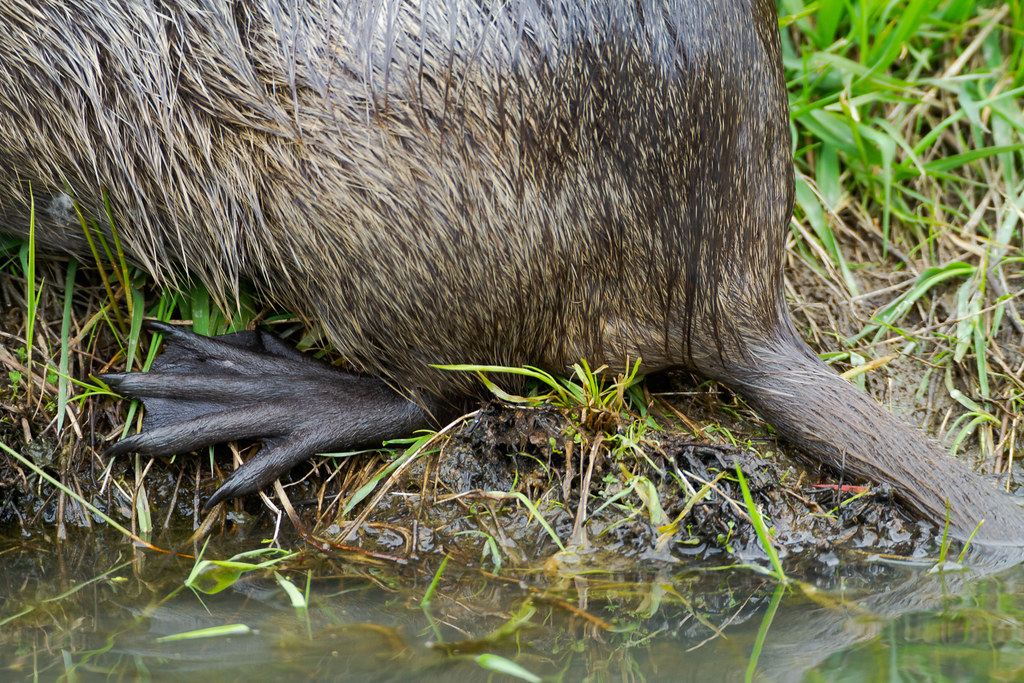
A close-up view of the rear foot of a nutria

Nutria are by far the most commonly seen of the aquatic rodents at Ridgefield, with muskrats being relatively common, beavers not common at all. There are enough clues in this picture to identify which of these rodents this is. The tail is the most obvious indicator, but the rear foot all by itself holds enough clues. A muskrat has white claws while those of a nutria and beaver are dark. Both beavers and nutria have heavily webbed rear feet, but all five of the beaver’s toes are webbed, on a nutria only the inner four.

Which begs the question: why?

I don’t know the answer but I do know this is a nutria.

Howling

A coyote howls at Ridgefield National Wildlife Refuge

I first met this coyote when we surprised each other on the short trail to the observation blind at Ridgefield. When I got back to the car I moved on to the Kiwa Trail parking lot and discovered the coyote had as well. I drove to the far side of the lot to get a better angle on the sunlight then gently swung the car into place. The coyote didn’t pay me much heed and hunted in the meadow for a while, then surprised me once more by howling a few times (unanswered). It then slipped through the gate and disappeared up the trail.

I’ve heard coyotes howl many times but it was fun to finally get to see it.

Lifer

A male horned lark

During the winter horned larks can be found in large numbers in the Northwest, but mostly on the eastern side of the Cascades. There are a few resident populations on the western side where I live but I had never seen a horned lark until this January when I found a male foraging near Schwartz Lake at Ridgefield.

I use Northwest Birds in Winter by Alan Contreras when I want to get more specific info on the distribution of one of our birds during the winter than you can get out of a general purpose field guide. I bought my copy in 1997, about a year after I moved here, when I met Alan at an Audubon event and he signed my copy. It’s definitely not a field guide and not useful for identifying birds, but a nice complement to my army of guides when I want to dig a little deeper.

A close-up view of a male horned lark

Skittish

A close-up view of the face of a female northern flicker

I loved the little woodpeckers in the woods behind our house when I was growing up but I didn’t discover flickers until I got into birds & photography in graduate school. I put my neophyte bird guide skills to the test as I tried to identify the bird making a ruckus in the tree outside my apartment. I found my mark and have loved flickers ever since.

The race we typically see in the west, the red-shafted flicker, is slightly different from the race I first met in the east. I have long hoped to get a close-up of the red-shafted male with his spectacular red mustache, and one was calling out from the nearby trees when I photographed this female at Ridgefield, but he never joined her down in the grass. She gave me great looks as she fed in the rain, however, and I was thankful for the opportunity as flickers are usually pretty skittish.

We even have them in our yard, they are a particular favorite of our resident bird-watcher Emma, and she and Sam and I got a great look from my office this afternoon as a male bathed in our birdbath. No way to get pictures without disturbing him, I can’t park my car in the backyard and photograph him Ridgefield-style. But he gave us a nice long look at his feathers as he splayed them about in the water and seemed nonplussed by his furry fan chirping at him from the cat tree.

Visibility

A close view of the face of an eastern cottontail

As a fan of small cars, I’ve been thinking my next one should be in a bright color to make it more visible to other drivers, like the metallic red on the Chevy Sonic or the orange on the upcoming Subaru Crosstrek (although as much as it pains me to say it, perhaps it is too orange). But when I look at my tight animal close-ups and see my car reflected in the eye, I wonder if these brighter colors would also be more visible in the picture?

For some reason car reviews don’t touch on this sort of thing.

Not that I’ll lose any sleep over it since it could be fixed in post if necessary, plus for the most part I do prefer calmer colors like a nice sky blue or maroon or green or — oh wait, am I talking about cars again?