A great egret hunts in the last light of the day. The sun was setting but its direct rays were already blocked in this channel, leaving a nice soft light. I didn’t expect the egret to catch much but it caught three bullfrogs in quick succession. I don’t know how many more it caught before calling it quits as at that point I had to leave both because the light was gone and to get out of the refuge before the automatic gate closed for the night.
Tag: River S Unit
Hooded White Horse
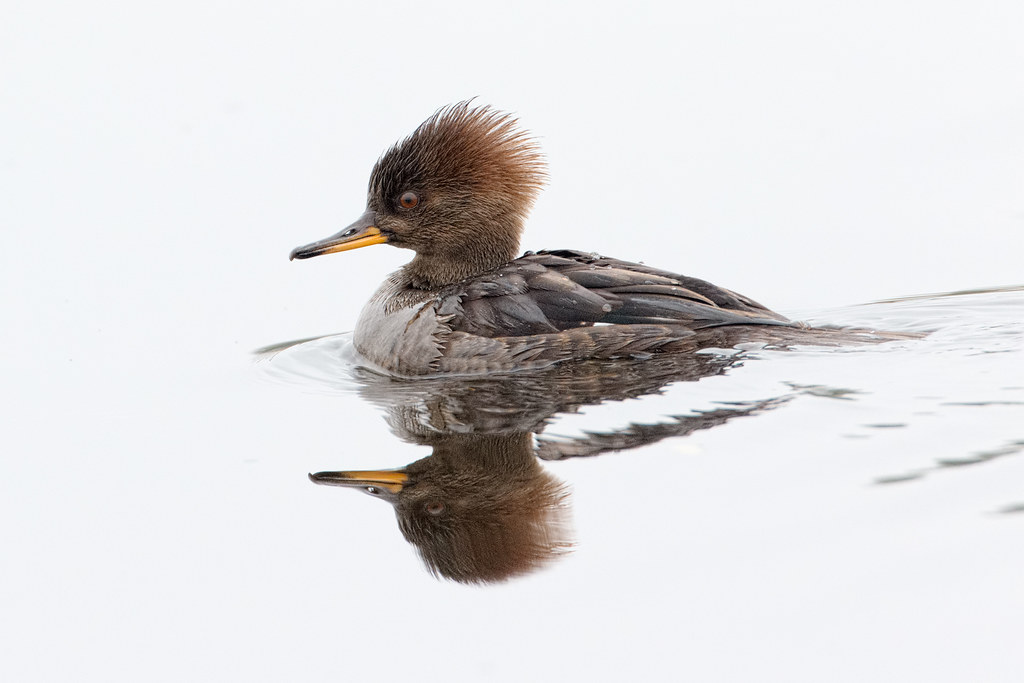
Reflections on a cloudy day turned the surface of Horse Lake white when I exposed for a female hooded merganser as she swam past my car. The auto tour at Ridgefield is one of my favorite places in the Northwest as you get to see such lovely wild animals like this up close and behaving naturally, frequently without disturbing them.
Settling In
An American bittern seemingly ready to settle in for the night. It had been hunting up and down the channel in a light afternoon rain, but as the sun peaked out at sunset it settled into the grasses and hunkered down. Which made me wonder, where do bitterns spend the night? I’ve no idea if it was going to stay here for a while, but it was a lovely little parting gift on Christmas of 2014, as after taking these pictures I left for home.
The picture below is a zoomed in version of the bittern. I had upgraded my camera gear not long before, picking up the Canon 7D Mark II camera in late October and the Canon 100-400 mm II lens in mid-December. The new lens replaced my old 100-400 lens which I had for almost 14 years, but it was having some issues after so much use (I took it on every hike I went on) so I’m glad Canon finally updated it. This picture was zoomed in to 400mm, the top picture was at 100mm.
Really love this lens, very thankful for it.
Death of a Salamander
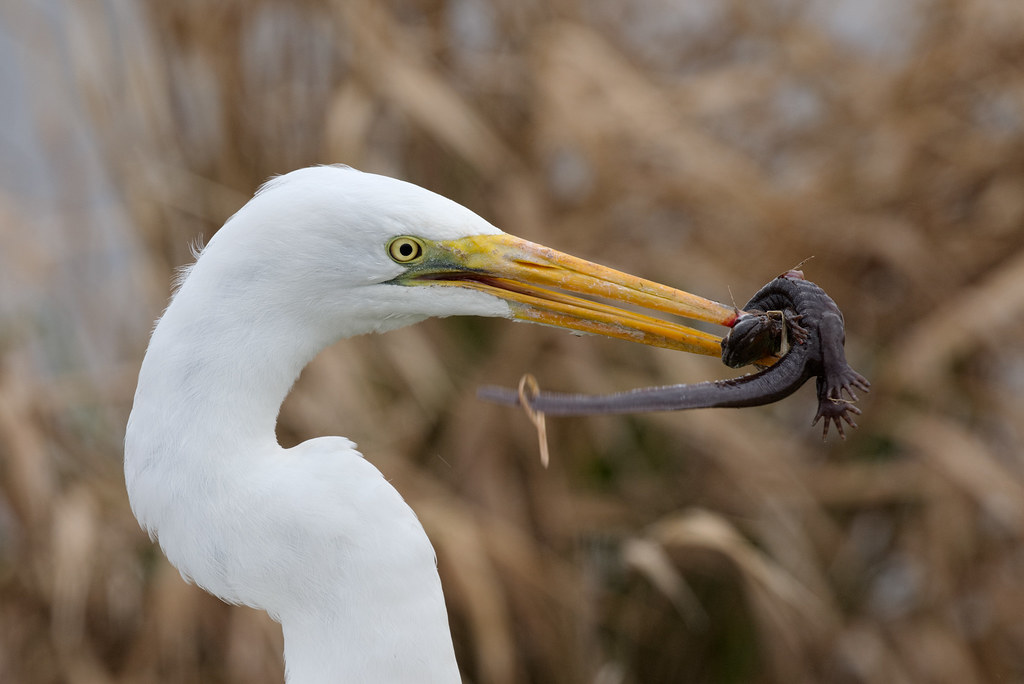
While I normally like to arrive before sunrise, I got a late start to my visit to the refuge in late February, as I was tired and decided to sleep in, arriving after noon. There was a great egret at the edge of Horse Lake, right at the start of the auto tour, so I pulled over and set up to take portraits since it wasn’t on the hunt.
Or so I thought.
Unfortunately my camera wasn’t set up for action as the egret suddenly struck into the water and brought up this northwestern salamander. I’ve rarely seen these lovely salamanders, and only when they’re being eaten, as the terrestrial form (adults can be aquatic or terrestrial) is usually below ground. During breeding season they move to the water to breed, and I believe late February is prime mating season for these salamanders at sea level, so hopefully it had a chance to pass on its genes before the egret caught it. I’ve never seen one this large, I was rather taken aback when I saw what it was.
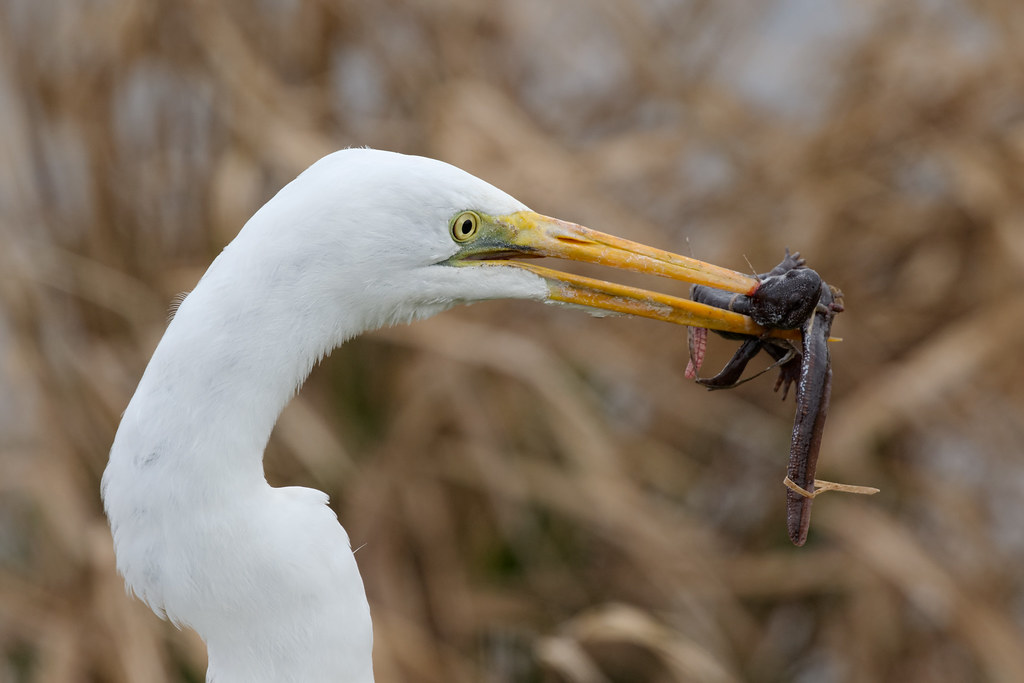
When i first saw the white spots running from the head of the salamander down to its tail, I assumed it was part of its coloration and was confused when I later read that this is not the case. I couldn’t see that it could be any other species, but then I read that the white spots are poison that the salamander releases as a defense mechanism.
I don’t know if it explains something I found a little odd, as when the egret first caught the salamander it brought it out of the water and tossed it several yards away into the grass. It seemed rather upset and agitated with the salamander, perhaps I thought because the salamander’s long tail kept thrashing back towards the egret’s eyes, and I thought to myself, “Well, you are trying to eat it!”, but perhaps it was upset because it got a taste of the poison.
The egret grabbed and tossed the salamander multiple times, I was surprised at how long the little thing put up a fight. The egret’s first strike had opened a hole in the salamander’s side and some of its internal organs had come out, so it was going to die even if it managed to get away, so I wished I could tell it to just give up and its agony would end. Eventually it did stop fighting as much and the egret gave it a good dunking in the water, after which the salamander’s body went limp and its legs hung to its sides. The egret swallowed it in one fell swoop. I wonder now, although probably much too large to be killed by the poison, if it made the egret sick, and perhaps it might give the next salamander a pass.
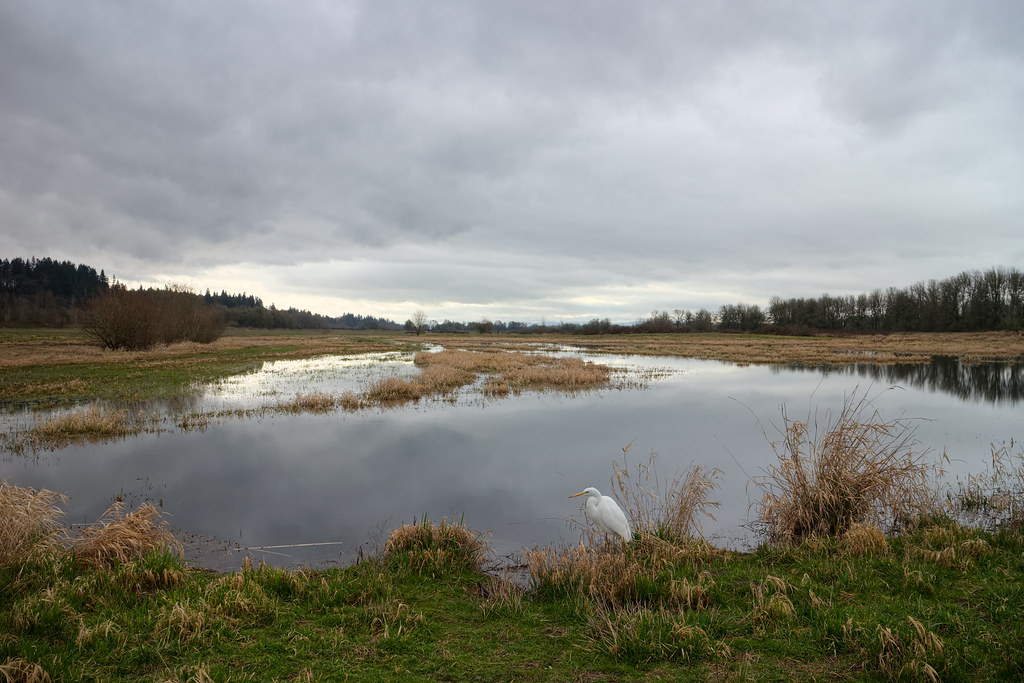
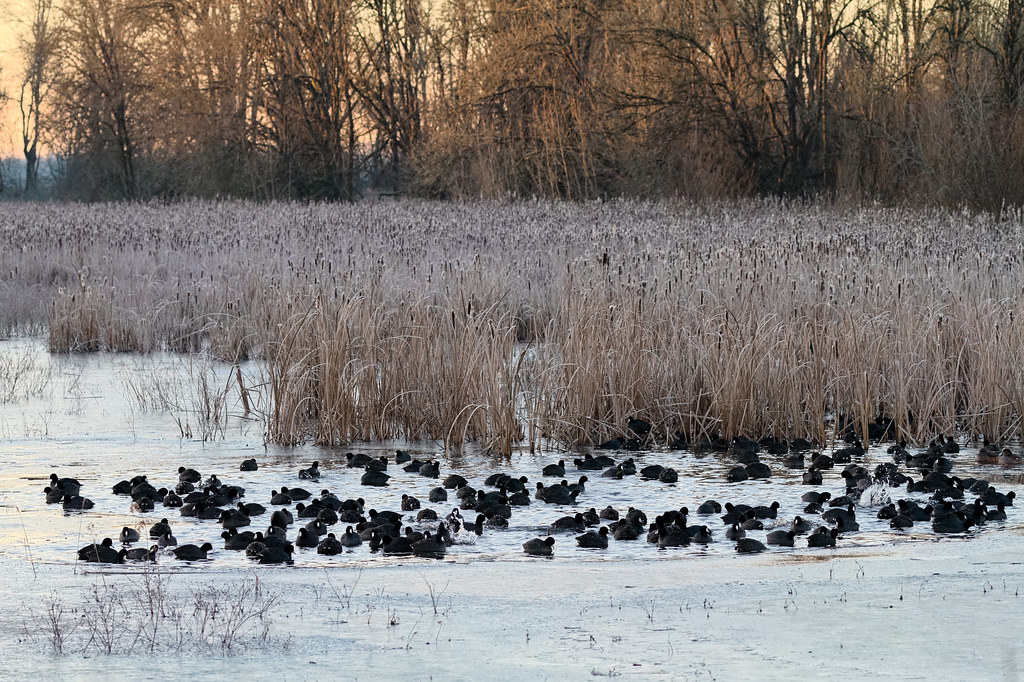
After I got over the thrill of seeing this magnificent little creature and the shock of watching it die, I reflected on how amazing it is that, just feet from where I have spent many, many hours sitting and watching and listening at this pond, an entire world exists under the water that I have little knowledge of and no way to observe. I would have never known this magnificent salamander was there if not for the egret (this wider view of Horse Lake shows the egret not long before it caught the salamander, just over to its left).
Above the water I can watch and learn, but the things below I see only when they are brought out from the water and into the air, usually as they die. That makes me a little sad, but this encounter did encourage me to learn about the salamanders as I knew nothing about them before, apart from the name. Their numbers declined by one that day, but the northwestern salamander population in general is doing well in its range on the western edge of North America, from northern California up through British Columbia.
Maybe one day we’ll meet on friendlier terms. In the meantime it makes me happy knowing they are there, even if I can’t see them.
It also made me happy to see that, a while back, one of my pictures was used for the good of salamanders, as the U.S. Fish & Wildlife Service used my favorite rough-skinned newt picture on their Facebook page to announce some steps they are taking to protect our salamanders from a fungus that is killing them elsewhere. I like how Flickr displays the usage rights I set for my pictures, as I set most of them so they can be used for non-commercial purposes, a long-standing tradition dating back to when I first started putting my pictures online back in the mid-90’s.
A Christmas Miracle
Perhaps miracle is a bit strong, but I was delighted to find this short-eared owl on Christmas along Ridgefield’s auto tour, it had been almost a decade since I had last seen one. I didn’t have much time for pictures as there was a car approaching from behind and I wanted them to see the owl too. Since I already had my big telephoto mounted I took some quick head-and-shoulders shots. I was shooting out of my car’s window, so to get a slightly different look from the top picture I lowered the window to get more of the distant trees as a green background to go along with the brown grasses around Rest Lake. I then moved on and in my rear-view mirror I saw the folks behind me got a nice look too.
A Hard Rain’s a-Gonna Fall
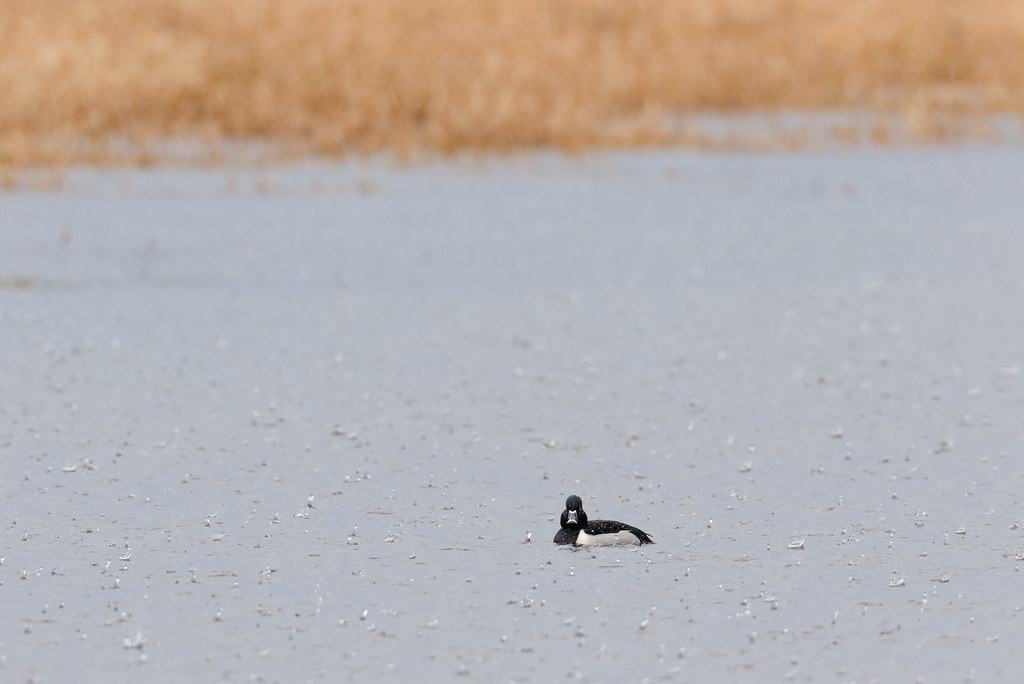
I was sitting next to Bull Lake for a while, watching a male bufflehead diving for food and photographing him whenever he swam close. I’ve been wanting to take more environmental portraits so when he moved a ways off I turned my lens to this distant ring-necked duck as the rain moved in. I was happy enough with the early pics but then the rain turned heavy and pounded the water in large drops. Ducks are built for the wet of course but even so I felt a bit sorry for him as the water exploded around him. The hard rain lasted only seconds, then he and the other ducks resumed their feeding.
If you’d like a closer view of what a ring-necked duck looks like, I took this picture almost a year earlier just one lake over. It was also raining, but only lightly.
Almost Bald
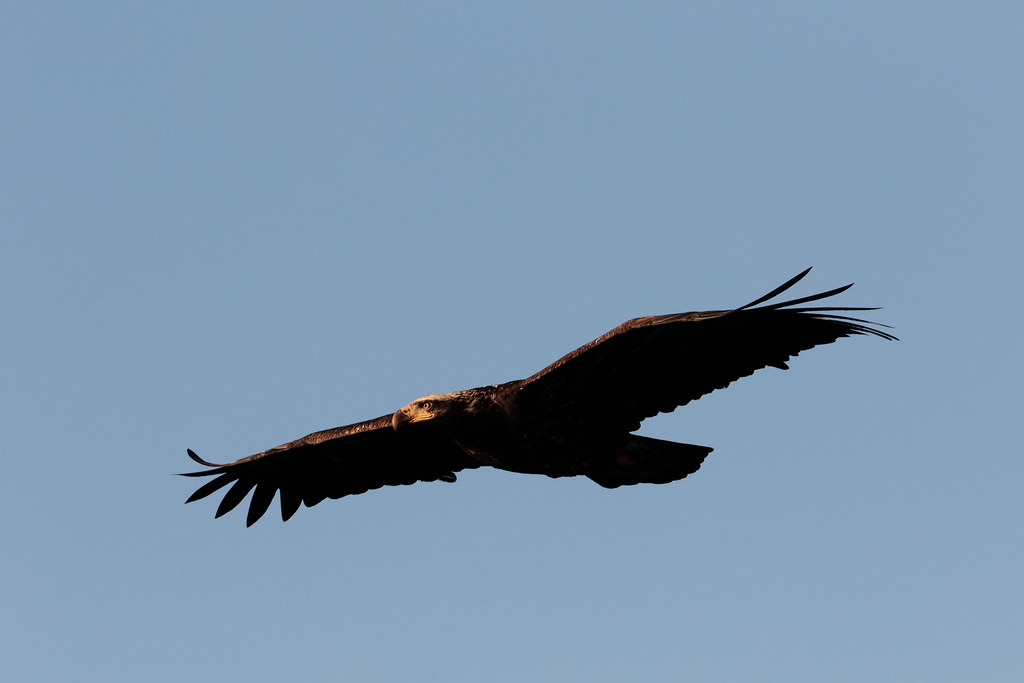
A bald eagle soars above Rest Lake on a cold winter morning. Next winter it should have the full white head from which the bald eagle’s name is derived, and I suspect it will attract much more attention from the resident adults as well. For now, though, its competition seemed to be the other young eagles on the refuge.
The Submerged Crosstrek
I spent the second-to-last day of my Christmas break at Ridgefield, arriving before sunrise and leaving after sunset. The bald eagles had been pretty active and the sunny day brought out many visitors to admire them, so late in the afternoon I parked a ways away so I could watch the day end in a more peaceful and relaxed state. When I saw the setting sun cast a shadow of my little Subaru on a frozen Rest Lake, I couldn’t resist a self-portrait as an homage to a picture I had taken almost exactly a year earlier (but around the bend and at sunrise instead of sunset).
But it was even more of a nod to the recurring nightmare I used to have, of me visiting Ridgefield and driving my car into the lake, as the angle of the sun made the the car look like it was submerged. Thankfully I haven’t had the dream in a while so I was in a rather whimsical mood when I took the picture.
The white birds on the distant part of the lake are tundra swans, most are sitting on the ice, but there was a small section of open water where a large number of ducks and geese had concentrated. This is also one of the last places I photographed coyotes (these pictures from January 2012 were taken near this spot).
Submerged also describes how I’ve felt most of the past couple of months, as a hectic work schedule had me working many nights and weekends. Thankfully things are returning to normal as the stress had worn me down, but I was able to not work for our three day holiday weekend and spent the days drifting in and out of sleep as my body and mind began to recover.
The Slow Reveal
Before returning in December, my previous visit to Ridgefield had been in January not long after Emma died, so at first my heart wasn’t in it. But after spending a long while watching a male red-winged blackbird at South Quigley Lake, I began to enjoy myself and stayed longer than I had initially intended. So I was looking forward to seeing them again this time but I didn’t see a single one in my first few visits. On the fourth trip I heard them but didn’t see them. I did finally see one on my fifth visit but didn’t get any pictures until the seventh, when this lovely male sang for me as the sun rose behind us.
On the Seventh Day
For six days did he search for an American bittern, and for six days was he disappointed. And he was sorely vexed, for one year and one day had passed since his last sighting. But lo on the seventh day was a bittern revealed to him, and great was his pleasure for deep was his love, and he left rejoicing.