Putting Down Roots

Putting Down Roots

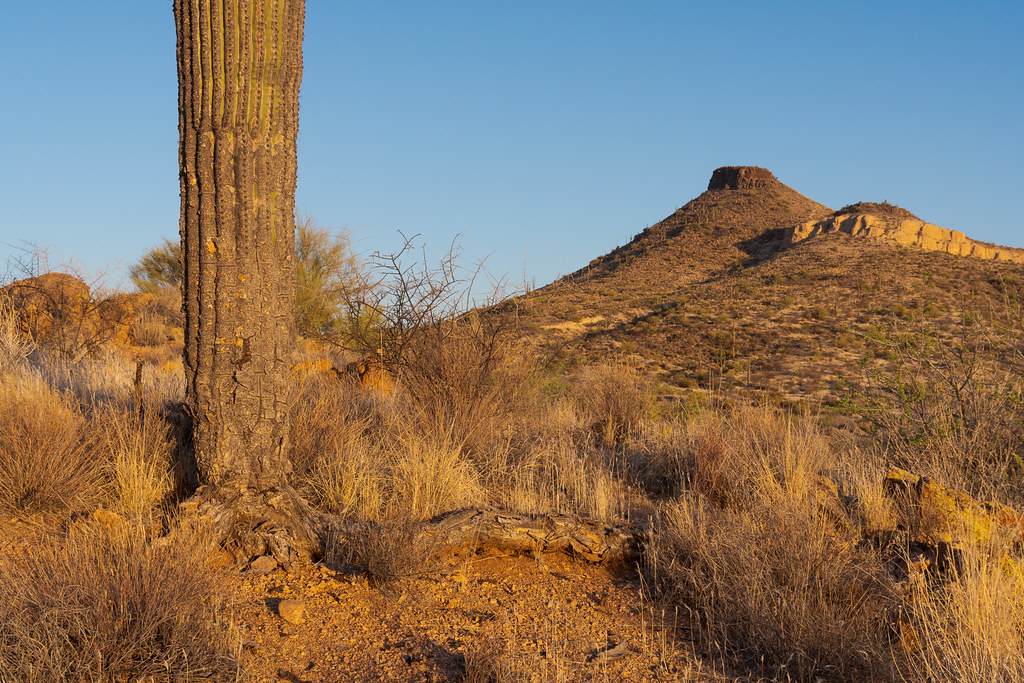
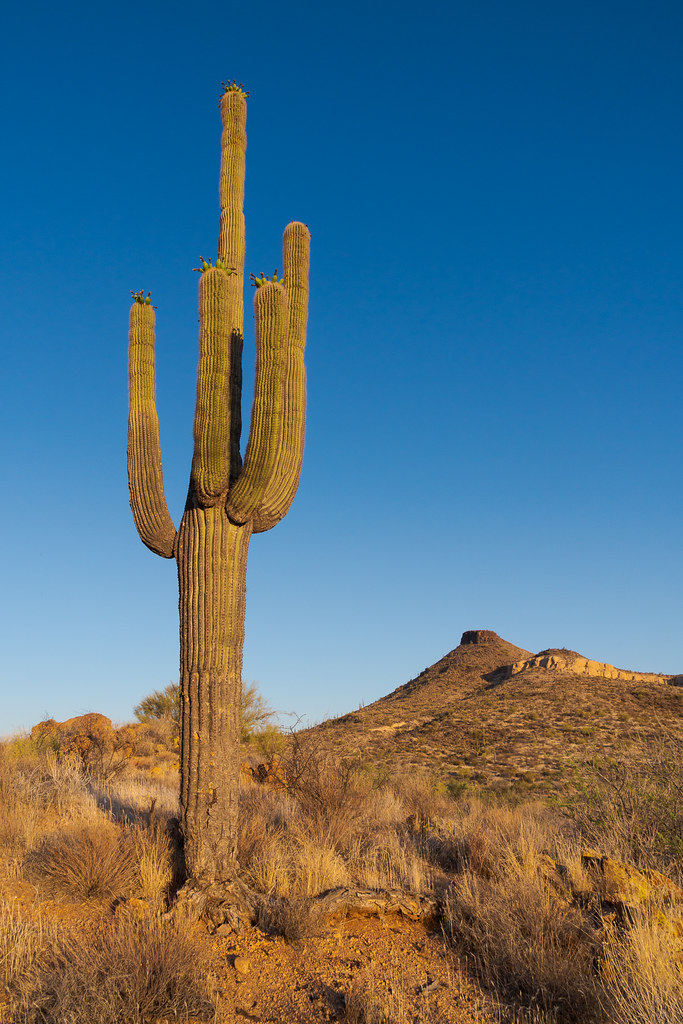
My first impression after hiking with saguaros was of redwoods. Of massive lifeforms with an outsized impact on their environment. Of warriors, long-lived giants, their struggles written on their skin. Yet for all of that a surprisingly shallow root system. Saguaros have a central tap root that grows down but the rest of their roots radiate outward a handful of inches below the surface, soaking up every bit of rainwater they can. Sometimes erosion exposes these shallow roots, as on this old saguaro at sunrise on the Vaquero Trail, Brown’s Mountain rising in the background.

Shallow Roots

The Guide’s Pack

A tall saguaro leans over and appears to be asking for a hug from another saguaro, as my Tom Bihn Guide's Pack sits underneath

I bought my backpack, the Tom Bihn Guide’s Pack, four years ago and put it to use right away on a trip to Mount Rainier National Park and Olympic National Park in Washington. We spent our first years together hiking around the Pacific Northwest, not only Rainier and the Olympics but the Columbia River Gorge, the redwoods in California, the Oregon coast, and of course at Ridgefield. Designed and manufactured in nearby Seattle, it was right at home in its home.

Then we moved to the desert.

The Tom Bihn Guide's Pack at Sunrise Peak in the McDowell Sonoran Preserve

My first thought after moving here, unsure how I would handle hiking in the hotter weather, was to take a lighter pack on some short hikes, so for the first couple of hikes I took an old REI daypack I’ve had for over twenty years. I quickly switched to the Guide’s Pack as I realized it was better suited to carry the water I’d need on longer hikes courtesy of its internal frame and hip belt.

Since some of the trails are narrow my first thought was to take off the two removable pockets on the sides and store them in the bag. One of the pockets has an organizer for little things but the other is open, and it turns out it is perfectly sized to carry two 27oz Klean Kanteen water bottles. I carry one 27oz bottle attached to my camera bag, two in the side pocket, and a spare in the bottom of the backpack. But I quickly realized my mistake once I started putting my telephoto lens and camera into the bag when the light started getting harsh, as to get to the water bottles I had to pull out the camera and lens. You have to constantly drink water while hiking here, so easy access to water is critical. I put the pockets back on the sides where they have stayed ever since, and after looking in the mirror I realized they weren’t sticking out as I had imagined anyway.

A dusty Tom Bihn Guide's pack at Brown's Ranch in the McDowell Sonoran Preserve

The bag is getting more and more dusty and that’s a good thing because it means I’ve been hiking more and more. I’ve been out almost 20 times in the two months we’ve been here and can’t wait for the next hike. One of the things I’ve loved about this pack is its looks, the navy parapack material is both durable and gorgeous and is well-matched against the coyote brown bottom and straps. It’s a rucksack design, the top compartment is where I keep my snacks, you can open the zipper and get inside without opening up the pack. Pull back the top and there’s a cavernous compartment inside where I store my hiking poles, my fourth water bottle, a first aid kit, and extra clothing (if needed), and various other things. There are some o-rings inside for attaching stuff sacks, adding some nice organizational capability to the large space.

The Tom Bihn Guide's Pack next to one of the many rock formations in Brown's Ranch in the McDowell Sonoran Preserve

My last adaptation in the desert was to start putting the big lens and camera away when the sunlight starts to get harsh, swapping the lens for trekking poles which make hiking in the desert more enjoyable. How I wish I had four arms so I could carry my tripod and trekking poles too! The tripod I cinch under the bag with some lash straps, that has worked a treat. This is the configuration in the picture below, with the backpack and attached tripod holding up Balanced Rock.

There are lots of nice touches in the bag, such as the loop handle that makes it easier to load the bag into the car or move it about the house. There’s a nice mesh on the back – your back does get sweaty in the desert, for summer hiking I might look for a back with a gap between your back and the backpack. Or maybe a lightweight pack if it proves too hot in the summer for any hike over an hour or two.

I absolutely adore the Guide’s Pack. I love that its beautiful, I love that its well-made and made well, and I love that it’s a great backpack too. It broke my heart to leave the Northwest but getting to know the Sonoran Desert has been an absolute joy. My thanks to the folks at Tom Bihn for making the backpack that let me explore my home in the Northwest, and my new home in the Southwest.


The Tom Bihn Guide's Pack sits underneath Balanced Rock in McDowell Sonoran Preserve

No Time to Rest

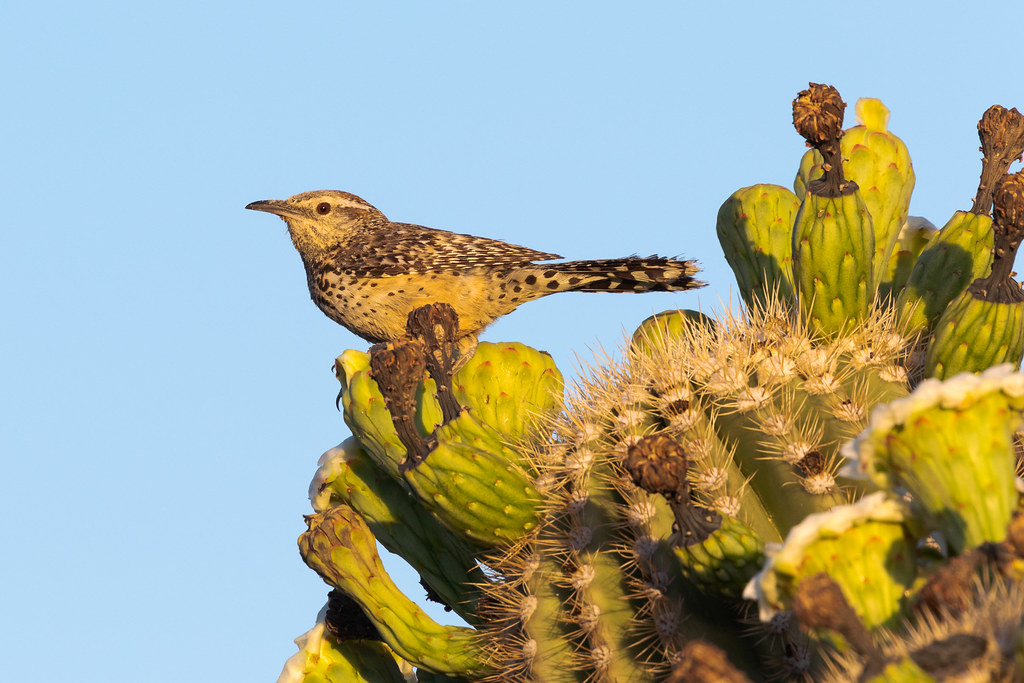
A cactus wren, its face covered in pollen, pauses on a saguaro while feeding its young

A cactus wren paused momentarily above its nest (not visible) while it and its mate constantly flew in and out feeding insects to their young. They were comfortable with my presence so I was able to watch them for a while as the sun quickly rose but I didn’t take many pictures since they paused so briefly. It’s face is covered in pollen from saguaro blossoms, I had seen several other species of birds face down in the flowers but the wrens seemed too busy feeding their young to feed themselves. The next week I did witness one quickly eating from a blossom but they didn’t take the time to gorge themselves like the finches and doves and quail.

As worn out as I am I’ve been getting up before sunrise to hike on all my days off as these springtime activities will soon be but a memory. The heat is quickly rising, summer will quickly follow, then it will be time to rest. Or at least nap, I’d still like to hike as much as the temperatures allow.

Calling Me Home

A male Gambel's quail sits atop spent saguaro blossoms in the Brown's Ranch section of McDowell Sonoran Preserve in Scottsdale, Arizona

One of the birds I most wanted to photograph when we arrived in Arizona was the Gambel’s quail. Not because they are rare – we saw them in the neighborhood when we were looking at our rental house – but because they called me home. It was our vacation in New Mexico a decade ago that got me excited about living in the Southwest, and my encounter with Gambel’s quail there was one of the highlights of the trip, their serenade at sunrise. So it was a special delight to photograph this male and female up on the saguaros as the sun rose, dining on the cactus blossoms, in our shared desert home. Home in a larger sense, though I see them every day in my backyard these quail were at Brown’s Ranch in McDowell Sonoran Preserve.

A female Gambel's quail eats from saguaro blossoms in the Brown's Ranch section of McDowell Sonoran Preserve in Scottsdale, Arizona

Not the Usual Suspects

A young male Bullock's oriole perches atop a blooming saguaro cactus in the Brown's Ranch section of McDowell Sonoran Preserve in Scottsdale, Arizona

In my short time here there are a handful of birds I’ve gotten used to seeing on the saguaros: Gila woodpeckers, gilded flickers, house finches, cactus wrens, and curve-billed thrashers. But I sometimes see more than the usual suspects, such as this splash of color that momentarily swooped into view early Saturday morning. He’s a young Bullock’s oriole, he’ll be even more colorful and vibrant in a year. I’ve only see this species a couple of times before, both during my years in Portland, so here’s hoping we meet more often in Arizona.

The Night Owl & The Early Bird

A curve-billed thrasher sings atop a saguaro in the early morning light on the Jane Rau Trail in the McDowell Sonoran Preserve in Scottsdale, Arizona

I’m a night owl in a land of early birds. It wasn’t a good feeling when the alarm rang out at 4:30am but it was a great feeling when the sun tipped over the mountains and illuminated the curve-billed thrasher serenading me atop a saguaro. I love how gingerly it appears to be stepping on its prickly perch but in truth the birds fly onto these saguaros with great speed and alacrity.