Most of the branches have broken off this long-dead tree but still it reaches for the sky. In life it wouldn’t have approached the heights of the massive saguaros that dominate the landscape but it would have provided welcome shade for young plants trying to gain a foothold in the desert. In death it can provide some shade and shelter, every little bit helps as while the hills and vegetation behind me are providing some protection from the sun at this early hour, as the sun rises there will be little escaping its glare. Yet life flourishes in this desert, it is not the emptiness of sand and rock I imagined in my youth.
Tag: Scottsdale
Safe in the Arms of the Cholla
Spirits
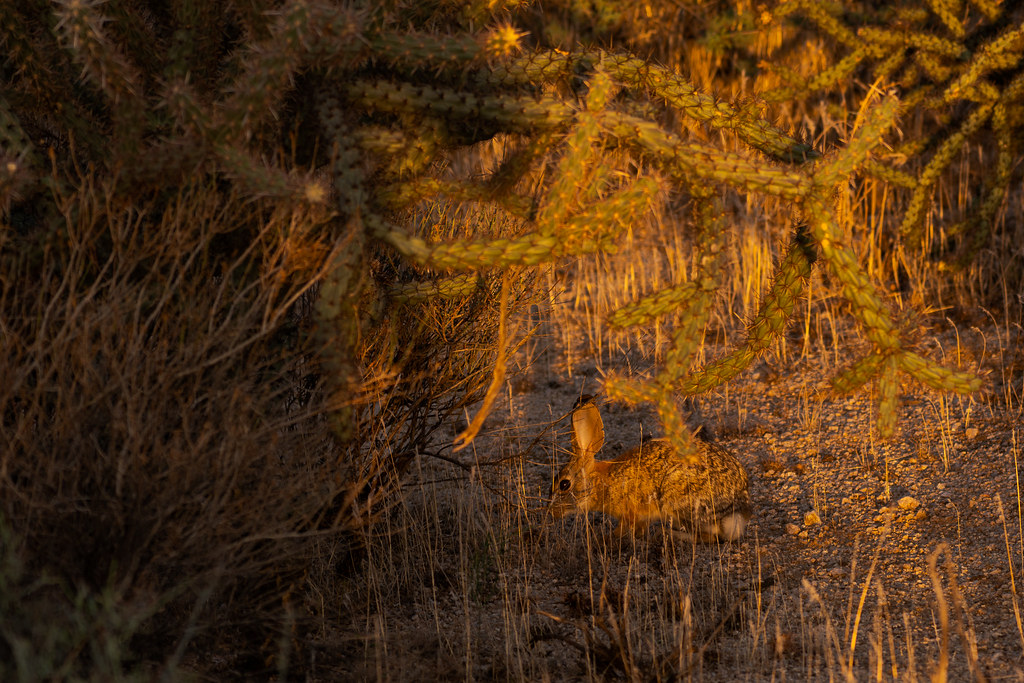
I am amazed how effortlessly and silently mammals move through their home while I stumble down the trail. The jackrabbits seem like spirits floating through the desert, I often first notice the black tips of their tall ears moving while the rabbit itself is blocked from sight by the many plants of the scrubland. This lovely creature I found not on the trails but at the trailhead of Brown’s Ranch, we shared a quiet moment before sunup.
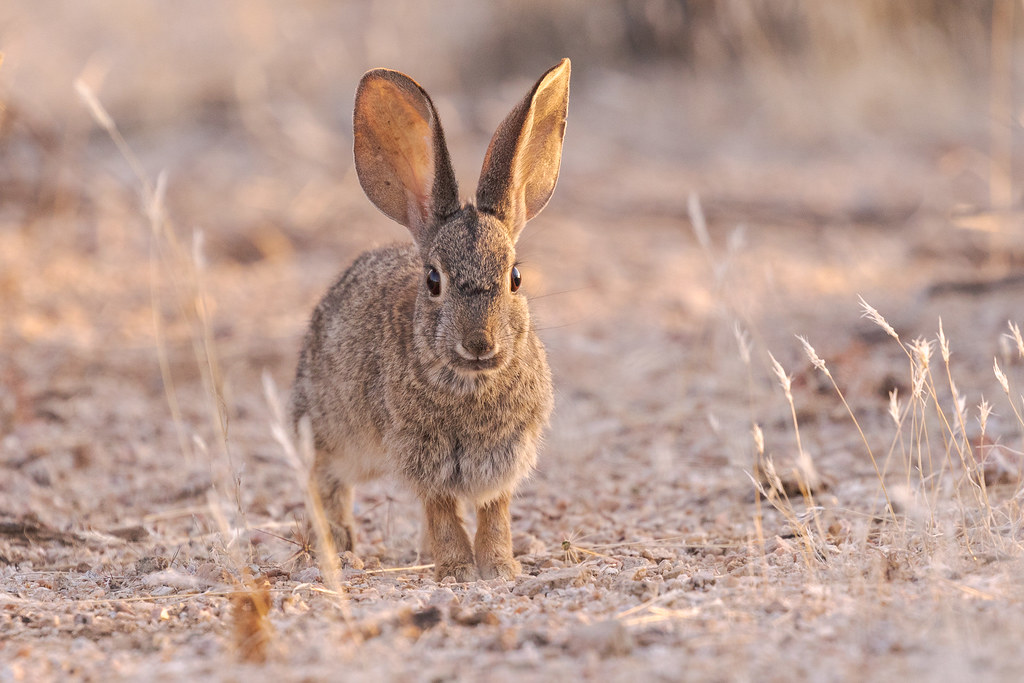
The rabbit you are most likely to see at the trailhead, and on the trail, is the desert cottontail (below). They too move silently through the desert but are so much smaller than the jackrabbits that you see them when you see them, there are no tall black tips dancing in the early light to catch your eye. Like all the mammals your best bet to see them is to arrive early, here also at the trailhead but just as the sun began peeking through to send one of us onto the trails and one to bed.
Walking in the Sonoran Desert at sunrise, seeing the desert both wake up and go to sleep, is a joy and a treasure even to this lifelong night owl.
Present, Future, Past
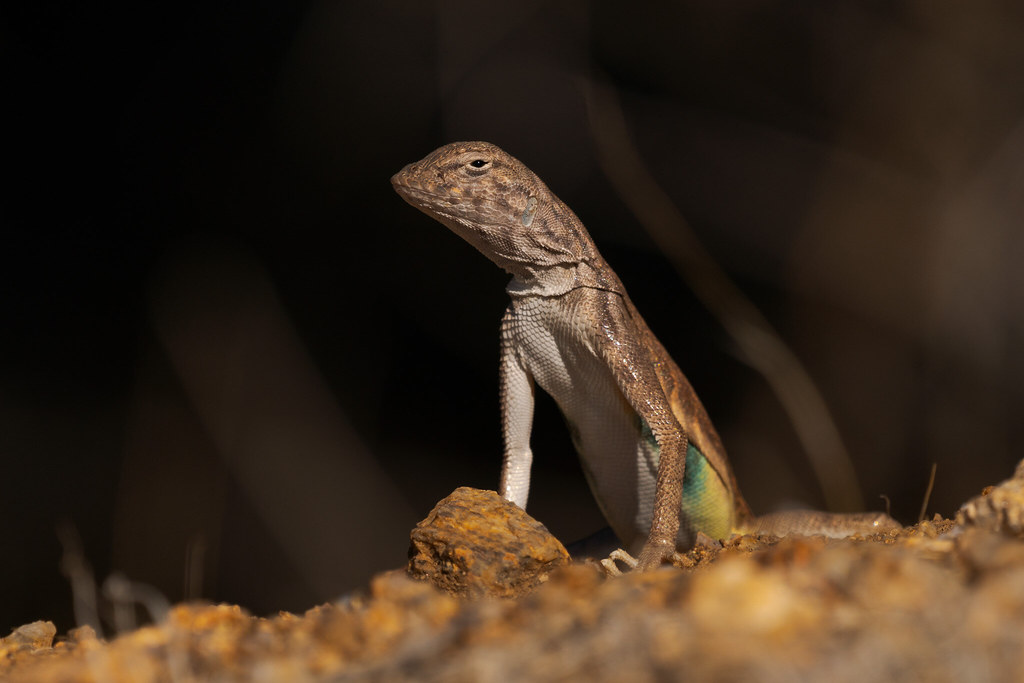
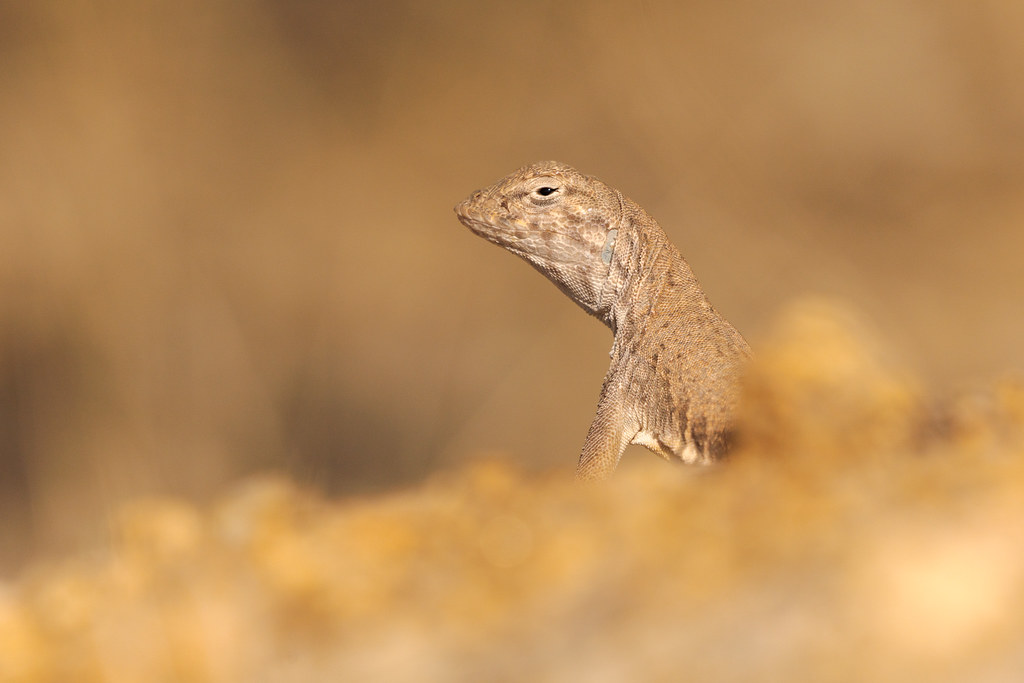
With Nikon and Canon about to announce their first serious attempts at the mirrorless market, I’m curious to see what approach the two industry stalwarts take and how Sony responds. I’m hoping to add a second mirrorless camera, not because I haven’t loved my Sony A6500 but because I want to go back to using it for the purpose I bought it, to be my walk around camera and for non-wildlife use. I’ve switched to using it as my wildlife camera as combined with their 100-400mm lens and 1.4x teleconverter it has proven a much better setup for capturing the denizens of the desert than my Canon, like this zebra-tailed lizard at ground level.
I dislike the weight and size of my Canon so on my last hike I only brought the Sony and switched lenses throughout the morning, it made me so happy to put my beloved 24mm lens on it as I photographed desert scenes, then I switched to the telephoto when I saw a mule deer, a Harris’s hawk, a cottontail, then a black-tailed jackrabbit, and for close-ups of a saguaro, a soaptree yucca, a teddy bear cholla. I just don’t want to have to switch lenses! I don’t mind it on occasion but I’ve always preferred to have one camera for telephotos and one for wider shots, and then switch to other lenses as needed.
A day will come when I can’t manage the weight of heavier lenses as I hike, it isn’t approaching but I can see it in the distance. In the meantime I try to get out as much as I can, photograph what I can, but more than anything delight in the moments as they pass, for they pass ever more quickly. I’m thankful for the handful of cameras I’ve had over the decades for the pictures taken, the memories preserved. I’m amazed at what I can do with today’s gear compared to when I started. Here’s hoping my photographic future is as rewarding as the past.
Pupdate
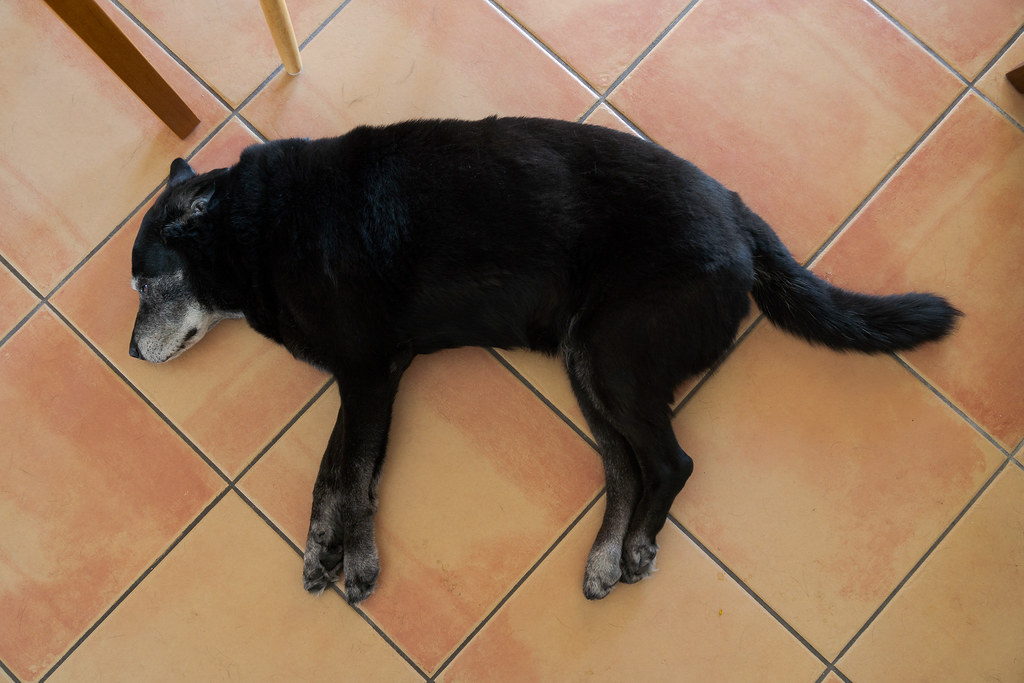
Age continues to take its slow toll on our sweet pup Ellie but at fourteen or fifteen years old she is doing far better than I ever hoped. We found a good vet here in Scottsdale and the good news is her kidney disease hasn’t worsened. She’s lost about 10 pounds in the last 6 months but an ultrasound didn’t show anything alarming. A continuing trend and a symptom of the kidney issues is she is not as interested in eating her food so we have switched to a different food that has helped for the moment. She is still quite interested in the cats’ food but it has far too much protein for her.
She is feeling more pain in her back and hind legs so we are adjusting her pain medicines, there is some risk to her kidneys but at this point we want to make sure the remainder of her life is as happy as it can be. It seems to be helping, this morning she went on a 0.75 mile walk and kept a good pace the entire time, yesterday she went 1.17 miles! With the heat we don’t take her on evening walks but even in Portland it was getting difficult, I could only get her to go to the park and then she’d want to go straight home.
She loves sleeping both in her dog beds and on the tile floors although the tile is proving a bit slippery, we’re getting some booties that will give her more grip. Her attitude is one of joy as it always has been. Her hearing has been going for a while now, when I came home yesterday she didn’t hear me even as I walked up behind her but she happily greeted me when I rubbed her floppy ears.
Every day a blessing.
Lighter than Air
Most of the lizards I see underfoot scurry across the desert floor at a seemingly impossible speed, as though they were lighter than air, none more so than the zebra-tailed lizard. This one had raised up his body off the ground and showed off his long legs and the coloring along his side although you can’t see the vibrant tail for which he is named. Just once I’d love to run like he runs, to know that effortless speed.
Green and Blue in the Desert
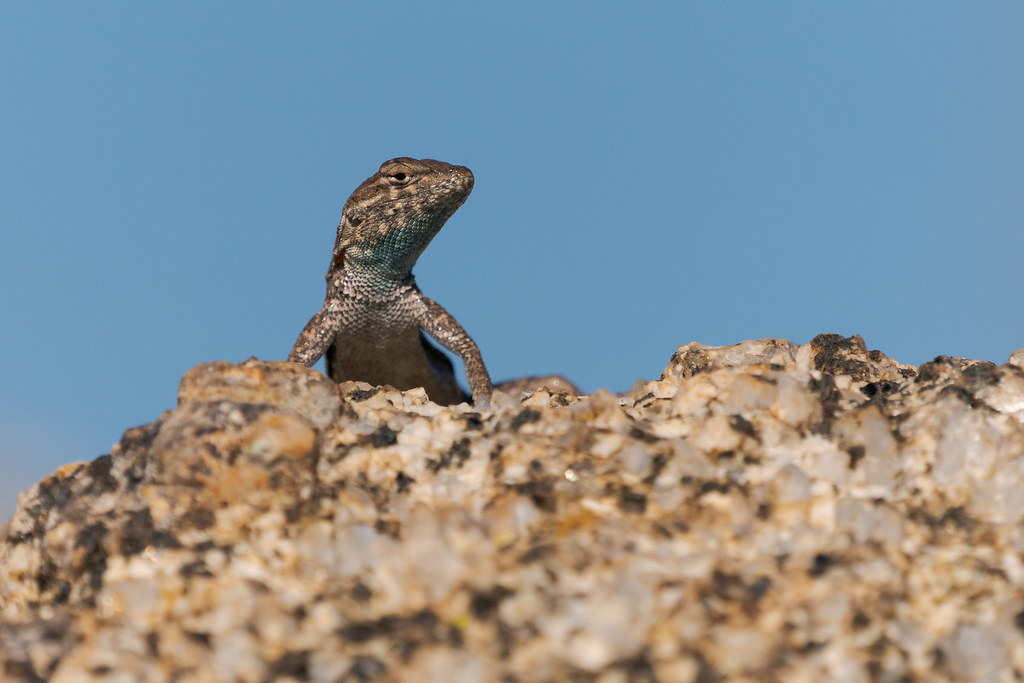
I was sitting below this little common side-blotched lizard, shooting up at it against a blue sky (below), when I realized if I moved the camera slightly I could shift the background to green courtesy of a massive saguaro standing behind it. There is green in the desert, not the ubiquitous saturated greens of the forests of the Northwest but a soft, muted green, always in the saguaros and palo verdes but on many more plants now that the summer monsoons have arrived.
Blue is easy to find in the skies of the desert but some lizards, especially the males, may have blue throats or sides or blue speckled throughout their scales. Blue too is the skin around the eyes of adult white-winged and mourning doves. All of these blues can be seen where I photographed this lizard at The Amphitheater in McDowell Sonoran Preserve, a rock formation on the Cholla Mountain Loop Trail that is one of my favorite places to hike.
Surprises
I researched Arizona as much as I could before deciding to move here and now that we’ve been here over four months I can say there haven’t been any major surprises. I was a little worried that the summer heat and inescapable sun would drive me crazy right away, the risk I thought was low but the consequences severe. I thought it more likely I might be sick of the heat by the end of the summer and would want to escape back to the mountains or coast of the Northwest for a vacation, but so far that hasn’t happened. We are probably past the hottest days although it will still be above 100 degrees for a while yet. I’ve been pleased to find I can hike even on the hottest days as long as I’m on the trails early and off before the real heat of the day. We’ll see how I feel about the heat in the long term but so far the air conditioning, a nice swimming pool, and the wonders of the Sonoran Desert have made it tolerable.
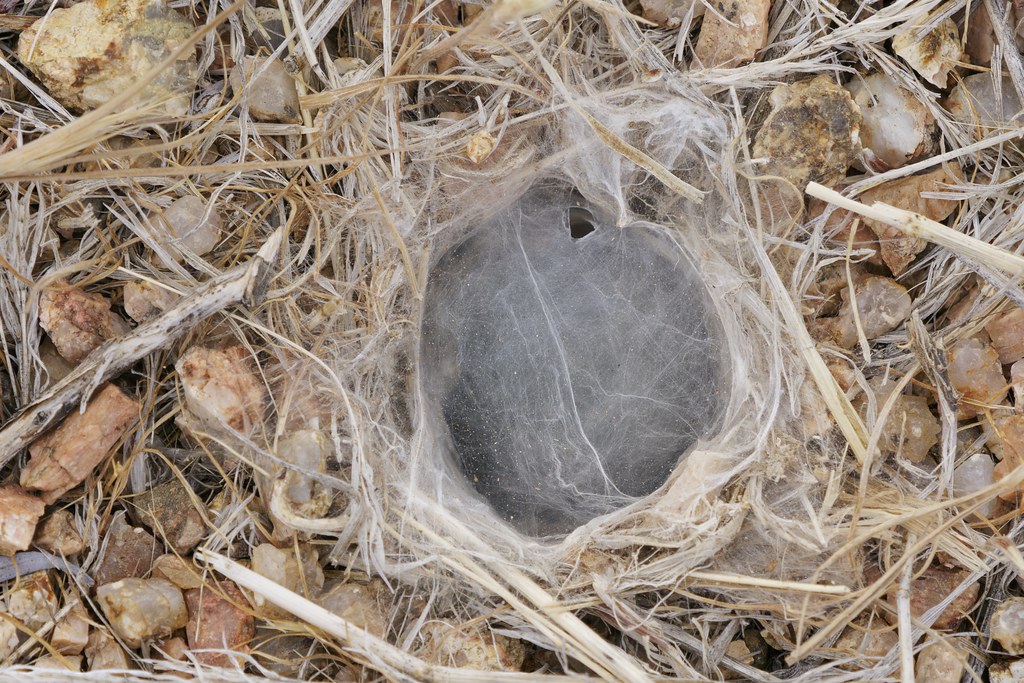
Speaking of surprises, I was hiking near Granite Mountain one day when I saw what at first seemed like outstretched fingers of a human hand retreating into the earth before I quickly realized it was a tarantula pulling its legs into its hole. We saw a tarantula during a week’s vacation in New Mexico years ago so I assumed they would be more visible but so far I’ve only seen the one. I think this may be a tarantula hole, I saw it on the Vaquero Trail but didn’t see its owner, but I’m far from certain as I still have much to learn about my new home.
The Valley of the Sun
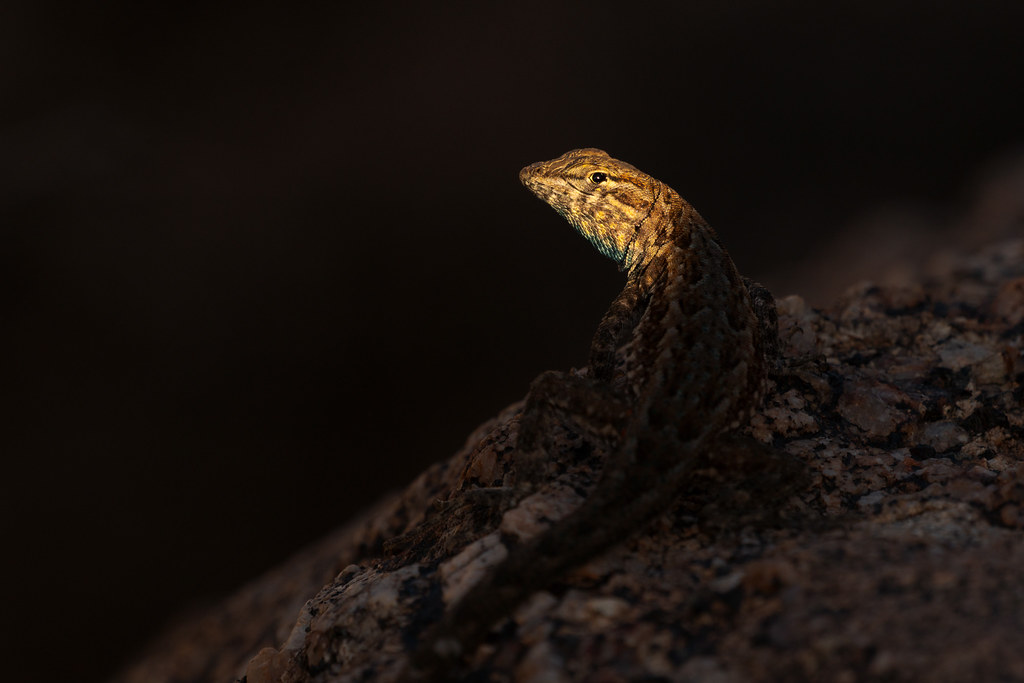
In the Valley of the Sun, when you get the first rays of light depends on when the rising sun clears any mountains to the east. This scene played out in miniature early one morning when I found this common side-blotched lizard completely in shadow until it turned its head into a shaft of light that had just cleared the rock behind it.
Seeing Red in the Desert
I knew even before setting foot in Arizona that my pictures in the desert would draw heavily from a palette of browns rather than the green of the Pacific Northwest. I didn’t know that there would occasionally b red in the desert too, such as the red racer, the house finch, and the northern cardinal. However, for a month or so at the end of spring and the start of summer red explodes across the desert in the fruit of the saguaro.
Here near The Amphitheater in McDowell Sonoran Preserve a ripe fruit bursts open, exposing the pulp and seeds inside. The fruit is chockfull of seeds, according to the National Park Service there are about 2000 seeds per fruit. Few will develop into a seedling and fewer into an adult saguaro in the harsh desert climate but its not for lack of trying. I noticed multiple birds eating the fruit but mostly it was white-winged doves, who apparently digest the seeds rather than passing them in their waste like some other birds. They end up with so much juice and pulp and seeds on their faces that I imagine some of the seeds will fall to the ground as they preen, so perhaps all is not lost.
As the fruit continues to ripen on the saguaro, even the outside turns red. The dried stalk above them is all that remains of the flowers that grew atop them, the ripened fruit results from flowers that were pollinated. Most of the fruit grows at the top of the saguaro or the ends of its arms but some grows on the sides like the one below that has been cleaned of most of its contents by the denizens of the desert, only a few of the tiny black seeds remain inside.