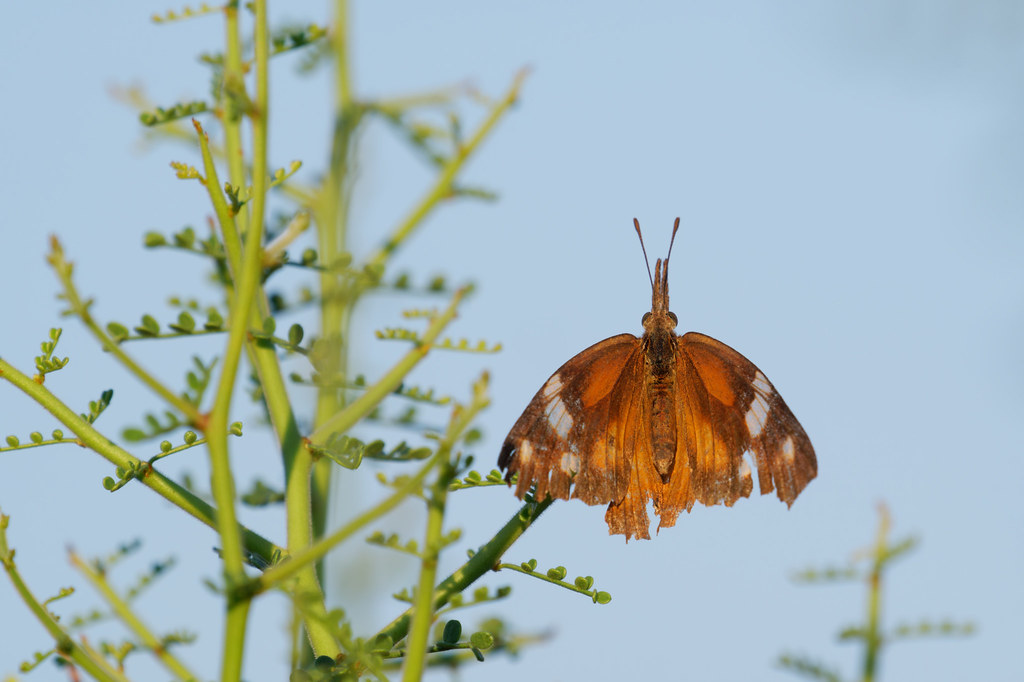
As the butterfly turned and spread its wings into the light of the rising sun, I could see how its wings resembled fallen leaves with uneven edges and transparent sections that mimic areas that have rotted away leaving only the veins. The disguise might be more effective in the forest than the desert where the leaves tend to be rather tiny.
Tag: Sonoran Desert
American Snout
Flickerfreude
One of my great joys this spring was to go to a local park on weekend evenings and watch a pair of gilded flickers raise their family in a nest near the top of an old saguaro. I’ve shared some of those pictures before and have more I haven’t sorted yet, but one of my favorites is the last one I took. Earlier in the weekend as I scouted for antelope squirrels lower in the park I heard a flicker calling out constantly and worried something had gone wrong and one of the adults was alarmed, but when I made my way to the nest I realized the last remaining youngster had found its full flicker voice and was putting it to good use.
It was as close to fledging as it could be, often hanging out of the nest hole and even leaning down occasionally to shoot out its long tongue (I’m presuming ants were climbing up the cactus as they are a favored food). It was happy enough to take feedings from its parents but after the sun set and I prepared to leave, I wondered if the Germans had a word for the feeling that as much as you had loved watching a flicker grow up, you hoped not to see it again. Not that I wouldn’t technically see it, just that I wouldn’t know I had, as I knew I wouldn’t be able to get back until the next weekend and something would have gone wrong for it not to have left the nest by then.
I took one last photo, though I had taken one just like it after the sun set the day before, and whispered let’s not meet here again. As I arrived the following weekend I was both happy and sad to walk up the trail and not hear the familiar voice, to see the nest hole emptied of a bird on the precipice of leaving the comfortable world it had known to join the fuller world that awaited, and hoped it would have a wonderful life.

A Little Red-Faced
First light on the Hawknest Trail revealed a young white-winged dove that was a little red-faced, courtesy of the saguaro fruit juice that stained its beak and the tip of its face. It was mid-July so there wasn’t much fruit left on the old giants but the plucky youngster seemed to have found some before perching on the ocotillo to preen its feathers. With its cleaning regimen complete followed by a few beak swipes on the ocotillo stem, it flew off to a nearby saguaro and chased off the adult that was feeding there.
Quiet For a Moment
In late July I had a quiet moment with our not-so-quiet state bird, the cactus wren. The sun had mostly dipped below the mountains as it posed for a moment before flying off with two others. More robin-sized than wren-sized, they don’t seem to cock their tails like their smaller cousins, but their personalities remind me of the ever-entertaining marsh wrens I watched in the Northwest. On recent hikes they’ve kept me company calling out from either side of the trail while mostly staying out of sight.
Barnacle
Rain, Finally Rain
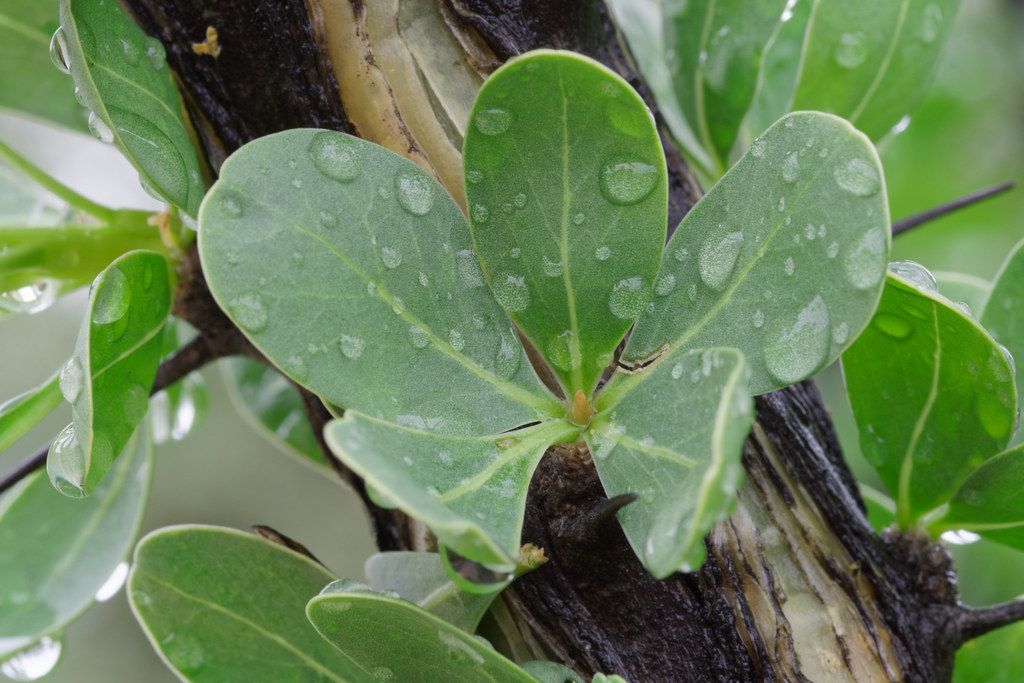
Thursday night a monsoon storm brought thunder and lightning and buckets of rain in a short period of time, while I prefer the Oregon rains that spread out a year’s worth of rainfall over hundreds of days rather than a few hours, I can’t complain as the desert desperately needs the water. Less intense thunderstorms arrived on Friday, since I was off work I was able to grab my macro lens to photograph a scene I had envisioned for a while but hadn’t been able to capture, large water drops collecting on the leaves of an ocotillo. The thunderstorms diminished as the weekend progressed but showers continued on and off through Sunday, giving me several days of joy out in the rain photographing plants around the yard.
The fun ended Sunday evening when the focusing unit of my Canon macro lens at long last gave up the ghost, I hoped it was a momentary glitch but sadly that does not appear to be the case. It was a few months shy of 22 years old as I bought it in November 1999 for $580, what fun we’ve had over the years! I have no idea what I’ll do for a replacement, modern lenses have a number of features I’d like that my old lens didn’t, but it’s the cameras that give me pause. Sony doesn’t have focus bracketing in their cameras but it would be so useful for the things I shoot I might add another system just to get it, but we’ll see.
The Ol’ Switcheroo
A male ladder-backed woodpecker clings to a dead tree on a cloudy morning in the Sonoran Desert, a little tribute to the overcast of the Northwest with a bird of the Southwest from someone lucky enough to have called both home. Not much later he and his mate pulled the ol’ switcheroo, when I wasn’t looking he flew off and she flew in but I didn’t notice the change at first. Taken in March of 2020, turned out to be my first sighting of the female, the male I had seen before.
You Should Have Called First!
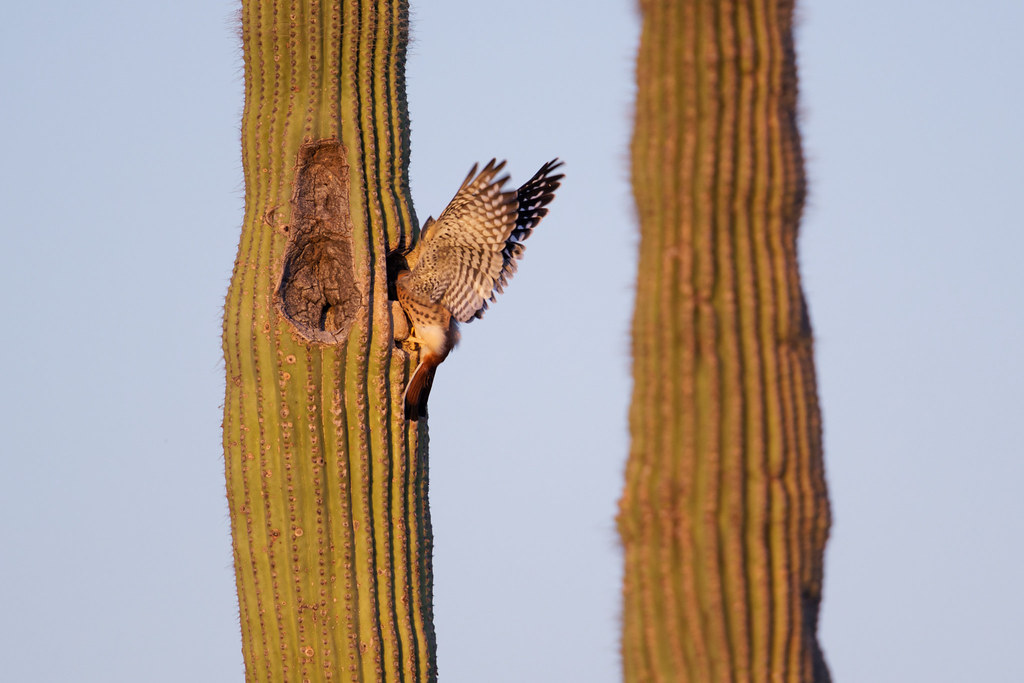
A male kestrel arrives at his nest in a saguaro to feed the last of his young that had not yet fledged but was surprised to find him sitting in the entrance hole. Strong winds blew as the sun was about to set but kestrels are agile fliers with a strong grip, so even though he had to fall backwards to avoid crashing into the youngster he was able to flare out his wings while grasping the cactus with his talons and maintain his purchase. He not only recovered with remarkable grace but soon leaned in and fed his hungry charge before flying off to look for the next meal.
I bet next time he calls first to let junior know he’s on his way.
Morning Surprise
At the start of May I got up early and went to a favorite trail I hadn’t been to in a while. I soon came across mule deer so close to the trail I could have photographed them with a wide angle lens, but it was rather dark yet so rather than risk startling them I continued on towards the scene I planned to photograph at sunrise.
Further on the dim light suddenly intensified and turned pink, not nearly as strongly as the time when I was visiting my favorite saguaro but I couldn’t figure out why it was happening at all. The sun was still below the mountains and there were no clouds I could see to reflect the light, but perhaps the mountains hid more than just the rising sun. I looked around for something to shoot and had to smile when I saw the family of deer were occasionally visible through the desert scrub. I was far enough away now to need a telephoto lens but I was pleased I could include Troon Mountain in the background, as somewhere betwixt us and the mountain sits my home.
I watched from afar as the deer drifted in and out of view until they disappeared for good. The pink light stayed but for a moment before turning yellow, then a sickly white, then dying away until the sun at last cleared the hills. I tarried too long with the deer to have any chance of reaching my original destination so I went a little further down the trail to my favorite rock formation and soaked in the moment when the light suddenly floods across the desert.
It’s a little embarrassing that after a few years in the desert I can still struggle so to predict the sunlight, my excuse that I love rainy days and spent decades in an area with a plethora of them only goes so far, but it’s alright if I never get much better.
Sometimes it’s nice to be surprised.