On the Lookout

A close-up view of a juvenile red-tailed hawk looking directly at me at Ridgefield National Wildlife Refuge

There was a period of time at Ridgefield where I came across what I called Hawk-on-a-Stick, juvenile red-tailed hawks perched on signs around the large meadow that would allow me to view them from close range. They didn’t often look directly look at me, which was a good thing, as it meant they were comfortable with me and on the lookout either for voles in the meadow or older redtails that might chase them away.

Penultimate

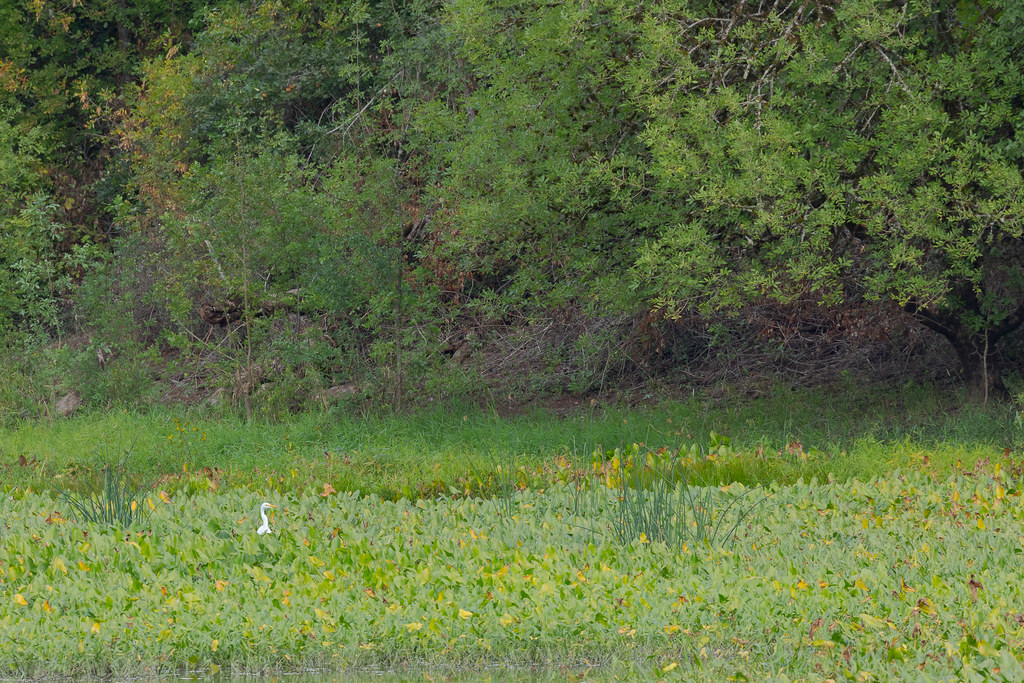
A great egret stands in a wetland with trees in the background on the Oaks to Wetlands Trail at Ridgefield National Wildlife Unit in Washington

This environmental portrait of a great egret on the Oaks to Wetlands Trail is one of my favorites from my many visits to Ridgefield National Wildlife Refuge, the second-to-last picture on my second-to-last visit. I didn’t know it was going to be my penultimate visit, I arrived in innocence, unaware in a month a job search would begin that ended in a move far away. The trail is in the Carty Unit, a part of the refuge I didn’t visit very often as I so loved the auto tour in the River S Unit, I almost didn’t go since I forgot my tripod which made pictures in the dark of the forest difficult (I’d forget it on my last visit too). I’m glad I did since it turned out to be my last hike on this trail.

It takes on extra meaning for me now as in both picture and memory I look at my beloved refuge from a distance. Thankfully the look evokes fondness rather than regret, full of thankfulness for my many visits rather than sadness at their end. I knew after moving here the biggest test of how happy I was would be if editing old pictures brought tears rather than smiles, so I’m pleased to report that I’m both grateful for my two decades in the Pacific Northwest and thrilled about exploring the American Southwest.

The wetlands behind me, the desert before, my life begins anew.

Whiteout

A juvenile red-tailed hawk sits in a meadow in heavy fog at Ridgefield National Wildlife Refuge in Washington

A juvenile red-tailed hawk sits in a meadow in heavy fog at Ridgefield National Wildlife Refuge in Washington. The telephoto lens is exaggerating the whiteout effect as it is picking up all the fog between my car and the distant hawk but it illustrates the point: for an animal that might normally hunt by soaring high above the meadow and looking for voles below, a thick fog changes the dynamic between predator and prey.

An American bittern stands on a shoreline in heavy fog at Ridgefield National Wildlife Refuge in Washington

The fog didn’t have such an impact on an American bittern stalking the shoreline that winter morning as it looked and listened for small creatures both on the land and in the water. Sometimes it hunted by slowly walking up and down the shoreline, sometimes by standing still, but in either case the thick fog would not obscure the prey such a short distance away.

An American bittern looking into the marsh in heavy fog at Ridgefield National Wildlife Refuge in Washington

Dove Tales

A white-winged dove perches in a tree near sunset

I’ve taken many pictures of white-winged doves out on the trails but this one is from our backyard as the sun sank low in the sky. If I could only see them one place my preference would be to see them in the wild, but I’m thankful I get to see them at home as well. We get four dove species in our yard (five if you include pigeons), not just white-wings but mourning doves, Eurasian collared-doves (a pair), and on rare occasion a single Inca dove. Seeing them together I can get a feel for their different sizes, as well as see the young after they’ve fledged (none nest in our yard). Mostly though I just enjoy seeing and listening to them every day.

We are not the only ones mesmerized by the doves. All three cats are currently watching out the sliding glass door into the backyard. Trixie in particular loves watching them, a mourning dove has been brave enough to come close to the house and Trixie starts chirping like Emma used to, her tail whipping back and forth furiously. I wish Emma had lived long enough to make it to Arizona with us, she was our most devoted bird-watcher.

Learning to See in the Desert

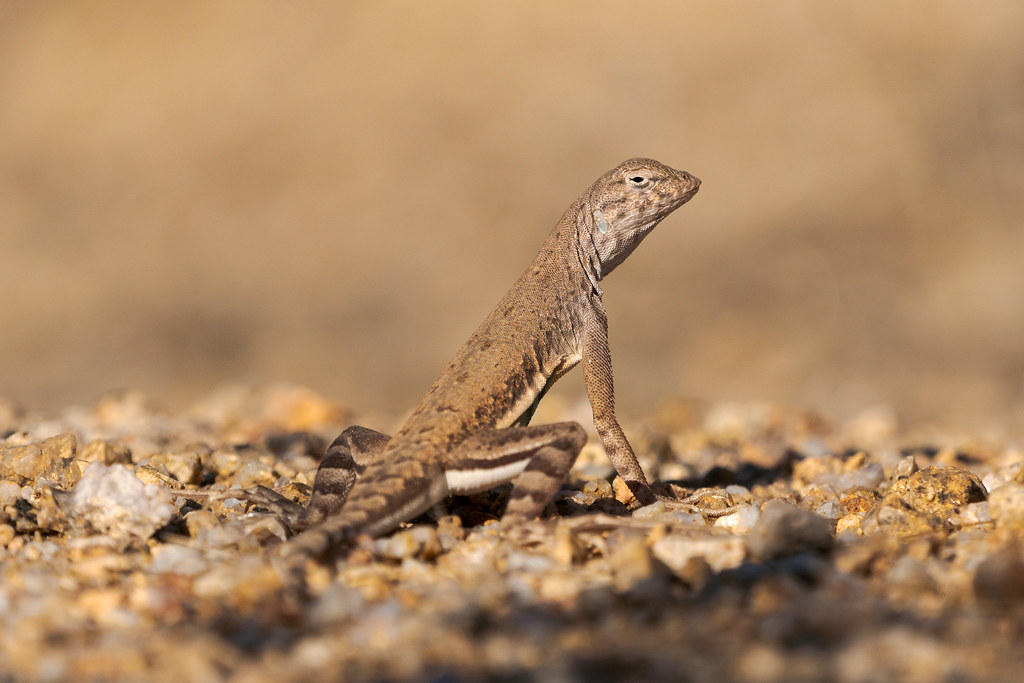
A zebra-tailed desert on the ground near The Amphitheater in McDowell Sonoran Preserve

Hiking in the desert feels both normal and unfamiliar. I know so much more about this unique environment than when we moved here but I have so much more to learn. As I hike the trails I’m well aware that the animals are living their lives perhaps not far from where I’m walking but even for those within my sight I wonder how many I actually see. I’m still developing eyes for the desert.

I am making progress, each hike is an opportunity both to look and to see. While taking a water break near the Amphitheater I spotted what I thought might be a lizard in the scrub and walked closer with my camera, almost turning around on a couple of occasions when I became convinced it must be a stick or bit of dried cactus. Thankfully I kept going and discovered this lovely zebra-tailed lizard. It happened again this morning, out on the Rustler Trail I thought I saw another zebra-tail in the middle of the trail so I slowed my approach, but repeatedly doubted myself until I was close enough to remove all doubt.

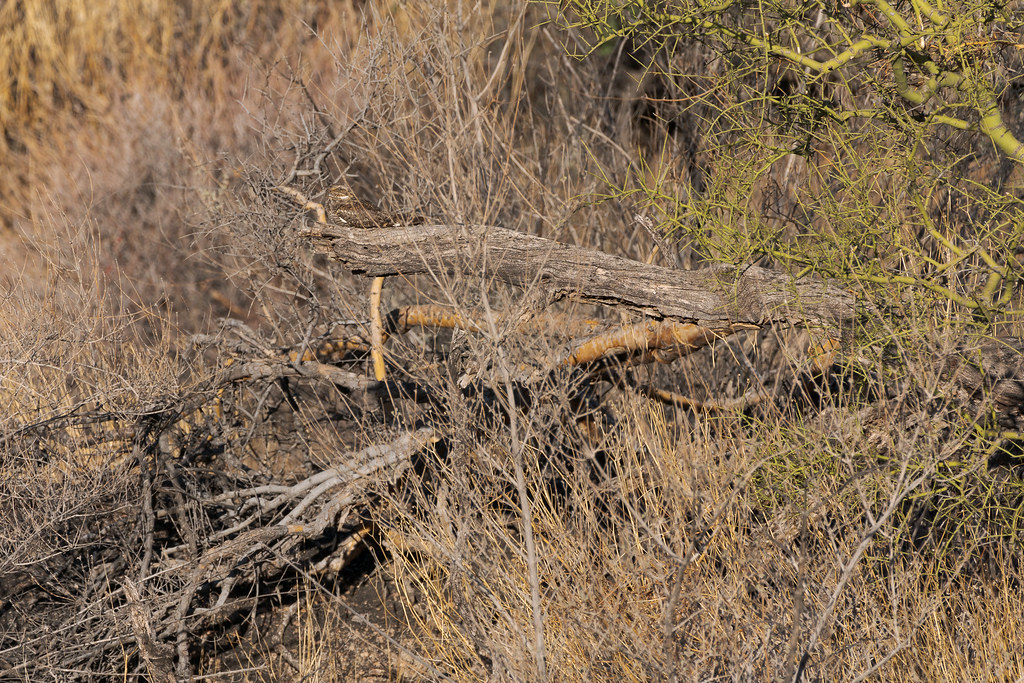
Sometimes though I think I could live here for decades and still not see what lies before me. The only reason I saw the lesser nighthawk below was that I stopped for a water break and it flew towards a nearby rock before seeing me and settling down further off on this fallen tree, hidden in plain sight. I’ve seen them flying low over the desert numerous times but I now wonder how many I’ve passed that were settled in for the morning.

A lesser nighthawk is barely visible as it rests on a fallen tree in McDowell Sonoran Preserve

Look How Far the Light Came

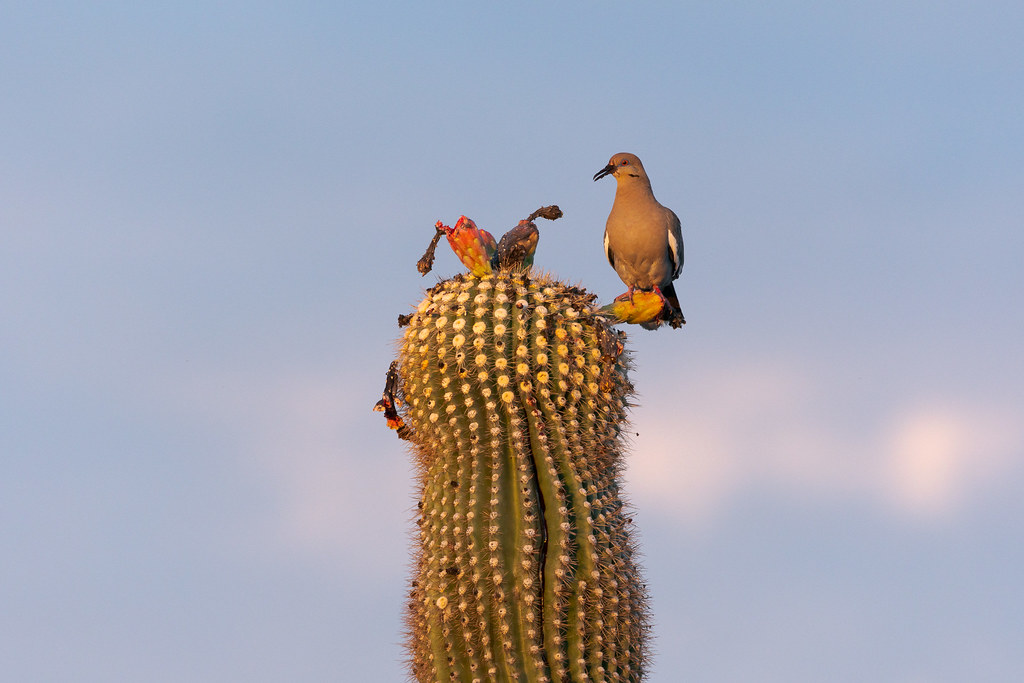
A white-winged dove straddles two pieces of fruit on a saguaro cactus on the Latigo Trail in McDowell Sonoran Preserve in Scottsdale, Arizona

Look how far the light came
To paint you
This way
Bruce Cockburn “Look How Far”

It was 5:30 a.m. on July 4th as I walked along the Latigo Trail, most of the desert still in darkness. I stopped when the rising sun fell upon this tall saguaro and the white-winged dove feeding on its fruit. Minutes later the clouds in the east obscured the sun and its rays no longer fell upon the clouds in the west nor the cactus before me, save for the tip top where the dove stood. A moment later all was in shadow. I was struck by how much had to occur for me to be standing there, to catch the light that traveled many millions of miles in mere minutes, to behold its beauty and bear witness to its passing.

Red, White, and Blue

A white-winged dove, its face covered in the red juice of saguaro fruit, perches atop a saguaro illuminated by the rising sun by the Latigo Trail in McDowell Sonoran Preserve

I spent the morning of the 4th of July amidst a double splendor of red, white, and blue. The rays of the rising sun illuminated the top of the cactus amidst blue skies, white clouds, and the ripened red fruit of the saguaro. Eating that fruit was a white-winged dove, with the white wing patches for which it is named, a blue eye ring, and red eyes. And on this morning, as with all the other doves since the fruit ripened, a face covered with the red juice and pulp of the saguaro’s fruit, as they stick their entire heads in to get every last bit of this short-lived bounty of food.

A Cactus Home

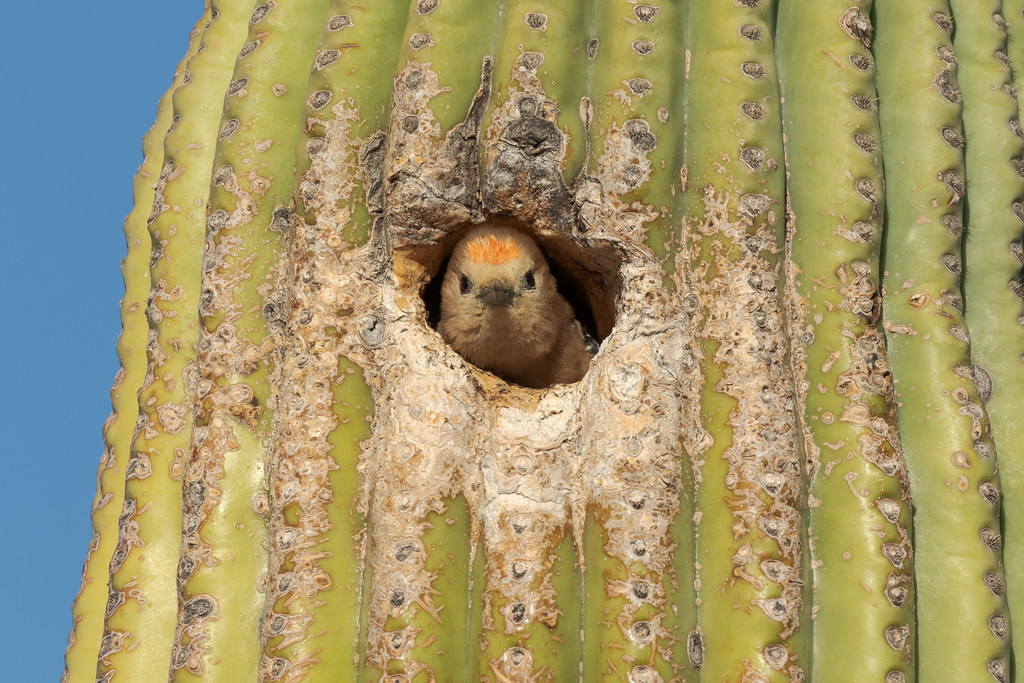
A Cactus Home

I hoped for this picture since I first learned that woodpeckers like the Gila woodpecker make their nests in cavities they drill into saguaros. I wasn’t sure how frequent a sight it would be until we moved here and thankfully I had the chance to watch a couple of different Gila woodpecker families this spring. This male and its mate made their hole facing the rising sun but it was a bit too long of a hike to get there right at sunrise. But I spent several early mornings watching in amazement as they brought an endless stream of insects and spiders to the nest.

White-Winged Love

A white-winged dove perches atop a saguaro cactus, it's face covered in pollen

In case you were wondering what a white-winged dove looks like when it isn’t plunged headlong into a saguaro blossom, here you can see most of the bird apart from its feet. The golden color to the entire front of its head is from pollen, making readily apparent how the birds pollinate the saguaros as they stick their heads in the flowers from one cactus to the next. Much to my delight white-wings are one of the most common birds in our backyard so I get to see them every day of the week.