The Snail Pace

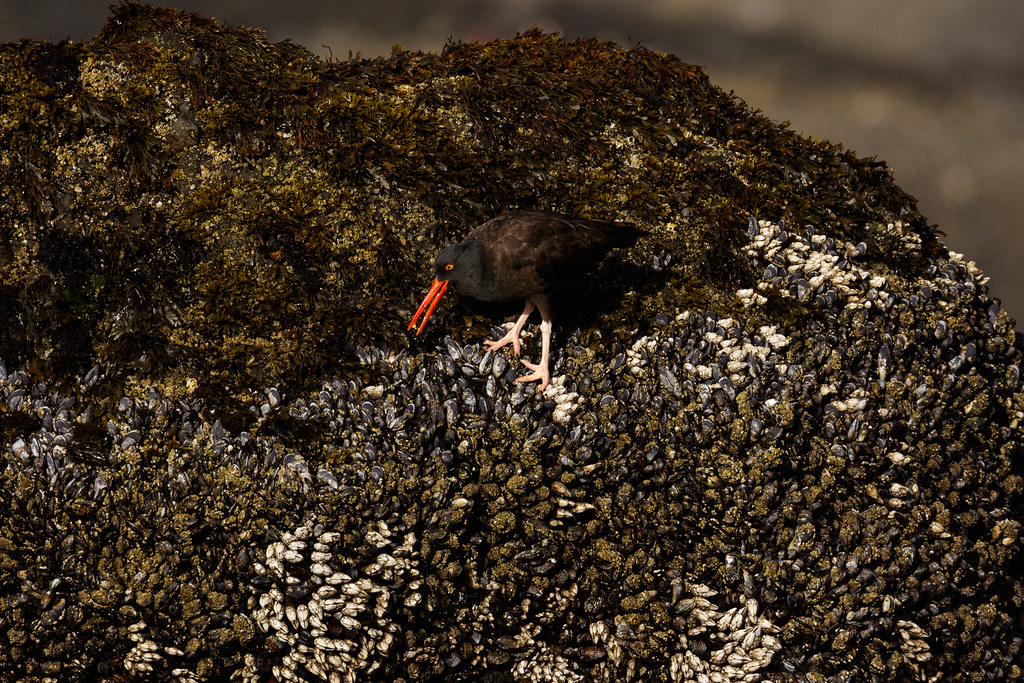
A black oystercatcher swallows the soft part of a snail it has extracted from its shell at Yaquina Head Outstanding Natural Area in Newport, Oregon

Life is precarious in tide pools. Mussels and barnacles that live too low on the rock surface are within reach of predatory starfish. Those too high are at risk of drying out while they wait for the rising tide. And in this case, the high spots also had just enough purchase for a black oystercatcher to walk along their perimeter, feeding as it went. But its target on this day was not the mussels and barnacles but the snails that feed on the algae on their shells, here it is about to swallow the soft part of a snail it has extracted from its shell.

The oppressive summer heat might be the biggest obstacle I had to overcome to be willing to move to the desert, but not far behind was saying goodbye to the coast (and in California, the nearby wetlands). I was rather taken with tide pools and the coast in general on visits to the redwoods in California and the rain forests in Washington and decided to make a concerted effort to visit the coast more often, which is why I was at the Oregon coast on this day in early October. A few weeks later I’d find out my team was getting laid off and thus started the process that would take me from the Northwest.

I changed the lock screen on my phone to this picture of a harbor seal as soon as moving to Arizona became a possibility, before it even became a strong possibility, to force myself to think repeatedly about whether I could really give up the coast. I decided I wasn’t ready to say goodbye to the coast, and never would be, but I was ready to say hello to the desert. And to the desert I go.

To California

A California scrub-jay perches on a grape vine in a backyard in Portland, Oregon

I photographed this California scrub-jay in our backyard in 2005, back when it was known as a western scrub-jay. The species was split into two in 2016, the California is who you’ll usually see in Oregon. Emma was particularly fond of the large, gregarious birds like jays, crows, and flickers, so if she was on watch I always knew when one landed in our backyard.

A Christmas Tradition Broken

A juvenile red-tailed hawk looks down while perched on a blackberry vine at Rest Lake at Ridgefield National Wildlife Refuge

I normally go to Ridgefield National Wildlife Refuge on Christmas morning, as I don’t have kids and usually don’t travel to see family. If it’s pouring rain I might have the refuge to myself, or nearly so, and it’s a contemplative time until mid-morning when the crowds show up. But this Christmas brought ice that kept me from going up, as it would not just be risky to drive there but they often close the auto tour entirely when the roads are bad. But I can at least post a picture from Ridgefield, a juvenile red-tailed hawk in February 2008, listening for breakfast from its perch on a blackberry vine. It’s the juvenile redtails (that don’t yet have their red tails) that hang out close to the road and allow the tight close ups of some of my other pictures, although I saw them like this a lot more back then than now.

Things Are Not Always As They Appear

A western gull holds a dead red rock crab in its beak on Cobble Beach at Yaquina Head Outstanding Natural Area in Newport, Oregon

It might look like this western gull has just caught a red rock crab but the crab was long dead. No flesh yet remained, yet the shell and legs were still held together by a thin material. Usually the dead crabs are scattered in pieces around the beach so I was surprised to see the crab of a piece, and perhaps the gull was too, as it quickly dropped it when it realized there was nothing left to eat.

The Rippers

A close-up view of a juvenile red-tailed hawk

At Ridgefield, many creatures prey on the Townsend’s voles that live in the meadows and marshes. Some predators like herons, bitterns, egrets, and coyotes swallow the voles whole. Others like this red-tailed hawk (above) and rough-legged hawk (below) have beaks designed to let them rip apart their prey and eat only the parts they desire. If you watch them on a fresh kill you’ll see them pull out parts like intestines they don’t want and cast them aside so they can get to the muscles and organs they prefer. It’s a bit gruesome and I always feel for the little voles but at least they die quickly, this is how these beautiful but deadly birds have evolved to survive.

I photographed both hawks on the same day, and in nearly the same spot, the rough-leg right as the sun was cresting the hill and the red-tail over an hour later in direct sunlight.

A close-up view of a rough-legged hawk

Fall Grouse

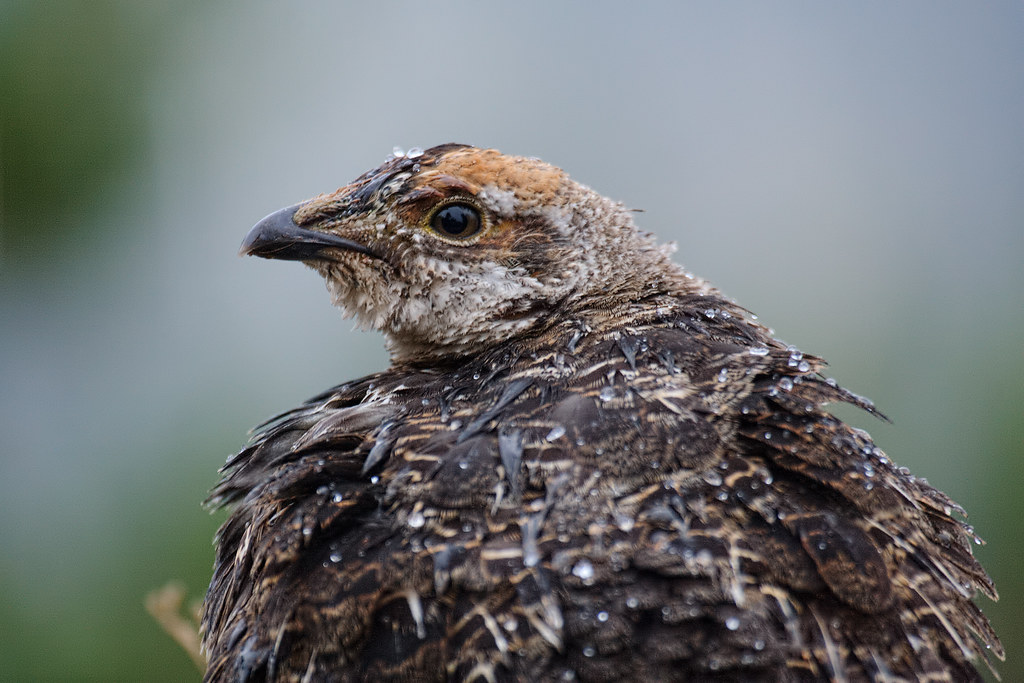
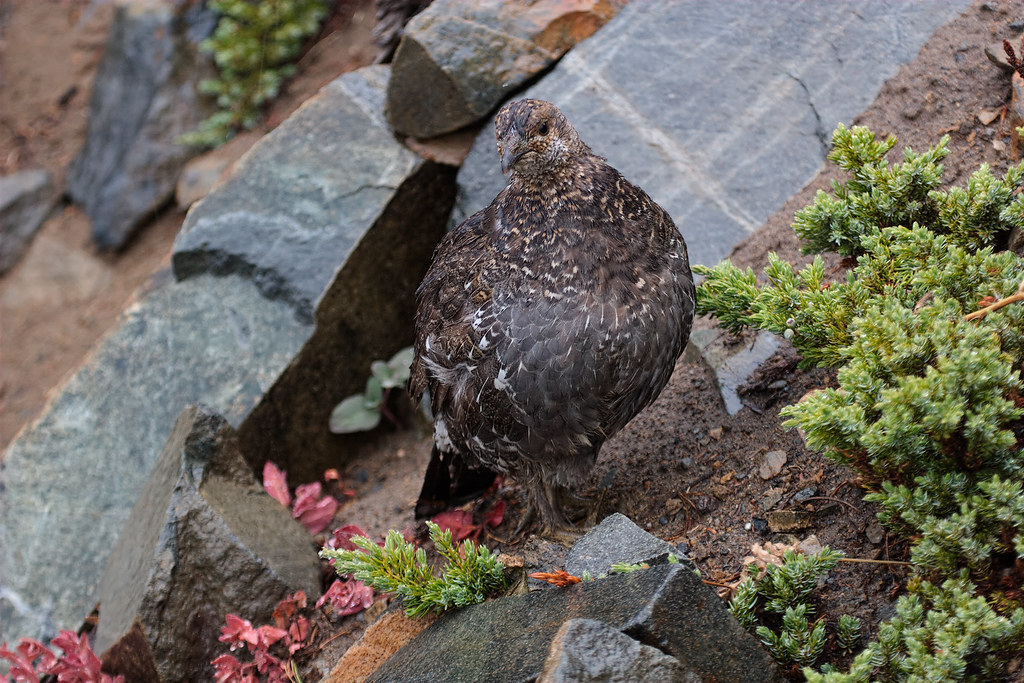
A sooty grouse on a rainy fall day on the Sourdough Ridge Trail in Mount Rainier National Park

I had just arrived at the Sunrise area of Mount Rainier National Park and was taking a quick exploratory hike on the Sourdough Ridge Trail late in the day, as I had never been to that part of the park before. It was cold and raining but I found first a hoary marmot and then a group of sooty grouse on the way back to the car. My hands were soaked and cold so I was fumbling with the camera, but I watched them for as long as I could stand before continuing back to the car.