The Slow Reveal

A male red-winged blackbird sings at sunrise

Before returning in December, my previous visit to Ridgefield had been in January not long after Emma died, so at first my heart wasn’t in it. But after spending a long while watching a male red-winged blackbird at South Quigley Lake, I began to enjoy myself and stayed longer than I had initially intended. So I was looking forward to seeing them again this time but I didn’t see a single one in my first few visits. On the fourth trip I heard them but didn’t see them. I did finally see one on my fifth visit but didn’t get any pictures until the seventh, when this lovely male sang for me as the sun rose behind us.

The Deluge

A male northern shoveler feeds during a heavy downpour at Long Lake in Ridgefield National Wildlife Refuge in Ridgefield, Washington on December 23, 2015. Original: _L1A7885.CR2

The rain here in the Northwest is frequent during the cooler months but it’s usually more drizzle than downpour, yet it has absolutely poured at times this month. I love photographing in the rain and am always a little disappointed when there’s a good strong shower but nothing to shoot. Fortunately I was already watching a group of shovelers feeding in Long Lake when a sudden deluge of large raindrops pounded the surface of the water. The ducks of course are built for wet weather and fed unabated, and soon enough the rain softened in intensity.

📷: Canon 7D II | Canon 500mm f/4L IS USM + 1.4x III
🗓️: December 23, 2015

Surviving and Not Surviving into the New Year

Surviving into the New Year

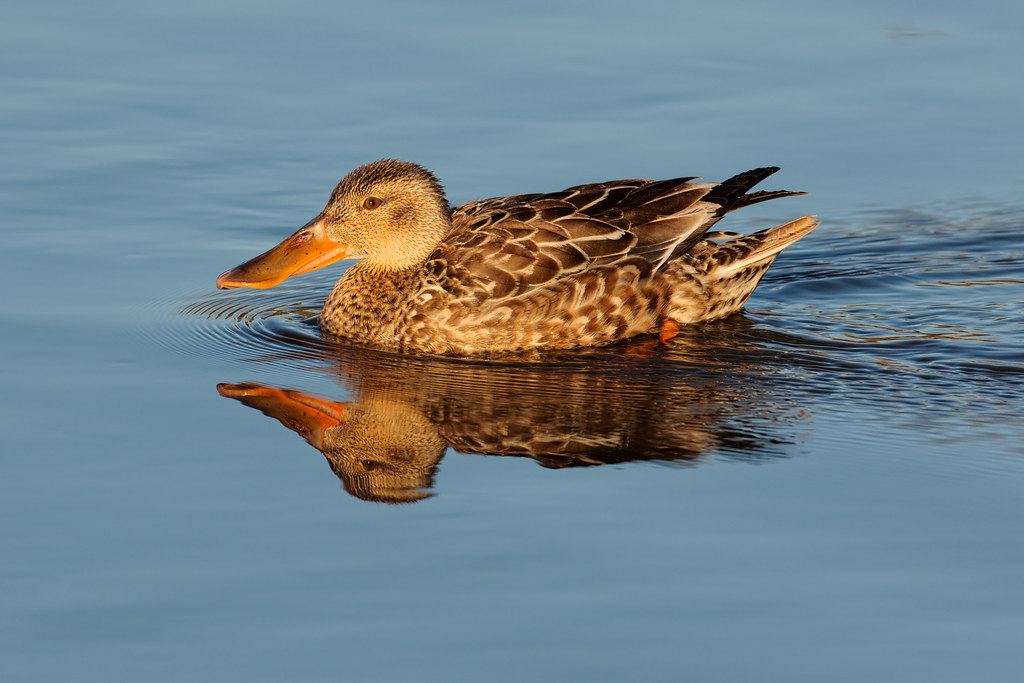
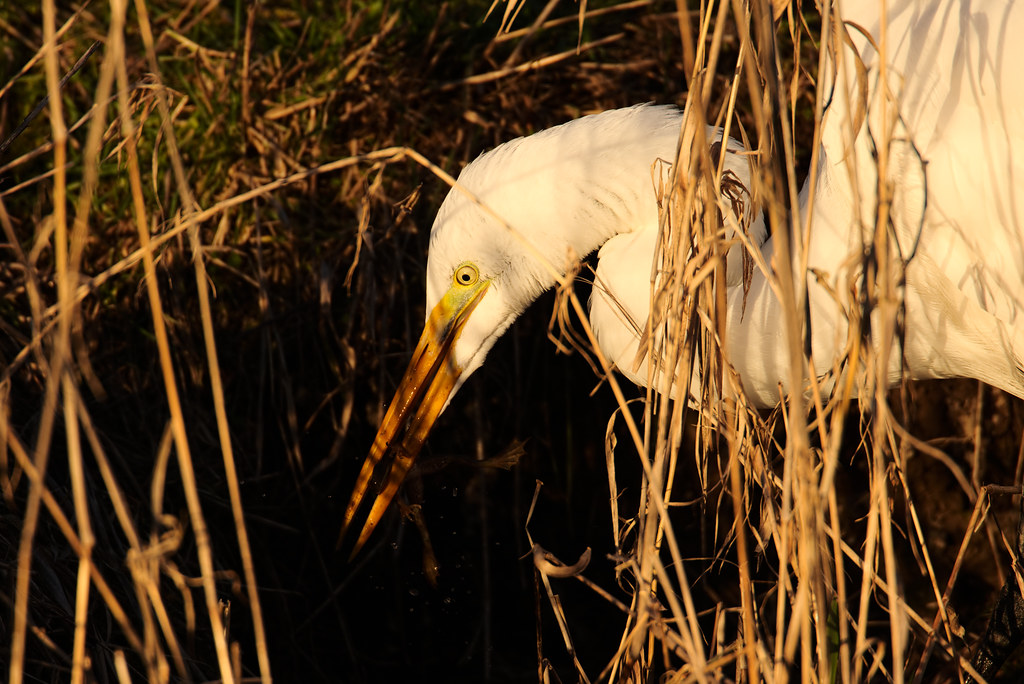
A shoveler swims past late in the day on New Year’s Eve of 2014, meaning she likely survived into the new year. The little bullfrog below almost made it into the new year but an egret plucked it from the shadows shortly before sunset. The bullfrogs move pretty slowly in the cold of winter and if spotted are easy pickings for the egrets and herons and bitterns that patrol these shores.

Not Surviving into the New Year

Ring-necked Thieves

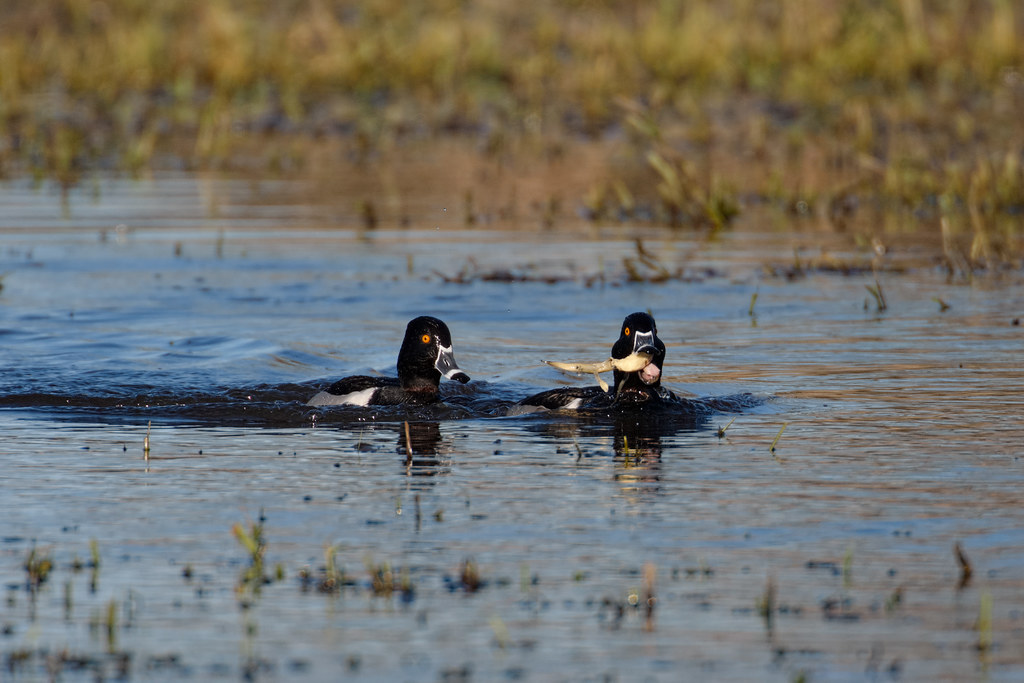
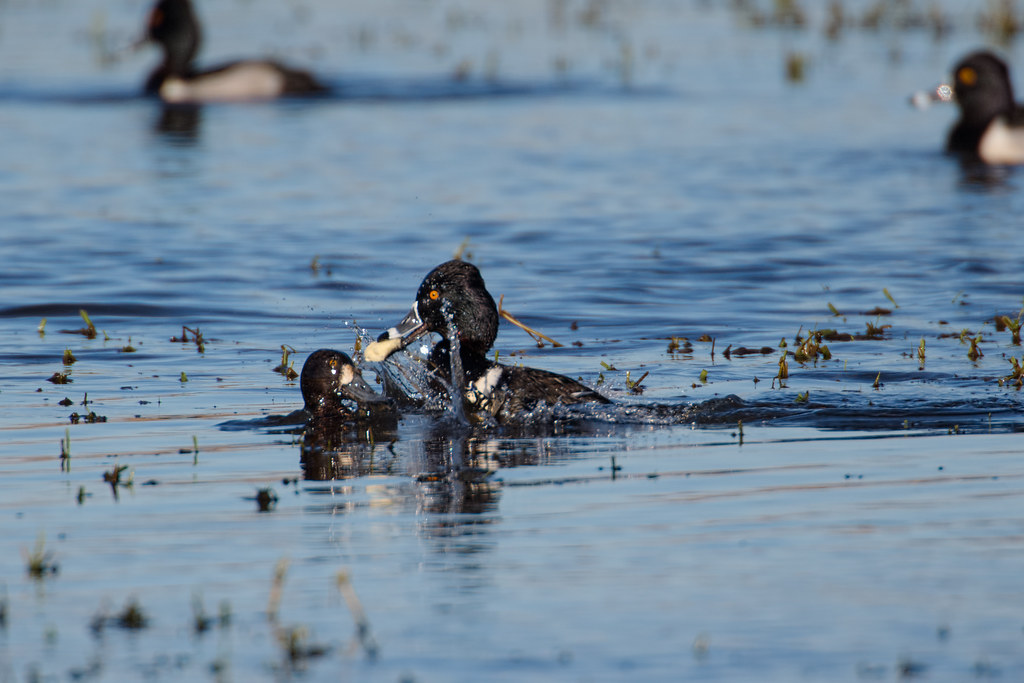
One ring-necked duck chases another to try and steal his food

Sometimes animal behavior seems all too familiar to our own.

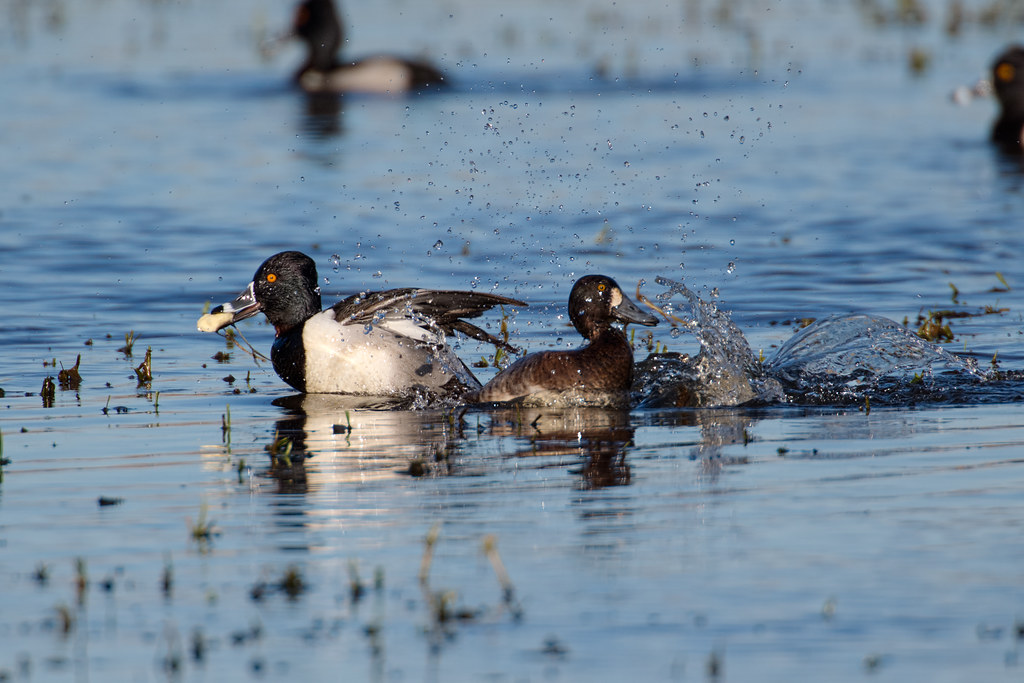
A small flock of ring-necked ducks was diving under the shallow waters of Bull Lake to feed, sometimes bringing up what I’m guessing is the root of an aquatic plant. Whatever it was, the ducks were very fond of it, and the one that surfaced with it would swim away from the others while trying to quickly eat it, all while any nearby ducks would try to swim over and steal it and eat it for themselves. I wasn’t sure which of these two males actually surfaced with the plant but the chase was on.

While in a mad dash to escape with his food, the ring-neck swam directly over a lesser scaup as she was surfacing, leaving her rather startled but none the worse for wear. He held onto his prize and was able to eat it at last.

Whoops!

Collision Course

Open Water

A flock of coots swims in a tight pack

Coots often hang out in large groups and when it gets cold enough to freeze the ponds at Ridgefield, such as this cold New Year’s Eve morning, the constant movement of the flock helps keep part of the pond from freezing. This not only benefits them, as they dive under the water both to feed and to avoid hunting eagles, but other waterfowl as well, such as the bufflehead who would join them the following morning.