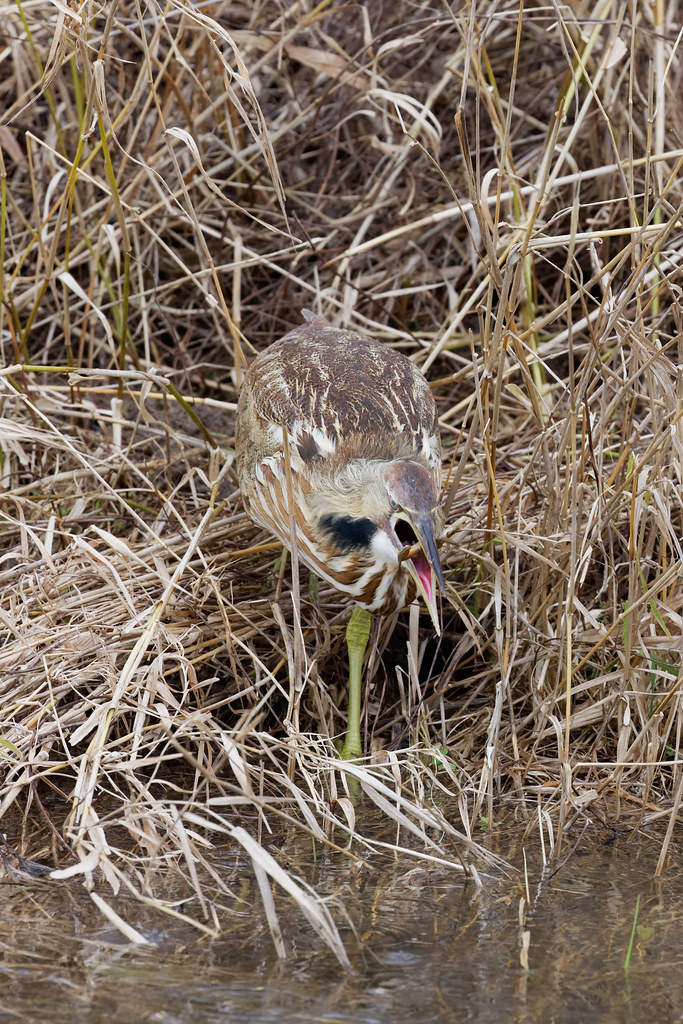
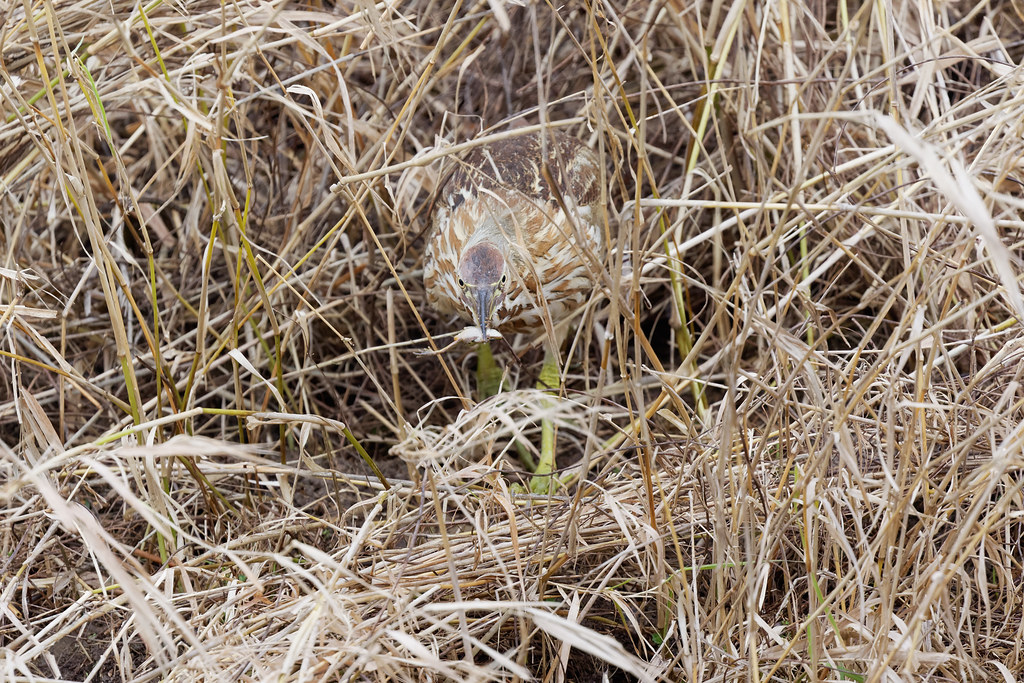
They say pictures never lie but they can certainly give the wrong impression. This American bittern, swallowing a treefrog it just caught, caught it further away from the water but came down to the water, dunked it, and swallowed it. As adults treefrogs often live near water but spend most of their time on land (and more often near the ground rather than in trees). The bittern has covered both its eyes with a nictitating membrane to protect them as it flips the frog down towards its throat.
Category: Birds
Your Treefrog, Sir
Shake It Off
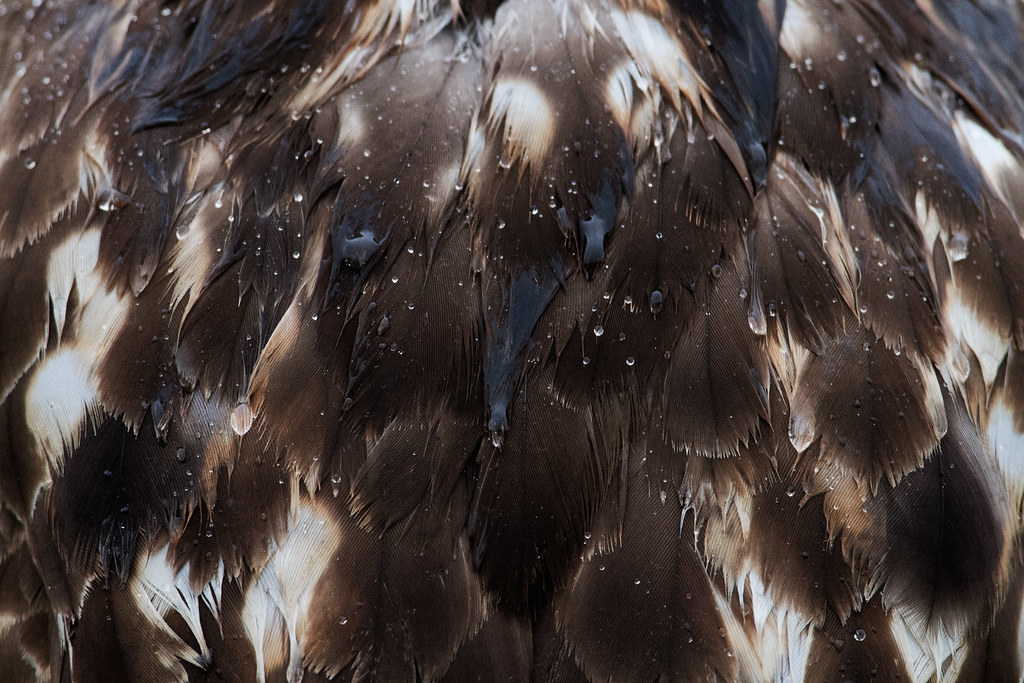
Water drops coat the back of a sooty grouse on a rainy afternoon, but it has shaken most of the water from its head. I wish Canon would build teleconverters into all of its telephoto lenses like they did with their 200-400mm lens, as it would be very helpful on days like this. I was photographing multiple grouse who were moving all around me as I sat on the trail, sometimes walking right up to me as they fed, but I was also keeping my eye on a marmot that was feeding nearby. I would have preferred to switch my teleconverter in and out as my subjects moved about, but given the heavy rain I was hesitant to take the lens off the camera.
It Rains Sometimes Here in the Northwest
It rains fairly often during winter here in the Pacific Northwest but it is often a gentle, misty rain and hard to convey in images. On this January afternoon, however, great big buckets of rain started pouring from the sky so I took the opportunity to show how predators like this egret, if they want to eat, have to hunt no matter the weather. If you’re wondering how the egret fared under such conditions, this happened about 10 minutes later.
I was playing off the shutter speed (to freeze the rain) with the depth of field (to keep as much rain in focus as possible), but I wish I could have had more depth of field. Hopefully it still conveys a sense of how hard it was raining.
Surprise in the Dogwood
We don’t get a large variety of birds to our urban backyard and to make matters worse I can’t easily put a chair by the window in my office that looks into the backyard. So I typically miss out on many seasonal visitors but on this rainy winter day I moved the cat tree out of the way and stuck my telephoto lens out of the window to see what was visiting our feeders. I was quite surprised when this Townsend’s warbler flitted into the dogwood, didn’t have much time to get the picture (it’s a bit out of focus and not well composed) but what a lovely little creature he was.
Puffball
No Shelter From the Rain
A downpour on Christmas morning left this young red-tailed hawk, sitting on a signpost beside the auto tour, drenched from head to toe with water drops beading up on the feathers on its back. The heavy rain and the holiday morning also meant that I had the refuge pretty much to myself and I was able to observe this tolerant hawk at my leisure without having to worry about blocking the road.
Dry Feathers
A very similar picture to another female flicker photo (that one with wet feathers), taken a couple of weeks later. There was a family of flickers that used to visit our suet feeder but I haven’t noticed them as much lately. Maybe I’ve just missed them, I lost my early warning system when our birdwatcher-in-residence died early this year.
Suet for Starlings
We used to get a lot of starlings coming to our suet feeder, and especially in the spring when they were raising young, they could go through the suet rather quickly. Sometimes I’d still put the suet out regardless as Emma loved watching them and listening to the racket they made. Not sure why but I rarely see starlings at our feeder these days.
Backside
One benefit to earning an animal’s trust is that you can often watch it for a long period of time. The downside is that it often has its back to you as it doesn’t consider you a threat. I had been watching this bittern hunt on the far bank for over an hour when it swam over and sat down right in front of me. It turned around to scan the water and I loved the geometry formed by its body and beak, its two round eyes sticking out from the side of its head.