Water

A great egret eats an American bullfrog in the rain at Ridgefield National Wildlife Refuge

In 2001 I bought what at the time was my most expensive lens, Canon’s 100-400mm lens. Since then it’s gone with me on every hike and nearly every trip and been one of my most treasured lenses. However the image stabilization system needs repair but I haven’t sent it in as I was hesitant to spend much money on a lens that could benefit from a modern re-design.

To my great delight, Canon finally brought out a new 100-400 lens and I pre-ordered the day of the announcement. It arrived on Friday so Saturday morning I opened it up and took it to my favorite refuge to try it out. One of the nice new features is that the lens has some weatherproofing, which I got to test with my very first pictures when I encountered this egret in the pouring rain. The egret was on the passenger’s side of the car so I slid over, stuck the lens out the window into the rain, and had just got the exposure and focus set when the egret struck into the water, pulling out this small bullfrog.

I meant to frame a little looser but in my haste to even get the shot I didn’t keep the camera quite level, so I rotated and cropped in post. Still I was pleased that with the zoom I was able to pull back and show a bit of the world these animals live in. The egret with its long featherless legs is built to wade in shallow water like this, able to hunt along the water’s edge, looking for frogs and fish in the water and frogs and voles on the land.

I’ve always loved photographing in the rain, especially to show how animals still have to go out into the rain to live their lives, and I’m thankful my favorite hiking lens now can as well.
Cold Confusion

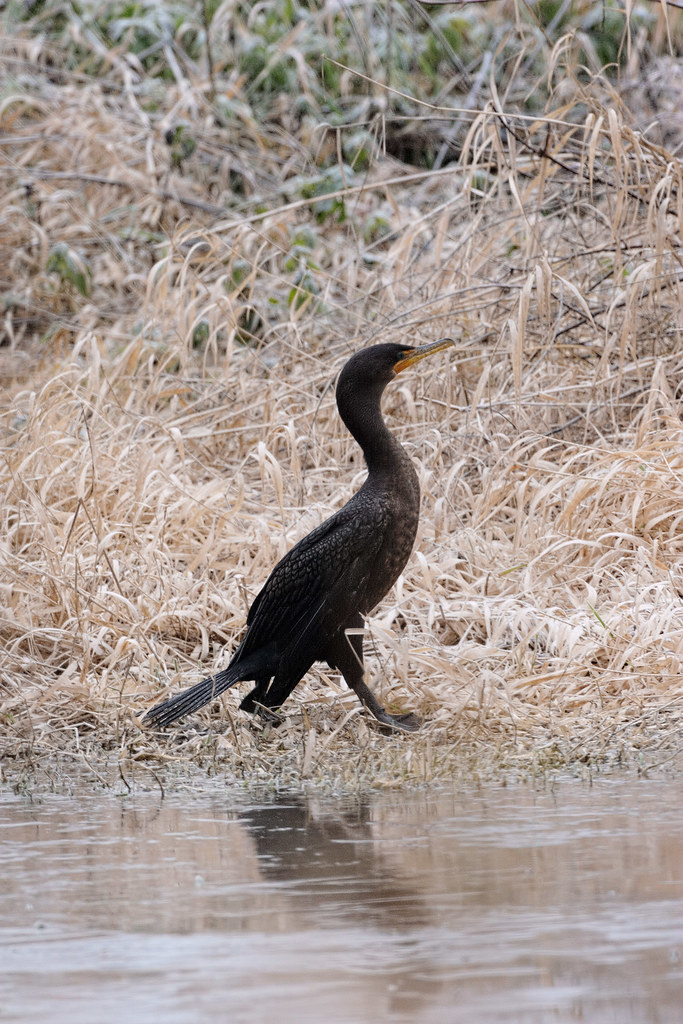
A double-crested cormorant walks beside a frozen Bower Slough

I wasn’t sure what I was seeing when I first spotted a dark form walking along the opposite shore on a cold winter morning. It took me a moment to recognize it as a double-crested cormorant as while it’s a bird I’ve seen many times, it’s always been flying or swimming, not walking. I wonder if it was as confused as I was, as we had a rare day cold enough to freeze the water of the slough, icing over its favorite fishing hole.

The Happy Scaup

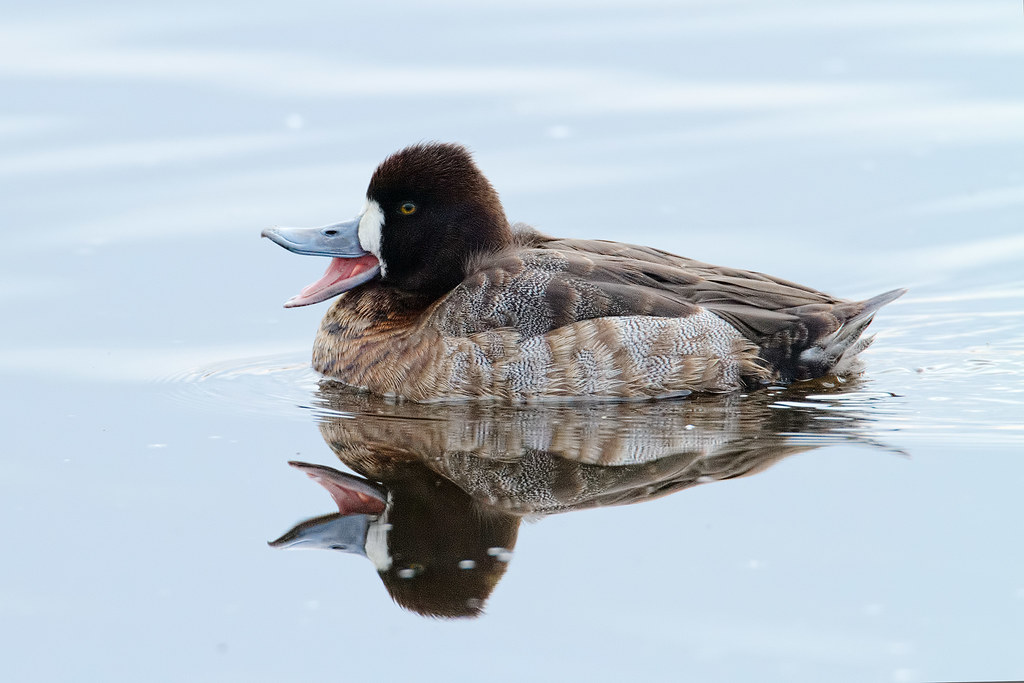
A female lesser scaup yawns as she swims across Horse Lake

Over the past few years I’ve noticed there’s a lone female scaup that sometimes hangs out at Horse Lake. I don’t know if it’s the same bird from year to year, and she often hangs out at the far side of the lake, but it’s always a treat when she swims in close. Unfortunately in this instance I had been photographing diving coots and ducks and to get a high shutter speed was shooting at ISO 3200. That’s higher than I like to push the 7D and the technical quality of the picture suffers a bit for it, but since she was yawning it provides a nice change from my other pictures of her.

The Diving Duck

A female lesser scaup starts her dive under the water, her head already underneath the water, at Horse Lake on the auto tour at Ridgefield National Wildlife Refuge in Ridgefield, Washington in December 2013

I love watching the diving ducks on Horse Lake, like this female scaup starting her dive to search for food under the water. She pushes forward with her flattened tail on the surface of the water and her webbed feet below and breaks the surface of the water with her beak, her body soon to follow. It’s absolute poetry and I’ll never tire of watching it.