A Lovely Pair

A pair of mountain goats in Yellowstone National Park

This pair of mountain goats reminds me of a pair of Kiwis (or were they Aussies?) that I met at the lookout on the top of Mount Washburn. They were young and touring a bunch of national parks in my homeland and asked my opinions on my favorite parks. They were lovely folks and although I headed back down the trail before them, they later came running past, saying the ranger had told them there were mountain goats near the trail. I kept my walking pace and arrived a short time after them, but the goats were already all the way down the hill and moving off. I got a quick picture but a better memory, meeting nice people on the trails is one of the joys of our national parks.

The goats aren’t native to Yellowstone but they were perfectly adapted to this part of the park, I was astounded at how quickly and easily they covered the steep slopes below the trail. I was even more impressed by the time I arrived back at the car, huffing and puffing, and unconvincingly consoled myself that they’d probably be equally slow and tired if they were carrying a heavy camera and lens.

A Meal of Grasshoppers

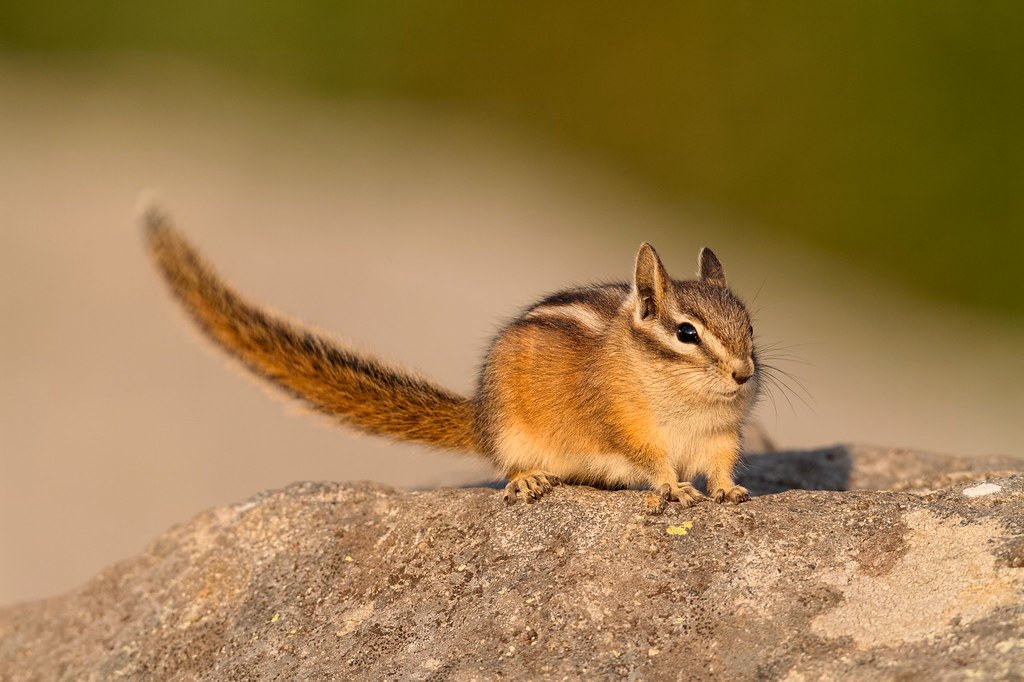
Alarm

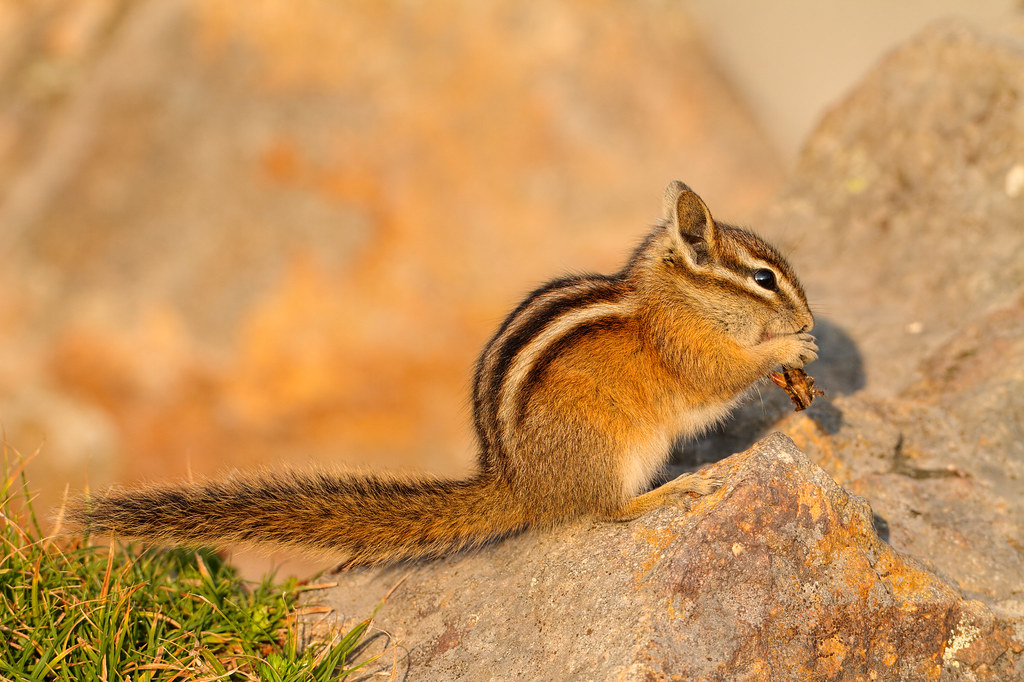
I had been watching this chipmunk feeding near the trail in Mount Rainier National Park for quite a while when it straightened out its tail and began whipping it back and forth. I looked behind me, then checked the skies, but couldn’t see what had raised the alarm. There were some grouse feeding nearby that were partially obstructed but they had been there even longer than I had.

I soon got my answer when it ran over right in front of me and picked up a grasshopper that had been smashed underfoot by a hiker, then ran back to the big rocks to eat it. Even though I had been watching it for a while, I’m guessing the tail flashing was one last test to make sure I meant it no harm. When it was done eating, it actually ran between my legs and on down the trail.

I guess I passed the test.

A Meal of Grasshoppers

High Water

A nutria feeds in Bull Lake in front of a partially submerged sign

We set a record for the wettest December ever when we were only three weeks into the month, and it has often rained since then, so it is no surprise that the water levels at Ridgefield are a little high. But not nearly so much as this picture would suggest, that sign is back near a hunter’s blind near the shore of Bull Lake, which itself is managed to mimic the flood plains of the Columbia before the dams went in. An unusually hot and dry summer left us with little snowpack in the mountains and we haven’t seen the widespread flooding we got when I moved here almost twenty years ago.

I took advantage of a two week vacation from work to return to Ridgefield (and going out to do photography in general) after a year’s absence. I’ve been up there six times so far and will probably go a few more times before it is time to head back to work. I’ve had a lot of fun and mostly photographed animals I’ve photographed many times before, biggest surprise was finding a short-eared owl up close, but I’ve been more surprised by what I haven’t seen: mammals apart from the ever-present nutria, and more importantly, my beloved bitterns.

I knew I was going to be hard-pressed to find bitterns when I drove by Rest Lake, which has by far been my best spot to find them the past few years, and saw that the way the water and the plants are in that area, the bitterns would be a lot more exposed than they like to be. I looked for them on every visit but didn’t see a single one. I still have a lot of old pictures to edit and get back online so regardless bittern pictures will be coming.

It was good to be back, the key will be to keep the momentum going and keep heading out once I’m back at work, as it is going to be a hectic month or two.

Mouthful

A hoary marmot collects a mouthful of grasses and flowers

A hoary marmot collects grasses and flowers late on a fall day in Mount Rainier National Park. I didn’t think it could add more without dropping what it already had, but I was wrong. After adding that last bit it was either satisfied with its collection, or felt unable to collect any more, and trundled off towards its den.

A hoary marmot with a mouthful of grasses and flowers